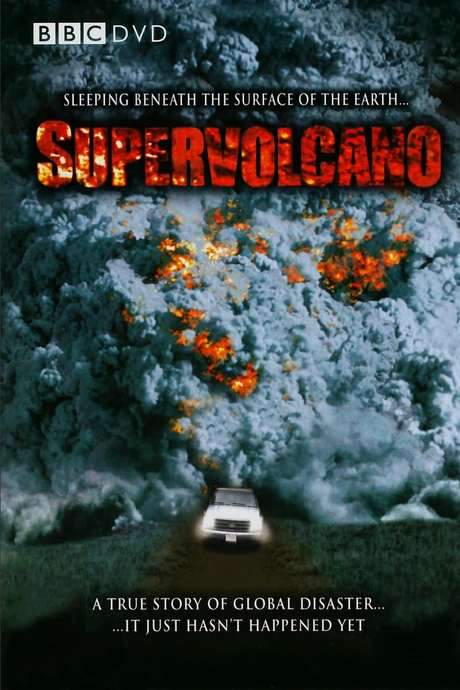


Supervolcano Plot Summary
Read the complete plot summary and ending explained for Supervolcano (2005). From turning points to emotional moments, uncover what really happened and why it matters.
Richard Lieberman, the scientist in charge of Yellowstone Volcano Observatory, leads a press conference with his colleagues Jock Galvin, Dave, Matt and Nancy, and their boss, Michael Eldridge, to present their new virtual imagery simulator VIRGIL, which Eldridge claims will greatly aid their research. The gathering is brisk, professional, and aimed at reassuring the public that they are prepared for any eventuality, even as a wary reporter in the room—Maggie Chin—asks about the possibility of an eruption. Rick dismisses the notion as a remote possibility, trying to keep the mood calm and focused on science rather than fear.
Soon after, an earthquake triggers a tsunami on one of the park’s lakes, and Maggie interviews Kenneth “Ken” Wylie on TV about his new book on volcanoes. Rick and Ken are brothers-in-law, and their later exchange grows tense as Rick accuses Ken of exploiting public anxiety to sell his book. The tension underscores a central tension in the film: the difference between keeping the public informed and managing the sensational narratives that can spiral into mass panic.
Meanwhile, the undersecretary of FEMA, Wendy Reiss, presses Rick for a hard look at worst-case scenarios if Yellowstone were to release a “super eruption.” He shares a sobering simulation that shows the potential reach of an ashfall across the United States, a visualization that raises the stakes for everyone involved. The moment crystallizes the stakes: even a routine hydrothermal event at Norris Geyser Basin can ripple outward as questions pile up from a growing crowd of reporters and viewers.
As the team runs more simulations on VIRGIL, they learn that even a moderate eruption could destabilize the broader magma chamber beneath Yellowstone and potentially trigger a much larger event. The possibility shifts from theoretical to immediate concern, prompting heightened vigilance across the park and in federal offices. Seismic chatter grows louder, and the ground begins to feel unsettled enough that the park’s authorities decide to close it for safety. Maggie persists, arriving at the park anyway, while Rick dispatches Matt to give her a guided tour that doubles as a data-gathering exercise. The team detects a harmonic tremor near Norris, a sign that an eruption of uncertain scale could be imminent.
News of the tension and the new danger leaks to the press, stoking a national panic. FEMA schedules a crucial press conference in Washington, DC, where Rick is pressured to downplay the threat and assure the public that the eruption will not be large. The scene highlights the strain between scientific caution and political expediency, a recurring theme in the film. As Rick travels back from the conference, the field office finishes tallying the latest data. They uncover troubling evidence: the top of the magma chamber contains enough eruptible magma to destabilize the chamber and trigger a super eruption. The realization hits with devastating clarity as the team rushes to interpret the new data and plan for what comes next.
The eruption begins in earnest, tearing through the landscape with frightening speed. The field office is severely damaged, and Jock is injured in the chaos. Matt investigates the eruption and contacts Dave to relay the news to Rick. A pyroclastic flow forces the team to abandon the main USGS office; Nancy and Matt try to outrun the advancing cloud in a truck, but the flow overwhelms them, and they are killed in the resulting devastation. The ash plume and tremors force a rapid reconfiguration of emergency response, with FEMA widening its protective measures and airspace closures as a precaution for thousands of travelers and residents.
Rick reaches out to Dave, who had relocated earlier to establish a backup office in a hotel in Bozeman. Meanwhile, the vent system drives ash east across the United States, closing major air routes and pushing authorities to seek shelter and containment. Rick’s plane fights its way through the ash and makes an emergency landing in Cheyenne. He and Ken decide to move toward a FEMA facility in Denver, but the ash renders those plans impractical, forcing them to seek a nearby military installation instead.
The eruption drives a dramatic collapse of structures as the ashfall intensifies and the venting continues. The motel roof collapses, destroying the backup office and killing Dave. Rick and Ken manage to reach a secure military installation, where they weather the worst of the event. Inside the installation, Rick coordinates with FEMA and pieces together the forecast: the vents will merge into one massive caldera, unleashing an eruption on the scale of the Huckleberry Ridge Event—the most dramatic chapter in Yellowstone’s long history.
As officials scramble to devise a plan to save the estimated 25 million people trapped by ash, Rick argues that evacuation by air is impractical and nearly impossible given the conditions. He pushes for a stark, grim approach: FEMA initiates the Walk to Life program, urging people to walk through the ash to safety rather than waiting for a risky airlift or relief operation. The approach is controversial but holds a grim logic given the scale of the disaster unfolding around them.
A week into the eruption, the ground above the emptied magma chamber begins to sink, signaling that the eruption is nearing its end. Yet the damage is already extensive, and much of the US must endure a volcanic winter, with atmospheric conditions rendering large portions of the country uninhabitable. The crisis claims lives and reshapes how the country thinks about natural disaster response. In the end, the Walk to Life program manages to save around 7.3 million people out of the original 25 million trapped, including Rick and Ken, whose resilience and teamwork underscore the human capacity to endure even the most cataclysmic events. The film closes on a somber but hopeful note, emphasizing caution, preparedness, and the quiet courage of those who confront extraordinary danger.
Supervolcano Timeline
Follow the complete movie timeline of Supervolcano (2005) with every major event in chronological order. Great for understanding complex plots and story progression.
Launch of VIRGIL and kickoff briefing
Scientists reveal the VIRGIL virtual imagery simulator and present its potential for volcano research at the Yellowstone Volcano Observatory. Rick Lieberman and his team explain the system while their boss Eldridge touts its capabilities. The press conference introduces the looming possibility of an eruption, which Rick dismisses as remote for now.
Maggie Chin questions eruption likelihood
A reporter asks whether Yellowstone could erupt, prompting Rick to downplay the risk as a remote possibility. Jock, Dave, Matt, Nancy, and Eldridge watch as the question hangs in the room. The moment sets the tone for how information will be communicated to the public.
Maggie interviews Ken after the lake tsunami
An earthquake triggers a tsunami in a park lake, prompting Maggie to interview Ken Wylie on TV. Rick and Ken share a tense, brother-in-law rivalry; Rick accuses Ken of fanning panic to sell a book. The media storm intensifies the public's fear of a volcano eruption.
Undersecretary Reiss probes worst-case scenario
Wendy Reiss asks Rick about the worst-case scenario of a Yellowstone eruption and shows a simulation of devastating ashfall across the US. Rick hesitates, but the data make the potential scale undeniable. The moment demonstrates the national-level stakes of their research.
Hydrothermal event and VIRGIL stress test
A hydrothermal burst at Norris Geyser Basin triggers questions from the press. Rick's team runs new VIRGIL simulations that reveal even a moderate eruption could destabilize the magma chamber and trigger a super eruption. The team recognizes the escalating risk.
Park closes; tremor hints at imminent eruption
Following more seismic activity, the park is shut down to protect visitors and staff. Maggie returns to Yellowstone anyway, and Rick assigns Matt to give her a tour. They detect a harmonic tremor near Norris indicating an eruption of unknown scale is imminent.
Eruption leak triggers national panic and DC press conference
An eruption press conference is scheduled in Washington, DC after an alarming email leaks to the press. FEMA officials pressure Rick to downplay the threat and say the eruption will not be large. The political stakes push him into a difficult, public-facing stance.
Magma chamber destabilization and initial eruption symptoms
As data is completed, scientists realize the top of the magma chamber has enough eruptible magma to destabilize the system. A pyroclastic flow damages the main USGS field office and injures Jock; Nancy and Matt are killed while trying to escape.
Ash plume forces evacuations and airspace closure
The vent plume blankets the region, shutting US airspace and prompting FEMA to implement protective measures. Rick's plane flies into ash, forcing an emergency landing in Cheyenne. He and Ken decide to reach a military installation instead of Denver.
Backup operations destroyed; rescue leads to military installation
A motel roof collapses under heavy ash, destroying the backup hotel office and killing Dave. Rick and Ken reach a nearby military installation, where they weather the eruption inside. The shift to a secure facility marks a turning point in their response.
Vents merge into massive caldera and Huckleberry Ridge scale forecast
From the safety of the installation, Rick informs FEMA that the vents will merge into one massive caldera, indicating an eruption on the scale of Huckleberry Ridge. The team confronts the reality that evacuation would be impossible. The planet-wide consequences intensify the urgency.
Walk to Life plan and grim choices
Officials scramble to save 25 million people trapped by ash, but Rick argues evacuation would fail due to ash and airspace. FEMA launches the Walk to Life program, guiding survivors through the ash to safety. The plan buys time and preserves a portion of the population.
Eruption wanes and a volcanic winter begins
One week after the eruption starts, the magma chamber's empty space collapses, signaling the end of the eruption. The atmosphere is darkened by ash, and large areas of the US become uninhabitable. The Walk to Life saves 7.3 million people, including Rick and Ken.
Supervolcano Characters
Explore all characters from Supervolcano (2005). Get detailed profiles with their roles, arcs, and key relationships explained.
Michael Eldridge (Tom McBeath)
The boss at Yellowstone Volcano Observatory, overseeing the VIRGIL project and the research team. He champions scientific advancement while guiding his staff through a high-stakes crisis, balancing caution with progress.
Rick Lieberman (Michael Riley)
A principal scientist who runs simulations and interprets data for decision-makers. He wrestles with public fear, political pressure, and the responsibility of communicating worst-case scenarios without causing panic.
Wendy Reiss (Rebecca Jenkins)
Undersecretary of FEMA who pushes for a plan to protect people and questions the worst-case scenario. She is pragmatic, politically aware, and focused on managing a national response.
Jock Galvin (Gary Lewis)
Field colleague known for his hard-won experience and frontline perspective. He confronts escalating danger and is killed during the eruption while trying to evacuate the team.
Nancy (Jennifer Copping)
Team member involved in the research and monitoring effort who dies in the eruption as the crisis spirals.
Matt (Shaun Johnston)
Team member who assists in field operations and ultimately loses his life to the pyroclastic flow while trying to help others.
Dave (Adrian Holmes)
Scientist who leaves Yellowstone to set up a backup office in Bozeman and dies when the backup location is destroyed by ashfall.
Captain Franks (Fred Keating)
Uncredited captain who appears during the crisis, contributing to the emergency response narrative in a supporting role.
Ken Wylie
Kenneth Wylie, Rick's brother-in-law and a public-facing voice who becomes an adversarial presence via media-driven mass-panic.
Supervolcano Settings
Learn where and when Supervolcano (2005) takes place. Explore the film’s settings, era, and how they shape the narrative.
Time period
Set in the contemporary era, the crisis unfolds with current media, government agencies, and emergency response protocols, reflecting modern disaster management and communication.
Location
Yellowstone National Park, Norris Geyser Basin, Bozeman, Cheyenne, Denver, Washington, D.C.
Yellowstone National Park is the setting, a vast wilderness known for geysers, hot springs, and a fragile volcanic landscape. Norris Geyser Basin features in the crisis as hydrothermal activity surges alongside seismic events. The story moves between field sites in Bozeman and the surrounding towns, Cheyenne and Denver, and the capital Washington, D.C., highlighting the park's isolation that amplifies danger and complicates response.
Supervolcano Themes
Discover the main themes in Supervolcano (2005). Analyze the deeper meanings, emotional layers, and social commentary behind the film.
🌋
Disaster Response
The film centers on how scientists, government agencies, and responders coordinate under mounting risk. It shows the tension between rapid action and cautious planning as a potential super-eruption threatens millions. The Walk to Life plan and evacuation decisions illustrate the ethical and logistical challenges of saving lives in a disaster of unknown scale.
🔬
Scientific Uncertainty
VIRGIL simulations demonstrate possible outcomes but cannot predict exact events, highlighting how data can be interpreted under political and public scrutiny. The story emphasizes how uncertainty affects policy decisions, media messaging, and personal belief in risk assessments. It also shows the strain on scientists when faced with false reassurance and political pressure.
🏔️
Human Cost
The crisis shows the vulnerability of communities and individuals when a natural disaster escalates. The loss of colleagues and the struggle of ordinary people to reach safety underscore the human price of inaction or miscommunication. It also celebrates resilience and the idea that humane decisions, like the Walk to Life program, can save millions.

Coming soon on iOS and Android
The Plot Explained Mobile App
From blockbusters to hidden gems — dive into movie stories anytime, anywhere. Save your favorites, discover plots faster, and never miss a twist again.
Sign up to be the first to know when we launch. Your email stays private — always.
Explore the mobile appSupervolcano Spoiler-Free Summary
Discover the spoiler-free summary of Supervolcano (2005). Get a concise overview without any spoilers.
In the heart of America lies Yellowstone National Park, a sprawling wilderness that rests atop one of the planet’s most powerful volcanic systems. Beneath its geysers and steaming vents, a dormant “dragon” stirs, its immense magma chamber a silent reminder that nature’s scale can dwarf human ambition. The film opens with a palpable sense of awe and unease, blending the pristine beauty of the park with an undercurrent of scientific tension, setting a tone that is both methodical and foreboding.
Richard Lieberman heads the Yellowstone Volcano Observatory, a tight‑knit team of specialists tasked with monitoring the subtle whispers of the earth. At a press conference he introduces the cutting‑edge VIRGIL simulator, promising transparency while striving to keep panic at bay. Around him stand Jock Galvin, a pragmatic field officer; Dave, the data analyst who translates tremors into meaning; Matt, the eager technician; Nancy, the communications liaison; and their supervisor Michael Eldridge, who balances bureaucracy with ambition. Outside the scientific circle, Maggie Chin, a relentless reporter, probes for the truth, while Kenneth “Ken” Wylie, a best‑selling author and Lieberman’s brother‑in‑law, adds a personal dimension to the unfolding drama.
When a sudden earthquake ripples through the park, the team’s instruments pick up anomalous signals that hint at a possible shift in the volcano’s behavior. Wendy Reiss, the undersecretary of FEMA, presses for a hard look at worst‑case scenarios, forcing the scientists to confront the gap between measured caution and the political imperative to reassure a nervous public. The atmosphere tightens as the researchers wrestle with data that could rewrite the nation’s understanding of volcanic risk, all while navigating media scrutiny and internal disagreements.
The film sustains a tense, almost clinical atmosphere, where the beauty of the landscape contrasts sharply with the looming possibility of catastrophe. Through measured dialogue and nuanced character dynamics, it explores how expertise, responsibility, and human curiosity intersect when the earth itself threatens to rewrite the rules of survival.
Movies with Similar Twists and Themes
Uncover films that echo the narrative beats, emotional arcs, or dramatic twists of the one you're exploring. These recommendations are handpicked based on story depth, thematic resonance, and spoiler-worthy moments — perfect for fans who crave more of the same intrigue.


Featured on this page

What's After the Movie?
Not sure whether to stay after the credits? Find out!
Check out our other apps:

SAT Sphere
Build confidence for the Digital SAT.

Mori Atlas
Discover wild places worth protecting.

Luntero
Search smarter for a home in Amsterdam.

Plot Explained
Unravel movie endings and hidden clues.

Pokechamp
Dive into Pokémon data and battle logic.

Driving Theory
Get ready for your European theory test.

Movie Dust
Plan your next cinema trip with ease.

Musemap
Find art and culture as you travel.

Selkobase
Compare credentials before committing.

Local Manual
Turn an unfamiliar country into practical next steps.

Lernavi
Compare school systems before your next move.

GymRoam
Find a workout stop wherever your plans take you.
Explore Our Movie Platform
New Movie Releases (2026)
Famous Movie Actors
Top Film Production Studios
Movie Plot Summaries & Endings
Major Movie Awards & Winners
Best Concert Films & Music Documentaries
Movie Collections and Curated Lists
© 2026 What's After the Movie. All rights reserved.
Privacy Policy