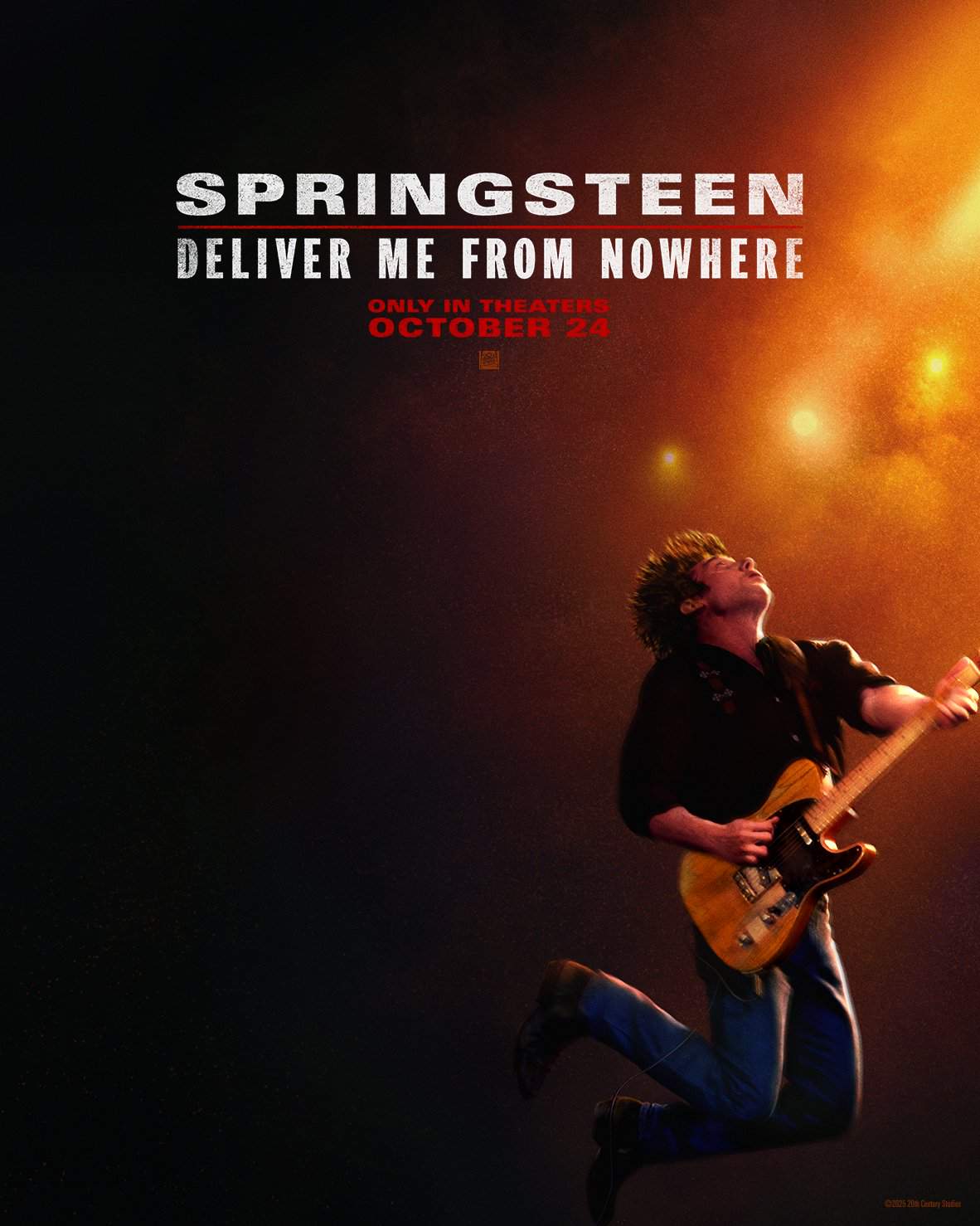
Springsteen: Deliver Me from Nowhere 2025

Directed by
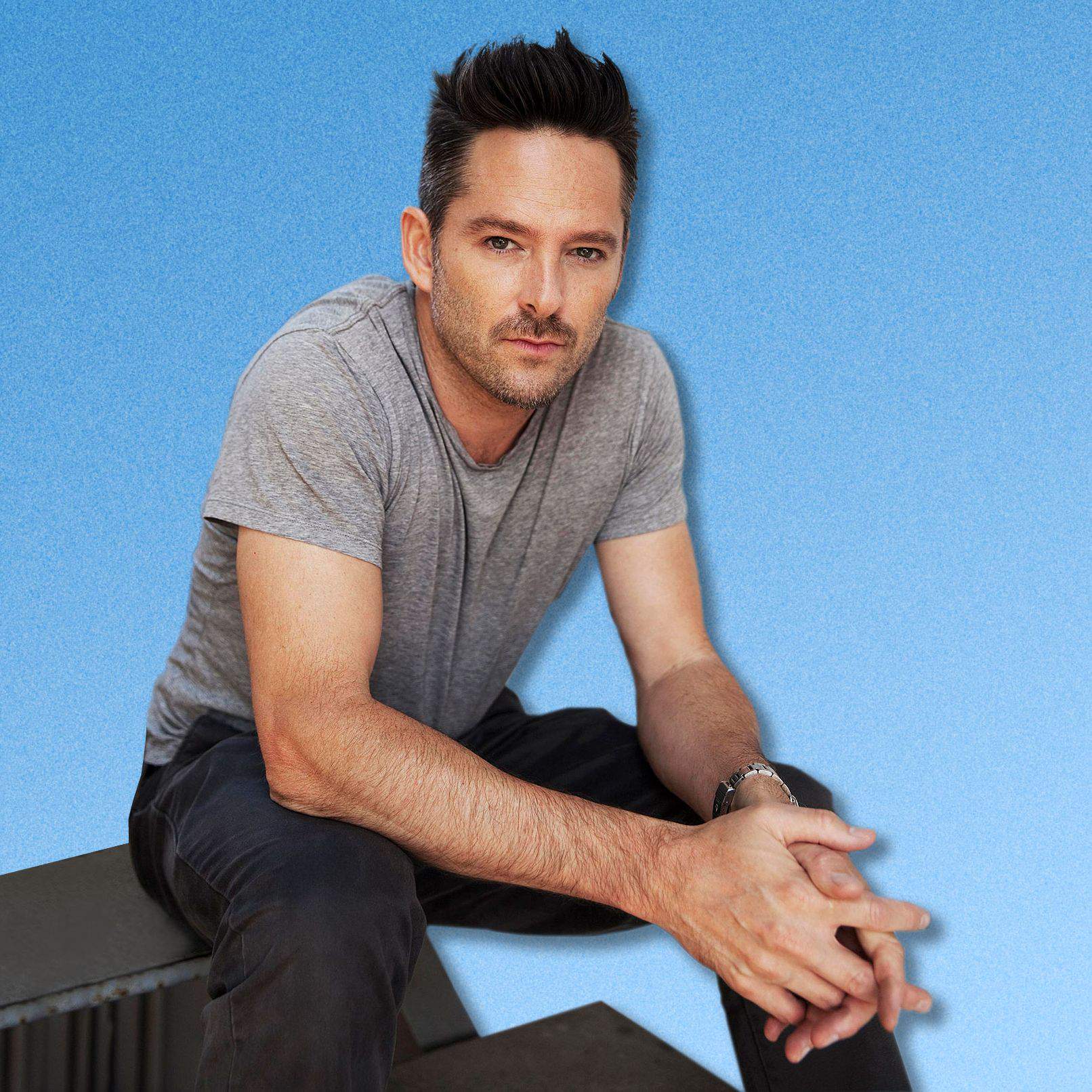
Scott Cooper
Made by

Bluegrass Films
Where to Watch Springsteen: Deliver Me from Nowhere
See current US streaming, rental, and purchase options for Springsteen: Deliver Me from Nowhere (2025) via JustWatch.







Springsteen: Deliver Me from Nowhere Plot Summary
Read the complete plot summary and ending explained for Springsteen: Deliver Me from Nowhere (2025). From turning points to emotional moments, uncover what really happened and why it matters.
In 1981, Bruce Springsteen wraps The River Tour and, to escape the glare of fame, is guided by his manager and producer Jon Landau to a quiet house near Freehold, New Jersey. Matt Delia, his trusted friend and mechanic, drives him to the Colts Neck retreat where Bruce buys his first new car, a Chevrolet Camaro, and begins tinkering with music again while playing with local bands at the Stone Pony. There, he meets Faye Romano, an old classmate’s younger sister, and grows close to her and her young daughter Haley. The rising momentum of the River era places new pressure on him as his label anticipates another hit album.
With the success of his top-ten single “Hungry Heart” and mounting expectations, Bruce proposes trimming studio costs by assembling a rough demo himself. His relationship with his father, Douglas Springsteen, a man wrestling with alcohol and mental health issues, casts a heavy shadow over his life and work, a tension that once pushed him to defend his mother, Adele Springsteen, with a baseball bat. Reading Flannery O’Connor and catching Badlands on TV sparks a fascination with darker impulses, nudging him toward writing a song in the killer’s voice and taking [Faye Romano] on a date to Asbury Park. The mood at the house shifts as Bruce enlists his guitar technician, Mike Batlan, to convert a bedroom into a makeshift studio equipped with a four-track recorder to shape the new demo.
As his creative world deepens, Bruce grows closer to Faye and her daughter Haley, letting the stark, somber songs take shape with a blunt, blue-collar sensibility drawn from his own childhood and the complicated legacy of his father. Meanwhile, Jon keeps an eye on opportunities beyond the music, weighing the potential for a movie role against Bruce’s devotion to the songs. The work takes on a life of its own as Bruce records the tracks largely unaccompanied, choosing an imperfect, unvarnished sound that feels true to his vision.
[Mike Batlan] delivers the only copy of the finished demo—a single cassette—to Jon, who confides in his wife, Barbara Landau, about the unexpectedly darker, deeply personal songs. In California, Adele calls Bruce to help with the increasingly erratic Douglas, and the pressure mounts as Bruce heads to New York City to record, reuniting with the E Street Band. They lay down several tracks, including the incendiary “Born in the U.S.A.,” but Bruce remains uneasy with the full-band studio texture, sensing it doesn’t mirror the raw truth of his acoustic vision. After two weeks, he decides to pause the planned singles and focuses on preserving the core sound of the demos.
Jon supports Bruce’s instinct to let the music speak for itself, steering the decision to treat the raw demo as the new record, a bold move that sacrifices radio-friendly hits in favor of artistic honesty. The album Nebraska comes together using older equipment to recreate the demo tape as a vinyl master, a choice that preserves the stark intimacy of the performances. Record executive Al Teller expresses dismay at the absence of singles and the absence of a public-facing image on the cover, but Jon stands by Bruce’s artistic gamble.
Bruce then tells Adele that he is moving to Los Angeles alone, and Faye tearfully accuses him of avoiding his fears. He suffers a mental breakdown during the cross-country drive, yet Matt Delia helps carry him toward a new home in LA. Ten months later, Bruce is back on tour with Jon’s support, and a visit from his proud parents brings a rare moment of reconciliation. The epilogue reveals Nebraska reaching number three on the charts, while the shelved hits eventually appear on Born in the U.S.A., propelling him to global superstardom as he continues treatment for depression. The story leaves Bruce entwined with his art and his past, forever marked by the choice to keep the album’s stark honesty intact.
Springsteen: Deliver Me from Nowhere Timeline
Follow the complete movie timeline of Springsteen: Deliver Me from Nowhere (2025) with every major event in chronological order. Great for understanding complex plots and story progression.
End of The River Tour and move to a quiet house
In 1981, Bruce Springsteen finishes The River Tour and retreats to a quiet house near Freehold, New Jersey. His manager Jon Landau rents a home in Colts Neck to lie low from fame. This downtime becomes the seedbed for a stark, personal period in his music.
Bruce buys his first new car
Bruce purchases his first new car, a Chevrolet Camaro, as he settles into the Colts Neck house. The modest purchase mirrors his grounded, working-class mindset during this transitional phase. It foreshadows the unvarnished style that will define Nebraska.
Meeting Faye Romano at the Stone Pony
Playing with local bands at the Stone Pony in Asbury Park, he meets Faye Romano, an old classmate’s younger sister. Their growing connection unfolds as fame intensifies and the songwriting process begins to take shape. This encounter foreshadows the intimate, blue-collar perspective of his future songs.
Pressure to deliver another hit and starting the demo
With Hungry Heart already a top-ten hit, the label pressures Bruce for another hit album. He proposes trimming studio costs by preparing a self-made demo. This DIY approach signals a move toward raw, unpolished sound.
Family tensions and artistic inspiration
Bruce’s fraught relationship with his father, Douglas, an alcoholic with mental health struggles, colors his new material. He defends his mother Adele and recalls family memories as inspiration. Reading Flannery O’Connor and watching Badlands fuels him to write songs in a killer’s voice.
Bedroom studio and the four-track setup
Bruce enlists guitar tech Mike Batlan to convert the bedroom into a makeshift studio with a four-track recorder. They work in tight, intimate space to shape the demo’s sound. The environment emphasizes a down-to-earth, blue-collar ethos.
Songwriting from memory and personal history
Bruce writes a collection of stark, somber songs drawn from his childhood and his father’s history. The music grows darker and more personal as he records largely on his own. The result is an intensely authentic, unvarnished disk.
Handoff of the demo and the private doubts
Mike brings Jon Landau the only copy of the completed demo, and Jon confides in his wife about the songs’ unexpectedly darker nature. The industry senses a risky, deeply personal project. The demo becomes the anchor for the album’s direction.
Adele calls for help; the move toward NYC recording
Living in California, Adele calls Bruce asking for help with his increasingly erratic father. Bruce visits his father and then heads to New York City to record with the E Street Band. The NYC sessions mark a transition from a DIY demo to a fuller studio process.
Recording at the studio; Born in the U.S.A. tracks
In New York, they lay down tracks including Born in the U.S.A., but Bruce remains unhappy with the full-band sound. Tension grows between artistic vision and commercial expectations. He fights to preserve the stripped-down feel that first defined the music.
Nebraska emerges from the raw demo; no singles
After two weeks, Bruce cannot recapture his acoustic vision and decides to shelve the potential singles. Jon chooses to use Bruce’s raw demo unchanged, turning it into the Nebraska album. The decision keeps Nebraska's intimate, raw voice intact.
Cross-country move to Los Angeles and breakdown
With the label uneasy, Bruce tells Faye he is moving to Los Angeles alone. A mental breakdown follows during the cross-country drive, and Matt helps him reach a new home in LA. Jon urges him to seek professional help, and Bruce begins therapy.
Ten months later: back on tour and family visit
Bruce returns to touring with Jon’s support, ten months after the LA breakdown. His proud parents visit and reconnect with him; Douglas asks to sit on his lap, signaling a fragile moment of reconciliation. The arc closes on a note of personal healing, even as the commercial success looms.
Nebraska’s success and Born in the U.S.A.’s rise
Nebraska reaches number three on the charts, validating the stark, personal approach. The earlier shelved hits are released on the next album, Born in the U.S.A., propelling Bruce to global superstardom. The epilogue notes continued treatment for depression as his career soars.
Springsteen: Deliver Me from Nowhere Characters
Explore all characters from Springsteen: Deliver Me from Nowhere (2025). Get detailed profiles with their roles, arcs, and key relationships explained.
Bruce Springsteen (Jeremy Allen White)
Bruce is a fiercely committed songwriter torn between family trauma and artistic ambition. His blue-collar memories shape stark, somber songs, and he relentlessly pursues an authentic sound even as fame looms. He experiences emotional volatility and a pervasive sense of responsibility to his past.
Jon Landau (Jeremy Strong)
Bruce's manager and producer who recognizes the tension between artistry and commercial expectations. He supports Bruce's unconventional choices, defending artistic vision even when the industry questions the strategy. He acts as a stabilizing confidant amid rising pressure.
Adele Springsteen (Gaby Hoffmann)
Bruce's mother, a grounding presence who faces her own challenges and remains a touchstone for Bruce's childhood. Her distance and care reflect the domestic pressures shaping his music. She stays connected even as life on the road pulls Bruce away.
Douglas Springsteen (Stephen Graham)
Bruce's alcoholic father, whose volatile mental health exerts a heavy influence on Bruce's worldview. The father-son dynamic fuels Bruce's protective instincts and fuels the emotional undercurrents of his songwriting. His struggles mirror the themes of disappointment and resilience.
Faye Romano (Odessa Young)
A former classmate's younger sister who forms a personal connection with Bruce and becomes a mirror for his vulnerability. She introduces Bruce to new emotional landscapes and provides support as he experiments with his music and relationships. Her presence adds humanity to Bruce's restless creativity.
Mike Batlan (Paul Walter Hauser)
Bruce's guitar technician who helps transform a bedroom into a makeshift studio. He shares Bruce's determination to capture a direct, unpolished sound and becomes a partner in the early demo process. His practical skills support the artistic shift toward Nebraska.
Springsteen: Deliver Me from Nowhere Settings
Learn where and when Springsteen: Deliver Me from Nowhere (2025) takes place. Explore the film’s settings, era, and how they shape the narrative.
Time period
Early 1980s (1981–1982)
Set during the tail end of The River Tour in 1981, the story follows Bruce as fame looms and he seeks artistic authenticity. It charts a year of intense writing, recording, and touring, culminating in the Nebraska era and the shift toward the Born in the U.S.A. period. The narrative spans a transition from small-town life to major-label pressure and personal struggle.
Location
Freehold, New Jersey, Colts Neck, New Jersey, Asbury Park, New Jersey, New York City, New York, Los Angeles, California
The film unfolds around Bruce Springsteen's early life in New Jersey, with key locations in Freehold and Colts Neck. Asbury Park serves as a backdrop for local gigs and the burgeoning music scene. The journey also takes him to New York City and finally to Los Angeles as he redefines his sound and career.
Springsteen: Deliver Me from Nowhere Themes
Discover the main themes in Springsteen: Deliver Me from Nowhere (2025). Analyze the deeper meanings, emotional layers, and social commentary behind the film.
🎭
Artistic Integrity
Bruce rejects the conventional path of hit singles in favor of a raw, unvarnished demo. The film centers on the belief that art should reflect lived experiences rather than commercial formulas. This commitment shapes the Nebraska sessions and defines how the music connects with listeners. The contrast between studio polish and stripped-down recording emphasizes honesty over hype.
🧠
Mental Health
The story portrays Bruce's internal battles, including a mental breakdown and the search for professional help. Family dynamics with his alcoholic father amplify the emotional burden behind the songs. Therapy and supportive relationships become crucial to his recovery and artistic re-emergence. The film frames mental health as integral to creative process and human resilience.
🧭
Fame vs Self
The pressure to become a global star clashes with Bruce's need for authenticity. The decision to shelve potential hit singles and avoid public-facing stunts reflects a deliberate rejection of manufactured fame. The coverless album and limited press appearances highlight the priority of art over image. This tension fuels the personal journey across cities and stages.
🎼
Creative Process
A DIY approach sees a bedroom studio, a four-track recorder, and a spare room converted into a studio stage for the Nebraska demos. The film emphasizes older equipment and an intimate sound that captures the songwriter's voice. The transition from demo to vinyl master preserves the raw emotional core of the songs. The process illustrates how constraints can sharpen artistic direction.

Coming soon on iOS and Android
The Plot Explained Mobile App
From blockbusters to hidden gems — dive into movie stories anytime, anywhere. Save your favorites, discover plots faster, and never miss a twist again.
Sign up to be the first to know when we launch. Your email stays private — always.
Explore the mobile appSpringsteen: Deliver Me from Nowhere Ending Explained
Unravel the ending of Springsteen: Deliver Me from Nowhere (2025) with our detailed explanation. Understand the final scenes, character fates, and unresolved questions.
In the film’s final moments Bruce sits with his longtime manager, Jon Landau, trembling under the weight of his own darkness. Jon’s only offer is a simple plea to keep fighting, and Bruce finally accepts that he must confront his demons through therapy rather than bury them in music. The decision to seek help becomes the quiet catalyst that pulls him out of the abyss.
Six months later he steps onto a modest stage, the crowd breathing in the raw, stripped‑down songs that sprang from his Freehold refuge. After the set, the backstage door opens and his parents—long absent from his life—step in. Douglas, eyes hollow with regret, asks for a moment alone with his son. In a hushed exchange the father acknowledges every scar he left, apologizing for the violence and neglect that haunted Bruce’s childhood. Bruce forgives him, and the brief reunion hints at a fragile, long‑overdue reconciliation that steadies him for what comes next.
The film then shifts to a brief montage: the Nebraska recordings, praised for their stark honesty, earn critical acclaim, and Bruce’s next project—Born in the U.S.A.—propels him to worldwide fame. The ending leaves us with a sense that, having finally faced his past and made peace with his parents, Bruce can move forward, carrying both the pain and the perseverance that shaped his music.
Springsteen: Deliver Me from Nowhere Spoiler-Free Summary
Discover the spoiler-free summary of Springsteen: Deliver Me from Nowhere (2025). Get a concise overview without any spoilers.
In the early‑80s, after a grueling arena tour, Bruce Springsteen retreats to a modest house on the outskirts of his New Jersey hometown, seeking a moment of quiet before the next wave of expectations. The world he inhabits is one where stadium lights and chart‑topping hits loom large, yet the rooms he now occupies are modest bedrooms fitted with a four‑track recorder, a guitar technician’s improvisations, and the lingering scent of his childhood streets. The documentary’s tone is intimate and hushed, capturing the raw texture of a legendary rock star who chooses to strip away the polish of his previous work and listen instead to the faint, imperfect whispers of a solitary acoustic voice.
Surrounding Bruce are the people who quietly shape his path. His longtime manager and confidant, Jon Landau, offers both pragmatic guidance and unspoken encouragement, while a young mechanic‑turned‑friend, Matt, provides the practical support of rides and new wheels. A budding romance blossoms with Faye Romano, whose presence introduces a tender, if complicated, domestic rhythm to his otherwise solitary creative process. Meanwhile, the specter of his father, Douglas, hangs over him—a volatile figure whose past bruises still color the younger man’s reflections on family and identity.
The film weaves interviews, archival footage, and moments of solitary recording into a portrait of an artist wrestling with the paradox of fame. It hints at a tension between the commercial machinery eager for another smash single and Bruce’s yearning to honor the stark, haunting stories that pulse beneath his own experiences. The mood is one of quiet defiance, a blend of melancholy and resolve that invites viewers to feel the weight of a man choosing authenticity over expectation, all while the world outside remains buzzing with the promise of stadium anthems.
Movies with Similar Twists and Themes
Uncover films that echo the narrative beats, emotional arcs, or dramatic twists of the one you're exploring. These recommendations are handpicked based on story depth, thematic resonance, and spoiler-worthy moments — perfect for fans who crave more of the same intrigue.
Featured on this page

What's After the Movie?
Not sure whether to stay after the credits? Find out!
Check out our other apps:

SAT Sphere
Build confidence for the Digital SAT.

Mori Atlas
Discover wild places worth protecting.

Luntero
Search smarter for a home in Amsterdam.

Plot Explained
Unravel movie endings and hidden clues.

Pokechamp
Dive into Pokémon data and battle logic.

Driving Theory
Get ready for your European theory test.

Movie Dust
Plan your next cinema trip with ease.

Musemap
Find art and culture as you travel.

Selkobase
Compare credentials before committing.

Local Manual
Turn an unfamiliar country into practical next steps.

Lernavi
Compare school systems before your next move.

GymRoam
Find a workout stop wherever your plans take you.
Explore Our Movie Platform
New Movie Releases (2026)
Famous Movie Actors
Top Film Production Studios
Movie Plot Summaries & Endings
Major Movie Awards & Winners
Best Concert Films & Music Documentaries
Movie Collections and Curated Lists
© 2026 What's After the Movie. All rights reserved.
Privacy Policy