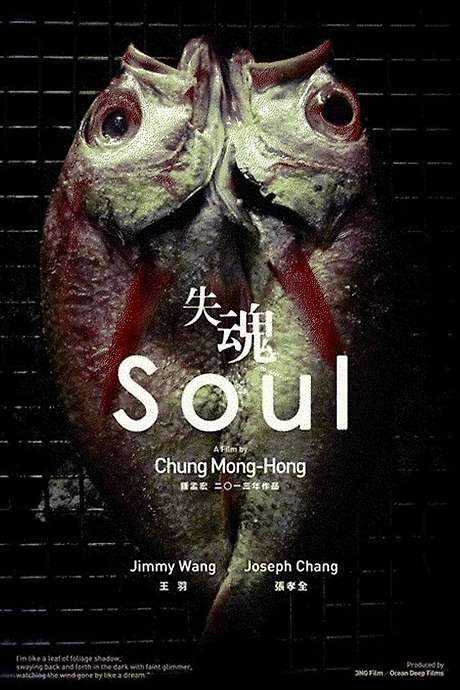
Soul 2013

Directed by

Chung Mong-Hong
Made by

3 Ng Film
Soul Plot Summary
Read the complete plot summary and ending explained for Soul (2013). From turning points to emotional moments, uncover what really happened and why it matters.
Ah-Chuan, Joseph Chang, a young man, collapses at work and slips into unconsciousness. At his bedside, a mysterious boy offers him a room in a few days, as the boy himself will be leaving. He is soon sent to stay with his father, Mr. Wang, Jimmy Wang Yu, up in the mountains. An older sister visits but is visibly unsettled by his behavior upon waking, and before long Ah-Chuan commits a terrible act and kills her.
When confronted by his father, Ah-Chuan explains that he entered the body because the real Ah-Chuan had left it, promising to return in time. In the wake of this claim, Mr. Wang hides his daughter’s body, kills his son-in-law when he arrives, and buries the son-in-law’s car, before confining Ah-Chuan to a shed. A mysterious Messenger, King Shih-Chieh, appears and tells Ah-Chuan that the real Ah-Chuan won’t be back for a while.
At a clinic, Mr. Wang reveals that his late wife did not kill herself; depression was involved, yet the truth runs deeper. He later uncovers an old well and persuades Ah-Chuan to jump in. Ah-Chuan descends and experiences visions of himself and his mother, then awakens back at the house. He learns that his wife had asked for a mercy killing in the shed, not a suicide.
A city cop arrives to investigate the disappearances surrounding the family—specifically Mr. Wang’s daughter and son-in-law. Ah-Chuan turns violent and kills the city officer. His police friend, Wu, Vincent Liang, checks on him; Ah-Chuan injures Wu in the eye, chases him through the woods, and later saves him from drowning. As Ah-Chuan walks away, Wu shoots him in the back.
Mr. Wang then leads them down the mountain, crafting a version of events that places all blame on himself for Wu’s supposed use. A year passes, and Ah-Chuan toils in the mountains while Mr. Wang is moved to a sanatorium because of his failing health. When Ah-Chuan visits him, he recounts the moment he first met the real Ah-Chuan (in spirit), who declared that he was going home. The story remains haunted by the ties between bodies, spirits, and the guilty choices that bind them.
Soul Timeline
Follow the complete movie timeline of Soul (2013) with every major event in chronological order. Great for understanding complex plots and story progression.
Ah-Chuan collapses at work
Ah-Chuan falls unconscious at his workplace. At his bedside, a boy offers him his room in a few days, saying the boy will be leaving.
Move to the mountains to stay with his father
Ah-Chuan is sent to stay with his father, Mr. Wang, in the mountains. He relocates to the rural home as part of his recovery.
Sister visits and is unsettled by his awakening
Ah-Chuan's older sister visits the mountain home, but she is disturbed by Ah-Chuan's behavior when he wakes. The scene foreshadows the tension to come.
Ah-Chuan kills his sister
During the aftermath of her visit, Ah-Chuan kills his sister. The act triggers a chain of deadly concealment and drastic measures by Mr. Wang.
Confrontation and the body-switch claim
When confronted by Mr. Wang, Ah-Chuan claims he entered the real Ah-Chuan's body after the latter left it, and that the real Ah-Chuan will return.
Hiding bodies and confining Ah-Chuan
Mr. Wang hides his daughter's body, kills her husband when he arrives, and buries the son-in-law's car. He confines Ah-Chuan to a shed to keep him under control.
Messenger delivers an update on the real Ah-Chuan
A messenger appears and tells Ah-Chuan that the real Ah-Chuan won't be back for a while. The news deepens the sense of isolation and the mystery surrounding the body-switch.
Clinic revelation about the late wife
At a clinic, Mr. Wang reveals that his late wife killed herself due to depression. This backstory adds context to the family tragedy.
Well encounter and the jump
Mr. Wang uncovers an old well and persuades Ah-Chuan to jump in. The act triggers a haunting sequence that blurs the line between reality and vision.
Vision and awakening in the house
Ah-Chuan jumps into the well and experiences visions of the real Ah-Chuan and his mother. He then awakens back in the house, suggesting the visions have altered his perception.
Mercy killing confession
Mr. Wang reveals that his wife did not kill herself, but asked him for a mercy killing in the shed. The revelation reframes the deaths and the motives behind them.
Investigation and the city cop's death
A city cop arrives to investigate the disappearances of the daughter and son-in-law. Ah-Chuan kills the city cop in the ensuing chaos.
Wu's pursuit and confrontation
Wu, Ah-Chuan's police friend, checks on him. Ah-Chuan injures Wu in the eye, they pursue through the woods, and Wu shoots Ah-Chuan in the back as he walks away.
Down the mountain and a calculated blame
Mr. Wang takes Ah-Chuan and Wu down the mountain, devising a version of events in which he takes all the blame for the murders for Wu to use.
One year later: a final spiritual moment
One year later, Ah-Chuan works in the mountains while Mr. Wang has been transferred to a sanatorium. Ah-Chuan visits him and recalls meeting the real Ah-Chuan in spirit form, who says he is going home.
Soul Characters
Explore all characters from Soul (2013). Get detailed profiles with their roles, arcs, and key relationships explained.
A Chuan (Joseph Chang)
A young man who finds his body occupied by the real Ah-Chuan, leading to confusion and volatile impulses. He struggles with the sense that another is controlling his actions while a web of family secrets closes in. His internal conflict escalates into murder, entangling personal relationships and pushing him toward a tragic fate.
Wang (Jimmy Wang Yu)
The patriarch who hides his daughter's body and manipulates the truth to shield his family, becoming involved in brutal decisions. He crafts cover-ups and bears moral ambiguity, acting as both protector and threat within the family crisis.
Wu (Vincent Liang)
A police ally who checks on Ah-Chuan, becomes entangled in the pursuit, and is wounded during the confrontation. His involvement ties law enforcement to the escalating violence and moral complexity of the case.
Inspector Yang (Tou Tsung-Hua)
A city inspector investigating the disappearances, navigating police procedures while the violence spirals, seeking the truth amid deception and chaos.
Messenger (King Shih-Chieh)
A messenger who arrives to inform Ah-Chuan that the real Ah-Chuan won't be back for a while, introducing a sense of fate or otherworldly dimension to the possession.
Doctor (Chen Yu-hsun)
A doctor at the clinic who provides context about the family’s backstory and observes the unraveling events, anchoring the medical and moral aspects of the plot.
Soul Settings
Learn where and when Soul (2013) takes place. Explore the film’s settings, era, and how they shape the narrative.
Location
Mountains, Shed, Clinic, Well, House, Sanatorium, Woods, City
The film unfolds largely in a remote mountain setting, with a weathered shed serving as a hiding place and a clinic as a site of revelation. The well and surrounding woods create a claustrophobic atmosphere that heightens tension. The contrast between isolation in the mountains and the occasional reach to the sanatorium underscores themes of confinement and escape.
Soul Themes
Discover the main themes in Soul (2013). Analyze the deeper meanings, emotional layers, and social commentary behind the film.
🌀
Duality
Identity becomes a battleground as Ah-Chuan is inhabited by the real Ah-Chuan. The film blurs lines between self and other, showing how memory and will clash within a single body. This duality drives both internal conflict and outward violence, complicating every decision.
💔
Grief
Depression and unresolved loss haunt the family history, from the late wife's tragedy to the secrets kept by Mr. Wang. The narrative uses spaces like the clinic and the well to expose raw pain and unspoken guilt. Mercy, suffering, and moral ambiguity intersect as characters confront what it means to ease pain. The burden of grief shapes loyalties and choices.
💥
Consequences
Violence triggers a chain reaction that pulls in family, police, and the wider community. Each act of deception leaves a mark that cannot be erased, forcing characters to confront the truth they hide. The pursuit through the woods and the ensuing revelations expose the moral costs of hidden truths. The ending suggests the cycle of guilt and retribution may continue beyond the mountains.

Coming soon on iOS and Android
The Plot Explained Mobile App
From blockbusters to hidden gems — dive into movie stories anytime, anywhere. Save your favorites, discover plots faster, and never miss a twist again.
Sign up to be the first to know when we launch. Your email stays private — always.
Explore the mobile appSoul Spoiler-Free Summary
Discover the spoiler-free summary of Soul (2013). Get a concise overview without any spoilers.
In the quiet folds of a mist‑shrouded mountain village, a celebrated chef suddenly collapses, his health unraveling without explanation. Sent to his father’s remote home to recover, he finds himself far from the bustling kitchens and bright lights of the city, surrounded instead by the lingering scent of pine and the low murmur of distant streams. The isolation is palpable, and the house itself seems to hold a memory of stories untold, setting a tone that is both contemplative and subtly unsettling.
At the heart of this secluded world lives Chuan’s father, a stoic man whose life has been marked by quiet endurance. Their relationship is layered with unspoken expectations: a son returning to a place that once shaped his identity, and a father watching his child drift further from the man he once knew. The mountain home becomes a stage where the ordinary rhythms of daily life—preparing meals, tending to the garden, sharing tea—are tinged with an odd, almost reverent calm that hints at deeper currents beneath the surface.
When tragedy strikes the family, a palpable shift occurs. Chuan begins to speak in a voice that is disarmingly serene, offering explanations that blur the lines between reality and something more ethereal. The atmosphere grows heavier, as if the very walls are listening to the quiet conversations that now echo through the hallways. A sense of mystery hangs in the air, inviting the viewer to wonder whether the mountain’s silence is a refuge or a conduit for something far stranger.
The film weaves together the stark beauty of its natural setting with a psychological undercurrent that probes identity, loss, and the strange ways people cling to one another when the familiar world begins to unravel. It balances moments of stillness with an ever‑present feeling that something unseen is shifting, leaving the audience poised on the edge of discovery, eager to see how Chuan will navigate the fragile line between belonging and becoming something else entirely.
Featured on this page

What's After the Movie?
Not sure whether to stay after the credits? Find out!
Check out our other apps:

SAT Sphere
Build confidence for the Digital SAT.

Mori Atlas
Discover wild places worth protecting.

Luntero
Search smarter for a home in Amsterdam.

Plot Explained
Unravel movie endings and hidden clues.

Pokechamp
Dive into Pokémon data and battle logic.

Driving Theory
Get ready for your European theory test.

Movie Dust
Plan your next cinema trip with ease.

Musemap
Find art and culture as you travel.

Selkobase
Compare credentials before committing.

Local Manual
Turn an unfamiliar country into practical next steps.

Lernavi
Compare school systems before your next move.

GymRoam
Find a workout stop wherever your plans take you.
Explore Our Movie Platform
New Movie Releases (2026)
Famous Movie Actors
Top Film Production Studios
Movie Plot Summaries & Endings
Major Movie Awards & Winners
Best Concert Films & Music Documentaries
Movie Collections and Curated Lists
© 2026 What's After the Movie. All rights reserved.
Privacy Policy