


Where to Watch Simharasi
See current US streaming, rental, and purchase options for Simharasi (2001) via JustWatch.


Streaming availability powered by 
Simharasi Plot Summary
Read the complete plot summary and ending explained for Simharasi (2001). From turning points to emotional moments, uncover what really happened and why it matters.
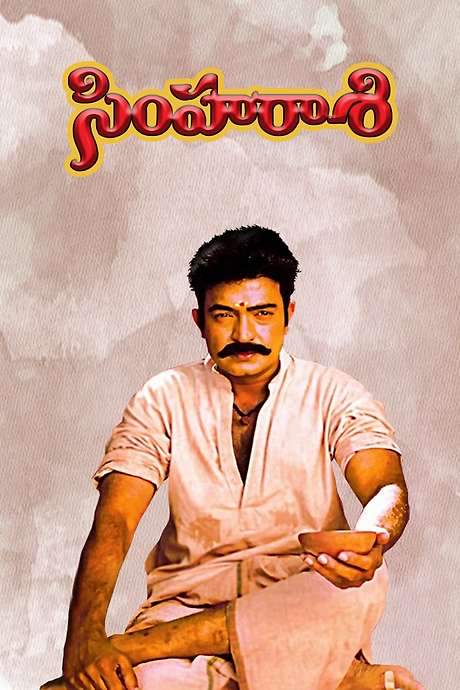
Dr. Rajasekhar stars as Narasimharaju, a highly respected, selfless figure in a rural village who treats every woman as his sister and even helps fund their weddings. He is fearless enough to consider killing his father, Irulandi, when he learns of a second wife, but the father chooses suicide to spare his son from a painful confrontation, leaving Narasimharaju to navigate the fallout and the complicated family ties that follow. To shield his stepsister Lakshmi from harm, Narasimharaju brings her to live with him, solidifying his vow to protect the vulnerable in his community.
A local MLA approaches Narasimharaju for political backing during the upcoming election, but he refuses, causing the MLA to lose. Ironically, the MLA’s son—someone who admires Narasimharaju—ends up marrying Lakshmi, adding a bittersweet twist to the village’s political and personal dynamics. A distant relative’s daughter, Varsha as Bhuvaneswari, arrives in the village from Bangalore. At first, she misreads Narasimharaju by his appearance, but soon comes to respect his tireless work and the tangible progress he’s driven in the community. Under his leadership, the village gains a free hospital, a day care center, and a college—milestones that symbolize his commitment to education, health, and opportunity for all.
Bhuvaneswari is drawn to Narasimharaju and even proposes marriage, but he does not accept her love, though she remains persistent and hopeful. To understand the man she’s fallen for, Narasimharaju shares a painful flashback: he was born into extreme poverty, with a mother afflicted by leprosy who could not be treated in a hospital and was kept apart from him. She eventually drowns herself in a river when he is eight years old, a tragedy that hardens his resolve and leads him to vow never to marry, out of fear of transmitting disease to a future partner. In a difficult turn, Narasimharaju persuades Bhuvaneswari to consider marrying someone else, hoping to protect her from a life shadowed by his own fear.
Meanwhile, he discovers Lakshmi being tortured by her husband, a revelation that reveals it was part of a revenge plot aimed at slighting Narasimharaju for his earlier political stance. Narasimharaju confronts Lakshmi’s abusive husband and makes it clear that he will not tolerate criminal activities, even if it jeopardizes his family’s interests. On the day of Bhuvaneswari’s wedding, a misunderstanding erupts when the groom’s family believes Narasimharaju and Bhuvaneswari are lovers after spotting his dhoti in her room, and they halt the marriage. A friend of Bhuvaneswari clarifies that Narasimharaju had once given his own dhoti to protect her when her clothes were washed away, dispelling the rumor and restoring trust. Manorama (/actor/manorama), a village elder who cares for the community, speaks up against the cruel assumptions and urges Narasimharaju to marry Bhuvaneswari. In a moving turn of events, he heeds that call and marries Bhuvaneswari, sealing a union that embodies his dedication to family, community, and the hope he has built for those around him.
Simharasi Timeline
Follow the complete movie timeline of Simharasi (2001) with every major event in chronological order. Great for understanding complex plots and story progression.
Narasimharaju confronts his father over a second wife
Narasimharaju learns that his father Irulandi had a second wife and is angered by the betrayal. The confrontation drives the elder to commit suicide rather than face his son. Narasimharaju then brings his stepsister Lakshmi to live with him, starting his duty to protect the vulnerable.
Narasimharaju builds free hospital and educational institutions
He uses his reputation to uplift the village by building a free hospital, a day care center, and a college. These institutions improve healthcare and education, especially helping women access services. His philanthropy earns him lasting respect in the community.
MLA seeks support and Narasimharaju refuses
A local MLA visits Narasimharaju to secure his backing in the upcoming election. Narasimharaju refuses to align with the MLA, standing by his principles. The MLA loses the election as a consequence.
Lakshmi's abuse and Narasimharaju intervenes
Narasimharaju learns that his stepsister Lakshmi is being tortured by her husband as a revenge plot against him. He confronts and beats Lakshmi's husband, vowing to oppose criminal activity even if it harms his family. The act reinforces his stance against wrongdoing.
Lakshmi's marriage to the MLA's son
The MLA's son, who admires Narasimharaju, ends up marrying Lakshmi. This alliance complicates the family dynamics but also cements Narasimharaju's influence. Lakshmi gains stability though under different circumstances.
Bhuvaneswari arrives from Bangalore
Bhuvaneswari, a distant relative's daughter from Bangalore, arrives in the village. At first she misreads Narasimharaju based on his appearance, assuming he is not approachable. Over time she discovers his hard work and generosity.
Bhuvaneswari is attracted but Narasimharaju rejects
Bhuvaneswari is drawn to Narasimharaju and confesses her feelings, but he does not accept her love. He remains focused on his service to the village and his painful past. The pair’s dynamic remains unsettled as she pursues him.
Narasimharaju's childhood tragedy
Narasimharaju recalls his childhood: born into poverty, his mother suffered from leprosy and could not touch him. He never sees his mother, who stays isolated in a room. When he is eight, his mother drowns herself in a river, a trauma that shapes his vow never to marry.
He vows never to marry
Shaken by his mother's isolation, Narasimharaju decides he will not marry to spare any woman from touching a body marked by his past. He resolves to guard others from pain, even if it costs him happiness. This vow defines his approach to later relationships.
He convinces Bhuvaneswari to marry someone else
Narasimharaju convinces Bhuvaneswari to marry someone else, hoping to spare her from his tragic fate. He explains his past and his vow, trying to prevent her heartbreak. She remains hopeful that love could still be possible.
Wedding day crisis and misunderstanding
On Bhuvaneswari's wedding day, the bridegroom's family misreads the situation and suspects Narasimharaju and Bhuvaneswari are lovers, seeing Narasimharaju's dhoti in her room. They interrupt the ceremony in a burst of scandal and anger. The disruption threatens to derail their union.
The truth behind the misinterpretation
Bhuvaneswari's friend reveals the truth that Narasimharaju lent his dhoti to safeguard her when her dresses were washed away, clearing the misunderstanding. This revelation shifts the village's perspective and exposes the cruelty of the accusation. It reinforces Narasimharaju's integrity.
Manorama pushes for marriage; they wed
Manorama, a village ally, urges Narasimharaju to marry Bhuvaneswari, echoing his mother's values. He follows her counsel and marries Bhuvaneswari, uniting the couple and reaffirming his compassionate mission. The marriage concludes the drama with a hopeful note for the village.
Simharasi Characters
Explore all characters from Simharasi (2001). Get detailed profiles with their roles, arcs, and key relationships explained.
Narasimharaju (Dr. Rajasekhar)
A respected, benevolent village leader who funds healthcare, education, and various social projects. He treats women as sisters and refuses to support crime, even if that harms family ties. His past trauma from his mother's illness drives a cautious, self-denying outlook that he eventually overcomes to form a caring family.
Lakshmi
Narasimharaju's stepsister who endures abuse from her husband, which is tied to a plot by those seeking to avenge the MLA's loss. Her arc intersects with Narasimharaju's insistence on justice and integrity.
Bhuvaneshwari
Daughter from Bangalore who grows to respect Narasimharaju's hard work and generosity. She initially misreads him but becomes determined to marry him. Her journey culminates in a marriage that aligns love with Narasimharaju's commitment to service.
Manorama
A village elder who speaks out against cruel assumptions and pushes for Narasimharaju's marriage to Bhuvaneshwari. She embodies community wisdom and solidarity, helping guide the protagonist toward a just ending.
Simharasi Settings
Learn where and when Simharasi (2001) takes place. Explore the film’s settings, era, and how they shape the narrative.
Location
Village, Bangalore
The story centers on a rural village where Narasimharaju runs a free hospital and other facilities to uplift the community. The village is tight-knit, with residents relying on his generosity and leadership. Bangalore appears as a contrasting origin point for Bhuvaneshwari's character, highlighting the reach of modern city life into a traditional setting.
Simharasi Themes
Discover the main themes in Simharasi (2001). Analyze the deeper meanings, emotional layers, and social commentary behind the film.
🏥
Compassion in Leadership
Narasimharaju uses wealth and influence to provide free healthcare, education, and care for the village, turning personal virtue into public good. The theme highlights how selfless service can transform a community and earn respect beyond bloodlines. It also shows the responsibilities that come with power and the impact of philanthropy on ordinary lives.
👪
Family, Duty, and Honor
The film pits personal loyalty against family pressures, including a contentious relationship with his father and the complicating presence of his stepsister. Narasimharaju stands by his principles even when it risks his family ties, showing a complex balance between duty to others and personal bonds. The narrative explores how familial expectations shape choices and destiny.
🌧️
Trauma and Resilience
Narasimharaju's childhood trauma—his mother's leprosy and death—shapes a vow to avoid intimate contact, driving much of his early restraint. The story uses this wound to meditate on resilience, forgiveness, and the possibility of healing through love and commitment. It frames pain as a catalyst for strength, not a permanent barrier.
💍
Love and Commitment
Bhuvaneshwari's steadfast faith in Narasimharaju's goodness challenges his initial reluctance rooted in his mother's memory. The romance evolves through understanding and sacrifice, culminating in an arranged-turned-voluntary marriage that respects both love and duty. The theme shows how genuine affection can coexist with a life of service.

Coming soon on iOS and Android
The Plot Explained Mobile App
From blockbusters to hidden gems — dive into movie stories anytime, anywhere. Save your favorites, discover plots faster, and never miss a twist again.
Sign up to be the first to know when we launch. Your email stays private — always.
Explore the mobile appSimharasi Spoiler-Free Summary
Discover the spoiler-free summary of Simharasi (2001). Get a concise overview without any spoilers.
In the sun‑drenched lanes of a close‑knit rural village, a figure of quiet strength walks among the fields and humble homes, known more for his generosity than his stature. Narasimharaju is a man whose compassion extends to every woman he meets, treating each as a sister and quietly funding the celebrations that mark their lives. The community feels his presence in the steady rhythm of daily chores, the rustle of crops, and the unspoken promise that no one will be left to face hardship alone.
When tragedy strikes his own household, the loss of his father forces Narasimharaju to shoulder a new responsibility. He welcomes his stepsister, Lakshmi, into his home, offering her the stability and safety that have become the hallmark of his character. Their bond deepens amid the simple rituals of village life, underscoring his unwavering commitment to protect those who are vulnerable.
The village itself hums with the possibility of change, and an unexpected visitor from the city arrives to test the limits of its traditions. Bhuvaneswari, a confident young woman from Bangalore, initially misreads the protagonist’s quiet demeanor but soon becomes drawn to his tireless efforts to uplift the community. Under his guidance, the hamlet begins to blossom with a free hospital, a daycare, and a college—tangible symbols of hope that reflect his belief in education, health, and collective progress.
Amid the gentle cadence of fields and festivals, unspoken feelings begin to surface, hinting at a delicate dance between duty and desire. As the village navigates the subtle currents of politics and personal aspirations, the story lingers on the promise that a selfless heart can shape a brighter future, leaving the audience wondering how love, responsibility, and ambition will intertwine in this heartfelt drama.
Featured on this page

What's After the Movie?
Not sure whether to stay after the credits? Find out!
Check out our other apps:

SAT Sphere
Build confidence for the Digital SAT.

Mori Atlas
Discover wild places worth protecting.

Luntero
Search smarter for a home in Amsterdam.

Plot Explained
Unravel movie endings and hidden clues.

Pokechamp
Dive into Pokémon data and battle logic.

Driving Theory
Get ready for your European theory test.

Movie Dust
Plan your next cinema trip with ease.

Musemap
Find art and culture as you travel.

Selkobase
Compare credentials before committing.

Local Manual
Turn an unfamiliar country into practical next steps.

Lernavi
Compare school systems before your next move.

GymRoam
Find a workout stop wherever your plans take you.
Explore Our Movie Platform
New Movie Releases (2026)
Famous Movie Actors
Top Film Production Studios
Movie Plot Summaries & Endings
Major Movie Awards & Winners
Best Concert Films & Music Documentaries
Movie Collections and Curated Lists
© 2026 What's After the Movie. All rights reserved.
Privacy Policy