
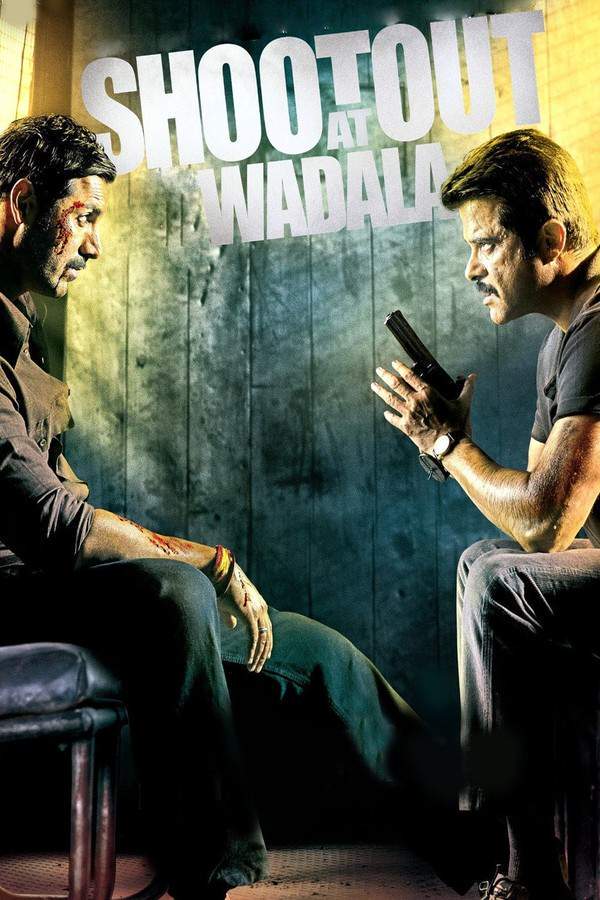
Shootout at Lokhandwala 2007

Directed by

Arbaaz Khan
Made by

White Feather Films
Where to Watch Shootout at Lokhandwala
See current US streaming, rental, and purchase options for Shootout at Lokhandwala (2007) via JustWatch.


Streaming availability powered by 
Shootout at Lokhandwala Plot Summary
Read the complete plot summary and ending explained for Shootout at Lokhandwala (2007). From turning points to emotional moments, uncover what really happened and why it matters.
In 1992, former chief justice Dhingra [Amitabh Bachchan] interviews the three leading members of Bombay’s Anti-Terrorism Squad (ATS): Shamsher S. Khan, Kaviraj Patil and Javed Sheikh to defend them in their upcoming inquiry. Khan explains that he hand-picked 27 of Bombay Police’s best enlisted men to help combat crime, borrowing the concept from the LAPD SWAT team. After Operation Blue Star in 1984, several Sikh extremists fled to Bombay and began establishing a base in the city, engaging in violence, extortion, and other subversive tactics. The death of his best officer at the hands of the extremists prompts Khan to obtain clearance from police commissioner Krishnamurthy to encounter those responsible for the officer’s death. Khan asks journalist Meeta Mattoo Dia Mirza to cover the incident to deter future incidents.
Maya, Vivek Oberoi, the second-in-command of the gangster Dawood Ibrahim, runs the latter’s criminal activities in Bombay with his gang. Maya’s ambitions are fueled by his mother Amrita Singh, to the point where he wishes to assert his independence from Dubai and take over Bombay for himself. Khan’s ATS focuses on Maya’s gang after a police informant connects them to a string of murders in the city. The ATS encounters one of Maya’s gang members, and Maya retaliates by killing the informant’s relative. The ATS contacts the gang members’ families to try and convince them to surrender, but the gang threatens and attempts to bribe the members of the ATS in return. Maya, meeting Khan, tells him to keep their families out of it.
When prominent city builder Wadhwani Shri Vallabh Vyas refuses to pay Maya Rs. 40 million in protection money, claiming to deal directly with Dubai, Maya kidnaps Wadhwani’s son. Wadhwani complains to the boss, who asks Maya to return the child immediately. Maya refuses, stating that he has upped his demands and that he wants control of Bombay. Tipped off by an informant (who, Dhingra alleges, called from Dubai), Khan learns that Maya’s gang is located at a flat in Swati building in Lokhandwala Complex, Andheri. In November 1991, the ATS lays siege on the building with a large force of police. The police kill Wadhwani’s son, allowed to leave by Maya to see if any from his flat will be allowed to surrender. During the subsequent shootout, Maya’s gang tries to escape by various means, contacting Dubai, bribing a senior officer to intervene on their behalf, and even firing a rocket-propelled grenade as a distraction, but fail. Maya and each member of his gang is eventually killed.
While critical of Khan and the ATS throughout the interview, during their inquiry, Dhingra defends them in court by pointing out that the likes of Khan are necessary to safeguard the public against criminals. Khan and the ATS are acquitted.
Shootout at Lokhandwala Timeline
Follow the complete movie timeline of Shootout at Lokhandwala (2007) with every major event in chronological order. Great for understanding complex plots and story progression.
Blue Star aftermath drives action in Bombay
Following Operation Blue Star in 1984, Sikh extremists flee to Bombay and violence and extortion surge in the city. The death of Khan's best officer at the hands of the attackers spurs him to act, and he seeks clearance from the police commissioner to confront those responsible. This sets the stage for a targeted crackdown on organized crime in the city.
ATS formed and elite unit recruited
To counter the rising threats, Khan forms the ATS by hand-picking 27 of Bombay Police's best enlisted men, inspired by the LAPD SWAT concept. He believes a focused, elite unit can tackle organized crime and terrorism more effectively. He presents the plan to the police commissioner to secure the necessary support and authority.
Clearance to confront the criminals obtained
To confront the criminals responsible for his officer's death, Khan obtains formal clearance from Police Commissioner Krishnamurthy, giving the ATS its mandate. This authorization legitimizes their upcoming operations against the syndicate. The unit prepares for a high-stakes confrontation with armed criminals in the city.
Meeta Mattoo brought in to cover the crackdown
Khan asks journalist Meeta Mattoo to cover the impending operation to deter future violence and bring public attention to the crackdown on crime. Her presence adds a media dimension to the ATS's actions and the city’s response. The intention is to pressure criminal networks through public scrutiny.
Maya rises within Dawood Ibrahim’s network
Maya, the second-in-command of Dawood Ibrahim's syndicate, runs the gang's operations in Bombay while seeking independence from Dubai and greater control over the city. His ambitions put him at odds with the police and the growing push to curb gang violence. The conflict with the ATS becomes a central focus of the crackdown.
Informant ties Maya’s gang to a string of murders
An informant connects a string of murders in the city to Maya's gang, drawing the ATS’s attention and signaling a direct threat to public safety. The linkage justifies intensifying surveillance and raids against the gang’s operations. The investigation narrows to Maya’s network as the primary target.
ATS confronts a gang member; retaliation escalates
The ATS closes in on a gang member, triggering Maya to retaliate by killing the informant’s relative. The violence underscores the brutal stakes of the confrontation and the risk to officers working to dismantle the network. Tensions between law enforcement and the gang escalate rapidly.
Families targeted; threats and bribes intensify
The ATS reaches out to the gang members’ families to persuade surrender, but Maya’s crew escalates the conflict by threatening officers and attempting to bribe them. The exchange reveals the gang’s willingness to deploy pressure beyond the battlefield. Public safety considerations become a central concern for the crackdown.
Tip-off locates Maya’s flat in Lokhandwala
An informant tips off authorities that Maya's gang is located in a flat in Swati building, Lokhandwala Complex, Andheri, triggering a focused police operation. The tip creates a concrete target for the ATS’s siege plan. The city watches as the noose tightens around the gang.
Siege on the flat begins
In November 1991, the ATS lays siege to the flat with a large force, intending to overwhelm Maya’s group. The operation draws on the unit’s training and planning to neutralize the threat with minimal collateral damage. The tense standoff showcases the city’s direct confrontation with organized crime.
Wadhwani’s son is killed during the siege
Wadhwani’s son is killed during the operation, an outcome the police contest and Maya’s persistence seems to justify. Maya had allowed the child to leave to see if any occupants would surrender, but tragedy still strikes. The event underscores the human cost of the confrontation.
Maya’s escape attempts and distraction tactics
The gang tries to escape by various means, including contacting Dubai and bribing a senior officer, and even firing a rocket-propelled grenade as a distraction. Despite these efforts, the siege tightens, and escape becomes increasingly unlikely. The standoff tests both sides’ resolve and endurance.
Maya and the gang are killed
Ultimately, Maya and every member of his gang are killed in the siege, bringing a violent chapter in Bombay’s crime war to a close. The operation eliminates the primary threat to the city’s safety from this network. The city breathes a sigh of relief as the immediate danger dissolves.
Inquiries and acquittals frame the aftermath
During the inquiry, Dhingra defends Khan and the ATS, arguing that such officers are necessary to safeguard the public. In court, Khan and the ATS are acquitted, highlighting the ongoing debate between strict policing and civil liberties. The case cements the narrative that bold, controversial measures can be vindicated over time.
Shootout at Lokhandwala Characters
Explore all characters from Shootout at Lokhandwala (2007). Get detailed profiles with their roles, arcs, and key relationships explained.
Shamsher Khan (Sanjay Dutt)
A veteran ATS figure who hand-picks a top team to battle organized crime after a key officer’s death. He drives the major operation against Maya’s gang with a pragmatic, risk-taking mindset, prioritizing public safety. While respected, his methods attract criticism during the inquiry, illustrating the moral ambiguities of enforcing order in a dangerous city.
Defence Lawyer Dhingra (Amitabh Bachchan)
The defense counsel who argues in court that the tough measures taken by Khan and the ATS were necessary to safeguard the public. He presents a pragmatic justification for extraordinary actions amid a tense crime environment. His performance frames the legal debate over whether law-and-order priorities can override civil liberties.
Maya Dolas (Mahindra 'Maya' Dolas) (Vivek Oberoi)
Leader of a Dawood Ibrahim–linked gang, Maya seeks to consolidate power over Bombay through violence and extortion. He breathes life into the city’s underworld, expanding his influence and showing a willingness to kidnap and intimidate to meet demands. His actions trigger the ATS siege, culminating in a deadly confrontation.
Meeta Mattoo (Dia Mirza)
A journalist recruited to cover the incident, Meeta serves as a narrative conduit and public-facing voice about the stakes of the confrontation. Her presence highlights the media’s role in shaping public perception and accountability. Through her reporting, the film explores how information can influence policy and deter future violence.
Wadhwani (Shri Vallabh Vyas)
A prominent city builder whose business interests intersect with the criminal underworld’s protection demands. His kidnapping underscores the conflict between power, money, and safety in a metropolis. The episode demonstrates how crime disrupts urban development and civic life.
Aayi (Amrita Singh)
Maya’s mother, whose presence hints at familial motivations behind the criminal enterprise. The film uses her character to illuminate the personal pressures and loyalties that can shape a young man’s path into crime. Her role reflects how family dynamics can feed the cycle of ambition and risk.
Inspector Kaviraj Patil (Suniel Shetty)
A senior police inspector who oversees aspects of the operation, coordinating with the ATS and other units. He embodies the procedural side of the siege, balancing strategy with on-the-ground realities. His involvement underscores the collaborative effort required to confront a large criminal network.
Javed Shaikh (Arbaaz Khan)
A member of Maya’s gang who represents the organized-crime network’s internal structure. His role highlights the hierarchy and loyalty-driven dynamics that sustain illicit activity. His actions contribute to the gang’s violent resistance against law enforcement.
Sub-Inspector Mhatre (Abhishek Bachchan)
A young ATS officer who participates in the raid and its operational decisions. His perspective reflects the younger generation of police and the pressures they face in dangerous assignments. He contributes to the overall depiction of officer commitment amid intense risk.
Fatim 'Fattoo' Dolas (Rohit Roy)
A key figure within Maya’s gang, Fattoo embodies the underworld’s drive for control and retaliation. His presence emphasizes the gang’s organizational depth and willingness to escalate violence to protect interests. His arc intersects with the siege and the law-and-order response.
Shootout at Lokhandwala Settings
Learn where and when Shootout at Lokhandwala (2007) takes place. Explore the film’s settings, era, and how they shape the narrative.
Time period
1991–1992
The story unfolds in the early 1990s Mumbai, culminating in a November 1991 siege and an inquiry carried into 1992. It references the post-1984 context of organized crime and police response in the city. The period is marked by aggressive law-enforcement tactics and a volatile crime landscape that influences both the investigation and courtroom proceedings.
Location
Lokhandwala Complex, Andheri, Bombay (Mumbai)
The action centers on the Lokhandwala Complex in Andheri, a dense Mumbai neighborhood that becomes the backdrop for a high-stakes police siege. The setting reflects a sprawling, crowded metropolis where crime intersects with everyday urban life. It’s a gritty urban landscape that shapes how the ATS conducts operations and how civilians are affected by the violence.
Shootout at Lokhandwala Themes
Discover the main themes in Shootout at Lokhandwala (2007). Analyze the deeper meanings, emotional layers, and social commentary behind the film.
🚓
Law & Order
The ATS operation showcases rapid, coordinated policing and strategic planning to neutralize a violent gang. The film highlights the tension between protecting the public and the potential collateral harm of aggressive tactics. It presents officers as both determined defenders of safety and fallible participants within a controversial system. The eventual acquittal in court adds a layer of debate about the legality and morality of swift, forceful action.
💣
Crime & Power
Maya Dolas leads a ruthless criminal network aiming to seize control of Bombay through extortion and violence. The summary details how the gang uses threats against families and bribery to resist law enforcement. The pursuit exposes the brutal cost of organized crime and the police effort to dismantle it. The siege outcomes underscore the human and political stakes behind power struggles in a megacity.
📰
Media
journalist Meeta Mattoo is brought in to cover the incident, signaling the media’s role in shaping public perception and deterrence of future violence. The film uses Meeta’s reporting to reflect how information can influence policy and accountability. Coverage helps frame the narrative around law enforcement actions and the ethical questions they raise. The press becomes a lens through which the audience understands the events and their consequences.
⚖️
Justice
Defence Lawyer Dhingra defends the ATS in court, arguing that such measures are necessary to safeguard the public. The film examines the legitimate use of extraordinary police powers and the costs to civil liberties. It presents a legal defense that praises public safety while acknowledging systemic imperfections. The acquittal of Khan and the ATS invites reflection on whether ends justify means.

Coming soon on iOS and Android
The Plot Explained Mobile App
From blockbusters to hidden gems — dive into movie stories anytime, anywhere. Save your favorites, discover plots faster, and never miss a twist again.
Sign up to be the first to know when we launch. Your email stays private — always.
Explore the mobile appShootout at Lokhandwala Spoiler-Free Summary
Discover the spoiler-free summary of Shootout at Lokhandwala (2007). Get a concise overview without any spoilers.
In the scorching summer of 1991, Mumbai’s glittering skyline is shadowed by a tense quiet that settles over the Lokhandwala Complex. A modest flat in the high‑rise swarms with whispered rumors of a hidden fortune—₹70 lakh tucked away behind locked doors—while the city’s streets pulse with the uneasy rhythm of a metropolis on the brink. The atmosphere is heavy with the scent of heat and anticipation, the kind that turns ordinary neighborhoods into unwitting stages for a drama that could reshape the balance of power.
Enter the city’s determined law‑enforcer, Shamsher S. Khan, an Assistant Commissioner of Police whose reputation for relentless resolve is matched only by his willingness to import a new breed of tactical thinking. Hand‑picking a cadre of the Bombay Police’s finest, he fashions a unit that bears the hallmark precision of a SWAT team, yet is steeped in the chaotic energy of Mumbai’s streets. As the operation takes shape, the ATS’s own internal dynamics surface, with senior figures such as Kaviraj Patil and Javed Sheikh adding layers of experience and calculated caution to the unfolding plan. Their collective purpose is clear: to confront a threat that has long lingered in the shadows, now edging toward the open.
Across the divide, the criminal element gathers in the same building, led by the ambitious Maya and his close associate Dilip. Their gang, a tightly knit cohort that has managed to amass the hidden cash, radiates a mixture of street‑wise savvy and daring aspiration. Their motives, hinted at but never fully disclosed, suggest a yearning for influence that extends beyond the confines of their concrete stronghold. Adding a further twist to the tension, journalist Meeta Mattoo circles the story, drawn by the promise of a narrative that could expose the underbelly of the city and perhaps deter future bloodshed.
The stage is set for a clash that reverberates far beyond the walls of a single flat. Mumbai itself becomes a character, its bustling avenues and quiet apartments transformed into a war‑zone where law and lawlessness stare each other down. The looming confrontation promises to hold the nation’s attention, casting a long, uncertain shadow over the city’s fragile equilibrium.
Movies with Similar Twists and Themes
Uncover films that echo the narrative beats, emotional arcs, or dramatic twists of the one you're exploring. These recommendations are handpicked based on story depth, thematic resonance, and spoiler-worthy moments — perfect for fans who crave more of the same intrigue.




Featured on this page

What's After the Movie?
Not sure whether to stay after the credits? Find out!
Check out our other apps:

SAT Sphere
Build confidence for the Digital SAT.

Mori Atlas
Discover wild places worth protecting.

Luntero
Search smarter for a home in Amsterdam.

Plot Explained
Unravel movie endings and hidden clues.

Pokechamp
Dive into Pokémon data and battle logic.

Driving Theory
Get ready for your European theory test.

Movie Dust
Plan your next cinema trip with ease.

Musemap
Find art and culture as you travel.

Selkobase
Compare credentials before committing.

Local Manual
Turn an unfamiliar country into practical next steps.

Lernavi
Compare school systems before your next move.

GymRoam
Find a workout stop wherever your plans take you.
Explore Our Movie Platform
New Movie Releases (2026)
Famous Movie Actors
Top Film Production Studios
Movie Plot Summaries & Endings
Major Movie Awards & Winners
Best Concert Films & Music Documentaries
Movie Collections and Curated Lists
© 2026 What's After the Movie. All rights reserved.
Privacy Policy