
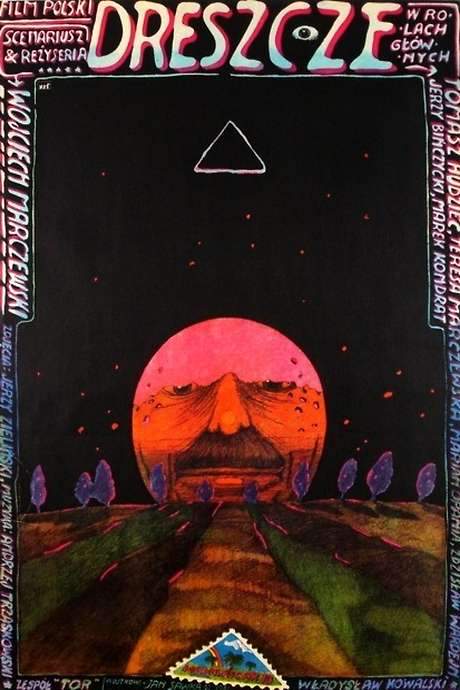
What Is Shivers About?
The premise of Shivers in 328 words, with nothing given away. The full story follows below.
In the grey‑washed streets of 1955 Poland, the nation moves to the relentless rhythm of a state that demands conformity above all else. Public squares echo with marching bands and the occasional hymn, while homes are suffused with a quiet, weary endurance. The film paints a world where ideology seeps into every cracked window and classroom blackboard, creating an atmosphere that feels simultaneously intimate and suffocating. The visual palette is muted, the soundscape a blend of distant propaganda chants and the soft murmur of everyday life, all of which set a tone of restrained tension.
At the heart of this world is Tomek, a young boy whose childhood is marked by the ordinary – school, family meals, and the small wonders that spark his curiosity. His home offers a fragile steadiness, yet the looming presence of the government begins to intrude on the most personal corners of his life. School becomes a workshop for obedience, where teachers recite rigid curricula and suppress the classics that once kindled imagination. Through Tomek’s eyes we sense the subtle erosion of innocence as the expectations of loyalty and duty begin to reshape his thoughts.
A new figure appears in Tomek’s journey: the Guide, a stern yet oddly compassionate overseer of the pioneer youth program. She embodies the state’s desire to mold its youngest citizens, orchestrating rituals, drills, and a constant monitoring that blurs the line between guidance and surveillance. Under her influence, Tomek is drawn deeper into a collective that prizes public allegiance over private yearning, prompting a quiet inner conflict between the world he is being taught to love and the lingering echoes of his own emerging desires.
The film lingers on that uneasy balance, exploring how a boy’s path to adulthood can be redirected by forces both visible and invisible. It is a meditation on memory, obedience, and the subtle ways a regime can reshape not just a society, but the very way a single mind perceives itself within it.
What Happens in Shivers?
The complete story of Shivers, from the first scene to the last, in 651 words (about 3 minutes). Spoilers throughout. Names in the text link to 1 cast member page.
Spoilers ahead
Tomek Tomasz Hudziec is a boy growing up in 1955 Poland, where his home life feels steady but wearying, and a tiny Madagascar stamp tucked away in his father’s books becomes a quiet beacon of curiosity. At school, a melancholy poetry teacher mourns that the government won’t let him teach many of Poland’s great classics, and a ruthless moment shatters innocence: when a window is slammed shut on a boy’s fingers during a prank, the fall that ensues seems to presage a harsher world to come. A new teacher soon arrives, delivering a rigid, Stalinist curriculum that the students cannot escape, turning school into a workshop for obedience where extracurriculars are mandatory and framed as part of a nationwide youth program.
On the way back from one of these drilled excursions, the class, now marching under red neckerchiefs, is forced to push through a street filled with churchgoers singing hymns, a vivid display of how state ideology collides with faith and daily life. The following day, Tom awakens to the shock of a police raid on his home; his father is hauled away to prison, and the stamp—his small, revelatory keepsake—vanishes into the chaos. Soon after, a female Guide from the pioneer camp arrives to recruit him, marking the start of a life that will feel governed by surveillance, ritual, and rumor. The Guide leads him into a world that feels both organized and suffocating, where discipline is maintained by a constant emphasis on loyalty and “duty.”
In the camp, Tom is quickly noticed by Jerzy [Jerzy Binczycki] and his friend Kazimierz Domagała [Krzysztof Kozłowski], who assume a position of control over their peers. The camp’s meals unfold under watchful eyes, and a dramatic moment when a window is smashed by a rock outside propels a harsh demand: the pioneers must identify the provocateur. All but Tom bolt into the street, and the Guide later excuses the misstep while insisting the children were acting on their supposed duty. As the days pass, Jerzy, Kazimierz, and Tom drag Dominik into their “secret base,” where alcohol and a Western radio become their crackling link to the world beyond their borders. Tom learns of the Poznań protests from these late-night broadcasts, and the seeds of intense ideological fixation take root.
Tom’s devotion to the Guide intensifies as the education system grows ever more conspiratorial: snitching on parents, filing reports about classmates, and repeating party lines become daily tasks. The stamp is dropped in front of another student, who uses it to accuse Tom of harboring colonialist views, but the Guide steps in, directing Tom to read a book on theory and to reflect on his loyalties. He overhears a tense exchange between the headmaster and the Guide over the Poznań protests, and when she catches him in a hallway, she offers him emotional support that paradoxically deepens his bond with her and the ideology she embodies. Tom’s transformation accelerates—he becomes a fervent voice for the movement, even when his father returns home and pleads for him to come back to ordinary life; Tom refuses, uttering slogans that echo through the corridors of power.
The Guide’s influence continues to unsettle him, and a stark ritual moment—Tom praying before a portrait of Bierut, with a cross that once hung nearby—signals a broader, darker shift in his inner life. The pioneer organization is abruptly dissolved, and the children are packed onto trucks to return home; in the scramble, Tom loses a Marx portrait and, in a frantic attempt to recover it, watches a counselor cast it aside. The final, quiet image is stark and haunting: Tom presses his Madagascar stamp onto the window of the departing train, a solemn, almost defiant gesture that cements his hard-won complicity with the world he’s been drawn into. The film lingers on the tension between personal memory and public obedience, a memory that will follow Tom long after the journey ends.
Shivers Timeline: Every Key Event in Order
13 key events in the order they happen, from “Tom finds a Madagascar stamp in his father's books” to “Final image: Madagascar stamp on the train window”. 13 events name a place, across 11 locations.
- 1
Tom finds a Madagascar stamp in his father's books
Tom, a boy living in Poland in 1955, discovers a small Madagascar stamp hidden in his father's library. The discovery sits alongside his mundane, tiresome home life and hints at a wider world beyond his daily routine. The stamp becomes a subtle motif that foreshadows his later entanglement with political ideology.
When:1955 Where:Tom's family home, Poland
- 2
A tragedy in the classroom: a hat, a window, a fall
During a poetry lesson, bullies throw a boy's hat out of the window. When the boy climbs out to retrieve it, the teacher closes the window on his fingers, causing him to fall several floors and sustain serious injuries. The incident exposes the volatile climate of the school under an oppressive regime.
When:1955 Where:School classroom
- 3
A new Stalinist teacher arrives and tightens control
A new teacher arrives, teaching strict Stalinist theory and struggling to control the unruly class. He still pushes mandatory extracurriculars, like agricultural work in a communist youth program. The class is forced to march in line, even walking against a crowd of churchgoers during a demonstration of state loyalty.
When:1955 Where:School
- 4
Secret police raid; Tom's father is imprisoned
The next day, Tom wakes to a raid by the secret police. His father is beaten and taken away to prison, and Tom witnesses the confiscation of his father's stamp book. The event marks a blunt entry into a world of state repression for the family.
When:1955 Where:Tom's home
- 5
Pioneer camp is introduced; Tom is chosen by a Guide
Representatives from a pioneer camp visit the school, and Tom is chosen by a female Guide to join. Life in the camp is strict, militarized, and heavily surveilled, signaling the shift from family to collective identity under the regime.
When:1955-1956 Where:Pioneer camp
- 6
The first camp dinner: a riot and a duty
At the first dinner, a window is smashed by a rock from outside, and the pioneers are ordered to apprehend the provocateur. Most of the group floods outside, and the Guide is later reprimanded yet urges the pupils to see catching the provocateur as their duty.
When:1955-1956 Where:Pioneer camp dining hall
- 7
Dominik is bullied; Jerzy and Kazimierz set the tone
Dominik is bullied by Jerzy and Kazimierz, framed as an interrogation of pro-communist lines. Tom watches as the older boys exercise control through intimidation, establishing a climate of fear within the camp.
When:1955-1956 Where:Pioneer camp
- 8
Tom discovers a 'secret base' and Western radio
Jerzy and Kazimierz take Tom to their secret base, where they drink and listen to a Western radio. Tom learns of the Poznań protests, broadening his exposure to dissent and shaping his growing ideological ambitions.
When:1956 Where:Secret base
- 9
Indoctrination intensifies; reports and fear
Pioneer education tightens as Tom is urged to read theory and report on classmates. He is told to monitor and report back, and he overhears the headmaster arguing with the Guide about the Poznań protests, who then comforts him as the regime tightens its grip.
When:1956 Where:Guide's office/corridor
- 10
Dominik's tragedy and Tom's confession
Days later, Dominik commits suicide after the mounting pressure in the camp. Tom exposes Jerzy and Kazimierz to the authorities in a bid to distance himself from their actions, attempting to separate himself from their influence.
When:1956 Where:Pioneer camp
Show the other 3 events of Shivers Hide the last 3 events
- 11
A turn to ideology; promotion and family pressure
Despite fears of expulsion, Tom is rewarded with a promotion to the executive council for his role in rooting out perceived 'dangerous enemies'. His father is freed from prison, but Tom refuses to return home, choosing to embrace the party line and the Guide's influence. A disturbing dream sequence hints at his deepening indoctrination.
When:1956 Where:Camp and home
- 12
Dissolution and the long walk home
The pioneer organization is abruptly dissolved, and the children are loaded onto trucks to be driven home. Tom loses a portrait of Marx amid the chaos, and a counselor discards it as the old symbols fade under a new reality.
When:1956 Where:Town streets; trucks
- 13
Final image: Madagascar stamp on the train window
In the film's final moment, Tom pastes his Madagascar stamp to the window of a train, a small but stubborn link to the past as the future looms. The act closes the loop on the stamp that started his journey and marks the end of his childhood under a changed political world.
When:Ending Where:Train
Who Are the Main Characters in Shivers?
13 characters, among them Tomek Zukowski (Tom), Jerzy and Kazimierz Domagała: who each one is and the part they play in the story. 11 of them link to the actor’s page.
- TZ
Tomek Zukowski (Tom)
Played by Tomasz Hudziec
A curious, bookish boy whose interest in a Madagascar stamp hints at a wider, more imaginative world. He is drawn into the school’s and camp’s rigid ideology, gradually becoming an adherent and even a zealot as he seeks approval from the Guide. His arc tracks a troubling transformation from open-mindedness to ideological fanaticism, culminating in a passion for regime slogans and a distorted sense of belonging.
- 🧠 Curious
- 🧭 Indoctrinated
- 🗝️ Loyalist
- J
Jerzy
Played by Jerzy Binczycki
An older, aggressive student who bullies Dominik and aligns with Kazimierz to enforce group norms. He embodies the pressure to conform and uses intimidation to police peers and dissent. His actions escalate the climate of fear that drives Tom deeper into the Pioneer movement.
- ⚔️ Aggressive
- 🧭 Conformist
- 🗡️ Coercer
- KD
Kazimierz Domagała
Played by Krzysztof Kozłowski
A close ally of Jerzy, equally willing to participate in bullying and coercive behavior to maintain group control. He helps orchestrate the punitive dynamics that push Tom toward radical ideology. His presence demonstrates how peer pressure can propel collective conformity.
- ⚔️ Bully
- 🧭 Conformist
- 🗣️ Influencer
- G(
Guide (Girl guide)
Played by Teresa Marczewska
A camp counselor who selects Tom and becomes a central figure in his emotional and ideological development. She enforces rules and supervises the children, but also becomes a focal point of Tom’s longing for approval. Her correspondence with Tom hints at a complicated and troubling dynamic.
- 🧭 Authority
- 🎒 Camp leader
- 🗣️ Gatekeeper
- D
Dominik
A fellow camper who is bullied by Jerzy and Kazimierz and becomes a tragic figure when he is beaten and ultimately commits suicide. His suffering highlights the brutal cost of the regime’s insistence on conformity and loyalty.
- 💔 Victim
- 🚩 Target
-

Tutor
Played by Marek Kondrat
A figure representing the state-approved education system, he delivers strict Stalinist theory and enforces obedience among the students. His presence underscores the institutional authority behind the indoctrination arc.
- 🏫 Authority
- 🎓 Educator
- F
Father
Played by Władysław Kowalski
Tom’s father, who is imprisoned during the crackdown on dissent, symbolizing the regime’s reach into the private sphere and the personal costs of political loyalty.
- 👨👦 Parental
- 🗝️ Victim of crackdown
- M
Mother
Played by Teresa Sawicka
Tom’s mother, who witnesses the raid and the family’s destruction under state pressure, representing the domestic impact of political repression.
- 👩👦 Family
- 💔 Suffering
- DO
Director of the Training Center
Played by Zygmunt Bielawski
The administrator who oversees the pioneer program and embodies the regime’s control over youth education and activities.
- 🏫 Administrator
- 🧭 Regime figure
- I
Inspector
A law-and-order figure who participates in the crackdown on perceived dissent and the enforcement of ideological conformity.
- 👮 Authority
- 🕵️♂️ Enforcement
- UO
UB Officer
Played by Bogusław Linda
A member of the state security apparatus who participates in the raid and the suppression of dissent within the family and school.
- 🕵️ Surveillance
- 🧨 Repression
- TM
Tadek's mother
Played by Małgorzata Pritulak
A minor character reflecting the civilian social environment around the school and camp, illustrating how families are caught up in the regime’s machinery.
- 👩👦 Family
- 🧭 Social pressure
- GG
Girl guide (Bridesmaid)
Played by Marlena Andrzejewska
A secondary character symbolizing the social fabric that reinforces conformity within the camp culture.
- 👫 Social role
- 🏷️ Conformist
Where and When Is Shivers Set?
Shivers is set in Poland, School and Pioneer camp (1955). Here is why the time and place matter to the story.
When
1955
The story unfolds in 1955 Poland, a period when the communist regime tightly restricted education and public life. Youth organizations and compulsory activities demonstrate the regime’s efforts to mold the next generation. The narrative also references the Poznań protests of 1956, signaling growing discontent and the regime’s fragility.
Where
Poland, School, Pioneer camp
Shivers is set across key spaces in 1950s Poland: a modest family home, a state-run school, and a tightly controlled pioneer camp. These places are depicted as tightly policed environments where dissent is punished and loyalty to the regime is demanded. The school and camp operate as ideological engines, blending propaganda with surveillance to shape daily life. The setting highlights the strain between private life and state doctrine in a society under strict control.
- 🇵🇱 Poland
- 🏫 School
- 🕊️ Cold War era
What Are the Themes of Shivers?
3 ideas the story keeps returning to, among them Indoctrination, Surveillance and Loss of Innocence.
-
01
Indoctrination
The Pioneer camp, teachers, and the Guide impose a rigid ideology that reshapes Tom from a curious, impressionable boy into a devoted participant. Through lessons, books, and monitored correspondence, he is steered toward unquestioning loyalty to the regime. The drive to conform is reinforced by selective punishment and rewards, narrowing his view of the world. The theme shows how institutions use education and community to manufacture ideological fidelity.
-
02
Surveillance
Everyday life is surveilled: teachers monitor letters, councils interrogate, and the secret police raid the family home. The camp reinforces this scrutiny with peer reporting and public displays of loyalty. The pressure to snitch on classmates and even parents demonstrates how dissent is policed from within and without. Surveillance becomes a constant, shaping behavior as much as any explicit punishment.
-
03
Loss of Innocence
Tom’s arc runs from innocent curiosity to troubling ideological fervor, reflecting the erosion of childhood autonomy under totalitarian pedagogy. The bullying of Dominik, his friends’ coercion, and a forced climate of fear strip away innocence as the group prioritizes conformity over individuality. The dissolution of the Pioneer movement and Tom’s fixation on ideological icons mark a painful, disillusioning transformation. The narrative culminates in a youth corrupted by propaganda and family estrangement.
What Kind of Film Is Shivers?
Dark in tone, with steady pacing and a moderate story, going by the plot summary.
- Tone
- Dark
- Pacing
- Steady
- Story
- Moderate
- Intensity
- High
- Ending
- Bleak
A relentlessly grim and unsettling drama about a boy's psychological indoctrination under a brutal socialist regime, creating a heavy, oppressive atmosphere of lost innocence and irreversible moral compromise.
- oppressive
- melancholic
- anxious
- somber
- claustrophobic
- grim
- political indoctrination
- coming of age
- loss of innocence
- totalitarianism
Content notes: political imprisonment, child indoctrination, implied suicide, psychological manipulation.
Quiz
How well do you remember Shivers? Test yourself on the story.

