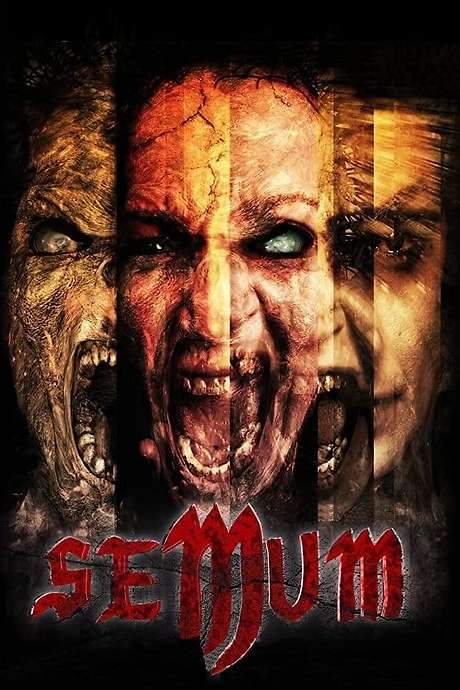
Semum 2008

Directed by

Hasan Karacadağ
Made by

Semum Plot Summary
Read the complete plot summary and ending explained for Semum (2008). From turning points to emotional moments, uncover what really happened and why it matters.
Canan [Ayça İnci] and her husband Volkan [Burak Hakkı] have just moved into a spacious, brand-new house, hoping to begin their life together with a sense of fresh possibility. The early days unfold with inviting normalcy: the couple settles in, routines form around the quiet rhythms of a new home, and the dream of a peaceful beginning feels within reach. Yet beneath the surface, Canan starts to notice odd, inexplicable happenings — small sounds, fleeting shadows, and a chill in rooms that should feel warm and safe. These sensations are easy to explain away at first, but they steadily grow more persistent and unsettling, leaving Canan increasingly unsettled as she struggles to understand what is happening to her.
A mysterious and malicious being, Semum [Nazlı Ceren Argon] takes control of her body and actions, and the atmosphere of the house shifts from uneasy to alarming. Canan’s behavior begins to change in ways she cannot anticipate or explain, and the people closest to her notice a growing distance between the woman they know and the person who now seems to be inhabiting her. The first part of the film follows Canan’s life as it is gradually upended by the demon’s influence. The once familiar home becomes a stage for fear, with intimate moments turning tense and fragile, and the couple’s trust strained as Canan’s choices start to diverge from the life she once envisioned. The sense of threat is not merely external; it seeps into everyday moments, turning ordinary conversations and routines into occasions for dread.
As the story moves into its second half, the tone broadens to engage with larger questions about faith, goodness, and the nature of evil through an Islamic lens. To guide these conversations, Mikail Hoca [Cem Kurtoğlu] enters the narrative, offering discussions about the nature of God, the meaning of good and evil, and the existence of the Devil. Through his dialogues, the film situates Canan’s personal ordeal within a wider spiritual framework, inviting viewers to consider how belief systems respond to fear and the unknown. The hospital-like precision of the medical explanations gives way to theological reflection, as characters grapple with questions that go beyond the surface of possession and into the realms of faith, doubt, and the human struggle to keep hold of one’s identity.
Within this cosmology, the demons are connected to ʿAzāzīl, a name that appears in Islamic tradition and is associated with Satan (Iblīs). The narrative uses this reference to frame the horror not merely as a personal affliction but as part of a larger spiritual contest between divine power and malevolent forces. The film acknowledges its roots in Islamic folklore while presenting its own cinematic interpretation of these timeless tensions. Director Hasan Karacadağ has asserted that Semum is an independent work, even as it nods to familiar exorcism tropes found in Western cinema. The result is a film that seeks to honor its cultural context by exploring fear through a distinctly Islamic lens rather than simply mirroring a Western template.
Throughout the drama, the study of fear is inseparable from the examination of faith. The house, once a symbol of safety and partnership, becomes a proving ground where Canan must confront not only the demon that has seized her but also the questions that arise when human vulnerability intersects with the unseen. The interactions with Mikail Hoca and the unfolding discourse about God and the Devil create a tension between the intimate, domestic horror and the broader metaphysical discussion that the film elevates as its central concern. By pairing a personal crisis with theological inquiry, Semum invites viewers to reflect on how people respond when faced with forces beyond their control and what it means to hold onto humanity in the face of possession.
In the end, the film presents a careful balance between atmosphere and idea, using the stark contrast between the couple’s everyday life and the supernatural menace to examine how fear can surface from within and how belief can shape the way that fear is understood and confronted. The result is a work that remains attentive to its characters — especially Canan, whose ordeal tests the strength of her own sense of self — while offering a thoughtful meditation on the interplay between faith, morality, and the mysteries of evil.
Semum Timeline
Follow the complete movie timeline of Semum (2008) with every major event in chronological order. Great for understanding complex plots and story progression.
Move into the new house
Twenty-seven-year-old Canan and her husband Volkan have just moved into a large, new house. At first their life seems to settle into a quiet routine, but Canan starts noticing strange, unexplained occurrences around the home. The new house becomes the uneasy cradle of the film's creeping sense of danger.
Strange phenomena begin
Canan begins to experience unusual phenomena that she cannot explain—a sense of presence, odd noises, and small disturbances she cannot account for. The events feel increasingly personal, targeting her daily life and sense of safety. The house becomes a space of growing dread as these experiences intensify.
Possession begins
Gradually, Canan's behavior shifts as a mysterious force takes control of her body. The changes are alarming and visible, with Semum becoming the driving presence behind her actions. Volkan watches helplessly as his wife is pulled further into this unseen influence.
Life and marriage unravel
Canan's life and their marriage begin to deteriorate under the demon's grip. Normal routines unravel as her personality darkens and trust between the couple erodes. The home that once held their future now feels like a battleground against an unseen foe.
Demon’s oppression centers the first part
The first part of the film centers on Canan's life being ruined by the mysterious demon. Her dawning fear becomes a public nightmare, affecting her work, social life, and sense of self. The narrative uses her escalating misery to frame the demon as the antagonist of Part I.
Transition to metaphysical questions
The film begins transitioning into metaphysical questions as it moves beyond ordinary haunting. Conversations hint at religious and existential frameworks for understanding evil. The shift prepares the audience for deeper debates rather than simple exorcism.
Hoca appears and frames the struggle spiritually
A Hoca appears and frames the struggle in spiritual terms, presenting God as a source of guidance. He introduces faith, prayer, and moral order as possible responses to the demon's possession. This scene marks a turning point toward theological consideration rather than purely supernatural events.
Demon identified with Islamic tradition
The demon is connected to Islamic tradition, identified as ʿAzāzīl, an alternate name for Satan (Iblīs). The Hoca explains this lineage to frame Semum within a cosmology of good and evil. The audience is invited to view the haunting through a religious lens rather than only fear.
Discussions on faith, evil, God, and Devil
Discussions explore how faith, free will, and divine justice intersect with Canan's affliction. The dialogue delves into whether suffering is a test, a warning, or a struggle against an internal nemesis. The metaphysical questions challenge the characters to redefine what is truly happening to Canan.
Religious interventions and hope
Religious interventions appear as characters seek relief through prayer, study, and guidance from the Hoca. The attempts mix ritual with personal fear as the family grapples with the demon's grip. The scenes emphasize faith as a potential counterforce against evil.
Intensified struggle and transformation
The struggle intensifies as Semum tightens its control over Canan's body. The transformation becomes more pronounced, blurring the line between illness and possession. Volkan and the Hoca confront the demon in hopes of freeing her, though the outcome remains uncertain.
Ending with philosophical reflections
The film closes with philosophical reflections rather than a definitive exorcism. It leaves viewers considering the nature of evil, God, and human agency within an Islamic framework. The ending ties the personal horror to broader metaphysical questions raised throughout the narrative.
Semum Characters
Explore all characters from Semum (2008). Get detailed profiles with their roles, arcs, and key relationships explained.
Canan (Ayça İnci)
Twenty-seven-year-old Canan moves into a large new house with her husband and gradually becomes subjected to strange disturbances. She slowly yields to an evil force named Semum, losing control of her actions. The transformation reveals her vulnerability and inner struggle as fear and manipulation take hold.
Volkan (Burak Hakkı)
Canan's husband who relocates with her to the new house. He remains supportive while growing increasingly distressed by the strange changes in his wife. His role centers on trying to protect Canan and navigate the escalating upheaval.
Mikail Hoca (Cem Kurtoğlu)
An imam figure who appears in the latter part of the film to discuss faith, God, and the Devil. He represents spiritual authority and attempts to interpret the metaphysical questions the story raises. His presence anchors the Islamic perspective within the narrative.
Semum (Nazlı Ceren Argon)
Semum is the malevolent demon that takes control of Canan's body, driving the central conflict. The entity embodies evil and serves as the tangible source of fear throughout the story.
Semum Settings
Learn where and when Semum (2008) takes place. Explore the film’s settings, era, and how they shape the narrative.
Location
the couple's new house
A large, newly built residence sits at the center of the story as Canan and Volkan move in. The modern home becomes a stage for unsettling disturbances that intensify as Canan's behavior changes. The setting juxtaposes everyday domestic life with a lurking, malevolent force. The house's claustrophobic atmosphere amplifies the fear and inevitability of the transformation.
Semum Themes
Discover the main themes in Semum (2008). Analyze the deeper meanings, emotional layers, and social commentary behind the film.
🌀
Possession
Possession drives the narrative as Canan's sense of self is overtaken by Semum. The film traces the slow erosion of will, pitting identity against an external malevolent power. This intrusion reframes fear as a tangible, intimate invasion rather than a distant threat. The demon's presence prompts questions about agency, control, and human resilience.
🕌
Faith and Doubt
Metaphysical questions are framed through Islamic beliefs, with a Hoca mediating the dialogue about God and the Devil. The narrative contrasts spiritual interpretation with fear-driven rationalization, inviting viewers to weigh belief and reason. The portrayal emphasizes the role of faith as a lens through which characters confront the unknown.
🏚️
Domestic Fear
The household becomes a crucible where normal life collapses into fear as eerie events unfold. Trust between Canan and Volkan is strained and tested by inexplicable forces. The story uses the home setting to build claustrophobic tension and an atmosphere of inescapable danger.

Coming soon on iOS and Android
The Plot Explained Mobile App
From blockbusters to hidden gems — dive into movie stories anytime, anywhere. Save your favorites, discover plots faster, and never miss a twist again.
Sign up to be the first to know when we launch. Your email stays private — always.
Explore the mobile appSemum Spoiler-Free Summary
Discover the spoiler-free summary of Semum (2008). Get a concise overview without any spoilers.
In the bustling streets of İzmir, a young couple steps into a freshly built house, hoping the blank walls will contain the promise of a new beginning. Their daily routine—unpacking, arranging furniture, sharing quiet moments—settles against the backdrop of a city that never truly sleeps. The modern setting feels ordinary, yet there is an undercurrent of something unsettled, as if the very air inside the home holds a whisper waiting to be heard.
Canan, newly married and eager to shape her future, begins to sense disturbances that defy explanation. Small, inexplicable sensations gradually give way to an oppressive feeling that something unseen is watching, nudging, and altering her perception of reality. Beside her, Volkan watches his partner’s growing unease with a mix of concern and helplessness, their once‑simple partnership strained by forces that cannot be named in ordinary conversation. As whispers of a malevolent presence known as Semum drift through the corridors, the couple’s world tilts toward a darkness that feels both intimate and overwhelming.
The film embraces a tonal fusion of classic horror dread and distinctly Islamic metaphysics. A learned Hoca appears as a spiritual guide, offering a framework that pits ancient concepts of good, evil, and divine will against the encroaching malevolence. This perspective roots the terror in cultural and religious symbolism, differentiating the story from Western exorcism narratives while echoing their existential questions. Cinematic lighting, lingering close‑ups, and a soundscape that blends urban clamor with eerie stillness all work to heighten the sense that something ancient is surfacing in a modern world.
Through measured pacing and a focus on the intimate dynamics between Canan, Volkan, and the unseen force, the movie cultivates a claustrophobic atmosphere that keeps the audience hovering between empathy and dread. The dread is never gratuitous; it is a slow, curious pull toward the unknown, inviting viewers to wonder how far the veil between the everyday and the supernatural can be stretched before it finally gives way.
Movies with Similar Twists and Themes
Uncover films that echo the narrative beats, emotional arcs, or dramatic twists of the one you're exploring. These recommendations are handpicked based on story depth, thematic resonance, and spoiler-worthy moments — perfect for fans who crave more of the same intrigue.
Featured on this page

What's After the Movie?
Not sure whether to stay after the credits? Find out!
Check out our other apps:

SAT Sphere
Build confidence for the Digital SAT.

Mori Atlas
Discover wild places worth protecting.

Luntero
Search smarter for a home in Amsterdam.

Plot Explained
Unravel movie endings and hidden clues.

Pokechamp
Dive into Pokémon data and battle logic.

Driving Theory
Get ready for your European theory test.

Movie Dust
Plan your next cinema trip with ease.

Musemap
Find art and culture as you travel.

Selkobase
Compare credentials before committing.

Local Manual
Turn an unfamiliar country into practical next steps.

Lernavi
Compare school systems before your next move.

GymRoam
Find a workout stop wherever your plans take you.
Explore Our Movie Platform
New Movie Releases (2026)
Famous Movie Actors
Top Film Production Studios
Movie Plot Summaries & Endings
Major Movie Awards & Winners
Best Concert Films & Music Documentaries
Movie Collections and Curated Lists
© 2026 What's After the Movie. All rights reserved.
Privacy Policy