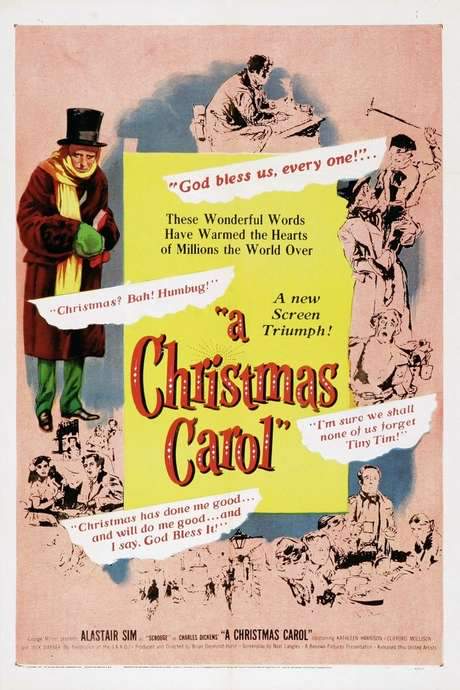
Scrooge 1951


Directed by

Brian Desmond Hurst
Made by

George Minter Productions
Where to Watch Scrooge
See current US streaming, rental, and purchase options for Scrooge (1951) via JustWatch.

Dove Amazon Channel
HD
Fawesome
HD
Kanopy
HD
Plex
HD
Plex Channel
HD
Tubi TV
SD
Amazon Video
SD Streaming availability powered by 
Scrooge Plot Summary
Read the complete plot summary and ending explained for Scrooge (1951). From turning points to emotional moments, uncover what really happened and why it matters.
On Christmas Eve, Ebenezer Scrooge Alastair Sim tells two businessmen that he has no intention of celebrating Christmas. He refuses to donate to two men collecting for the poor. His nephew, Fred Brian Worth invites him to dinner the next day, but Scrooge refuses, disparaging Fred for having married. Scrooge reluctantly gives his clerk Bob Cratchit Mervyn Johns Christmas Day off since there will be no business for Scrooge then, but Scrooge expects Cratchit back earlier the following day.
Scrooge returns home and is visited by the ghost of his seven-years-dead partner, Jacob Marley Michael Hordern. Marley’s ghost warns Scrooge that he must change his ways, or after death forever walk the earth bound in chains, as Marley does. Marley says Scrooge will be visited by three spirits, the first to arrive at one o’clock that night. Frightened, Scrooge takes refuge in his bed.
The Ghost of Christmas Past Michael Dolan arrives. Scrooge is shown himself alone at school, unwanted by his father after his mother died in childbirth. His beloved sister Fan Carol Marsh arrives to take him home, telling Ebenezer that their father has had a change of heart toward him. The Spirit shows Scrooge the annual Christmas party thrown by his former benevolent employer, S. Fezziwig Roddy Hughes. Scrooge watches his younger self propose to his sweetheart Alice Rona Anderson, who accepts. He is then shown how he is tempted to leave Fezziwig’s to join a business run by Mr. Jorkin Jack Warner.
Scrooge witnesses the death of Fan after she gives birth to Fred, and discovers he missed her last words asking him to look after her son. Scrooge’s younger self joins Jorkin and meets Jacob Marley. Jorkin’s firm buys Fezziwig’s business, and Alice breaks her engagement to Scrooge because of his dedication to “a golden idol.” When Jorkin is found to have embezzled funds from the now bankrupt company, Scrooge and Marley make good the missing funds, on condition they can control the company. One Christmas Eve, Scrooge refuses to leave work to visit a dying Marley. When Scrooge finally arrives, Marley, knowing he will be punished for his misdeeds, tries to warn Scrooge against his avarice. The Spirit reproaches Scrooge for taking Marley’s money and house, as an ashamed Scrooge finds himself back in his bed.
The Ghost of Christmas Present Francis de Wolff arrives. He takes Scrooge to see how “men of goodwill” celebrate Christmas. The spirit shows Scrooge poor miners joyfully singing Christmas carols and the Cratchits’ celebration on Christmas Day. Scrooge asks whether their ailing young son, Tiny Tim Glyn Dearman, will survive his physical disabilities. The Spirit hints that he will not unless the future is changed. Scrooge and the spirit then visit Fred’s Christmas party, where Fred defends Scrooge from his guests’ critical remarks.
An older Alice is working in a poorhouse, where she ministers to the sick and homeless. The Spirit shows Scrooge two emaciated children, personifying Ignorance and Want. When Scrooge shows concern for their welfare, the Spirit mocks him and scourges the miser with his own words: “Are there no prisons? Are there no workhouses?”
Finally, Scrooge encounters the Ghost of Christmas Yet to Come Czeslaw Konarski, who shows him the Cratchits mourning Tiny Tim’s death. Three people, including his charwoman Mrs. Dilber Kathleen Harrison, sell off the possessions of a dead man, and two businessmen joke they will only attend the man’s funeral if lunch is provided. When shown a gravestone bearing his own name, Scrooge begs the Spirit for a second chance; he then awakens in his bed.
Scrooge learns that it is Christmas Day, and gleefully realises he still has an opportunity to make amends. Though Mrs. Dilber is initially frightened by his transformation, Scrooge reassures her and promises to raise her salary. He anonymously purchases a prize turkey for the Cratchits and sends it to them. He delights Fred by attending his dinner party, asking his niece-in-law’s forgiveness and dancing with her. The next day, Scrooge plays a prank on Bob Cratchit and pretends to be about to fire him for lateness, but instead says he will raise Bob’s salary and assist his family. Scrooge embodies the Christmas spirit and becomes a second father to Tiny Tim, who recovers.
Scrooge Timeline
Follow the complete movie timeline of Scrooge (1951) with every major event in chronological order. Great for understanding complex plots and story progression.
Scrooge refuses donations and dismisses Fred
On Christmas Eve in his counting-house, Scrooge refuses to donate to the poor and dismisses Fred's invitation to Christmas dinner. He reluctantly grants Bob Cratchit Christmas Day off, but expects him back early the next day. The scene establishes his stubborn miserliness and disdain for Christmas.
Marley's warning and spirits foretold
Marley's ghost appears and warns Scrooge that he must change his ways, or he will wander the earth in chains after death. He tells Scrooge that he will be visited by three spirits, the first arriving at one o'clock that night. Scrooge is frightened and retreats to his bed.
Ghost of Christmas Past arrives – youth and family
The Ghost of Christmas Past arrives and takes Scrooge back to his youth, including his schooldays and his sister Fan's arrival to take him home. The journey reveals how family warmth once tempered his world view. The scenes unfold across different past places and times.
Fezziwig's Christmas party
The Spirit shows Fezziwig's generous Christmas party, highlighting how joyful leadership fosters communal goodwill. Young Scrooge witnesses the warmth and merriment of the staff and their manager. The scene contrasts with his later obsession with wealth.
Proposing to Alice and engagement breaks
During the past scene, Scrooge's younger self proposes to his sweetheart Alice, who accepts. The engagement falters as Scrooge's dedication to money grows. This moment underscores how love competes with his becoming a miser.
Temptation to join Jorkin's firm and Fezziwig's sale
The Spirit shows Scrooge being tempted to leave Fezziwig's to join Mr. Jorkin's business. Later, Jorkin's firm buys Fezziwig's business, foreshadowing how corporate greed reshapes Scrooge's path. The events deepen his preoccupation with wealth.
Alice breaks the engagement
Alice ends her engagement due to Scrooge's growing golden idol and fixation on money. The personal cost of his ambition becomes apparent as love is sacrificed. The past now bears the weight of lost happiness.
Jorkin embezzlement and cover-up
Jorkin is found to have embezzled funds from the now-bankrupt company, and Scrooge and Marley work to cover the missing money so they can take control. Their actions reveal the extent of their shared greed. The moment cements a morally compromised path.
Scrooge ignores dying Marley
One Christmas Eve, Scrooge refuses to leave work to visit a dying Marley. When Scrooge finally arrives, Marley, knowing his fate, tries to warn him against avarice. This missed chance underscores the stubbornness that history will later confront.
Ghost of Christmas Present arrives
The Ghost of Christmas Present takes Scrooge to see how people celebrate with goodwill. He witnesses miners joyfully singing and the Cratchits celebrating Christmas Day. The Spirit hints that Tiny Tim's life may depend on the future's changes, and they also visit Fred's party where Fred defends Scrooge.
Ignorance and Want; a harsher warning
The Spirit reveals two emaciated children, Ignorance and Want, lurking beneath the surface of society. When Scrooge shows concern, the Spirit mocks him and chides him for ignoring the vulnerable. The moment reinforces the moral critique embedded in the tale.
Yet to Come shows Tiny Tim's death and a grave
The Ghost of Christmas Yet to Come shows Tiny Tim's death and the Cratchits' profound sorrow. Two businessmen casually discuss attending the dead man's funeral for luncheon, revealing social indifference. Scrooge then sees his own gravestone and begs for a second chance.
Scrooge wakes on Christmas Day
Scrooge awakens on Christmas Day with a new resolve and the gift of a second chance. He is elated by the prospect of mending his ways and vows to change his life immediately. The moment marks the turning of his moral compass.
First acts of generosity on Christmas Day
He anonymously purchases a turkey for the Cratchits and attends Fred's Christmas dinner, eagerly seeking forgiveness from his family. He reassures Mrs. Dilber and signals a shift from greed to generosity. The day crystallizes his transformation.
Cratchit's relief and Tiny Tim's recovery
The next day, Scrooge publicly raises Bob Cratchit's salary and pledges support for the family. He becomes a second father to Tiny Tim, who soon shows signs of recovery. The new Scrooge embodies the true spirit of Christmas.
Scrooge Characters
Explore all characters from Scrooge (1951). Get detailed profiles with their roles, arcs, and key relationships explained.
Ebenezer Scrooge (Alastair Sim)
A miserly, work-obsessed businessman who distrusts Christmas and charity. His cold demeanor masks a life shaped by missed opportunities and loneliness. The visitation by Marley and the three spirits pushes him to confront his past, present, and possible future, culminating in a dramatic turn toward generosity.
Jacob Marley (Michael Hordern)
Scrooge's deceased partner, doomed to wander in chains. He appears as a warning, pressing Scrooge to mend his ways before it is too late. Marley foreshadows the fateful visit of the three spirits and establishes the moral framework of the tale.
Spirit of Christmas Past (Michael Dolan)
The first spirit to visit Scrooge, revealing his youthful memories and the roots of his hard-heartedness. He shows schooldays, his sister Fan, Fezziwig's benevolence, and the choices that shaped his adult life. The visitation emphasizes how memory influences present behavior.
Spirit of Christmas Present (Francis de Wolff)
A jovial, generous spirit who demonstrates the current joys and hardships of others. He guides Scrooge to witness the Cratchits’ warmth and the miners’ labor, highlighting generosity in the face of poverty. The spirit also foreshadows Tiny Tim’s fragile future if compassion is not extended.
Spirit of Christmas Yet to Come (Czeslaw Konarski)
The silent, foreboding figure who shows Scrooge a future without mercy or humanity. He reveals the death’s anonymity, the Cratchits’ mourning, and the lack of social regard for the dead man. The chilling visions compel Scrooge to seek redemption or face a lonely afterlife.
Bob Cratchit (Mervyn Johns)
Scrooge's kindly, overworked clerk who maintains a loving family despite poverty. He endures harsh treatment yet remains optimistic and patient. The prospect of a higher wage and better prospects for his family is central to the transformation Scrooge envisions.
Tiny Tim Cratchit (Glyn Dearman)
The Cratchits’ frail but hopeful son, whose health is a barometer for the family’s fortunes. Tim embodies vulnerability and resilience, and his fate becomes the emotional fulcrum for Scrooge’s change. The question of his survival intensifies the narrative’s stakes.
Fred Scrooge (Brian Worth)
Scrooge’s warm, forgiving nephew who embodies holiday generosity and familial affection. Fred’s Christmas invitation and defense against Scrooge’s harsh views illustrate the humane alternative to Scrooge’s miserly world. He represents the welcoming, festive human connection that Scrooge initially rejects.
Fan Scrooge (Carol Marsh)
Scrooge’s beloved sister who cared for him in youth. Fan’s memory surfaces as a reminder of softer, more hopeful times before Scrooge hardened himself with wealth. Her presence anchors the narrative’s emotional core around familial bonds.
Alice (Rona Anderson)
Scrooge’s former beloved who accepts his early proposal under Fezziwig’s influence. In the later scenes, an older Alice is depicted working in a poorhouse, ministering to the sick and homeless. Her arc underscores the cost of Scrooge’s earlier obsession with wealth and the possibility of love enduring beyond that era.
Fezziwig (Roddy Hughes)
A generous, jovial employer whose Christmas party embodies communal warmth and the joy of giving. Fezziwig’s spirit contrasts sharply with Scrooge’s later miserliness, serving as a structural exemplar of humane business ethics. His celebration highlights the power of kindness to shape people and memories.
Mrs. Cratchit (Hermione Baddeley)
The Cratchit family matriarch, who shoulders domestic responsibility with grace and resilience. She anchors the household’s warmth and sustains the family through scarcity. Her presence reinforces the theme that care and community can thrive even in poverty.
Mrs. Dilber (Kathleen Harrison)
The charwoman who participates in the later scenes surrounding the dead man’s belongings. Her role underscores the everyday, unglamorous realities of life and death in the story’s world. She embodies the practical, sometimes opportunistic human behavior that surrounds scarcity.
Scrooge Settings
Learn where and when Scrooge (1951) takes place. Explore the film’s settings, era, and how they shape the narrative.
Time period
Victorian era
The tale is set in 19th-century England, centering on Christmas Eve into Christmas Day. It places emphasis on the era's social contrasts—wealth and poverty, workhouses, and charitable expectations. The timeline follows Scrooge's memories, present revelations, and a grim glimpse of the future, all unfolding within a single holiday frame.
Location
Scrooge's counting house, Scrooge's home, Fezziwig's party, Fred's Christmas party, the Cratchit's home, the poorhouse
The story unfolds across several locations: Scrooge's dim counting house and his shadowy home, the lively Fezziwig's Christmas party, and the Cratchits' modest dwelling. Key scenes also take place at Fred's Christmas gathering and in the poorhouse where Alice tends the sick. The settings emphasize the contrast between wealth, celebration, and poverty in a 19th-century English town.
Scrooge Themes
Discover the main themes in Scrooge (1951). Analyze the deeper meanings, emotional layers, and social commentary behind the film.
✨
Redemption
Scrooge undergoes a dramatic transformation from a greedy, isolated miser to a generous, connected man. The spirits illuminate his past choices and their consequences, guiding him toward a moral awakening. By Christmas Day, he acts with compassion, raises salaries, and seeks to repair relationships, proving that change is possible at any age.
💰
Wealth vs Poverty
The narrative juxtaposes opulent wealth with harsh poverty to expose social inequality. Fezziwig’s generosity contrasts with Scrooge’s stinginess, while the Cratchits’ modest Christmas highlights the dignity found in family and community. The Ghost of Christmas Yet to Come warns that neglecting others can lead to a bleak, unloved future.
❤️
Family & Community
Family ties and communal warmth anchor the story. Fred’s festive invitation and the Cratchits’ intimate gathering underscore the healing power of belonging. Alice’s memory and Fan’s support from Scrooge’s past emphasize the importance of relationships over mere wealth.
👻
Supernatural Guidance
Three spirits act as moral tutors, guiding Scrooge through memories, present joys, and future consequences. Their interventions reveal how self-awareness, empathy, and foresight can reshape a person’s life. The supernatural frame serves as a catalyst for personal accountability and hopeful renewal.

Coming soon on iOS and Android
The Plot Explained Mobile App
From blockbusters to hidden gems — dive into movie stories anytime, anywhere. Save your favorites, discover plots faster, and never miss a twist again.
Sign up to be the first to know when we launch. Your email stays private — always.
Explore the mobile appScrooge Spoiler-Free Summary
Discover the spoiler-free summary of Scrooge (1951). Get a concise overview without any spoilers.
In the cold, soot‑streaked streets of Victorian London, the holiday season hangs heavy with both cheer and hardship. The city’s bustling markets and dimly lit workshops form a vivid backdrop for a tale that feels both timeless and distinctly of its era. A melancholy atmosphere pervades, punctuated by the clatter of carriage wheels and the echo of church bells, setting the stage for a story that balances grim realism with the flicker of hope.
At the heart of this world is the notoriously cantankerous Ebenezer Scrooge, a wealthy businessman whose reputation for stinginess has become almost legendary. His daily routine is marked by brusque dismissals of generosity and an unyielding focus on profit, leaving him largely estranged from those around him. The few connections he maintains—such as the good‑natured invitation from his nephew Fred and the timid loyalty of his clerk Bob Cratchit—serve only to highlight his self‑imposed isolation. Beneath the surface, hints of a troubled past suggest that his hardened exterior is more a shield than a choice.
The night before Christmas brings an unexpected visitor: the spectral form of his long‑deceased partner Jacob Marley, whose otherworldly warning hints at consequences far beyond the grave. Marley foretells the arrival of three mysterious spirits, each tasked with showing Scrooge aspects of his own life that he has long ignored. Their presence promises a journey that will force the miser to confront the shadows of his memories, his present choices, and the uncertain road that lies ahead.
Stylistically, the film blends sharp dialogue with richly textured scenery, allowing the stark London winter to mirror Scrooge’s internal chill. A subtle mix of dark humor and earnest sentiment underscores the narrative, inviting viewers to wonder whether even the most hardened heart can be thawed by the season’s spirit. The tone remains hopeful yet measured, promising a transformative experience without revealing the path it will take.
Movies with Similar Twists and Themes
Uncover films that echo the narrative beats, emotional arcs, or dramatic twists of the one you're exploring. These recommendations are handpicked based on story depth, thematic resonance, and spoiler-worthy moments — perfect for fans who crave more of the same intrigue.


Featured on this page

What's After the Movie?
Not sure whether to stay after the credits? Find out!
Check out our other apps:

SAT Sphere
Build confidence for the Digital SAT.

Mori Atlas
Discover wild places worth protecting.

Luntero
Search smarter for a home in Amsterdam.

Plot Explained
Unravel movie endings and hidden clues.

Pokechamp
Dive into Pokémon data and battle logic.

Driving Theory
Get ready for your European theory test.

Movie Dust
Plan your next cinema trip with ease.

Musemap
Find art and culture as you travel.

Selkobase
Compare credentials before committing.

Local Manual
Turn an unfamiliar country into practical next steps.

Lernavi
Compare school systems before your next move.

GymRoam
Find a workout stop wherever your plans take you.
Explore Our Movie Platform
New Movie Releases (2026)
Famous Movie Actors
Top Film Production Studios
Movie Plot Summaries & Endings
Major Movie Awards & Winners
Best Concert Films & Music Documentaries
Movie Collections and Curated Lists
© 2026 What's After the Movie. All rights reserved.
Privacy Policy