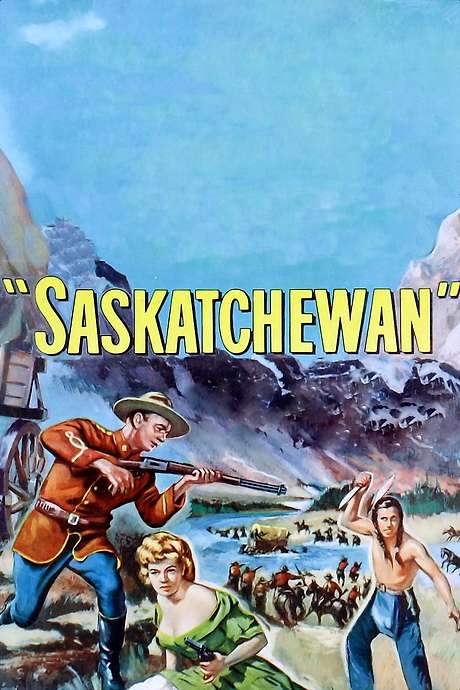
Saskatchewan 1954

Directed by
Raoul Walsh
Made by

Universal International Pictures
Saskatchewan Plot Summary
Read the complete plot summary and ending explained for Saskatchewan (1954). From turning points to emotional moments, uncover what really happened and why it matters.
After returning from a trapping trip in the northern reaches of Canada, North-West Mounted Police Sub-Inspector Thomas O’Rourke and his Cree ally Cajou discover a burned wagon train and a single survivor, Grace Markey. They bring her back to their fort in Saskatchewan, where the fragile balance of power and loyalty among the officers and Indigenous communities begins to fray. At the fort, the newly arrived post commander, Inspector Benton, unveils a sweeping order to confiscate all Cree rifles. O’Rourke, unaware of this directive—born from decisions taken while he was away trapping—finds himself entangled in a clash between obedience and personal trust. When he finally yields Cajou’s rifle to Benton, the move fractures a deep bond and strains the already tense relationship between the two men.
Across the border, the Sioux, led by a calculating strategy, press the Cree toward an alliance against the Red Coats of Canada. They promise to replace the rifles stripped from the Cree by ransacking the remnants of the dead from the 7th US Cavalry, who fell in a brutal history-making encounter at the Little Bighorn. The idea of a Cree-Sioux coalition intensifies the pressure on the Mounties, forcing hard choices about survival, sovereignty, and the quivering line between loyalty to a post and the larger sweep of history. The Cree, wary of becoming pawns in a larger game, weigh the cost of alliance against the immediate threat from the Sioux, while O’Rourke tries to navigate the political currents without destroying the fragile trust he’s built.
As the fort’s march toward Fort Walsh nears, Benton orders the sergeant to arrest [Thomas O’Rourke] for refusing a direct order. The sergeant resists, sparking a tense confrontation that reveals how fragile discipline can be when faced with competing loyalties. Benton intensifies his threats, signaling that everyone involved faces court-martial once they reach Fort Walsh. The mounting pressure leads O’Rourke to take a solitary path: he leaves the pack to visit the Cree camp and presses the Cree chief to reject any Sioux alliance. The Cree chief agrees to stay out of the alliance, but on one critical condition—having rifles returned to protect their people from Sioux raids. The requirement places O’Rourke in a difficult position, torn between following orders and protecting a fragile beacon of Cree autonomy.
Back at Fort Walsh, the superintendent—unmoved by the Cree chief’s conditional stance—refuses the demand for Rifle restoration and instead orders a sweeping detention of the entire Fort Saskatchewan detachment who had arrived at Fort Walsh earlier. The mood grows heated, and the mounting tension between federal directives and on-the-ground realities threatens to erupt into wider violence. O’Rourke, meanwhile, argues that genuine peace with the Sioux requires a different approach than force alone, but the chain of command remains steadfast in its demands. The superintendent attempts to negotiate with the Sioux to avert bloodshed, insisting that a peaceful coexistence is the only path forward for Canada. Yet the Sioux will not engage, and the Mounties find themselves outmatched and isolated, with their numbers shrinking under relentless pressure.
When the Sioux launch a coordinated attack, the Mounties find themselves trapped, surrounded, and desperate. The odds are heavily against them as casualties mount and morale sags. In a pivotal turn, O’Rourke—accompanied by the Cree—charges to the rescue, breaking the siege and providing a crucial lifeline to the beleaguered Mounties. The assault becomes a test of courage, duty, and the bonds forged between rival groups who must unite to survive. The climactic moments underscore the film’s central themes: the difficult choices forced by colonial borders, the price of obedience to higher authority, and the potential for unlikely alliances to alter the outcome of a dangerous confrontation.
Throughout the narrative, the relationships between [Thomas O’Rourke], [Cajou], [Grace Markey], [Inspector Benton], [Chief Dark Cloud], and [Spotted Eagle] weave a complex tapestry of loyalty, mistrust, and survival. The story does not shy away from showing how decisions made in distant rooms and on distant maps ripple through the lives of those on the frontier. In the end, the rescuing act of courage from O’Rourke and the Cree brothers demonstrates that cooperation can prevail even when orders push individuals toward separation. The film leaves audiences with a restrained, thoughtful meditation on the costs of power, the humanity found in mutual protection, and the enduring pull of courage in the face of overwhelming odds.
Saskatchewan Timeline
Follow the complete movie timeline of Saskatchewan (1954) with every major event in chronological order. Great for understanding complex plots and story progression.
Survivor Grace Markey arrives at the fort
O'Rourke and Cajou return from a trapping trip to find a burned wagon train and Grace Markey, the sole survivor. They bring her back to their fort in Saskatchewan, where her presence unsettles the frontier's already tense balance. Grace's survival becomes a catalyst that heightens suspicion and fuels looming conflicts.
Inspector Benton takes command and orders rifle confiscation
A newly arrived post commander, Inspector Benton, takes command at the Saskatchewan fort. He issues an order to confiscate all Cree rifles, a move O'Rourke is unaware of while away trapping. The order sets up a clash between duty and personal loyalties.
Benton targets Cajou's rifle; O'Rourke resists at first
Benton spots Cajou with a rifle and commands O'Rourke to confiscate it. O'Rourke initially refuses, arguing that he personally gave Cajou the rifle. The moment foreshadows a rift between O'Rourke and Cajou.
Rifle is taken; friendship ends
O'Rourke relents and takes Cajou's rifle to fulfill the order. The act costs him Cajou's friendship and deepens the divide between the Mounties and the Cree. The decision foreshadows broader consequences for alliance-building.
Sioux press Cree to ally, promising rifles
Across the border, the Sioux urge the Cree to join them against the Canadian forces. They promise to replace the rifles taken from the dead 7th US Cavalry at Little Bighorn. The Cree face a critical choice about whose side to trust.
March toward Fort Walsh; arrest order against O'Rourke
Mounties begin marching toward Fort Walsh near the border. Benton orders the sergeant to arrest O'Rourke for refusing the rifle order. The sergeant refuses, escalating tensions and hinting at a breakdown in command.
O'Rourke detours to the Cree camp
O'Rourke detours from the marching force to visit the Cree camp and seek a pledge not to ally with the Sioux. The Cree chief agrees not to join if rifles are returned, offering a potential path to de-escalation. This detour complicates the march and tests loyalty on multiple fronts.
O'Rourke reports Cree's condition to Fort Walsh
O'Rourke returns to Fort Walsh to relay the Cree chief's condition: they will not ally with the Sioux if their rifles are restored. The superintendent rejects the conditional deal and orders continued detention. Tensions rise as higher orders clash with on-the-ground diplomacy.
Fort Saskatchewan force detained at Fort Walsh
Upon arrival at Fort Walsh, the entire Fort Saskatchewan force is detained along with their officers. The detentions reflect the coercive atmosphere and the power struggle between Benton and the fort's leadership. The situation leaves the Mounties isolated and under scrutiny.
Talks with the Sioux ordered at Fort Walsh
The commander at Fort Walsh receives orders to meet with the Sioux and tell them they must live peacefully in Canada. O'Rourke warns that the Sioux will not talk to him, but the superintendent presses forward. The standoff underscores frontier fragility and the pressure to avoid open conflict.
Sioux attack the Mounties
The Sioux launch an attack on the Mounties, who are outnumbered and trapped. Many of their comrades are dead or wounded, and the situation grows increasingly desperate. The assault demonstrates the peril of an isolated outpost without Cree aid.
O'Rourke and Cree rescue the Mounties
O'Rourke and the Cree surge to the rescue, charging into the siege. The combined force fights to break the siege and tilt the balance in favor of the Mounties. The fragile alliance proves pivotal to the outcome, though its future remains uncertain.
Rescue and uneasy peace
The rescue lifts the Mounties from the brink of defeat, but the episode leaves lasting strains among the Cree, Sioux, and Mounties. O'Rourke's actions restore some balance but cement a wary peace among the factions. The events set the stage for ongoing frontier diplomacy.
Saskatchewan Characters
Explore all characters from Saskatchewan (1954). Get detailed profiles with their roles, arcs, and key relationships explained.
Thomas O'Rourke (Alan Ladd)
North-West Mounted Police Sub-Inspector who travels with Cajou and serves as the film’s moral compass. He is torn between following orders and preserving his friendship with Cajou, ultimately choosing duty in critical moments. His later actions aim to avert a Cree-Sioux alliance, balancing public order with personal loyalties.
Cajou (Jay Silverheels)
Cree leader and O’Rourke’s ally who seeks to protect his people from external threats. His trust is tested by the rifle confiscation, which strains his relation with O’Rourke. He navigates the frontier’s dangers while seeking security for the Cree.
Grace Markey (Shelley Winters)
The sole survivor of a burned wagon train taken to the fort, she becomes a focal point amid mounting tensions. Her presence drives the Mounties to weigh the costs of their actions and the civilians’ vulnerability on the frontier. Grace embodies resilience in a perilous landscape.
Inspector Benton (Robert Douglas)
New post commander who orders confiscation of Cree rifles and seeks firm discipline. He clashes with O’Rourke’s judgment and moves to arrest him, illustrating aggressive, centralized authority from afar. His actions escalate the frontier crisis and test local loyalties.
Patrick J. Scanlon (Richard Long)
Mounted Police sergeant who embodies the practical tensions of frontier policing. He stands against rash arrests and defends a more measured approach when officers are pressured by Benton. His stance represents a balance between obedience and pragmatic judgment.
Saskatchewan Settings
Learn where and when Saskatchewan (1954) takes place. Explore the film’s settings, era, and how they shape the narrative.
Time period
Late 19th century (1870s–1880s)
The story unfolds during the era of the North-West Mounted Police when Canada extends its reach into the prairie and border regions. Colonial authorities enforce rifle confiscations while facing Indigenous leaders and border tensions. The period is defined by frontier conflicts and the imprint of imperial governance on isolated outposts.
Location
Fort Saskatchewan, Saskatchewan, Fort Walsh
Fort Saskatchewan serves as the main NWMP fort where the Mounted Police enforce frontier order. Nearby Fort Walsh sits near the border, shaping the strategic decisions of the troops. The setting underscores the harsh, law-and-order atmosphere of late 19th-century Canada’s northern frontier.
Saskatchewan Themes
Discover the main themes in Saskatchewan (1954). Analyze the deeper meanings, emotional layers, and social commentary behind the film.
⚖️
Duty vs Morality
O'Rourke grapples with official orders and personal loyalties when asked to confiscate Cajou’s rifle. His choice highlights the tension between legal duty and moral responsibility on the frontier. The conflict tests friendship, trust, and the limits of obedience within a hierarchical command.
⚔️
Frontier Authority
The film centers on the clash between authoritative commands from Benton's England-informed post and the realities of frontier policing. Arrests, detentions, and court-martial threats reveal how distant authority intersects with local crisis. The Sioux pressure and Cree response heighten the stakes of governance at the edge of civilization.
🤝
Friendship & Betrayal
The evolving relationship between O'Rourke and Cajou is strained when a rifle confiscation sours trust. The drama probes how loyalty can be fractured by duty, and whether reconciliation is possible in a landscape of conflict. It also reflects broader themes of collaboration across cultural lines.

Coming soon on iOS and Android
The Plot Explained Mobile App
From blockbusters to hidden gems — dive into movie stories anytime, anywhere. Save your favorites, discover plots faster, and never miss a twist again.
Sign up to be the first to know when we launch. Your email stays private — always.
Explore the mobile appSaskatchewan Spoiler-Free Summary
Discover the spoiler-free summary of Saskatchewan (1954). Get a concise overview without any spoilers.
In the vast, wind‑scoured plains of 19th‑century Saskatchewan, the Royal Northwest Mounted Police hold a solitary line against a looming Sioux force that once shattered Custer’s command. The quiet balance of the remote outpost is threatened by the restless movements of neighboring Indigenous nations, each navigating their own survival on a frontier where colonial borders are as fragile as the winter ice. The film’s tone is rugged and contemplative, blending the stark beauty of the Canadian wilderness with an undercurrent of inevitable conflict, inviting the viewer to feel the weight of history pressing on a land that is both open and tightly held.
At the heart of the story stands Thomas O’Rourke, a seasoned mountie returning from a solitary trapping expedition, whose sense of duty is matched only by his personal ties to the land and its people. Beside him, Cajou—a Cree warrior and longtime ally—offers a bridge between the uniformed officers and the Indigenous community, their friendship a quiet testament to loyalty forged in hardship. The arrival of Inspector Benton, the newly appointed post commander, brings a stern, bureaucratic edge that begins to strain the established rapport, while Grace Markey, the lone survivor of a burned wagon train, embodies the fragile humanity caught in the crossfire. The looming presence of Chief Dark Cloud and the broader Cree nation adds a collective voice that wrestles with the promise of an uneasy alliance offered by the advancing Sioux.
The narrative is shaped by the delicate dance of obedience and moral conviction, as the characters each confront the pull of personal conscience against institutional demands. Tensions rise not only from the external threat of the Sioux but also from internal debates over the rightful ownership of weapons, the preservation of cultural autonomy, and the true meaning of brotherhood on a contested frontier. Against this backdrop, the film invites the audience to watch a tense, atmospheric tableau where honor, heritage, and the harsh realities of law and survival intersect, leaving the outcome of these fragile alliances suspended in an uneasy, anticipatory stillness.
Movies with Similar Twists and Themes
Uncover films that echo the narrative beats, emotional arcs, or dramatic twists of the one you're exploring. These recommendations are handpicked based on story depth, thematic resonance, and spoiler-worthy moments — perfect for fans who crave more of the same intrigue.


Featured on this page

What's After the Movie?
Not sure whether to stay after the credits? Find out!
Check out our other apps:

SAT Sphere
Build confidence for the Digital SAT.

Mori Atlas
Discover wild places worth protecting.

Luntero
Search smarter for a home in Amsterdam.

Plot Explained
Unravel movie endings and hidden clues.

Pokechamp
Dive into Pokémon data and battle logic.

Driving Theory
Get ready for your European theory test.

Movie Dust
Plan your next cinema trip with ease.

Musemap
Find art and culture as you travel.

Selkobase
Compare credentials before committing.

Local Manual
Turn an unfamiliar country into practical next steps.

Lernavi
Compare school systems before your next move.

GymRoam
Find a workout stop wherever your plans take you.
Explore Our Movie Platform
New Movie Releases (2026)
Famous Movie Actors
Top Film Production Studios
Movie Plot Summaries & Endings
Major Movie Awards & Winners
Best Concert Films & Music Documentaries
Movie Collections and Curated Lists
© 2026 What's After the Movie. All rights reserved.
Privacy Policy