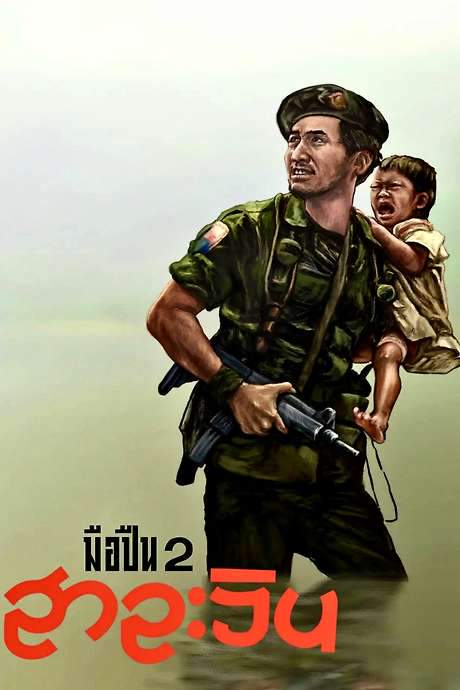
Salween 1993

Directed by

Chatrichalerm Yukol
Made by

Prommitr Production
Salween Plot Summary
Read the complete plot summary and ending explained for Salween (1993). From turning points to emotional moments, uncover what really happened and why it matters.
Set against the volatile borderlands of Myanmar along the Salween River, a fragile postwar peace unravels as the central government (then SLORC) and the Karen National Liberation Army wage a long-hidden war just beyond the borders. A Thai timber baron, Tweepong, manipulates both sides to keep unrest alive while his company harvests the region’s teak, turning the frontier into a dangerous, lawless zone where money and power roam freely.
Danai, Siricoup Metanee, a young and idealistic police lieutenant, arrives to take charge of the Fah Soong Pha Sak police station. He arrives mid-chaos, motorcycle-packed and uniformed, as a gun battle erupts between local police and armed gunmen. He is dragged into the mêlée, mud-splattered and unbowed, and immediately sets a standard: the officers must clean up, dress properly, and show discipline. The confrontation that kicks off his tenure is linked to a dangerous web of loyalties: the gunmen who started the fight had been sent to kill Sgt. Raem by Noppol Gomarachun Somsak Tweepong, the son of the local crime lord, a man who remains a shadow over the town’s politics.
At a birthday party for Tweepong, Danai meets Somsak’s wife, a once-glamorous Bangkok beauty now consumed by alcohol and regret, whose unhappiness hints at the deeper fractures within the Tweepong nexus. Danai’s tour of the district introduces Nid, a schoolteacher for Thai hill-tribe children and the daughter of Sergeant Ram. Her mother was raped and killed by Somsak’s men, a backstory that fuels Ram’s bitterness and adds a personal layer to the border conflict.
The conflict spills over into Thailand when Karen troops, led by KNLA Lieutenant Tulay, come under attack by a SLORC helicopter gunship. Danai initially orders Ram to turn the Karen back, but the sight of the helicopter’s assault unsettles him. He hesitates, even firing at the helicopter in a moment of frustration, though the clash remains unresolved in that moment.
Tension deepens as Somsak’s violence erupts at home: his wife accuses him of being homosexual, and in a furious struggle, Somsak seizes a gun and accidentally shoots her. She survives long enough to reach the police station, where she dies, naming Somsak as her killer. Now a fugitive, Somsak flees across the border into Myanmar. Danai, urged by Ram, abandons formal extradition and joins a dangerous, forceful pursuit into enemy territory, determined to bring Somsak back to Thailand.
In Myanmar, Tulay and his men strike a tenuous alliance, agreeing to spare Danai’s party in return for their lives during the earlier river incident. Danai insists that Somsak must face Thai law for murder, prompting Tulay to respond with a stark reminder of their world: > This is Kawthoolei. Thai laws have no meaning here.
The Karen strike at dawn, and Ram is fatally shot, though he manages to injure Tulay before dying. The survivors, including Ram’s daughter, press on, determined to bring Somsak back. They capture Somsak and begin the treacherous return to Thailand, carrying the weight of a village’s vengeance and a frontier’s unresolved debts.
As they near the river crossing, Tulay lies in wait under the water, attempting another ambush. SLORC troops appear and shoot Tulay, revealing a deal between the Myanmar authorities and Tweepong to seize Somsak. Tulay, though not fully dead, drifts downstream to die, while Somsak flees back toward Myanmar. Nid hands a pistol to Danai, who then shoots Somsak in the back, ending the chase and closing a brutal cycle of violence that stretched across borders and laws.
This story threads a landscape of conflicted loyalties, where a dedicated police officer faces ethical limits and personal danger, where a timber magnate’s profiteering sustains turmoil, and where the border between nations becomes a frontline for tragedy, loyalty, and the price of justice.
Salween Timeline
Follow the complete movie timeline of Salween (1993) with every major event in chronological order. Great for understanding complex plots and story progression.
Historical background of Myanmar conflict
A scrolling text establishes that Myanmar gained independence after World War II but ethnic conflicts persisted. It sets up the ongoing war between the central government (SLORC) and the Karen insurgents. It also introduces Tweepong, a Thai timber baron who manipulates both sides to keep the unrest alive so his logging operation can profit from the border forests.
Tweepong's manipulation of the conflict
Tweepong is introduced as a Thai timber magnate who cultivates ties with both KNLA and SLORC to keep the regional conflict simmering. He aims to ensure the unrest remains active so his timber operations near the Salween River can continue unimpeded. His double-dealing creates the dangerous, wild-west atmosphere of the border town.
Danai arrives and asserts authority
A young idealistic police lieutenant, Danai, rides into Fah Soong Pha Sak to take charge of the border police. A gun battle erupts between local cops and gunmen, leaving Danai muddy and demoralizing the station’s lax discipline. He gives the undisciplined officers a sharp dressing-down and insists they clean up and wear uniforms.
Invitation to the birthday
Somsak Tweepong, the godfather's son, visits Danai and invites him to his father's birthday party. The invitation pulls Danai deeper into the Tweepong family's circle and into the tensions between rival factions. The scene foreshadows the blend of personal and political stakes in the border town.
Elder Tweepong encounter
During a patrol through the rugged district, Danai meets the elder Tweepong, dressed in white and chasing butterflies with a net, who gives him salve for his blistered feet. The meeting hints at a calm, almost surreal counterpoint to the violence around them. Danai leaves with a small reminder of the Tweepong family’s reach.
Birthday party and the unhappy wife
Danai attends the birthday party and encounters Somsak's wife, a former Bangkok beauty queen now trapped in an unhappy, alcoholic marriage. She exudes charm but is quietly distressed by the life Tweepong imposes. The scene reveals the personal cost of the power struggles in the region.
Nid introduction
Danai meets Nid, a teacher at a school for Thai hill-tribe children and the daughter of Ram. Nid explains her mother's Karen heritage and how Somsak’s men raped and killed her, fueling Ram's hatred toward Tweepong's faction. This backstory deepens the motive for Ram's loyalty and Danai's sense of justice.
Cross-border escalation
As KNLA forces, led by Tulay, are attacked by a SLORC helicopter while crossing the Salween into Thailand, Danai initially orders Ram to turn the Karen back. After witnessing the helicopter's devastation, he relents and even fires on the helicopter, which returns fire. The escalation shows how quickly the conflict spills over into Thai soil.
Somsak's murder of his wife
Somsak’s wife accuses him of infidelity and of being homosexual, prompting a violent confrontation. He forcibly takes the pistol from her and shoots her; she escapes to the police station and dies afterward, saying Somsak killed her. The murder marks Somsak as a danger that must be captured.
Somsak fugitive and forceful pursuit
Somsak becomes a fugitive in Myanmar, and Danai initially believes he should be extradited through proper channels, but Ram convinces him to act outside the law. A party is organized to go into Myanmar and bring Somsak back by force. The operation polarizes loyalties and tests Danai's ideals against reality.
Deal for Somsak
Somsak's father makes a deal with the KNLA to provide Stinger missiles in exchange for saving his son. Tulay's faction briefly considers a different path, letting Danai's party proceed on their way in exchange for surviving the river incident. The maneuver shows how weapons and lives are traded in this borderland war.
Karen attack and Ram's death; back to Thailand
The following morning, Karen forces launch an attack; Ram is fatally shot but manages to injure Tulay before dying. Danai and the survivors, including Ram's daughter, seize Somsak and head back toward Thailand. The borderland conflict has claimed Ram and pushed the pursuit toward its final act.
Final ambush and Somsak killed
As Danai's group crosses a river bridge back to Thailand, Tulay ambushes from under the water but SLORC troops arrive and order Danai to drop his weapons. Tulay fatally shoots the SLORC colonel, sacrificing himself in the struggle. Nid hands a pistol to Danai, who then shoots Somsak in the back, ending his threat.
Salween Characters
Explore all characters from Salween (1993). Get detailed profiles with their roles, arcs, and key relationships explained.
Police Lt. Danai (Siricoup Metanee)
A young, idealistic police lieutenant who arrives to take charge of the Fah Soong Pha Sak station. He is quick to demand discipline and proper uniforms, and he learns to navigate the rugged border environment. His commitment to duty leads him to take decisive actions, including confronting both criminals and geopolitical pressures, even when the path is messy and dangerous.
Sgt. Raem (Sorapong Chatree)
A tough, battle-tested sergeant whose loyalty to his duty and to the local people runs deep. He harbors resentment toward Somsak due to crimes committed against a Karen woman connected to Nid, reinforcing his personal resolve as the conflict intensifies. He becomes a key figure in coordinating responses to cross-border violence and personal betrayals.
Lt. Tulay (Chatchai Plengpanich)
A Karen frontline officer involved in KNLA operations. He is strategic and enduring, playing a dangerous game of survival and alliance as Karen forces are pushed back by the SLORC. Wounded in battle, he remains a persistent rival to Danai's team and a symbol of the border’s volatile politics.
Somsak Tweepong (Noppol Gomarachun)
The son of a local godfather and a ruthless timber magnate who exploits both sides of the conflict to maintain power. He commits violent acts, including murder, and his personal and political schemes drive much of the plot’s tension. His eventual pursuit and confrontation with Danai culminate in a fatal reckoning.
Nid (Paweena Charivsakul)
Daughter of Ram, Nid is a teacher at a school for Thai hill-tribe children. Her mother's Karen heritage and her father's police duty anchor a personal stake in the border conflict. Her relationship with Danai evolves amid danger and vengeance, highlighting the human cost of the wider crisis.
Salween Settings
Learn where and when Salween (1993) takes place. Explore the film’s settings, era, and how they shape the narrative.
Time period
Late 1980s to 1990s
The events unfold during a period of intensified conflict between Myanmar's central government (SLORC) and the Karen National Liberation Army, with cross-border spillover into Thailand. Helicopter gunships and guerrilla skirmishes punctuate the era, reflecting a regional power struggle financed by resource interests. Corruption and shifting allegiances further complicate justice and security along the border.
Location
Fah Soong Pha Sak, Salween River, Thai-Myanmar border region
Fah Soong Pha Sak is a rugged border town perched near the Salween River, a flashpoint where Thai and Burmese interests collide. The area functions as a logging frontier, exploited by a Thai timber magnate who keeps unrest alive to protect his profits. The landscape and cross-border tensions shape daily life for police, rebels, and civilians alike.
Salween Themes
Discover the main themes in Salween (1993). Analyze the deeper meanings, emotional layers, and social commentary behind the film.
🗺️
Border Conflict
The film centers on a volatile border zone where KNLA and SLORC clash, making the Thai town a strategic crossroads. War here is waged through both military action and political deals that involve local elites and external sponsors. The everyday lives of police, villagers, and fighters are continually disrupted by this larger geopolitical struggle.
🪵
Resource Exploitation
A Thai timber baron manipulates both sides of the conflict to keep logging profits flowing in the border region. The plot shows how violence and instability sustain business interests, blurring lines between crime, politics, and commerce. People on the ground become pawns in a larger game of control over natural resources.
⚖️
Duty Justice
Danai embodies idealism and a sense of duty, clashing with a harsh reality where law is applied unevenly across Kawthoolei. The narrative questions whether allegiance to country or to simple justice can prevail in a landscape where Thai laws feel meaningless. It also presents the tension between personal morality and expedient action in crisis moments.

Coming soon on iOS and Android
The Plot Explained Mobile App
From blockbusters to hidden gems — dive into movie stories anytime, anywhere. Save your favorites, discover plots faster, and never miss a twist again.
Sign up to be the first to know when we launch. Your email stays private — always.
Explore the mobile appSalween Spoiler-Free Summary
Discover the spoiler-free summary of Salween (1993). Get a concise overview without any spoilers.
The film opens on the tangled frontier where the Salween River marks a porous line between Burma and Thailand, a place where the thin veneer of state authority quickly erodes under the weight of guns and shadowy power. The landscape is a stew of jungle, river traffic, and battered outposts, each bearing the scars of a fragile peace that never quite settled. Within this law‑less zone, daily life is a negotiation between survival and the ever‑present threat of violence, a tension that saturates the air with a restless, almost palpable unease.
Into this volatile mix arrives a newcomer, Danai, a young police lieutenant fresh from the capital, whose idealism clashes with the hardened pragmatism of the border’s inhabitants. He steps into the Fah Soong Pha Sak police station with a clear intent to impose order, insisting on disciplined conduct and a semblance of normalcy in a place where chaos has become routine. His presence immediately shines a light on the stark contrast between his bureaucratic training and the raw, unregulated world he must navigate.
Beyond the thin ranks of the local force, the simmering rebellion of the Karen National Liberation Army adds another layer of complexity. Their struggle against the Burmese government spills over the river, blurring the lines between insurgent and outlaw, and forcing anyone trying to maintain order to confront a conflict that is as political as it is personal. The border becomes a stage where loyalties shift like the river’s currents, and the very notion of law feels like a foreign concept.
Against this backdrop, Danai finds himself caught between his duty to uphold the thin thread of justice and the brutal realities of a frontier where firepower often speaks louder than statutes. The atmosphere is one of gritty realism, punctuated by moments of quiet reflection amid the jungle’s clamor, inviting the audience to ponder how far a single individual can stretch the reach of order when the world around them refuses to be tamed.
Movies with Similar Twists and Themes
Uncover films that echo the narrative beats, emotional arcs, or dramatic twists of the one you're exploring. These recommendations are handpicked based on story depth, thematic resonance, and spoiler-worthy moments — perfect for fans who crave more of the same intrigue.




Featured on this page

What's After the Movie?
Not sure whether to stay after the credits? Find out!
Check out our other apps:

SAT Sphere
Build confidence for the Digital SAT.

Mori Atlas
Discover wild places worth protecting.

Luntero
Search smarter for a home in Amsterdam.

Plot Explained
Unravel movie endings and hidden clues.

Pokechamp
Dive into Pokémon data and battle logic.

Driving Theory
Get ready for your European theory test.

Movie Dust
Plan your next cinema trip with ease.

Musemap
Find art and culture as you travel.

Selkobase
Compare credentials before committing.

Local Manual
Turn an unfamiliar country into practical next steps.

Lernavi
Compare school systems before your next move.

GymRoam
Find a workout stop wherever your plans take you.
Explore Our Movie Platform
New Movie Releases (2026)
Famous Movie Actors
Top Film Production Studios
Movie Plot Summaries & Endings
Major Movie Awards & Winners
Best Concert Films & Music Documentaries
Movie Collections and Curated Lists
© 2026 What's After the Movie. All rights reserved.
Privacy Policy