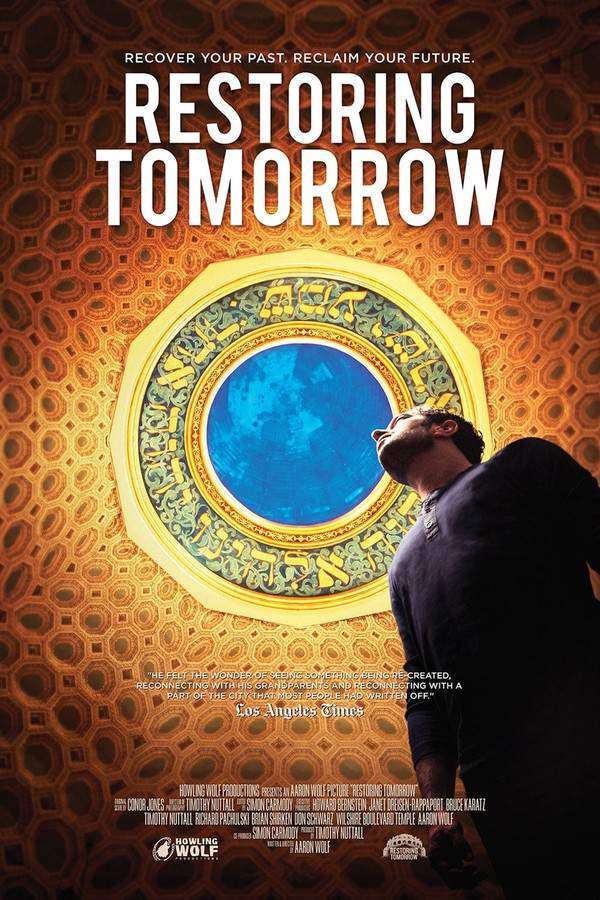
What Is Restoring Tomorrow About?
The premise of Restoring Tomorrow in 319 words, with nothing given away. The full story follows below.
In the heart of Los Angeles, a storied institution stands at a crossroads, its grand halls weathered by time and shifting cultural tides. Restoring Tomorrow invites viewers into a world where faith, history, and community collide, following filmmaker Aaron Wolf as he embarks on a deeply personal odyssey. Having drifted from his spiritual roots, Wolf finds himself unexpectedly drawn back into the orbit of a fading landmark — the historic Wilshire Boulevard Temple — where questions of belonging, heritage, and renewal quietly take shape.
At the temple, a bold vision emerges under the guidance of Rabbi Steve Leder, who dreams of breathing new life into a sacred space that has long symbolized the soul of Los Angeles’ Jewish community. With Wolf’s production company, Howling Wolf Productions, brought on to document the ambitious renovation, the project becomes more than a construction story — it transforms into a meditation on collective memory and the meaning of legacy. Interwoven with the physical restoration is the temple’s rich chronicle as the first Jewish congregation in the city, a lineage of leadership and devotion that gives the endeavor weight beyond its walls.
The film’s tone is reflective and reverent, blending intimate reflection with sweeping historical scope. Wolf’s own rediscovery serves as the emotional through-line, his camera turning inward as much as it captures the craftsmanship, faith, and determination of those laboring to revive the landmark. As scaffolding rises and stained glass catches renewed light, the narrative explores how institutions — like individuals — can find their way back from quiet decline through perseverance, shared purpose, and the quiet power of community.
What unfolds is a portrait of hope told through stone and spirit, where the act of restoration becomes inseparable from the act of remembering. With warmth, sincerity, and an eye for both grandeur and human detail, Restoring Tomorrow celebrates the spaces that shape us and the people who refuse to let them fade.
What Happens in Restoring Tomorrow?
The complete story of Restoring Tomorrow, from the first scene to the last, in 206 words (about 1 minute). Spoilers throughout. Names in the text link to 1 cast member page.
Spoilers ahead
This film explores a personal journey of rediscovery undertaken by filmmaker Aaron Wolf, framed by the historical narrative and physical reconstruction of the Wilshire Boulevard Temple. While studying at New York University, Wolf felt disconnected from his faith, describing himself as a “fallen-away Jew” who had drifted from his roots. Following a difficult breakup with his fiancé shortly before their wedding, Wolf returned to his childhood temple to seek guidance from Rabbi Steve Leder.
During this time, Rabbi Leder shared his vision for renovating the dilapidated temple, which had fallen into severe disrepair. Wolf agreed to document this restoration process using his company, Howling Wolf Productions.
The documentary intertwines this modern renovation with the temple’s legacy as the first Jewish congregation in Los Angeles. This history is told chronologically through the leadership of various rabbis, such as Edgar Magnin and Harvey J. Fields. Central to the emotional core of the film is the legacy of Alfred Wolf, the grandfather of Aaron Wolf. Having fled Germany during the rise of the Nazis, Alfred Wolf served as the temple’s rabbi from 1949 to 1985. It is this ancestral connection and the influence of his grandfather that ultimately draws the filmmaker closer to the temple and his own faith.
Restoring Tomorrow Timeline: Every Key Event in Order
15 key events in the order they happen, from “The First Jewish Congregation in Los Angeles” to “Wolf Rediscovers His Faith”. 14 events name a place, across 4 locations.
- 1
The First Jewish Congregation in Los Angeles
Wilshire Boulevard Temple is established as the first Jewish congregation in Los Angeles, California. The temple grows into a central institution for the city's Jewish community. Its long history becomes the chronological backbone of the story told in the film.
Where:Los Angeles, California
- 2
Edgar Magnin Leads the Congregation
Rabbi Edgar Magnin serves as one of the notable spiritual leaders of Wilshire Boulevard Temple during its early decades. His leadership helps shape the identity of the congregation in Los Angeles. He is remembered in the film as one of the influential rabbis in the temple's chronology.
Where:Wilshire Boulevard Temple, Los Angeles
- 3
Alfred Wolf Flees Nazi Germany
As the Nazis rise to power, Alfred Wolf, Aaron Wolf's grandfather, leaves his hometown of Eberbach, Germany. This departure marks a pivotal turning point in the Wolf family's history. His journey eventually leads him across the ocean to Los Angeles.
When:1930s Where:Eberbach, Germany
- 4
Alfred Wolf Becomes Rabbi of Wilshire Boulevard Temple
Alfred Wolf begins his tenure as rabbi at Wilshire Boulevard Temple in 1949. He becomes a central figure in the congregation and the broader Los Angeles Jewish community. His legacy at the temple becomes deeply consequential for both the film and his grandson Aaron.
When:1949 Where:Wilshire Boulevard Temple, Los Angeles
- 5
Three Decades of Alfred Wolf's Leadership
Rabbi Alfred Wolf serves the congregation from 1949 until 1985, spanning more than three decades. During this long tenure he builds a lasting influence on the temple and its community. This enduring impact is what later draws Aaron Wolf closer to the story of the temple and his own faith.
When:1949-1985 Where:Wilshire Boulevard Temple, Los Angeles
- 6
Harvey J. Fields Guides the Congregation
Following the long line of leaders, Rabbi Harvey J. Fields takes charge of the congregation in the temple's later years. He represents the continuing chain of rabbis who shaped the institution. The film recounts his leadership as part of the temple's chronological history.
Where:Wilshire Boulevard Temple, Los Angeles
- 7
The Temple Falls into Disrepair
Over the years, Wilshire Boulevard Temple physically deteriorates until it is in total disrepair and falling apart. The once-grand building is in urgent need of restoration. This decay sets the stage for the ambitious renovation project at the heart of the documentary.
Where:Wilshire Boulevard Temple, Los Angeles
- 8
A 'Fallen-Away Jew' at NYU
While studying at New York University, Aaron Wolf has little connection to his faith. He considers himself a 'fallen-away Jew,' having drifted from the temple and his Jewish heritage. Like much of the nation's younger generation, he feels disconnected from organized religion.
Where:New York University, New York
- 9
Wolf and His Fiancé Split
Weeks before their wedding, Aaron Wolf and his fiancé end their relationship. The painful breakup leaves Wolf searching for guidance and stability in his life. This personal crisis becomes the catalyst that sends him back to his childhood temple.
When:Weeks before the wedding
- 10
Wolf Seeks Counsel from Rabbi Steve Leder
In the wake of his breakup, Aaron returns to his childhood temple to seek counsel from Rabbi Steve Leder. The visit reconnects him with a place and community he had long drifted away from. This meeting proves to be a turning point in both his personal life and his career.
Where:Wilshire Boulevard Temple, Los Angeles
Show the other 5 events of Restoring Tomorrow Hide the last 5 events
- 11
Rabbi Leder Shares His Renovation Vision
During their meeting, Rabbi Steve Leder shares his vision to renovate the crumbling temple. He describes his ambitious plans to restore the building that is falling apart. The conversation introduces Wolf to the massive restoration project that will soon become the focus of his work.
Where:Wilshire Boulevard Temple, Los Angeles
- 12
Leder Asks Wolf to Document the Restoration
Rabbi Leder asks Aaron Wolf to document the temple's restoration on film. The request transforms Wolf from a passive visitor into an active participant in the temple's rebirth. It also plants the seed for what will become a deeply personal documentary project.
Where:Wilshire Boulevard Temple, Los Angeles
- 13
Howling Wolf Productions Comes On Board
Aaron Wolf agrees to the project and brings in his production company, Howling Wolf Productions, to film the restoration process. The company begins capturing the temple's reconstruction as it happens. This marks the official start of the documentary's production.
Where:Wilshire Boulevard Temple, Los Angeles
- 14
Filming the Restoration and Retelling the History
As the restoration unfolds, Wolf documents both the physical reconstruction and the temple's rich history. The film intertwines the renovation with the chronological story of the congregation and its rabbis, including Edgar Magnin, Harvey J. Fields, and Alfred Wolf. The project gradually becomes a journey of rediscovery for Wolf himself.
Where:Wilshire Boulevard Temple, Los Angeles
- 15
Wolf Rediscovers His Faith
Through his grandfather Alfred Wolf's enduring influence on the temple and its community, Aaron Wolf finds himself drawn closer to the subject of his film. Documenting the restoration gradually reconnects him with his Jewish heritage. The fallen-away Jew who began the journey ultimately finds his way back to his faith.
Where:Wilshire Boulevard Temple, Los Angeles
Who Are the Main Characters in Restoring Tomorrow?
Aaron Wolf: who they are and the part they play in the story. The profile links to the actor’s page.
- AW
Aaron Wolf
Played by Aaron Wolf
Aaron Wolf is a filmmaker who embarks on a personal journey to reconnect with his Jewish roots while documenting the restoration of the Wilshire Boulevard Temple. His introspective quest explores themes of faith, identity, and family, as he comes to terms with his past and the influence of his grandfather. Throughout the film, Aaron evolves from feeling disconnected to embracing his heritage.
- 🎥 Filmmaker
- 👨🎤 Personal Journey
- 🕊️ Identity
Where and When Is Restoring Tomorrow Set?
Restoring Tomorrow is set in Wilshire Boulevard Temple and Los Angeles. Here is why the place matters to the story.
When
The timeframe for the film centers around the contemporary era but delves into historical events from the mid-20th century to present, especially highlighting the experiences of Jewish communities post-World War II. The personal journey of self-discovery occurs in the present as the filmmaker reconnects with his roots and faith.
Where
Wilshire Boulevard Temple, Los Angeles
Wilshire Boulevard Temple is the first Jewish congregation in Los Angeles, known for its rich history and cultural significance within the community. The temple faced deterioration before its restoration, highlighting its importance not only as a place of worship but also as a beacon of Jewish heritage in the region.
- 🏛️ Historical Site
- 🕌 Temple
What Are the Themes of Restoring Tomorrow?
3 ideas the story keeps returning to, among them Rediscovery, Restoration and Faith.
-
01
Rediscovery
The theme of rediscovery runs deep as the filmmaker, Aaron Wolf, navigates his estrangement from his faith and cultural identity. His journey back to his childhood temple serves as a backdrop for exploring personal and communal reconciliation. The restoration of Wilshire Boulevard Temple symbolizes a tangible connection to heritage and faith.
-
02
Restoration
Restoration is both a physical and metaphorical theme in the film. The act of renovating the Wilshire Boulevard Temple reflects the filmmaker's attempt to mend his own fractured relationship with his faith and identity. It highlights the importance of preserving cultural landmarks as a way to strengthen community ties.
-
03
Faith
Faith plays a pivotal role as Aaron Wolf grapples with his Jewish identity throughout the narrative. The film emphasizes how personal belief systems can evolve and be reignited, especially through community involvement and support from figures like Rabbi Steve Leder. The journey underscores the significance of spiritual connections in one's life.
What Kind of Film Is Restoring Tomorrow?
Hopeful in tone, with slow pacing and a moderate story, going by the plot summary.
- Tone
- Hopeful
- Pacing
- Slow
- Story
- Moderate
- Intensity
- Medium
- Ending
- Happy
A contemplative and hopeful documentary weaving personal faith reawakening with the restoration of a historic Los Angeles temple, creating a warm portrait of heritage and renewal.
- reflective
- hopeful
- contemplative
- nostalgic
- inspiring
- reverent
- faith and spirituality
- religious restoration
- jewish heritage
- family legacy
Content notes: holocaust reference, relationship loss.
Quiz
How well do you remember Restoring Tomorrow? Test yourself on the story.