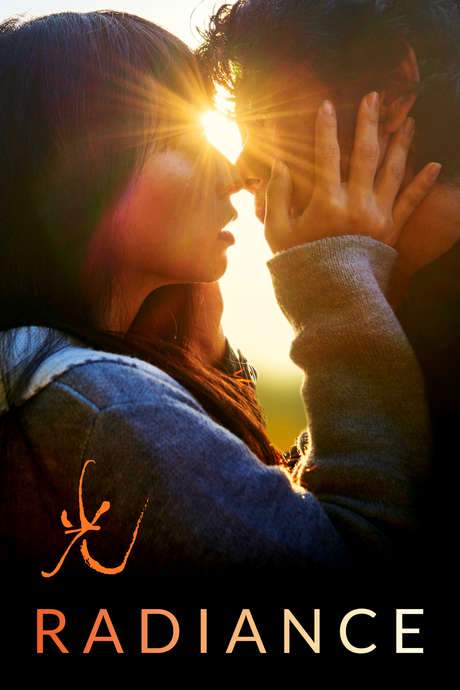
Radiance 2017


Directed by

Naomi Kawase
Made by

Kumie
Where to Watch Radiance
See current US streaming, rental, and purchase options for Radiance (2017) via JustWatch.

Film Movement Plus
HD
Film Movement Plus Amazon Channel
HD
Hoopla
SD
Kanopy
HD
Amazon Video
HD
Apple TV Store
HD
Fandango At Home
SD
Google Play Movies
SD
YouTube
SD Streaming availability powered by 
Radiance Plot Summary
Read the complete plot summary and ending explained for Radiance (2017). From turning points to emotional moments, uncover what really happened and why it matters.
Misako [Ayame Misaki] creates movie audio descriptions that aim to translate every visual detail into words, turning on-screen sights into a narrative for audiences who are blind or visually impaired. Her scripts go beyond simple captions; they are dense, sensory maps that describe settings, colors, textures, movements, and moods with the intention of helping listeners feel present in the scene. The goal is to capture the atmosphere of each moment, not just what appears on the screen, so that the experience becomes accessible without losing the film’s emotional core.
Working with her supervisors and colleagues, she tests a script for a film we’re told early on is deeply moving, conducting a trial run with a focus group of ten blind participants. This group becomes a sounding board that reveals how her descriptions land in real time, highlighting where words illuminate or obscure the on-screen world. The process is meticulous and collaborative, with adjustments made based on how the group interprets the imagery, the pacing, and the emotional beats encoded in the narration. The testers’ reactions become part of the film’s life, shaping how the story is meant to be experienced aloud.
During a pre-premiere screening, Misako encounters Masaya [Masatoshi Nagase], a renowned photographer who is largely without sight. His own work remains tied to the few images he still remembers or can conjure—the setting sun, Misako herself—making his perspective uniquely intimate and exacting. Masaya’s strong will and clear-eyed critique stand out; he becomes the one voice capable of challenging the precision and warmth of Misako’s descriptions. His skepticism pushes her to question whether her careful prose might sometimes feel too exacting or cold, and he inspires others in the room to voice their own critiques as well. This dynamic sets up a compelling tension: the balance between fidelity to what is seen and the need to evoke what is felt.
As the focus groups unfold, their exchanges illuminate the film’s underlying tension between perception and interpretation. Misako, at times defensive, lashes out during a heated moment when Masaya expresses renewed dissatisfaction with her updated script. Yet from this clash emerges a stronger, more nuanced collaboration. The two begin to bridge their differences, discovering a shared willingness to let the audience experience a world that has been previously invisible to their own eyes. Their evolving relationship becomes a conduit for exploring how description can be more than a guide—it can be a doorway to empathy and shared understanding.
Both Misako and Masaya attend the film’s grand premiere with Misako’s script in hand, and the audience’s emotional reactions reflect the power of a well-crafted audio description. However, in the wake of their argument, Misako’s colleague finishes the final version of the script, and it is his voice that overlays the film. This mishmash of voices on the premiere night underscores the collaborative nature of creating accessible cinema and the many hands that contribute to shaping a shared experience. The result moves many audience members to tears, as the narration becomes an intimate thread that ties together sight, sound, and feeling.
In the film’s closing moments, Masaya faces a difficult, almost meditative task: he climbs a small dune. Reaching the top, he stops and faces the setting sun, a quiet, resolute image that echoes the journey he shared with Misako. The ending lingers on the idea that accessibility work—carefully described, thoughtfully voiced, and honestly critiqued—opens up vistas that were once hidden. The movie’s final beat leaves viewers with a sense of reverence for the sensory world and for the connection between two people who learned to hear each other across the divide between sight and imagination.
Radiance Timeline
Follow the complete movie timeline of Radiance (2017) with every major event in chronological order. Great for understanding complex plots and story progression.
Misako develops descriptive scripts
Misako and her team craft audio description scripts that translate on-screen visuals into vivid language for blind audiences. She focuses on settings, actions, and mood to capture the film's atmosphere in words. The early drafts set the tone for how the audience might experience the movie in audio form.
Initial focus-group test
A focus group of ten blind participants evaluates Misako's draft, providing reactions to pacing, clarity, and the balance of detail. They discuss whether the descriptions convey space, character intent, and emotional beats without overpowering the viewing experience. Misako uses their feedback to revise the script.
Masaya enters the picture
At a pre-premiere screening, Misako meets Masaya, a renowned photographer who has lost much of his vision. He sees how the script describes images and challenges its gaps with candid critique. Their exchange plants the seed for a difficult but transformative collaboration.
Masaya's critique
Masaya becomes the sole member of the group willing to push back against the script's easy choices. He argues that description should invite interpretation rather than micromanage what viewers should feel. His blunt feedback exposes the coldness in some passages and spurs others to speak up.
A catalyst for change
His perspective becomes a catalyst for change as testers and Misako reconsider tone, pace, and empathy in the narration. Misako begins to soften some descriptions and foreground human moments. The dialogue deepens, revealing the film's sensitivity toward perception.
Growing partnership
Despite ongoing disagreements, Misako and Masaya begin to rely on each other and form a working partnership. They explore the idea that sense can extend beyond sight, enriching the film's world through audio and implication. Their collaboration grows into a mutual understanding.
Misako's outburst
In a heated moment, Misako lashes out at Masaya during a focus-group session when he questions the updated script. The clash shakes the room and forces them to confront their own biases about accessibility. They emerge with a clearer sense of purpose despite lingering tension.
Reaffirming collaboration
After the confrontation, they recommit to the project and broaden the range of voices considered in the narration. They refine their approach to include tester feedback, Masaya's sensibilities, and the director's vision. The result is a more human and inclusive description strategy.
Grand premiere approach
On the night of the grand premiere, Misako and Masaya attend with the revised plan, but Misako's colleague has finished the final script and records the overlay with his voice. The audience experiences the narration through a different storyteller, altering the dynamic of the collaboration. The moment reframes who is guiding the storytelling.
Audience reaction
Many attendees are moved to tears by the audio description, demonstrating the power of thoughtful narration to reveal a film's inner life. Viewers describe how sound and language render space, emotion, and action with new clarity. The screening validates the work of Misako and her team.
Masaya completes a symbolic climb
In the film's closing image, Masaya climbs a small dune and reaches the top to face the setting sun. The scene embodies vulnerability and perseverance, echoing themes of perception and connection. It leaves the audience with a quiet, contemplative note about what it means to truly see.
Radiance Characters
Explore all characters from Radiance (2017). Get detailed profiles with their roles, arcs, and key relationships explained.
Misako Ozaki (Ayame Misaki)
Misako is a meticulous scriptwriter who crafts audio descriptions to maximize accessibility for blind audiences. She believes precise language helps viewers 'see' the film, yet she must learn to balance detail with emotional nuance as she faces critique from Masaya and her colleagues. Through her interactions, she grows to trust the audience's interpretation and the power of shared experience.
Masaya Nakamori (Masatoshi Nagase)
Masaya is a renowned photographer who has lost much of his sight, limiting his ability to shoot. He is blunt and uncompromising, challenging Misako's scripts and forcing her to confront the coldness of overly precise descriptions. Their evolving relationship pushes him to reconsider how imagery can be conveyed beyond vision, enriching the film's emotional core.
Radiance Settings
Learn where and when Radiance (2017) takes place. Explore the film’s settings, era, and how they shape the narrative.
Time period
2020s
The film unfolds in the present day, aligning with contemporary accessibility norms and the evolving craft of audio description. It follows the process from script testing in a focus group to the grand premiere, highlighting real-world industry practices and audience response.
Location
Japan
Set in contemporary Japan, the story moves between film studios, screening spaces, and a high-stakes premiere. It centers on the day-to-day world of making cinema accessible for blind audiences through detailed audio descriptions. The setting reflects a modern industry where technology and empathy intersect to shape audience experience.
Radiance Themes
Discover the main themes in Radiance (2017). Analyze the deeper meanings, emotional layers, and social commentary behind the film.
♿️
Accessibility
Accessibility is treated as a collaborative craft rather than a box to check. Misako's descriptions strive to translate visual detail into meaningful perception for blind viewers, while the film probes the tensions between descriptive precision and artistic nuance. The narrative shows how inclusive design can deepen emotional engagement with cinema.
🤝
Empathy
Misako and Masaya challenge and learn from each other, revealing how shared understanding can reform artistic choices. Their dialogue and disagreements move both their perspectives toward a more humane view of storytelling. The film demonstrates that empathy can transform a description into an experience that resonates with audiences.
👁️
Perception
The story probes how perception shapes reality, especially when words describe what eyes cannot clearly see. Masaya's limited sight and Misako's careful language interact to reveal different ways of experiencing the same image. The climax atop the dune, facing the setting sun, embodies the moment of sensory awakening.

Coming soon on iOS and Android
The Plot Explained Mobile App
From blockbusters to hidden gems — dive into movie stories anytime, anywhere. Save your favorites, discover plots faster, and never miss a twist again.
Sign up to be the first to know when we launch. Your email stays private — always.
Explore the mobile appRadiance Spoiler-Free Summary
Discover the spoiler-free summary of Radiance (2017). Get a concise overview without any spoilers.
In a world where cinema is as much about sound as it is about light, a quiet niche thrives: the craft of audio description. Studios and focus groups of blind viewers converge to shape scripts that translate visual poetry into spoken nuance, turning movies into shared experiences that reach beyond sight. The atmosphere hums with meticulous care, a blend of artistic ambition and compassionate responsibility, setting a tone that feels both intimate and reverent.
Misako, a diligent writer of these descriptions, spends her days threading exhaustive details into scripts, striving to make every frame accessible. Her dedication masks a personal distance from the world she describes, a subtle withdrawal that fuels both precision and a yearning for connection. Enter Masaya, a celebrated photographer whose own visual impairment forces him to capture only the moments he can mentally picture—sunsets, portraits, fleeting light. When their paths cross at a pre‑premiere screening, his stark, unvarnished honesty clashes with her meticulous softness, sparking a dialogue that is as much about art as it is about perception.
Their interaction quickly becomes a delicate dance of critique and curiosity. Masaya challenges the warm precision of Misako’s work, exposing its potential coldness, while she offers him a doorway into a world he can only imagine. Together they begin to navigate an invisible landscape, each learning to see through the other’s eyes—one with words, the other with memory. The film’s mood remains contemplative, inviting viewers to wonder how two people, each partially blind to their own surroundings, might illuminate the shadows between them.
Movies with Similar Twists and Themes
Uncover films that echo the narrative beats, emotional arcs, or dramatic twists of the one you're exploring. These recommendations are handpicked based on story depth, thematic resonance, and spoiler-worthy moments — perfect for fans who crave more of the same intrigue.


Featured on this page

What's After the Movie?
Not sure whether to stay after the credits? Find out!
Check out our other apps:

SAT Sphere
Build confidence for the Digital SAT.

Mori Atlas
Discover wild places worth protecting.

Luntero
Search smarter for a home in Amsterdam.

Plot Explained
Unravel movie endings and hidden clues.

Pokechamp
Dive into Pokémon data and battle logic.

Driving Theory
Get ready for your European theory test.

Movie Dust
Plan your next cinema trip with ease.

Musemap
Find art and culture as you travel.

Selkobase
Compare credentials before committing.

Local Manual
Turn an unfamiliar country into practical next steps.

Lernavi
Compare school systems before your next move.

GymRoam
Find a workout stop wherever your plans take you.
Explore Our Movie Platform
New Movie Releases (2026)
Famous Movie Actors
Top Film Production Studios
Movie Plot Summaries & Endings
Major Movie Awards & Winners
Best Concert Films & Music Documentaries
Movie Collections and Curated Lists
© 2026 What's After the Movie. All rights reserved.
Privacy Policy