
Punishment Park 1971

Directed by
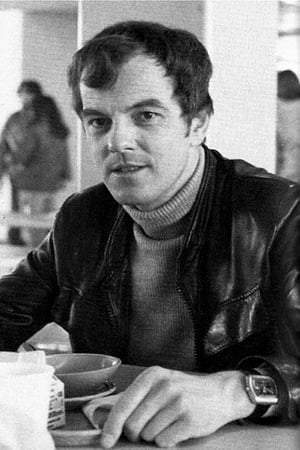
Peter Watkins
Made by

Churchill Films
Punishment Park Plot Summary
Read the complete plot summary and ending explained for Punishment Park (1971). From turning points to emotional moments, uncover what really happened and why it matters.
Set in 1970, amid the Vietnam War’s escalation, Punishment Park imagines a United States where President Nixon secretly orders a bombing campaign in Cambodia and declares a state of emergency under the McCarran Internal Security Act. The film frames a stark clash between a swelling anti-war movement and a government prepared to push constitutional boundaries in the name of “internal security.”
Across this tense backdrop, a broad spectrum of dissenters—anti-war activists, civil rights and feminist advocates, conscientious objectors, and even members of the Communist Party—are rounded up and brought before an emergency tribunal comprised of ordinary citizens. The sense of legality is murky, and the mood is prosecutorial, as the film grounds its ethical questions in real-world anxieties about authority, protest, and obedience.
With jails at capacity, those convicted face a brutal, by design no-win choice: serve their full sentence in federal prison or embark on a 53-mile desert ordeal in three days, through a scorching California landscape, with no water or food, and under the looming threat of pursuit by National Guardsmen and law enforcement as part of their field training. The consequences are stark, and the rules of the “game” are as punishing as the terrain itself, testing endurance, nerve, and the limits of civil disobedience.
Two European documentary crews follow these parallel threads: the detainees’ perilous trek and the tribunal’s courtroom hearings. They document Group 637 as they learn the ground rules, prepare for the desert passage, and begin their ordeal, while Group 638 confronts hearings that probe justifications for resisting the war in Vietnam. As the mood hardens on both sides, the film captures a fracture within Group 637—one faction rejecting the rule-bound framework, another clinging to pacifism and a hoped-for path to freedom.
In the tribunal, notable defendants surface, including Jay Kaufman, William Luke Valerio, James Arthur Kohler, and Nancy Jane Smith, each confronting the court with moral arguments and personal histories that illuminate the era’s divides. The narrative follows the violent split within the desert group, where the insurgent faction falters and is eliminated, while the pacifist faction edges toward the flag only to be met by a merciless ambush. The grim result becomes clear: there is, the film suggests, no sure way to win Punishment Park.
The documentary also weavingly introduces figures like Prof. Hazlett and other observers who wrestle with the legality, ethics, and human cost of what’s unfolding. As the hours wear on and the heat intensifies, the lines between legal procedure, political theater, and survival blur, leaving viewers with a haunting meditation on authority, dissent, and the price of protest. The film’s ultimate takeaway is unsettling: the pursuit of “justice” through coercive trials and punitive trials may be less about truth and more about the perseverance of a society under pressure, to the point where mercy, mercy’s absence, and the very idea of freedom are all put to a brutal test.
Punishment Park Timeline
Follow the complete movie timeline of Punishment Park (1971) with every major event in chronological order. Great for understanding complex plots and story progression.
Vietnam War escalation and Nixon's Cambodia campaign
In early 1970, the U.S. government escalates the Vietnam War by secretly bombing Cambodia, heightening public opposition. The domestic climate becomes tense as anti-war activism grows and government power is expanded to suppress dissent.
Emergency powers under the McCarran Act
President Nixon declares a state of emergency rooted in the McCarran Internal Security Act, empowering authorities to detain those deemed a risk. This legal framework justifies sweeping action against dissidents, including protesters, civil rights, and feminist activists.
Arrests of dissidents and groups
Members of the anti-war movement, civil rights, feminist groups, conscientious objectors, and Communist Party members are arrested and detained. With state and federal jails at capacity, the government relies on emergency tribunals to process detainees. These tribunals are made up of community members who decide each detainee's fate.
The emergency tribunal system
Detainees face an emergency tribunal where community members decide their fate; they can choose between serving a full federal prison sentence or entering Punishment Park. The panel frames the stakes in terms of loyalty, dissent, and national security, casting dissenters as risks to internal stability.
Punishment Park is introduced
Punishment Park is presented as a brutal field test: a 53-mile desert trek over three days without water or food. Detainees are chased by National Guardsmen and law enforcement and must reach the flag to win their freedom; failure means remaining in federal prison.
Group 637 begins the ordeal
European documentary crew follows Group 637 as they begin the Punishment Park course and learn the rules of the game. The group is warned that success means reaching the flag to gain freedom, while failure will seal their fate in prison. They also conduct interviews with their chasers.
Group 638 faces the civilian tribunal
Back at the tribunals, Group 638's case is argued as dissent against the war is defended. The documentary captures the hearings and the tense exchanges between the defendants and public officials. The atmosphere grows increasingly hostile as the narratives from both sides unfold.
Split within Group 637
The group splits: a faction refuses to follow the game's rules and resorts to violence, while another faction remains pacifist and continues toward the flag. The violent faction is eventually killed, illustrating the brutal consequences of militant resistance. The pacifists press on, hoping to reach the end despite the growing danger.
Pacifists near the finish
The pacifist group nears the American flag but is met with an ambush by police. They are beaten mercilessly, underscoring the brutality of a system designed to crush dissent. The ambush seals the sense that there is no victory to be won.
No winner: the system's inevitability
As the course concludes, it becomes clear there is no legitimate way to win Punishment Park. The exercise exposes how the authorities use punitive spectacle to enforce conformity during political conflict. The film leaves the viewer questioning justice under emergency powers.
Chasers and detainees: evolving hostility
Throughout the ordeal, the captors and detainees view each other with growing hostility. The chasers' pursuit and the detainees' resistance are documented from both sides' perspectives. The tension between law, media representation, and public opinion runs throughout the events.
Aftermath and reflections
The documentary team records the aftermath of the hearings and the moral costs of the punitive measures used during political strife. Viewers are left with a stark portrait of a society negotiating emergency powers and dissent. The film ends with lingering questions about justice and power during times of crisis.
Punishment Park Characters
Explore all characters from Punishment Park (1971). Get detailed profiles with their roles, arcs, and key relationships explained.
Documentarist – Peter Watkins
A on-screen documentarian guiding the audience through the parallel narratives of detainees and tribunal hearings. He observes, interviews, and records, making the film itself a witness to the unfolding conflict. As hostility builds, his role blurs the line between observer and participant.
Tribunal Marshall – Tom Kemp
An official figure within the emergency tribunal who embodies the state's coercive authority. He enforces procedure and makes judgment calls that reflect the legal facade of the park’s harsh rules. His demeanor reveals how power can be exercised through formal processes.
Defendant in the Desert (Pacifist) – Michelle Johnson
A pacifist detainee who champions nonviolence and conscientious objection to the war. She stands as a moral anchor within the punishment environment, choosing peaceful resistance over surrender. Her presence tests the limits of protest under extreme pressure.
Defendant in the Desert (Militant) – Jack London
A militant detainee advocating forceful resistance to the war and the park’s rules. He represents the faction willing to confront authority head-on, driving a confrontational dynamic within the group. His faction’s violence underscores the film’s warning about the consequences of militant action.
Defendant in the Desert (Semi-Militant) – Roland Gonzalez
A detainee who is not fully militant nor fully pacifist, navigating pressure from both sides. He embodies the ethical ambiguity and tension that arises under duress. His choices illustrate the fragility of compromise when faced with extreme coercion.
Defendant in the Desert (Pacifist) – Gary Johnson
Another pacifist detainee clinging to nonviolence amidst relentless pursuit. He represents the personal costs of principled protest in a climate of fear and coercion. His stance highlights the moral complexity of resisting a war-driven state.
Defendant in the Desert (Semi-Militant) – Don Pino
A semi-militant detainee torn between escalation and restraint. He contends with the practical need for self-preservation amid constant chase. His arc explores the spectrum of resistance tactics among the detainees.
Tribunal Defendant – James Arthur Kohler
A tribunal defendant who argues his anti-war stance during hearings. He represents the intellectual and moral counter-narratives within the movement, using reasoned defense to challenge the government’s perspective. His testimony adds a legal-rhetorical layer to the proceedings.
Tribunal Defendant – Nancy Jane Smith
A tribunal defendant who speaks at the hearings, presenting her anti-war position to the panel. She embodies the civil dissent voice within the courtroom and contributes to the documentary’s exploration of opposition under state scrutiny.
Punishment Park Settings
Learn where and when Punishment Park (1971) takes place. Explore the film’s settings, era, and how they shape the narrative.
Time period
1970
Set in 1970, during the escalation of the Vietnam War, the U.S. government enacts emergency powers under the McCarran Internal Security Act. The era is defined by widespread anti-war protests, civil rights activism, and feminist movements, all under intense governmental scrutiny. The film imagines how dissenters would be treated in a climate of security paranoia and political repression.
Location
Punishment Park, California Desert
Punishment Park unfolds in a blistering California desert where political detainees are subjected to a 53-mile, waterless course chased by guards. The harsh landscape doubles as a courtroom and battlefield, testing endurance and allegiance under emergency rules. The setting serves as a critique of state power and the treatment of dissent during a period of national upheaval.
Punishment Park Themes
Discover the main themes in Punishment Park (1971). Analyze the deeper meanings, emotional layers, and social commentary behind the film.
🔒
Power and Punishment
Punishment Park reveals how emergency powers can become mechanisms of political control. The park functions as a brutal test where the state polices dissent through surveillance, pursuit, and coercive rules. Violence and coercion erode any pretense of due process, exposing state machinery as punitive and dehumanizing. In this no-win scenario, victory is an illusion, and victims are left to endure or collapse under pressure.
✊
Civil Disobedience
Detainees confront the moral boundaries of resistance, with pacifist groups upholding nonviolence while others flirt with defiance of the park’s rules. The narrative probes the costs and consequences of dissent under a war-driven state. It questions what it means to uphold conscience when confronted with overwhelming power and coercion.
🎥
Documentary Reality
A documentary crew accompanies the events, turning the ordeal into a cinematic experiment. The camera presence influences behavior on both sides, raising questions about truth, perspective, and the ethics of recording violence. The film uses its meta-narrative to explore how documentary storytelling shapes historical memory.
🌵
Desert Survival
The desert itself is a relentless antagonist that amplifies the stakes of every decision. Heat, isolation, and pursuit intensify the detainees' resolve and fractures within groups. Survival becomes inseparable from political fate, underscoring the brutal logic at the heart of Punishment Park.

Coming soon on iOS and Android
The Plot Explained Mobile App
From blockbusters to hidden gems — dive into movie stories anytime, anywhere. Save your favorites, discover plots faster, and never miss a twist again.
Sign up to be the first to know when we launch. Your email stays private — always.
Explore the mobile appPunishment Park Spoiler-Free Summary
Discover the spoiler-free summary of Punishment Park (1971). Get a concise overview without any spoilers.
In a sharply satirical take on 1970s America, a mock‑documentary frames a nation on the brink of an unprecedented emergency. President Nixon, invoking a sweeping internal‑security law, declares a crisis that forces the sprawling anti‑war movement into the legal limelight. The film’s lens captures a country where the line between democratic process and authoritarian theater blurs, presenting a chillingly plausible extension of historical anxieties into a speculative present.
Against this backdrop, a disparate group of newly‑detained activists is offered a stark ultimatum: serve a conventional prison term or endure three harrowing days in “Punishment Park,” a blistering desert stretch where federal agents are authorized to hunt them as part of a brutal training exercise. The choice itself becomes a microcosm of the era’s moral and political tensions, juxtaposing the promise of legal sanction with the raw, unforgiving landscape that tests endurance, conviction, and the very notion of protest.
The detainees include a handful of voices that speak to the movement’s diversity. Jay Kaufman argues from a principled anti‑war stance, while William Luke Valerio brings a more radical edge to the dialogue. James Arthur Kohler offers a reflective, almost philosophical perspective on resistance, and Nancy Jane Smith represents the emerging feminist critique within the broader coalition. Overseeing the proceedings, Prof. Hazlett serves as an academic observer, probing the legality and ethics of the whole enterprise. Parallel to the desert trek, European documentary crews shadow both the convoy and the emergency tribunal, their cameras turning the entire process into a public performance that amplifies the atmosphere of paranoia and spectacle.
The tone remains unflinching and unnerving, blending stark realism with a conspiratorial edge. Sun‑scorched vistas, the ever‑present hum of distant helicopters, and the procedural veneer of courtroom hearings coalesce into a world where survival and ideology collide. The film invites viewers to contemplate how far a society might go when the machinery of power repurposes punishment as sport, leaving the audience perched on the edge of discomfort without ever revealing the final outcome.
Movies with Similar Twists and Themes
Uncover films that echo the narrative beats, emotional arcs, or dramatic twists of the one you're exploring. These recommendations are handpicked based on story depth, thematic resonance, and spoiler-worthy moments — perfect for fans who crave more of the same intrigue.

Featured on this page

What's After the Movie?
Not sure whether to stay after the credits? Find out!
Check out our other apps:

SAT Sphere
Build confidence for the Digital SAT.

Mori Atlas
Discover wild places worth protecting.

Luntero
Search smarter for a home in Amsterdam.

Plot Explained
Unravel movie endings and hidden clues.

Pokechamp
Dive into Pokémon data and battle logic.

Driving Theory
Get ready for your European theory test.

Movie Dust
Plan your next cinema trip with ease.

Musemap
Find art and culture as you travel.

Selkobase
Compare credentials before committing.

Local Manual
Turn an unfamiliar country into practical next steps.

Lernavi
Compare school systems before your next move.

GymRoam
Find a workout stop wherever your plans take you.
Explore Our Movie Platform
New Movie Releases (2026)
Famous Movie Actors
Top Film Production Studios
Movie Plot Summaries & Endings
Major Movie Awards & Winners
Best Concert Films & Music Documentaries
Movie Collections and Curated Lists
© 2026 What's After the Movie. All rights reserved.
Privacy Policy