
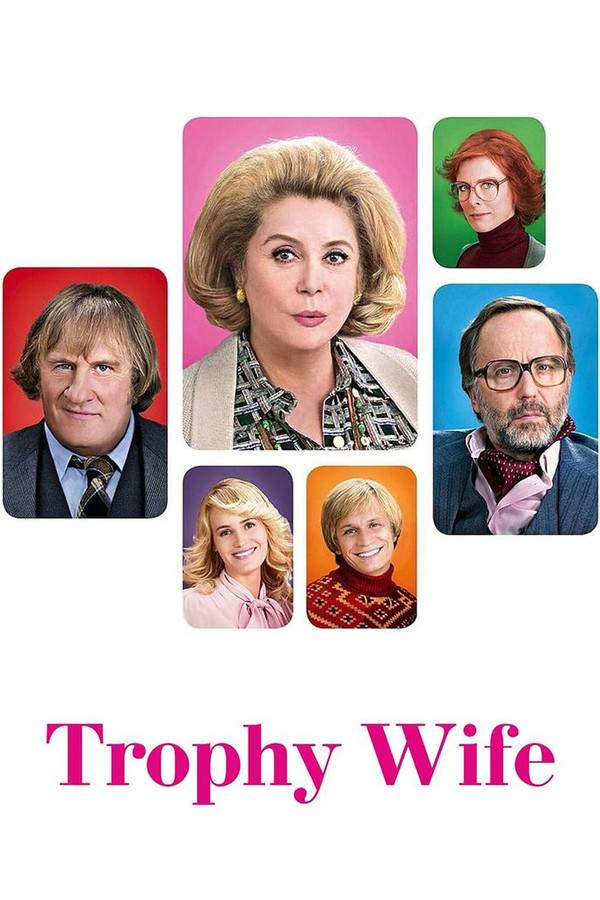
Potiche 2011

Directed by

François Ozon
Made by

Music Box Films
Potiche Plot Summary
Read the complete plot summary and ending explained for Potiche (2011). From turning points to emotional moments, uncover what really happened and why it matters.
In 1977, in the fictional, sunlit corner of northern France known as Sainte-Gudule, Nord, the life of Suzanne Pujol unfolds behind the gates of a prominent umbrella factory. She is presented as a devoted, though ultimately constrained, wife to Robert, the domineering president who wields his position with a mix of bluster and charm. Robert’s reputation for patronizing those around him—most pointedly Suzanne—belies a fragility underneath his commanding exterior. His affair with his secretary, Nadège, creates a fault line at home, where Suzanne and Robert are also raising two adult children with very different temperaments. Their daughter, Joëlle, embodies conservatism as the wife of a globe-trotting businessman and mother of two, while their son, Laurent, leans toward liberal ideas and artistic sensibilities as a student with his eye on more expansive horizons.
When the factory’s workers walk off the job in a demand for better conditions, the sudden crisis forces Robert into a confrontation he cannot simply command away. He is taken hostage, a development that shakes the family’s already fragile balance. That night, Suzanne seeks counsel from Maurice Babin, the town’s Communist mayor and a former union leader with whom she once shared a younger, more hopeful relationship. Babin urges Suzanne to assume leadership in Robert’s stead, arguing that careful diplomacy could secure the workers’ trust and bring production back to life. The next day, Robert’s heart gives way to a hospital bed, and the power pivot in Sainte-Gudule shifts decisively toward Suzanne.
With Babin’s guidance, Suzanne steps into management and crafts a strategy that blends respect with firmness. She reaches out to the factory workers, listening to their concerns and guiding them toward a renewed sense of purpose. Under her watch, production resumes, and the plant begins to show gains not only in output but in morale. Suzanne brings the family into the operation as well, entrusting Laurent with design duties that reinterpret the classic umbrella pattern through the lens of Kandinsky’s abstract art, a choice that signals both innovation and a break from the old ways. The business begins to prosper, and the atmosphere at the factory starts to reflect what many had imagined possible under Suzanne’s steadier hand.
Yet the path forward remains tangled in personal loyalties. A nightclub visit with Babin leads to a moment of closeness—an emotional hint of what might have been—though Suzanne insists that their relationship remain rooted in friendship. She emphasizes that she is not seeking a return to the old dynamic but acknowledges the value of having Babin as an ally. When Robert recovers and seeks to reclaim control, Suzanne reveals that she now holds the majority of the company’s shares, a revelation that redefines the power balance within the family and the town.
Nadège, who had been entwined with Robert, ends the affair and aligns with Suzanne, recognizing a mutual respect that had been missing in the marriage. The couple’s past becomes a lens through which Suzanne assesses the present, including the delicate, troubling disclosures about lineage. When Robert hints that Laurent might be his son, Suzanne counters with a revelation of her own infidelity in their early marriage, suggesting that the question of paternity is far from settled. The tension peaks when Joëlle presents Suzanne with a locket containing photos of her and Babin, prompting a confrontation that forces Babin to confront a troubling possibility: if Laurent were truly Babin’s son, it would complicate the political and familial loyalties at stake. The drive to a lake, where Suzanne offers a candid clarification that Laurent is not Babin’s son, leaves Babin disappointed and alone, a reminder of the enduring ambiguity that shadows their lives.
A boardroom showdown soon follows. Joëlle, wielding her own strategic instincts, transfers her shares to Robert, pushing Suzanne out of day-to-day control. The cost of this maneuver becomes clear when Joëlle confesses that Robert promised to hire her husband in exchange for her votes—an arrangement rooted in the fear of an unstable future as she faces another pregnancy. This revelation reinforces the sense that power in Sainte-Gudule is always negotiated, never freely given.
Time passes, and Suzanne’s life takes a decisive turn. The divorce from Robert looms, though the couple continues to share a living space that echoes their complicated history. Seizing the moment of her independence, Suzanne turns her attention to public life, stepping into politics with a bold, independent bid for mayor against Babin. The race culminates in a new chapter: Suzanne is elected as a deputy, a victory that marks both personal triumph and a redefinition of her role in the town’s leadership, while Babin remains a prominent presence as mayor. In this arc, Suzanne’s journey from a constrained wife to a capable, forward-looking leader embodies a nuanced arc of empowerment, resilience, and the enduring complexity of family, power, and ambition.
Potiche Timeline
Follow the complete movie timeline of Potiche (2011) with every major event in chronological order. Great for understanding complex plots and story progression.
Suzanne, a trophy wife in Sainte-Gudule
In 1977, Suzanne Pujol is the submissive wife of Robert, the tyrannical president of the umbrella factory. He patronizes her and treats workers with contempt. Her comfortable status masks a fragile balance of power at home and in town.
The factory strike and Robert's hostage situation
The umbrella factory workers go on strike, demanding better conditions. Robert storms off to confront them and is taken hostage by the strikers. The incident exposes the vulnerability of management under pressure and sets in motion Suzanne's potential role.
Suzanne negotiates for Robert's release with Babin
That night, Suzanne visits Maurice Babin, the town's Communist mayor and former union leader, to negotiate for Robert's release. The meeting reveals a potential ally who could reshape the town's power dynamics. The stage is set for Suzanne to step into leadership.
Robert's heart attack and hospitalization
The next day, Babin confronts Robert about misusing company funds for luxuries, and Robert suffers a heart attack, landing him in the hospital. Suzanne's and Babin's negotiations shift as Robert's health crisis creates an opening. The hospital scene marks the turning point in who will run the factory.
Suzanne takes over management and stabilizes the factory
Babin convinces Suzanne to take over management in Robert's absence. She adopts a diplomatic, worker-friendly approach and quickly eases tensions, getting production back on track. Laurent designs new umbrella patterns inspired by Kandinsky, boosting sales and showing the family’s potential impact.
Nightclub dance and kiss with Babin
Suzanne and Babin go to a nightclub, dancing together as a sign of their evolving relationship. He proposes that they rekindle their affair, but she refuses; they agree to remain friends, and she even shares a kiss.
Robert returns and tries to seize control
When Robert recovers, he tries to regain control of the factory. Suzanne asserts she holds the majority of shares and resists his bid for power. The balance of power in the company tilts decisively in her favor.
Nadège ends affair and backs Suzanne
Nadège ends her affair with Robert and sides with Suzanne, showing respect that Robert never gave. She becomes a quiet supporter of Suzanne's leadership moving forward. These changes consolidate Suzanne's position.
Paternity claims arise during family revelations
Robert reveals that Laurent's fiancée's mother was his mistress, challenging Suzanne's claims. Suzanne counters that Laurent is not Robert's son, noting that she herself was unfaithful early in their marriage. The revelation deepens the family’s tangled relationships.
Joëlle's locket and Babin's initial belief
Joëlle hands Robert Suzanne's locket, which contains photos of her and Babin. Robert confronts Babin, intending to blackmail him with the idea of an illegitimate son. Babin is initially overjoyed to think Laurent might be his son.
Lake confrontation and Laurent not Babin's son
Babin drives with Suzanne to a lake, where she clarifies that Laurent is not Babin's son either and hints that his real father was a notary she had an affair with. Babin is disappointed and leaves Suzanne alone at the lakeside.
Boardroom coup and transfer of control
At a board meeting to determine the factory's future, Joëlle unexpectedly transfers her shares to Robert, leaving Suzanne with little influence. Suzanne is forced to hand over management to her husband, marking a major setback. The power structure in the company shifts away from Suzanne.
Joëlle's confession and pregnancy
Joëlle reveals that Robert had promised to hire her husband in exchange for her shares, and that she is pregnant again and does not want a divorce. The revelation exposes the transactional nature of the family’s power. The factory's leadership is unsettled by these loyalties.
Suzanne's personal split and political pivot
A few months later, Suzanne and Robert are in the middle of a divorce, though they still live together. Inspired by her newfound independence, she turns to politics and runs for mayor as an independent against Babin. Her bid signals a new phase for both her life and Sainte-Gudule.
Suzanne becomes deputy; Babin remains mayor
She is elected as a deputy, marking a leap into politics while Babin continues as mayor. Her victory signals a major shift in the town's power dynamics and the Umbrella Factory's legacy.
Potiche Characters
Explore all characters from Potiche (2011). Get detailed profiles with their roles, arcs, and key relationships explained.
Suzanne Pujol (Catherine Deneuve)
A refined, initially submissive wife who orchestrates a bold takeover of the umbrella factory after her husband falls ill. She proves herself as a diplomatic and practical leader, bringing workers onside and steering the company toward success. Her transformation fuels her later pursuit of a political career, championing independence and social progress.
Robert Pujol
The tyrannical president of the umbrella factory, patronizing toward Suzanne and unfaithful. He clashes with Suzanne as she gains control, later attempting to regain authority after his illness. His arrogance and conventionalism stand in contrast to Suzanne's evolving vision for the company and family.
Maurice Babin
The town's Communist mayor and former union leader who becomes an ally-turned-rival. He mentors Suzanne at key moments and is drawn into a complicated dynamic as Suzanne's influence grows. His political presence anchors the local power struggle around the factory.
Nadège
Robert's secretary and former lover who ends her affair with him and sides with Suzanne, recognizing her respect for Suzanne’s leadership. She supports the shift in power and contributes to the workplace reorganization from an insider perspective.
Laurent Pujol
Suzanne's liberal-minded, artistically inclined son, engaged to a frequently absent woman. He contributes creatively by designing Kandinsky-inspired patterns for the umbrellas, signaling a generational shift in taste and outlook.
Joëlle Pujol
Suzanne's daughter, conservative and married to a constantly traveling businessman. She contemplates divorce and, at a pivotal moment, transfers her shares to Robert, revealing the complex family and corporate dynamics at play.
Potiche Settings
Learn where and when Potiche (2011) takes place. Explore the film’s settings, era, and how they shape the narrative.
Time period
1977
Set in 1977, the film reflects a period of social change in France, with labor movements and shifting gender roles influencing everyday life. The era heightens the stakes of factory negotiations and political ambition. It frames Suzanne's ascent from domestic life to industrial leadership and a future in politics.
Location
Sainte-Gudule, Nord, France
The story unfolds in the small fictional French town of Sainte-Gudule in Nord, centered on an umbrella factory and its workforce. It is a tight-knit, industrious community where strikes expose tensions between labor and management. The town serves as a backdrop for personal ambitions, social change, and the battle of wills between a domineering husband and a newly empowered wife.
Potiche Themes
Discover the main themes in Potiche (2011). Analyze the deeper meanings, emotional layers, and social commentary behind the film.
💪
Empowerment
Suzanne evolves from a submissive trophy wife to a capable leader of the umbrella factory. She navigates worker demands, negotiates with the town's power players, and drives production to new heights. The arc centers on personal empowerment, autonomy, and redefining authority in both business and family life.
🤝
Labor & Class
The factory strike exposes deep class tensions between management and workers. Suzanne's diplomatic approach helps bridge divides and restore production, illustrating how dialogue can transform conflict into cooperation. The dynamic also weaves in political maneuvering around labor affairs.
🎭
Gender Roles
The narrative challenges traditional gender expectations as Suzanne takes control and pursues a public career. The marriage trade-offs, affairs, and eventual independence highlight evolving gender norms in the late 1970s. The story uses humor and politics to critique patriarchal structures.

Potiche Spoiler-Free Summary
Discover the spoiler-free summary of Potiche (2011). Get a concise overview without any spoilers.
In the breezy summer of 1977, a modest French town hums with the steady rhythm of an umbrella factory that has become the town’s quiet pride. The world is painted with pastel colors and the polite formality of a small‑city community, yet beneath the surface a subtle tension simmers between tradition and change. The film’s tone balances light‑hearted satire with a warm, almost reverent look at everyday life, inviting the audience to linger over the quirks of a place where personal ambition and social expectation constantly intersect.
Suzanne Pujol lives as the picture‑perfect spouse of Robert, the factory’s charismatic yet domineering president. Her days are shaped by his exacting standards and the unspoken rules of a marriage that feels more ornamental than collaborative. Surrounded by a family that mirrors their own aspirations—an adult daughter navigating a strained partnership and a son drifting toward artistic pursuits—Suzanne’s world feels neatly contained, until the ordinary order begins to wobble.
When circumstances force Suzanne to step into the factory’s helm, she discovers a fresh sense of agency that had long been dormant. Embracing the role with a blend of diplomatic charm and surprising determination, she begins to redefine what it means to belong in a space traditionally ruled by men. Her emerging confidence draws the attention of the workers and hints at a broader shift in the town’s social fabric, while the looming return of Robert promises to test the boundaries of this newfound freedom. The story teases the delicate dance between personal reinvention and the pull of familiar authority, setting the stage for a subtle yet compelling exploration of empowerment.
Featured on this page

What's After the Movie?
Not sure whether to stay after the credits? Find out!




Explore Our Movie Platform
New Movie Releases (2025)
Famous Movie Actors
Top Film Production Studios
Movie Plot Summaries & Endings
Major Movie Awards & Winners
Best Concert Films & Music Documentaries
Movie Collections and Curated Lists
© 2025 What's After the Movie. All rights reserved.