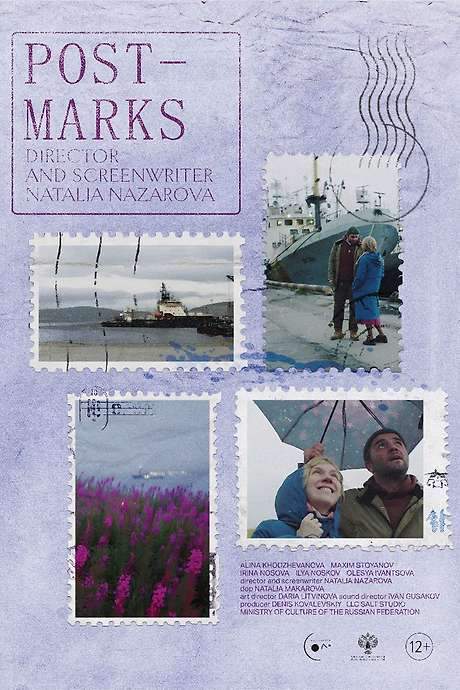
Postmarks 2024

Directed by

Natalya Nazarova
Made by

Salt Film Studio
Postmarks Plot Summary
Read the complete plot summary and ending explained for Postmarks (2024). From turning points to emotional moments, uncover what really happened and why it matters.
In Murmansk, Alina Khodzhevanova plays Yana, a young woman who works at a post office, collects stamps, and waits for her father to return from the sea. She spends most of her free time alone, wandering along the shoreline, and the quiet routine of her days is a steady backdrop to a life that often feels unseen.
Yana carries a mild cerebral palsy, and her slight limp and speech impediments make social integration challenging. She struggles to form friendships or find a romantic connection, and even at work she is treated with condescension. The only circle where she feels understood and taken seriously is among the local philatelists, a small group that shares her precision, patience, and passion for stamps.
Everything shifts when Maksim Stoyanov, a cheerful and charismatic sailor, arrives at the post office and shows genuine interest in Yana. The two begin a tender, chaste relationship, and their growing bond sparks a range of responses from outsiders—curiosity, skepticism, warmth, and doubt—each interpretation shading the couple’s development in different lights.
The film unfolds with a balance of drama and irony, presenting the everyday lives and inner worlds of its characters in a way that feels both intimate and observant. Nazarova’s approach is to shoot “in the genre of life,” placing the tragic moments side by side with comic ones, and letting small, quiet moments carry emotional weight as much as the more overt scenes.
The story is ultimately open-ended, aligning with the director’s core idea: > Sometimes the expectation of happiness is stronger than happiness itself. <
This openness invites viewers to reflect on hope, choice, and the pace of change in a community where a single, sincere connection can ripple through the ordinary rhythms of daily life. The film’s steady gaze on Yana’s world—its tenderness, restrictions, and the fragile spark of possibility—offers a humane portrait of resilience and the ways people reach for a sense of belonging.
Postmarks Timeline
Follow the complete movie timeline of Postmarks (2024) with every major event in chronological order. Great for understanding complex plots and story progression.
Daily life in Murmansk
Yana, a young woman with mild cerebral palsy, lives in Murmansk and works at the local post office. She spends her days stamping envelopes, collecting stamps, and waiting for her father to return from the sea. Most of her free time is spent walking along the shoreline, a quiet ritual that underscores her isolation from others.
A fragile place in society
Her disability makes social integration difficult; she faces condescension at work and struggles to make friends or find a boyfriend. The only place where she feels seen and taken seriously is among local philatelists, a small, accepting community.
A new visitor arrives
One day a cheerful sailor named Petya arrives at the post office and shows genuine interest in Yana. His warmth breaks through her guarded reserve, and she begins to imagine a different future. The encounter sparks a sense of possibility that her daily routine has rarely offered.
A tender, budding romance
Yana and Petya begin a tender, chaste relationship as they get to know each other. Their growing bond is met with varied reactions from those around them, who interpret the relationship in different ways. The romance becomes a focal point that tests Yana's confidence and its acceptance by the wider community.
Outsiders' responses
Friends and strangers alike react to the romance with a mix of curiosity, skepticism, and judgment. The open-ended nature of their love invites misinterpretations and challenges Yana to weigh her desires against social expectations.
Philatelists as belonging
Within the circle of local philatelists, Yana finds a sense of belonging and respect that she has not felt elsewhere. The hobby becomes a sanctuary where her voice is heard and valued.
The film's tonal balance
Dramatic twists sit beside ironic scenes, reflecting the director's aim to blend tragedy with comedy of everyday life. The contrasts give depth to Yana's experiences and the precariousness of happiness.
Waiting for the sea-father
Yana's waiting for her father's return from the sea remains a constant undercurrent in her life, shaping her hopes and anxieties. Even as she grows closer to Petya, the absence of a definitive reunion keeps her expectations in check.
Moment of choice
The couple's relationship forces choices that ripple through their social circle, forcing others to reconsider their own judgments. Yana must decide how far she is willing to go in pursuing happiness.
Open ending, open questions
The film ends without clear answers, reinforcing the director's idea that sometimes the expectation of happiness can be stronger than happiness itself. The final image leaves Yana at a threshold, inviting viewers to fill in what comes next.
Petya's impact lingers
Petya's presence has altered Yana's sense of self, showing her that intimate connection is possible despite her disability. The memory of their shared moments lingers as a quiet testament to what she has learned.
Setting and culture clash
The film juxtaposes a harsh, cold setting with warm human connection, mirroring Yana's internal struggle. The shoreline and the post office become emblemats of resilience and the desire for belonging.
Postmarks Characters
Explore all characters from Postmarks (2024). Get detailed profiles with their roles, arcs, and key relationships explained.
Yana (Alina Khodzhevanova)
A young woman living in Murmansk who works at the local post office, collects stamps, and waits for her father. She has mild cerebral palsy, which gives her a slight limp and speech impediment that affect her social life; nonetheless, she navigates everyday life with quiet resilience and a longing for connection. She finds belonging within the circle of local philatelists, where she is taken seriously.
Pyotr (Maksim Stoyanov)
A cheerful sailor who arrives at the Murmansk post office and shows genuine interest in Yana, sparking a tender romance. His charisma and kindness contrast with the wary reactions of others, challenging social judgments. His relationship with Yana becomes a focal point of how outsiders interpret happiness and affection.
Postmarks Settings
Learn where and when Postmarks (2024) takes place. Explore the film’s settings, era, and how they shape the narrative.
Location
Murmansk
The film is set in Murmansk, a port city on the Barents Sea. Yana works at a local post office and spends her free time walking along the shoreline, seeking connection in a stark, open coastal environment. The city provides a cold but intimate backdrop where philatelists form a small, accepting world for her.
Postmarks Themes
Discover the main themes in Postmarks (2024). Analyze the deeper meanings, emotional layers, and social commentary behind the film.
💖
Love and Loneliness
Yana's mild cerebral palsy shapes how she connects with others, making loneliness a daily companion. Her budding romance with Petya reveals tenderness in a world that often overlooks her. The relationship is tested by outsiders and social expectations, underscoring how fragile affection can be. The film presents happiness as something pursued in the face of obstacles.
🤝
Societal Judgments
The post office and stamp-collecting circle give Yana a sense of belonging, but the wider community treats her with condescension. Outsiders interpret the romance between Yana and Petya in various ways, illustrating how rumors shape reality. The director uses humor and irony to show that social norms can both constrain and reveal character. The themes explore acceptance beyond appearances and status.
⏳
Hope and Happiness
The open ending reinforces Nazarova's idea that longing can outlast fulfillment. Hope drives Yana to imagine happiness even when it remains uncertain. The film juxtaposes moments of tenderness with the possibility that happiness is only a temporary pause in life. The 'expectation of happiness' becomes a force that shapes action as much as happiness itself.

Coming soon on iOS and Android
The Plot Explained Mobile App
From blockbusters to hidden gems — dive into movie stories anytime, anywhere. Save your favorites, discover plots faster, and never miss a twist again.
Sign up to be the first to know when we launch. Your email stays private — always.
Explore the mobile appPostmarks Spoiler-Free Summary
Discover the spoiler-free summary of Postmarks (2024). Get a concise overview without any spoilers.
In the remote reaches of Murmansk, a quiet northern town moves to the slow rhythm of tides and the muted clang of a post office door. Here, Yana spends her days sorting letters, cataloguing stamps, and watching the horizon for the return of a father who sails far beyond the coast. The town’s subdued atmosphere mirrors her patient waiting, a daily ritual that feels both steady and endlessly suspended.
Yana carries a mild cerebral palsy that colors every interaction with a subtle limp and a hesitant speech. The world often meets her with condescension, and forming friendships feels like navigating a sea of strangers. Yet within the modest walls of the post office, a small circle of local philatelists offers her a rare sense of belonging—people who share her meticulous love for stamps and the quiet patience it demands.
The routine shifts when Petr, a charismatic sailor, steps into the post office and directs an unexpected, genuine curiosity toward Yana. Their encounter hints at a new perspective on hope and connection, suggesting that even the most solitary lives can be touched by another’s presence. The film treats this budding relationship with a gentle blend of drama and irony, allowing ordinary moments to pulse with emotional weight.
Director Nazarova frames the story “in the genre of life,” pairing the melancholy of waiting with quiet humor, and letting the simple cadence of daily work carry the narrative’s resonance. The mood is intimate and observant, inviting viewers to linger on the fragile spark of possibility that can ripple through an otherwise steady, unremarkable existence.
Featured on this page

What's After the Movie?
Not sure whether to stay after the credits? Find out!
Check out our other apps:

SAT Sphere
Build confidence for the Digital SAT.

Mori Atlas
Discover wild places worth protecting.

Luntero
Search smarter for a home in Amsterdam.

Plot Explained
Unravel movie endings and hidden clues.

Pokechamp
Dive into Pokémon data and battle logic.

Driving Theory
Get ready for your European theory test.

Movie Dust
Plan your next cinema trip with ease.

Musemap
Find art and culture as you travel.

Selkobase
Compare credentials before committing.

Local Manual
Turn an unfamiliar country into practical next steps.

Lernavi
Compare school systems before your next move.

GymRoam
Find a workout stop wherever your plans take you.
Explore Our Movie Platform
New Movie Releases (2026)
Famous Movie Actors
Top Film Production Studios
Movie Plot Summaries & Endings
Major Movie Awards & Winners
Best Concert Films & Music Documentaries
Movie Collections and Curated Lists
© 2026 What's After the Movie. All rights reserved.
Privacy Policy