What Is Pisay About?
The premise of Pisay in 298 words, with nothing given away. The full story follows below.
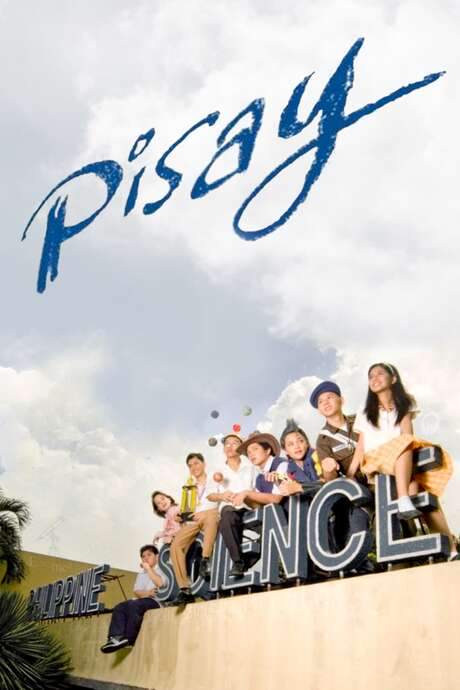
In the waning years of Martial Law, a prestigious science academy becomes a quiet crucible where youthful ambition collides with the weight of a nation in flux. The film follows a tight‑knit cohort of scholars from the Philippine Science High School’s 1986 batch, each carrying a personal dream that glimmers against the backdrop of political tension and institutional rigor. Their campus is a world of vaulted classrooms, disciplined routines, and whispered hopes, where the outside unrest subtly seeps through windows and conversations, shaping the rhythm of daily life.
At the heart of the freshman experience is Rom, a working‑class newcomer navigating the pressures of elite study while discovering the first stirrings of affection for Wena, a fellow student whose own aspirations echo his own. Their budding connection is set against the watchful eye of Mrs. Casas, a teacher whose commitment to academic excellence underscores the delicate balance between personal longing and scholarly focus. Around them, Mateo wrestles with the analytical demands of geometry and the social hierarchies of dorm life, while Liway brings a sharp political consciousness to the junior year, channeling her intellect into both coursework and quiet rebellion. Her collaboration with Andy on a chemistry project hints at the way curiosity can bridge disciplines and hearts.
The senior class finds its voice through the arts, guided by mentors like Mr. G and Ms. Fanny, who encourage students such as Euri to explore theatre as a form of subtle defiance. Meanwhile, Minggoy, an astronomy‑obsessed dreamer, offers a celestial perspective that steadies the group, his fascination with the heavens echoing the larger quest for clarity amid uncertainty. Together, these characters form an intimate tapestry—each thread distinct, yet woven into a collective narrative that captures the tension, hope, and resilience of youth living through a pivotal moment in history.
What Happens in Pisay?
The complete story of Pisay, from the first scene to the last, in 847 words (about 4 minutes). Spoilers throughout.
Spoilers ahead
The film unfolds as a tapestry of lives from the Philippine Science High School’s 1986 batch, weaving together the hopes, tensions, and small triumphs of students and their faculty during the late Marcos era. At the center of the freshman year is Rom [Gammy Lopez], a working-class student who is late to join the school and quickly finds himself navigating his growing romance with Wena [Annicka Dolonius]. Their relationship collides with the school’s strict policy on student romances and the concern that such distractions might hurt grades, a conflict voiced by Mrs. Casas [Eugene Domingo], a teacher whose authority underscores the tension between youthful longing and institutional rules. The pressure culminates in a charged moment when Rom forcibly kisses Wena, a scene that leads Wena to end the relationship and return the memorabilia they shared, signaling a painful but defining separation as they move forward on separate paths.
In sophomore year, Mateo [Carl John Barrameda] wrestles with geometry and dormitory bullying while the country mourns the assassination of Ninoy Aquino. The atmosphere of national upheaval seeps into the classroom, and Mateo opens up about a fading passion for study as his final exam looms. His teacher’s belief in his effort gives him a glimmer of purpose, even as he ultimately fails the final and is expelled. Yet the final turn comes with a quiet vindication: the geometry teacher helps him understand the bell curve and reminds him that he did his best despite his personal struggles. In a last act of resistance, Mateo sabotages a bully’s lab experiment, a moment that embodies the blend of personal hurt and rebellious energy that characterizes the period.
Liway [Shayne Fajutagana], a bold voice with sharp political insight, commands the junior-year narrative with her wit and ideals. She excels in humanities and politics but struggles with chemistry, and she forms a bond with Andy [Jonathan Neri] over a chemistry project that blossoms into romance. Liway becomes a outspoken critic of plans to split classes by academic performance, clashing with Ms. Casas over school amenities and budgets. The political climate tightens when Liway’s family faces persecution, forcing her to flee to the Netherlands, leaving Andy to present their project alone. A postcard from Liway arrives later, a bittersweet reminder of the distance that politics can impose on personal connections.
Senior year brings together the school’s theatre-leaning faculty and students as Mr. G [Arnold Reyes] and Ms. Fanny [Rowena Basco] guide Euri [EJ Jallorina] in making plays that speak to the era’s crisis. Euri’s talent for drama inspires him to challenge the PSHS restrictions on college choices, choosing Theatre Arts over a science-focused path and reflecting a broader push to follow passion in the face of conformity. The relationship between art and politics resonates throughout the year, revealing how creative expression becomes a form of resistance and personal truth.
Across these years, Minggoy [Elijah Castillo] remains the constant thread—the boy obsessed with astronomy who waits for Halley’s Comet and grows closer to the other main characters while serving as a bridge between their stories. His health darkens as senior year unfolds, and he suffers a serious illness that prevents him from attending graduation, a poignant counterbalance to the students’ graduation excitement.
When the People Power Revolution erupts, Daki [Alfred Labatos] becomes a catalyst for collective action, urging his classmates to join the momentous changes taking shape outside the school walls. Mrs. Casas confronts her fears about disappearances during martial law and is granted leave to finish her dissertation, a quiet but powerful moment of personal resolve. On the eve of graduation, Wena tells Rom that she will move to the United States with her family, and Rom jokingly asks her to be his partner at the graduation ball, a tender wish against the broader currents of history.
In a scene that ties personal growth to larger historical events, Mateo returns to PSHS for a visit and is welcomed by his old geometry teacher, signaling a circle of return and reconciliation despite the campus’s upheavals. The celebrations culminate with Minggoy’s grandmother sharing a lineage link—born in the same year Halley’s Comet last appeared (1910)—and a moment of shared wonder as they look up at the Moon through Minggoy’s telescope. The film closes with a quiet, aching beauty: the students are called one by one by their teachers to the stage, but Minggoy’s chair remains empty, a visual poem about friendship, loss, and the enduring pull of memory.
Throughout, the ensemble cast grounds the story in rich, intimate portraits of ambition, love, and resilience. The characters’ arcs—Rom’s tentative romance, Mateo’s intellectual and emotional struggles, Liway’s political awakening and exile, Euri’s artistic leap, and Minggoy’s quiet science-driven optimism—combine with the political upheaval to paint a nuanced, life-sized portrait of youth under an era of change. The film never sermonizes; instead, it invites reflection on how a single school year can encapsulate a nation’s tensions and a generation’s hopes, leaving viewers with a sense of both closure and the unfinished business of growing up in a time when the world outside the classroom was itself in flux.
Pisay Timeline: Every Key Event in Order
13 key events in the order they happen, from “Rom joins PSHS and begins a romance with Wena” to “Graduation day arrives; Minggoy's seat remains empty”. 13 events name a place, across 2 locations.
- 1
Rom joins PSHS and begins a romance with Wena
Rom, a working-class student, is belatedly admitted to PSHS during the 1982-1983 freshman year and quickly becomes involved with Wena. Their romance collides with the school's policy against student relationships, as Mrs. Casas warns about potential grade consequences. The budding connection sets up the social tensions that will shape the year.
When:1982-1983 Where:PSHS campus
- 2
Rom forces a kiss; Wena ends the relationship
Rom's mounting frustration culminates in a forceful kiss with Wena. Wena breaks off the relationship, telling him that her destiny seems pre-ordained and returning their memorabilia. The moment crystallizes the clash between desire and school rules.
When:1982-1983 Where:PSHS campus
- 3
Mateo grapples with geometry and bullying; Ninoy's assassination
In Sophomore year, Mateo struggles with geometry while enduring bullying in the dormitory. The assassination of Ninoy Aquino shocks the student body and dampens morale, with many students exempted from the final exam. A concerned geometry teacher helps Mateo confront his loss of passion, leading to a difficult outcome on the final exam.
When:1983-1984 Where:PSHS campus
- 4
Mateo's quiet peace and revenge
Mateo finds a measure of peace after the teacher explains the Bell curve and acknowledges his best efforts under trying circumstances. In a final act of revenge, he sabotages a bully's lab experiment, illustrating the emotional turmoil and sense of justice fueling his actions.
When:1983-1984 Where:PSHS campus
- 5
Liway and Andy's romance; political awakening and exile
Liway, outspoken and politically aware, begins a romance with Andy while excelling in humanities and facing chemistry challenges. She denounces plans to split classes by ability and clashes with Ms. Casas over school matters, including budget and amenities. When her family faces political persecution, Liway flees to the Netherlands, and Andy receives a postcard from her.
When:1984-1985 Where:PSHS campus; Netherlands
- 6
Theatre ambitions bloom under Mr. G, Ms. Fanny, and Euri
In Senior-year drama, Mr. G and Ms. Fanny guide plays about the political crisis, joined by Euri who embraces theatre. Euri asks why he never pursued acting, and Mr. G explains the fear and martial law era that impacted his own career. Inspired, Euri defies PSHS's science-first stance and applies to Theatre Arts.
When:1985-1986 Where:PSHS campus
- 7
Minggoy, the bridge between friends, pursues Halley's Comet
Minggoy remains a constant presence, a keen observer of astronomy who links Rom, Mateo, Liway, and Euri across the years. He eagerly awaits Halley's Comet as the class of 1986 approaches graduation. His enduring curiosity provides hopeful throughlines amid political and personal upheavals.
When:1982-1986 Where:PSHS campus
- 8
Minggoy collapses; illness curtails graduation
During Senior year, Minggoy collapses and is diagnosed with a serious illness, preventing him from attending the graduation ceremony. The news casts a pall over the seniors and his friends, underscoring the fragility of life alongside a turbulent national backdrop. The group must continue their journey without their constant companion.
When:1985-1986 Where:PSHS campus
- 9
People Power erupts; teachers face fears; leave granted
The People Power Revolution erupts, and Daki recruits classmates to join the movement while Ms. Casas confesses fears of disappearances under Martial Law. She is granted leave to finish her dissertation, giving her space to reflect on the era's risks. The campus becomes a microcosm of the national upheaval.
When:1986 Where:PSHS campus
- 10
Wena heads to the U.S.; Rom invites her to the graduation ball
On the eve of graduation, Wena reveals she will move to the United States with her family. Rom playfully asks her to be his partner at the graduation ball, a bittersweet note amid shifting futures. The moment highlights the personal distances growing between the students.
When:1986 Where:PSHS campus
Show the other 3 events of Pisay Hide the last 3 events
- 11
Mateo revisits PSHS; reunion with his geometry teacher
Mateo returns to PSHS for a visit and is warmly greeted by his geometry teacher, who acknowledges his growth and persistence. The reunion contrasts with earlier hardships and hints at a new path beyond the school walls. It serves as a symbolic bridge between past regrets and future possibilities.
When:1986 Where:PSHS campus
- 12
Grandmother reveals Halley's Comet tie and moonlit telescope scene
On the eve of graduation, Minggoy's grandmother shares that she was born in the same year Halley's Comet last appeared (1910), linking generations under the night sky. The students gaze at the Moon through a telescope Minggoy built, a moment of shared wonder despite hardships. The scene blends science and memory as a quiet beacon of hope.
When:1986 Where:PSHS campus
- 13
Graduation day arrives; Minggoy's seat remains empty
Graduation day unfolds as teachers call the students one by one, celebrating growth and resilience. Minggoy's chair stays vacant, a solemn tribute to the illness that prevented his presence. The ceremony closes the PSHS class of 1986 with a poignant nod to those who could not be there.
When:1986 Where:PSHS campus
Who Are the Main Characters in Pisay?
10 characters, among them Rom Meneses (Gammy Lopez), Wena Ledesma (Annicka Dolonius) and Mateo Markado (Carl John Barrameda): who each one is and the part they play in the story. Every profile links to the actor’s page.
- RM
Rom Meneses (Gammy Lopez)
Played by Gammy Lopez
A working-class freshman who earns a place at PSHS and falls for Wena. Rom’s romance is constrained by school policy and social divides, highlighting how class shapes opportunities and desire. His act of forcing a kiss complicates his growth and forces him to face consequences as the years progress.
- 💼 Working-class
- 🎯 Ambition
- ❤️ First love
- WL
Wena Ledesma (Annicka Dolonius)
Played by Annicka Dolonius
A socially privileged student whose romance with Rom ends when she asserts that her destiny is pre-ordained. She decides to end the relationship and later returns their memorabilia, signaling a commitment to her own path even amid campus tensions. Her departure to the U.S. underscores the reach of personal choices under political strain.
- 💎 Privilege
- 💔 Heartbreak
- 🌠 Destiny
- MM
Mateo Markado (Carl John Barrameda)
Played by Carl John Barrameda
A geometry-focused student who endures bullying in the dorm and loses his passion for study. He is expelled after failing finals but finds peace when his teacher reminds him that effort matters, illustrating resilience through adversity. Mateo ultimately channels his determination into personal growth despite setbacks.
- 🧠 Intellect
- 💢 Bullying
- 🎯 Determination
- LC
Liway Claver (Shayne Fajutagana)
Played by Shayne Fajutagana
An outspoken student with a sharp political mind who denounces policy-driven class divisions. Her activism leads to political persecution and her temporary exile to the Netherlands. Her arc situates personal conviction within a broader struggle for democracy and education.
- 🗳 Activism
- 🌍 Exile
- 🎓 Student leadership
- AG
Andy Gallardo (Jonathan Neri)
Played by Jonathan Neri
A supportive classmate who helps Liway with a chemistry project and shares a developing romance with her. Andy embodies collaboration and empathy amid campus politics, linking personal relationships to broader social movements.
- 🤝 Friendship
- 🧪 Science project
- 💞 Romance
- ML
Minggoy Lamazan (Elijah Castillo)
Played by Elijah Castillo
A steady presence in the year, Minggoy pursues astronomy and awaits Halley’s Comet. His sudden illness interrupts the graduation plan, giving the group a poignant reminder of mortality. His telescope and curiosity bind the characters together in the final moments.
- 🔭 Astronomy
- 🧬 Illness
- 🌙 Hope
- MC
Ms. Casas (Eugene Domingo)
Played by Eugene Domingo
A teacher who upholds school policy with authority while also expressing fear of past disappearances during Martial Law. She seeks to support her students’ education while navigating political pressures and her own scholarly pursuits.
- 🎭 Teacher
- 🧭 Authority
- 🛡 Protection
- MG
Mr. G (Arnold Reyes)
Played by Arnold Reyes
A theatre-versed faculty member who mentors students through creative expression. He candidly reflects on why he did not pursue acting during martial law, revealing personal restraint and the impact of political constraints on artistic ambition.
- 🎭 Theatre
- 🗺 Mentorship
- 🎓 Education
- EC
Euri Calo (Ej Jallorina)
Played by EJ Jallorina
A theatrically talented student who defies PSHS’s science-only expectations by applying for Theatre Arts. Euri demonstrates bold ambition and a willingness to chart an unconventional path in a rigid system.
- 🎭 Talent
- 🌟 Ambition
- 🎒 Student life
- L(
Lola (Ama Quiambao)
Played by Ama Quiambao
Minggoy’s grandmother, a comforting presence who offers familial perspective. She contributes to the generational dialogue about age, hope, and the passing of time as the group nears graduation.
- 👵 Family
- 🧭 Generational perspective
Where and When Is Pisay Set?
Pisay is set in Philippine Science High School (PSHS) and Philippines (1982-1986). Here is why the time and place matter to the story.
When
1982-1986
From 1982 through 1986, the film follows four school years during the waning years of martial law. The period covers the assassination of Ninoy Aquino, debates over exams and school resources, and the 1986 People Power Revolution. The narrative culminates with graduation as the nation undergoes political upheaval.
Where
Philippine Science High School (PSHS), Philippines
Set inside the Philippine Science High School, a premier science-focused institution in the Philippines, the film traces the lives of its students and teachers. The school becomes a backdrop for personal romances, academic pressure, and political debates during the late Marcos era. As the country moves toward the People Power Revolution, the campus experiences fear, resilience, and a sense of possibility.
- 🎓 School setting
- 🇵🇭 Philippines
- 🏫 PSHS campus
What Are the Themes of Pisay?
4 ideas the story keeps returning to, among them Forbidden Romance, Education in Turmoil and Political Awakening.
-
01
Forbidden Romance
Rom and Wena's relationship unfolds across freshman year, revealing class tensions and strict school policy. Ms. Casas argues that romantic entanglements could jeopardize grades and discipline. The relationship ends after Rom forcibly kisses Wena, and she returns memorabilia. The arc shows how personal desire clashes with institutional control.
-
02
Education in Turmoil
The PSHS students navigate an intense academic environment as the country endures political upheaval. Mateo struggles with geometry while dorm life involves bullying, and Ninoy Aquino's assassination casts a shadow over exams. Some students are exempt from finals, reflecting the disruption of normal schooling. The Bell curve discussion and teacher support reveal how education becomes a refuge in crisis.
-
03
Political Awakening
Liway challenges class division and plans to split classes, sparking student engagement in national politics. Liway flees to the Netherlands due to political persecution, signaling the risks faced by dissenters. The People Power Revolution looms in the backdrop as Daki mobilizes classmates and Ms. Casas fears disappearances. The film portrays how youth respond with courage, art, and solidarity amid oppression.
-
04
Cosmic Life
Minggoy's love of astronomy threads through the years, with Halley's Comet serving as a guiding motif for graduation. His illness prevents him from attending the ceremony, infusing the finale with poignancy. The telescope scene at the end ties science, memory, and hope for a better future. The cosmos becomes a lens to measure time, mortality, and resilience.
What Kind of Film Is Pisay?
Bittersweet in tone, with steady pacing and a moderate story, going by the plot summary.
- Tone
- Bittersweet
- Pacing
- Steady
- Story
- Moderate
- Intensity
- Medium
- Ending
- Bittersweet
A steady, intimate ensemble drama that captures the bittersweet pulse of youth navigating personal ambitions and first loves against the tense backdrop of a nation's political awakening.
- nostalgic
- hopeful
- melancholic
- reflective
- intimate
- oppressive
- coming of age
- political revolution
- academic pressure
- youthful ambition
Content notes: political persecution, bullying.
Quiz
How well do you remember Pisay? Test yourself on the story.