Pisay 2007

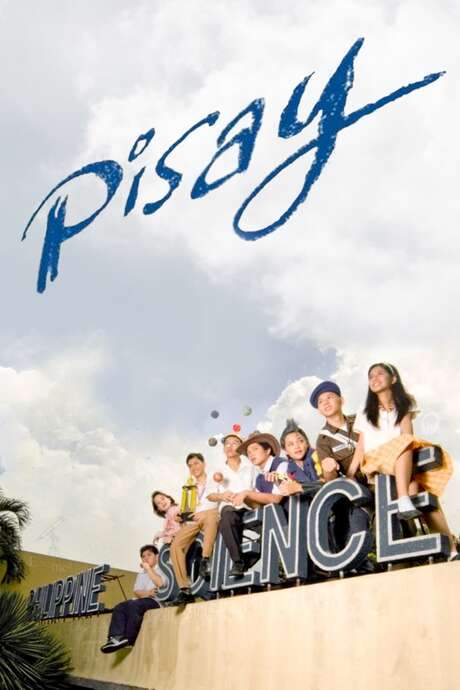
Set against the final years of Martial Law under Marcos, the film follows six scholars of the Philippine Science High School as they pursue their dreams. It tracks a freshman from 1982 through 1986, showing how the oppressive political climate cannot extinguish their ambition.


Does Pisay have end credit scenes?
No!
Pisay does not have end credit scenes. You can leave when the credits roll.
Meet the Full Cast and Actors of Pisay
Explore the complete cast of Pisay, including both lead and supporting actors. Learn who plays each character, discover their past roles and achievements, and find out what makes this ensemble cast stand out in the world of film and television.

Arnold Reyes
Mr. G
Eugene Domingo
Ms. Casas
Jonathan Neri
Andy Gallardo
Annicka Dolonius
Wena Ledesma
EJ Jallorina
Euri Calo
Carl John Barrameda
Mateo Markado
Elijah Castillo
Minggoy Lamazan
Ama Quiambao
Lola
Bernardo Bernardo
Quizmaster
Micah Muñoz
Marcus
Alfred Labatos
Daki Lim
Gammy Lopez
Rom Meneses
Shayne Fajutagana
Liway Claver
Claudine Najera
Ms. Pasillio
Rowena Basco
Ms. Fanny
External Links and Streaming Options
Discover where to watch Pisay online, including streaming platforms, rental options, and official sources. Compare reviews, ratings, and in-depth movie information across sites like IMDb, TMDb, Wikipedia or Rotten Tomatoes.





Take the Ultimate Pisay Movie Quiz
Challenge your knowledge of Pisay with this fun and interactive movie quiz. Test yourself on key plot points, iconic characters, hidden details, and memorable moments to see how well you really know the film.
Pisay Quiz: Test your knowledge of the 2007 film Pisay, which follows the lives of PSHS students during the late Marcos era.
In which year did Minggoy hope to see Halley's Comet after graduation?
Full Plot Summary and Ending Explained for Pisay
Read the complete plot summary of Pisay, including all major events, twists, and the full ending explained in detail. Explore key characters, themes, hidden meanings, and everything you need to understand the story from beginning to end.
The film unfolds as a tapestry of lives from the Philippine Science High School’s 1986 batch, weaving together the hopes, tensions, and small triumphs of students and their faculty during the late Marcos era. At the center of the freshman year is Rom [Gammy Lopez], a working-class student who is late to join the school and quickly finds himself navigating his growing romance with Wena [Annicka Dolonius]. Their relationship collides with the school’s strict policy on student romances and the concern that such distractions might hurt grades, a conflict voiced by Mrs. Casas [Eugene Domingo], a teacher whose authority underscores the tension between youthful longing and institutional rules. The pressure culminates in a charged moment when Rom forcibly kisses Wena, a scene that leads Wena to end the relationship and return the memorabilia they shared, signaling a painful but defining separation as they move forward on separate paths.
In sophomore year, Mateo [Carl John Barrameda] wrestles with geometry and dormitory bullying while the country mourns the assassination of Ninoy Aquino. The atmosphere of national upheaval seeps into the classroom, and Mateo opens up about a fading passion for study as his final exam looms. His teacher’s belief in his effort gives him a glimmer of purpose, even as he ultimately fails the final and is expelled. Yet the final turn comes with a quiet vindication: the geometry teacher helps him understand the bell curve and reminds him that he did his best despite his personal struggles. In a last act of resistance, Mateo sabotages a bully’s lab experiment, a moment that embodies the blend of personal hurt and rebellious energy that characterizes the period.
Liway [Shayne Fajutagana], a bold voice with sharp political insight, commands the junior-year narrative with her wit and ideals. She excels in humanities and politics but struggles with chemistry, and she forms a bond with Andy [Jonathan Neri] over a chemistry project that blossoms into romance. Liway becomes a outspoken critic of plans to split classes by academic performance, clashing with Ms. Casas over school amenities and budgets. The political climate tightens when Liway’s family faces persecution, forcing her to flee to the Netherlands, leaving Andy to present their project alone. A postcard from Liway arrives later, a bittersweet reminder of the distance that politics can impose on personal connections.
Senior year brings together the school’s theatre-leaning faculty and students as Mr. G [Arnold Reyes] and Ms. Fanny [Rowena Basco] guide Euri [EJ Jallorina] in making plays that speak to the era’s crisis. Euri’s talent for drama inspires him to challenge the PSHS restrictions on college choices, choosing Theatre Arts over a science-focused path and reflecting a broader push to follow passion in the face of conformity. The relationship between art and politics resonates throughout the year, revealing how creative expression becomes a form of resistance and personal truth.
Across these years, Minggoy [Elijah Castillo] remains the constant thread—the boy obsessed with astronomy who waits for Halley’s Comet and grows closer to the other main characters while serving as a bridge between their stories. His health darkens as senior year unfolds, and he suffers a serious illness that prevents him from attending graduation, a poignant counterbalance to the students’ graduation excitement.
When the People Power Revolution erupts, Daki [Alfred Labatos] becomes a catalyst for collective action, urging his classmates to join the momentous changes taking shape outside the school walls. Mrs. Casas confronts her fears about disappearances during martial law and is granted leave to finish her dissertation, a quiet but powerful moment of personal resolve. On the eve of graduation, Wena tells Rom that she will move to the United States with her family, and Rom jokingly asks her to be his partner at the graduation ball, a tender wish against the broader currents of history.
In a scene that ties personal growth to larger historical events, Mateo returns to PSHS for a visit and is welcomed by his old geometry teacher, signaling a circle of return and reconciliation despite the campus’s upheavals. The celebrations culminate with Minggoy’s grandmother sharing a lineage link—born in the same year Halley’s Comet last appeared (1910)—and a moment of shared wonder as they look up at the Moon through Minggoy’s telescope. The film closes with a quiet, aching beauty: the students are called one by one by their teachers to the stage, but Minggoy’s chair remains empty, a visual poem about friendship, loss, and the enduring pull of memory.
Throughout, the ensemble cast grounds the story in rich, intimate portraits of ambition, love, and resilience. The characters’ arcs—Rom’s tentative romance, Mateo’s intellectual and emotional struggles, Liway’s political awakening and exile, Euri’s artistic leap, and Minggoy’s quiet science-driven optimism—combine with the political upheaval to paint a nuanced, life-sized portrait of youth under an era of change. The film never sermonizes; instead, it invites reflection on how a single school year can encapsulate a nation’s tensions and a generation’s hopes, leaving viewers with a sense of both closure and the unfinished business of growing up in a time when the world outside the classroom was itself in flux.

Coming soon on iOS and Android
The Plot Explained Mobile App
From blockbusters to hidden gems — dive into movie stories anytime, anywhere. Save your favorites, discover plots faster, and never miss a twist again.
Sign up to be the first to know when we launch. Your email stays private — always.
Explore the mobile appWatch Trailers, Clips & Behind-the-Scenes for Pisay
Watch official trailers, exclusive clips, cast interviews, and behind-the-scenes footage from Pisay. Dive deeper into the making of the film, its standout moments, and key production insights.
Pisay Themes and Keywords
Discover the central themes, ideas, and keywords that define the movie’s story, tone, and message. Analyze the film’s deeper meanings, genre influences, and recurring concepts.

Unlock the World of Movies with Our Comprehensive Wiki
Dive into our Movie Wiki for in-depth film encyclopedia entries, including cast biographies, production trivia, plot synopses, behind-the-scenes facts, and thematic analyses. Whether you’re researching iconic directors, exploring genre histories, or discovering hidden easter eggs, our expertly curated movie database has everything you need to fuel your cinematic passion.

Similar Movies To Pisay You Should Know About
Browse a curated list of movies similar in genre, tone, characters, or story structure. Discover new titles like the one you're watching, perfect for fans of related plots, vibes, or cinematic styles.







Quick Links: Summary, Cast, Ratings, More

What's After the Movie?
Not sure whether to stay after the credits? Find out!
Check out our other apps:

SAT Sphere
Build confidence for the Digital SAT.

Mori Atlas
Discover wild places worth protecting.

Luntero
Search smarter for a home in Amsterdam.

Plot Explained
Unravel movie endings and hidden clues.

Pokechamp
Dive into Pokémon data and battle logic.

Driving Theory
Get ready for your European theory test.

Movie Dust
Plan your next cinema trip with ease.

Musemap
Find art and culture as you travel.

Selkobase
Compare credentials before committing.

Local Manual
Turn an unfamiliar country into practical next steps.

Lernavi
Compare school systems before your next move.

GymRoam
Find a workout stop wherever your plans take you.
Explore Our Movie Platform
New Movie Releases (2026)
Famous Movie Actors
Top Film Production Studios
Movie Plot Summaries & Endings
Major Movie Awards & Winners
Best Concert Films & Music Documentaries
Movie Collections and Curated Lists
© 2026 What's After the Movie. All rights reserved.
Privacy Policy