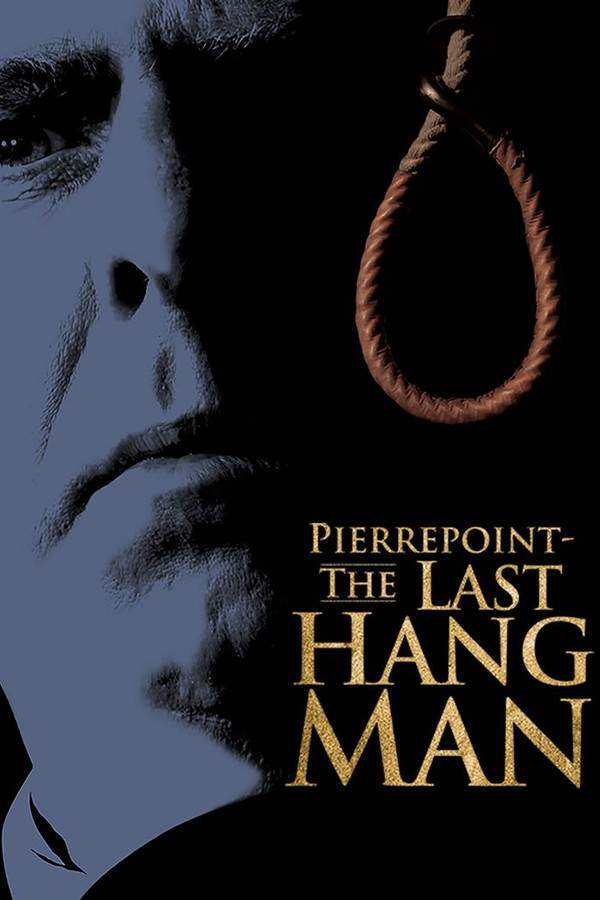
Pierrepoint 2007


Directed by

Adrian Shergold
Made by

IFC First Take
Where to Watch Pierrepoint
See current US streaming, rental, and purchase options for Pierrepoint (2007) via JustWatch.









Pierrepoint Plot Summary
Read the complete plot summary and ending explained for Pierrepoint (2007). From turning points to emotional moments, uncover what really happened and why it matters.
Albert Pierrepoint embarks on a solemn journey to become a prison executioner, following in the footsteps of his father. Approaching his grave vocation with a sense of seriousness and dedication, Pierrepoint applies a meticulous blend of science and logic to every hanging he performs. He possesses an uncanny ability to swiftly calculate the ideal length for the gallows rope, taking into account the height, weight, and physical constitution of each condemned soul. Unlike some of his peers, who wear their emotions on their sleeves, Pierrepoint is not inherently cruel or cold-hearted; he simply perceives execution as a job—a task to be executed properly, devoid of excessive emotion.
As Albert’s proficiency catches the eye of the British government, he and his wife, Annie bask in the anticipation of new opportunities that lie ahead. They receive the news that their husband is deemed the best executioner in Britain, destined to become the embodiment of England’s efficient and humane execution system. His journey takes a daunting turn when he is dispatched to Germany to carry out the execution of 47 Nazi war criminals following the harrowing Belsen trials in 1945. Though he is overwhelmed by the sheer number of deaths placed before him, Pierrepoint executes his duties with a chilling resolve. However, one poignant incident brings his deeply-held values to the forefront; when a body arrives lacking a coffin, he passionately demands it be provided, asserting that the deceased deserves dignity in death after paying the ultimate price.
As time passes, the emotional toll of his work begins to weigh heavily on Albert. He gains notoriety within his community, where some neighbors commend him for “stringing up” criminals, while others vocally rebuke him for enforcing the controversial capital punishment. To accommodate their changing circumstances and status, Albert and Annie decide to purchase a pub nearby, which flourishes, buoyed by Albert’s newfound fame.
However, Pierrepoint’s composure faces a harrowing test when he is tasked with executing a dear friend, James “Tish” Corbitt, a gentle soul who unfortunately fell into a fit of jealousy and committed murder. Confronted with the inherent tragedy of their friendship, Albert struggles to maintain his usual stoic façade, choosing instead to offer his friend comforting words during his final moments. Tish meets his fate with an almost serene acceptance, uttering the final words, >“Thank you, Albert,” as the hood is drawn over his face.
Later that evening, in the refuge of their pub, Albert seeks solace in sharing his torment with Annie, who finds discomfort in his confession. The couple had previously established an unspoken rule—“never talk about it.” Yet, overwhelmed by sorrow and guilt, Albert reveals the profound anguish he feels, doubting not only the morality of his profession but his ability to continue in a role that seems increasingly unbearable.
The emotional strain reaches a boiling point when Pierrepoint is assigned the execution of Ruth Ellis, a captivating young woman found guilty of murdering her lover. As the public protests against her fate erupt, chaos surrounds Pierrepoint, with hostile mobs outside the prison shaking and spitting on his vehicle as he makes his way home. After executing more than 335 individuals, and achieving a record time for the fastest hanging at just 7.5 seconds, Albert Pierrepoint ultimately arrives at a life-altering decision—he resigns from his position, leaving behind the weight of a profession that had transformed him in ways he never imagined.
Pierrepoint Timeline
Follow the complete movie timeline of Pierrepoint (2007) with every major event in chronological order. Great for understanding complex plots and story progression.
Albert's Training
Albert Pierrepoint begins his journey to become a prison executioner, following in the footsteps of his father who held the same job. He approaches the training with seriousness, applying scientific methods to ensure each execution is performed correctly and humanely.
Recognition from the Government
As Albert's skills as an executioner are recognized, he and his wife Annie find excitement in the new opportunities that arise. The British government acknowledges him as the best executioner, emphasizing the importance of a swift and humane execution process.
The Belsen Trials
In 1945, after the Belsen trials, Albert is tasked with executing 47 Nazi war criminals in Germany. Despite being staggered by the scale of the task, he executes his duties with precision, highlighting his commitment to his role.
A Crisis of Conscience
During the executions, Albert encounters a moment that shakes him to his core when one of the executed is left without a coffin. He passionately demands that the body be treated with dignity, revealing his inner values and sense of morality.
Rising Fame
As Albert continues his work, he becomes a local celebrity, praised by some for his efficiency while criticized by others for his role in capital punishment. This duality begins to weigh heavily on him, adding to his emotional turmoil.
Buying the Pub
Albert and Annie decide to purchase a nearby pub, hoping to capitalize on Albert's newfound fame. The business begins to thrive, and it becomes a gathering spot for locals who hold differing opinions about Albert's profession.
Executing a Friend
Tragedy strikes when Albert is required to execute his friend James Corbitt, known as 'Tish.' Despite the emotional weight of the situation, Albert performs his duty, speaking kindly to Tish, who meets his end with a smile and gratitude.
Emotional Breakdown
After executing Tish, Albert experiences a deep emotional breakdown, sharing his anguish with Annie. Their previously established rule of silence about his job crumbles as he confesses his guilt and the toll the execution has taken on him.
The Ruth Ellis Execution
Albert is called to execute Ruth Ellis, a young woman convicted of murder. The public outcry against her execution is intense, with angry mobs protesting outside the prison, reflecting the contentious nature of capital punishment during this time.
Resignation from the Profession
After completing over 335 executions and achieving a record for the fastest hanging, Albert reaches his breaking point. He ultimately resigns from his position as an executioner, feeling the weight of the moral implications of his work.
Pierrepoint Characters
Explore all characters from Pierrepoint (2007). Get detailed profiles with their roles, arcs, and key relationships explained.
Albert Pierrepoint
Albert Pierrepoint is a dedicated and methodical prison executioner who approaches his job with a rational mindset. Though not devoid of emotion, he embodies an almost scientific understanding of his role. His journey reflects the struggle between duty and his growing moral dilemmas, particularly as he faces the executions of people he knows personally.
Annie Pierrepoint
Annie is Albert's supportive wife, who navigates her discomfort with his occupation. She represents the personal side of Pierrepoint's life, often caught in the conflict between understanding her husband's duty and the emotional toll it takes on him. Annie's reaction to Albert’s inner turmoil adds depth to the theme of guilt and the impact of his profession on family life.
James Corbitt
James Corbitt, known as 'Tish', is a meek man who becomes a victim of Pierrepoint's profession. His friendship with Albert adds an emotional layer to the story, transforming a typical execution into a personal tragedy for Pierrepoint. His calm acceptance of his fate contrasts sharply with Albert’s internal struggle, highlighting the complex nature of human emotions in life-or-death situations.
Pierrepoint Settings
Learn where and when Pierrepoint (2007) takes place. Explore the film’s settings, era, and how they shape the narrative.
Time period
1945
Set in the aftermath of World War II, specifically around 1945, the film touches on the repercussions of the war and the justice system's attempt to address war crimes. This period was marked by societal debates surrounding execution and justice, particularly following the harrowing Belsen trials. Pierrepoint's role as an executioner becomes particularly poignant against the backdrop of these significant historical events.
Location
Germany, Britain
The movie takes place primarily in Britain and Germany, highlighting the contrasting societal views on capital punishment. Britain is depicted as grappling with morality and justice while Germany serves as a backdrop to the post-war trials of Nazi war criminals. These locations play a crucial role in shaping Pierrepoint's professional experiences and emotional conflicts.
Pierrepoint Themes
Discover the main themes in Pierrepoint (2007). Analyze the deeper meanings, emotional layers, and social commentary behind the film.
⚖️
Justice
The theme of justice is central to Pierrepoint's story, exploring the complexities surrounding capital punishment. The film raises questions about morality, the effectiveness of the justice system, and the emotional burdens carried by those who enforce it. Pierrepoint embodies the conflict between duty and personal moral struggles.
💔
Guilt
Guilt permeates Pierrepoint's experiences as he grapples with the emotional aftermath of his job. The executions take a toll on his psyche, particularly when he faces executing a friend. This theme emphasizes the psychological impact of carrying out such duties and the weight of personal connections intertwined with professional responsibilities.
🏛️
Authority
The theme of authority highlights Pierrepoint's position as the best executioner in Britain, tasked with enforcing the law. His authority is challenged by public opinion and his own moral beliefs, leading to an internal conflict that ultimately influences his choice to resign. The film critiques the nature of authority in the context of life and death decisions.

Coming soon on iOS and Android
The Plot Explained Mobile App
From blockbusters to hidden gems — dive into movie stories anytime, anywhere. Save your favorites, discover plots faster, and never miss a twist again.
Sign up to be the first to know when we launch. Your email stays private — always.
Explore the mobile appPierrepoint Spoiler-Free Summary
Discover the spoiler-free summary of Pierrepoint (2007). Get a concise overview without any spoilers.
In post‑war Britain a nation still echoing with the clang of justice and the hush of mourning, Albert Pierrepoint has inherited his father’s grim trade and turned it into a meticulous craft. With a cold, almost clinical precision, he treats each hanging as a problem of physics, measuring weight, height and rope length with the same exactness a surgeon might apply to a scalpel. His reputation for efficiency spreads beyond the stone walls of the prisons, making him the country’s most trusted—if unsettling—symbol of a system that prides itself on humane execution.
Beside him, his wife Annie is the quiet anchor in a life that demands emotional distance. Their partnership is built on unspoken rules and mutual support, yet the very nature of Albert’s work begins to stir doubts that neither can ignore. The couple’s modest world is increasingly invaded by a public that is split between admiration for the “clean” administration of justice and a growing chorus of voices demanding its abolition. This societal rift casts a long shadow over their domestic routine, turning ordinary conversations into thinly veiled examinations of conscience.
When the government dispatches Albert to the continent to carry out the sentences of those condemned for wartime atrocities, the stakes shift from domestic order to an international reckoning. The task places him at the crossroads of personal duty and the broader ethical debates ignited by the recent tribunals. In this charged atmosphere, the precision of his trade collides with the weight of historical vengeance, prompting him to confront the deeper meaning of his role.
Against a backdrop of a nation rebuilding itself, the film weaves a somber, introspective tone that probes the paradox of a man who views execution as a job, while the world around him questions whether the job should exist at all. The story lingers on the uneasy balance between methodical professionalism and the inevitable moral turbulence that follows, inviting the audience to consider where justice truly ends and humanity begins.
Movies with Similar Twists and Themes
Uncover films that echo the narrative beats, emotional arcs, or dramatic twists of the one you're exploring. These recommendations are handpicked based on story depth, thematic resonance, and spoiler-worthy moments — perfect for fans who crave more of the same intrigue.



Featured on this page

What's After the Movie?
Not sure whether to stay after the credits? Find out!
Check out our other apps:

SAT Sphere
Build confidence for the Digital SAT.

Mori Atlas
Discover wild places worth protecting.

Luntero
Search smarter for a home in Amsterdam.

Plot Explained
Unravel movie endings and hidden clues.

Pokechamp
Dive into Pokémon data and battle logic.

Driving Theory
Get ready for your European theory test.

Movie Dust
Plan your next cinema trip with ease.

Musemap
Find art and culture as you travel.

Selkobase
Compare credentials before committing.

Local Manual
Turn an unfamiliar country into practical next steps.

Lernavi
Compare school systems before your next move.

GymRoam
Find a workout stop wherever your plans take you.
Explore Our Movie Platform
New Movie Releases (2026)
Famous Movie Actors
Top Film Production Studios
Movie Plot Summaries & Endings
Major Movie Awards & Winners
Best Concert Films & Music Documentaries
Movie Collections and Curated Lists
© 2026 What's After the Movie. All rights reserved.
Privacy Policy