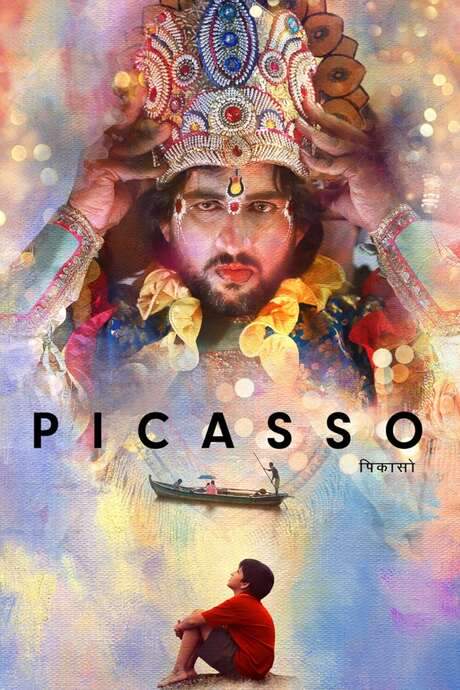
What Is Picasso About?
The premise of Picasso in 282 words, with nothing given away. The full story follows below.
In the wind‑kissed hills of Maharashtra’s Konkan belt, a modest village clings to tradition while the wider world whispers of distant possibilities. A national painting competition promises the winner a once‑in‑a‑lifetime journey to Spain, the birthplace of Pablo Picasso, where the chosen young artist could study the very roots of modern art. The prize is more than a trip—it is a gateway to a world of colour and technique that feels almost mythical to the villagers who have never left the coastline.
The story centers on Gandharva Pandurag Gawade, a seventh‑grader whose quiet talent with a brush catches the eye of the competition’s selectors. When the invitation arrives, it brings both exhilaration and a looming obstacle: a fee that his family simply cannot afford. Pandurang, his father, once a celebrated Dashavatari performer, now battles the grip of alcoholism that has muted his once‑vibrant artistry. His mother, frail and ailing, adds another layer of vulnerability to a household already weighed down by debt and uncertainty.
Against this backdrop, the film breathes a gentle, lyrical tone, letting the landscape and the rhythms of village life echo the inner turbulence of its characters. Art becomes a fragile thread that could stitch together broken hopes, offering a quiet sanctuary where grief and aspiration meet. The father‑son relationship pulses at the heart of the narrative, hinting at the possibility that shared creative passion might ignite a path toward redemption and renewal.
As the contest deadline draws near, the village’s modest homes and bustling streets hold their breath, framing a story that balances the stark realism of everyday struggle with the soaring dream of a canvas waiting to be painted in the light of a far‑away Spanish sunrise.
What Happens in Picasso?
The complete story of Picasso, from the first scene to the last, in 498 words (about 2 minutes). Spoilers throughout. Names in the text link to 6 cast member pages.
Spoilers ahead
Gandharva Pandurang Gawade, a seventh-grade student from a remote village in the Konkan belt of Maharashtra, stands at the center of a hopeful moment. He is selected for the national level Picasso Arts Scholarship, a competition that promises a transformative journey: the winner gets to travel to Spain—Picasso’s birthplace—to further refine their art. The news arrives with a practical obstacle, though—the fee required to move to the next level of the competition. Gandharva shares this detail with his family, only to hear the painful truth that they cannot afford it.
Gandharva’s father, Pandurang Gawade, is a Dashavatari artist who performs in a nearby village. Once a capable actor, he now wrestles with the shadow of alcohol addiction, a struggle that has dimmed his former talents and strained the family’s resources. The mood at home is heavy: an ailing mother and mounting debt compound the pressure, threatening to derail the young boy’s dream before it can truly take flight. The family’s challenges are not just monetary; they touch the heart of their daily life, testing hope against hardship.
The narrative focuses on whether Pandurang can confront his demons and rekindle the artistry that once carried him and his family through tough times. It also follows Gandharva as he holds fast to a dream of Spain, hoping that this opportunity might open a doorway to a brighter future for himself and those he loves. The film frames art as a possible lifeline, suggesting that creative expression can heal wounds that money, illness, and despair cannot easily mend.
Gandharva’s world is deeply rooted in local culture and performance. The story introduces theatre artists who shape the village’s artistic fabric: Bappu and Shreenath Ambeskar, whose presence underscores the communal nature of art-making and the steady support networks that sustain young talents. Their roles illuminate how performance traditions—like Dashavatari—live on through communities that nurture new generations of artists.
In a meta-theatrical thread, the film features a play-within-a-play segment that blends the stage with life offstage. The in-play characters add texture to the storytelling: [Narad] in the play, brought to life by Vitthal Gaonkar, and [Mohini] in the play, portrayed by Nilkanth Sawanth. This interplay emphasizes how art mirrors life and how the boundaries between theatre and real life can blur, offering a richer understanding of character, fate, and resilience.
At its core, Picasso is a story about fathers and sons, about hopes and dreams, and about the ways life can imitate art even in the face of overwhelming odds. It explores how art—whether in a traditional performance, a classroom, or a festival stage—can heal, unite, and inspire. The film suggests that the pursuit of beauty and mastery is not just a personal quest but a communal one, capable of lighting a path through debt, illness, and despair toward something enduring and transformative. Picasso, in its gentle, hopeful arc, invites the audience to believe that dedication, culture, and love for art can sustain a family and lift a young dreamer toward a Spain-bound horizon.
Picasso Timeline: Every Key Event in Order
12 key events in the order they happen, from “Gandharva is selected for the Picasso Arts Scholarship” to “Art as a healing force”. 10 events name a place, across 8 locations.
- 1
Gandharva is selected for the Picasso Arts Scholarship
A seventh-grade student Gandharva Pandurag Gawade from a remote village in the Konkan belt of Maharashtra earns a spot at the national level of the Picasso Arts Scholarship. The prize includes a chance to travel to Picasso's birthplace, Spain, to further his art. The selection sets the dream in motion for him and his family.
Where:Gandharva's home village, Konkan, Maharashtra
- 2
Gandharva informs his parents
Gandharva breaks the news of his selection and explains that a fee is required to advance to the next round. He asks for financial support, hoping his family can help, but his parents react with concern about whether they can manage the cost.
Where:Home in Konkan
- 3
Parents can’t afford the fee
Despite Gandharva's excitement, his parents tell him they cannot afford the required fee to continue in the competition. The financial barrier immediately threatens the child's opportunity and long-term dream.
Where:Family home, Konkan
- 4
Pandurang performs Dashavatari in a nearby village
Pandurang, Gandharva's father, continues to perform as a Dashavatari artist in a nearby village. This work reflects his enduring talent and the distance between his past success and his current struggles.
Where:Nearby village, Konkan
- 5
Pandurang's addiction hampers him
Although once an accomplished actor, Pandurang's alcohol addiction now hinders his performances and daily life. The drinking problem compounds the family’s financial and emotional strain.
Where:Home and nearby village
- 6
Gandharva's mother falls ill
Gandharva's mother is described as ailing, adding emotional weight and increasing the guardians' burden. Her illness intensifies the pressure on the family as they try to keep Gandharva's dream alive.
Where:Family home, Konkan
- 7
Debt looms over the family
Debt hangs over the family, making Gandharva's participation seem even more uncertain. The combination of poverty, illness, and addiction frames the central obstacle to his Spain-bound dream.
Where:Konkan region
- 8
Gandharva's dream of Spain remains alive
Despite the obstacles, Gandharva's dream of going to Spain to hone his art remains a driving force. The story frames this journey as a test of perseverance and artistic faith.
Where:Gandharva's home; future destination Spain
- 9
Life imitating art as a central theme
Picasso is described as a story about fathers and sons, hopes and dreams, and life imitating art. The narrative suggests art can heal lives and help mend frayed relationships.
- 10
Can Pandurang reclaim his art?
The synopsis asks whether Pandurang can fight his demons and bring his art back to life. The answer hinges on his struggle and the family's willingness to support Gandharva.
Where:Konkan region
- 11
Prize promises travel to Spain
The prize for the winner includes travel to Spain, Picasso's birthplace, to further the artist's development. This potential reward raises the stakes for Gandharva and his family.
Where:Spain
- 12
Art as a healing force
Across the story's hardships, art is presented as a healing force that can bridge gaps between generations. The film emphasizes the transformative power of creativity in their lives.
Who Are the Main Characters in Picasso?
7 characters, among them Gandharva Pandurang Gawade (Samay Tambe), Pandurang Gawade (Prasad Oak) and Gandharva's Mother (Ashwini Mukadam): who each one is and the part they play in the story. Every profile links to the actor’s page.
- GP
Gandharva Pandurang Gawade (Samay Tambe)
Played by Samay Tambe
A bright seventh-grade student from a remote Konkan village, Gandharva is determined to chase his dream despite financial hurdles. He balances school, family pressures, and a deep love for art, especially painting and theatre. His journey to Spain symbolizes hope that art can transform not only his life but his family's future.
- 🎯 Determined
- 🧭 Dreamer
- 💪 Resilient
- PG
Pandurang Gawade (Prasad Oak)
Played by Prasad Oak
A Dashavatari artist who once shone on stage but now struggles with alcohol addiction. He carries the weight of debt and an ailing mother, which strain the family and threaten Gandharva's scholarship path. His fight to reclaim his art life is central to the film's emotional arc.
- 🎭 Artist
- 💔 Struggling
- 🌀 Redemption
- GM
Gandharva's Mother (Ashwini Mukadam)
Played by Ashwini Mukadam
Ailing yet resilient, she anchors the family with quiet strength and hope. She endures illness and mounting debts while supporting Gandharva’s dream of Spain. Her presence highlights the familial costs of pursuing art in difficult circumstances.
- 💖 Caring
- 🏥 Illness
- 💪 Hope
- TA
Theatre Artist (Bappu)
Played by Bappu
A veteran performer in the local theatre scene who acts as a mentor to the younger artists. He embodies the traditional arts that shape Gandharva’s world and offers practical guidance amid hardship. His steady presence provides a bridge between old and new generations of performers.
- 🎭 Mentor
- 🧭 Guiding
- 🤝 Community
- TA
Theatre Artist (Shreenath Ambeskar)
Played by Shreenath Ambeskar
Another local theatre artist who preserves the Dashavatari tradition and contributes to the troupe’s dynamic. He represents the communal support network around Gandharva and his family. His interactions emphasize the importance of art as a shared cultural practice.
- 🎭 Artist
- 👥 Community
- 🗺️ Tradition
- N(
Narad (In Play) – Vitthal Gaonkar
Played by Vitthal Gaonkar
A mythic figure appearing within the play's frame, Narad serves as a guide and commentator. He enriches the narrative by linking theatre with myth and offering meta-perspective on the characters’ journeys. His presence underscores theatre as a living, evolving art form.
- 🪐 Mythic
- 🗺️ Guide
- M(
Mohini (In Play) – Nilkanth Sawanth
Played by Nilkanth Sawanth
A mythic figure within the play's world who brings enchantment and complexity to the performance. Mohini’s role adds layers of temptation and wonder, weaving spiritual and artistic themes into the story. Her presence highlights the transformative power of performance.
- 🪄 Enchantment
- 🎭 Mythic
Where and When Is Picasso Set?
Picasso is set in Konkan belt, Maharashtra, India and Spain. Here is why the place matters to the story.
Where
Konkan belt, Maharashtra, India, Spain
Set in the remote Konkan belt of Maharashtra, the story unfolds in a coastal village where monsoon winds, fishing boats, and a tradition of theatre shape daily life. This region is known for its lush landscapes, rugged coastlines, and a strong culture of performing arts that fosters Gandharva's creative spark. The narrative also traces Gandharva's upcoming journey to Spain, Picasso's birthplace, as the scholarship's prize offers a path to his dreams.
- 🏞 Konkan coast
- 🏠 Rural village ambiance
- 🎭 Arts culture
What Are the Themes of Picasso?
3 ideas the story keeps returning to, among them Art & Healing, Family & Responsibility and Hope & Dreams.
-
01
Art & Healing
Art in Picasso serves as more than a showcase of skill; it becomes a language that heals wounds within a fragile family. Gandharva's devotion to his art offers a doorway for his father to confront his demons and for the whole household to envision a brighter future. The film frames creativity as a catalyst for reconciliation, growth, and resilience.
-
02
Family & Responsibility
The film centers on the fragile balance between love and duty in a struggling family. Pandurang's battle with alcohol addiction threatens the dream Gandharva holds, creating tension at home. Their journey tests loyalty, forgiveness, and the cost of chasing art in the face of debt.
-
03
Hope & Dreams
Hope propels Gandharva toward Spain, representing a tangible horizon beyond poverty. The pursuit of the Picasso scholarship demonstrates the power of opportunity to change a family’s trajectory. The story suggests that even modest dreams can ignite courage and persistence in the hardest times.
What Kind of Film Is Picasso?
Hopeful in tone, with steady pacing and a straightforward story, going by the plot summary.
- Tone
- Hopeful
- Pacing
- Steady
- Story
- Straightforward
- Intensity
- Medium
- Ending
- Bittersweet
A hopeful yet melancholic drama that follows a young artist's dream against a backdrop of familial struggle, balancing sadness with the sustaining power of art.
- hopeful
- melancholic
- persevering
- dreamy
- rural
- sincere
- father-son relationship
- artistic passion
- financial struggle
- addiction
Content notes: alcoholism, financial hardship.
Quiz
How well do you remember Picasso? Test yourself on the story.