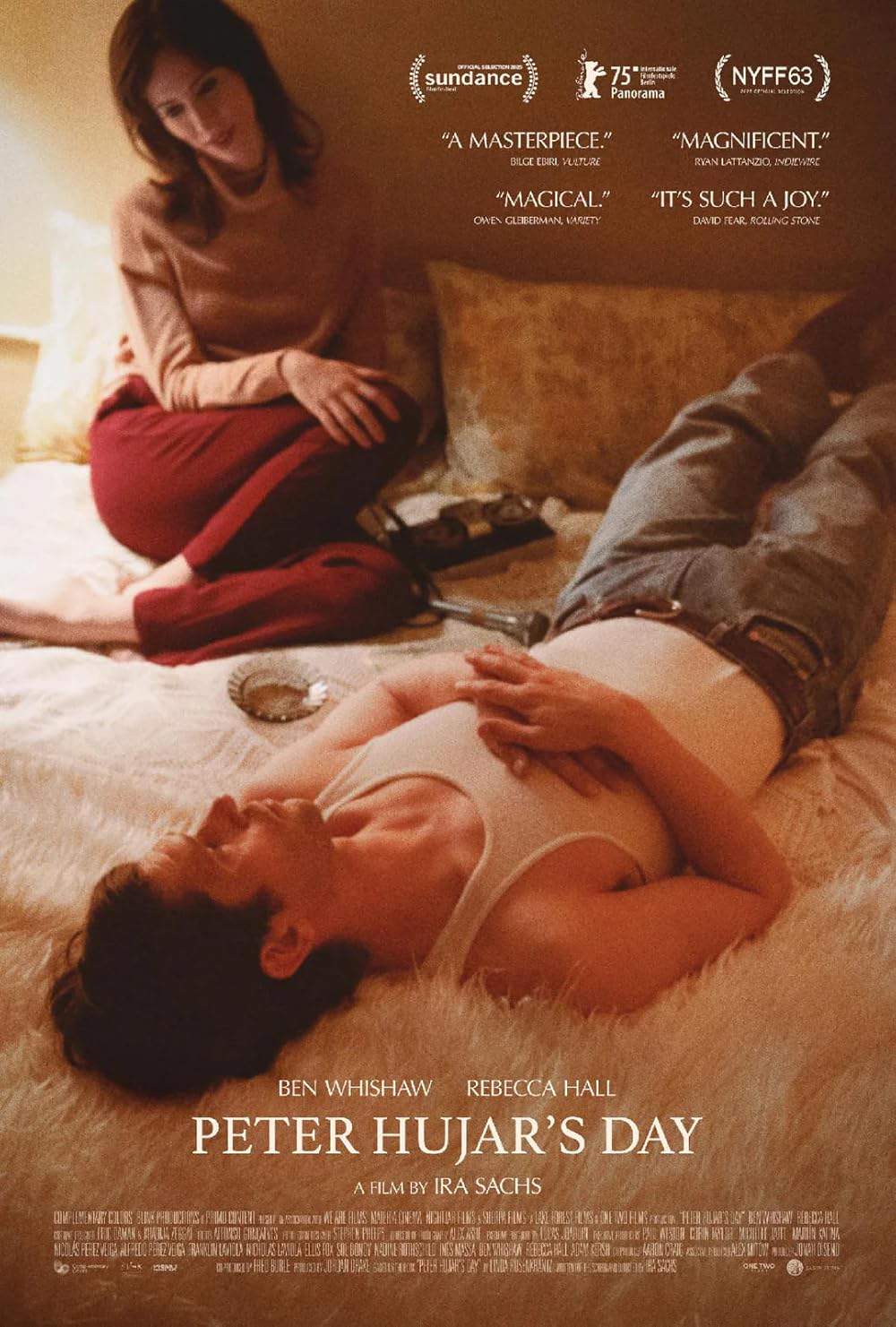
Peter Hujar's Day 2025

Directed by
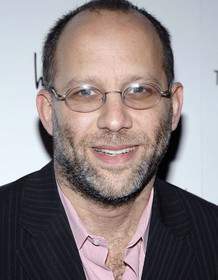
Ira Sachs
Made by

Jordan Drake Productions
Where to Watch Peter Hujar's Day
See current US streaming, rental, and purchase options for Peter Hujar's Day (2025) via JustWatch.








Peter Hujar's Day Plot Summary
Read the complete plot summary and ending explained for Peter Hujar's Day (2025). From turning points to emotional moments, uncover what really happened and why it matters.
On December 19, 1974, Ben Whishaw embodies Peter Hujar as he sits with writer Linda Rosenkrantz, Rebecca Hall recording the day for her book project about ordinary days in the lives of artists. The scene unfolds in her SoHo apartment, where Peter’s account unfolds like a conversation with the tape rolling, Linda interjecting now and then to prompt details, clarify memory, and coax out moments that might seem trivial but collectively sketch the texture of a day lived by a photographer who is always at work.
Peter starts by retracing the night and morning: he slept through his 8:30 a.m. alarm and wakes to a phone call from Jacqueline de Mornay, an Elle editor, who is on the way to collect his photographs of Lauren Hutton. While he waits, Susan Sontag calls, asking for directions to a gallery show before heading to Paris, and a small web of phone calls and deals begins to form around the day. Linda’s questions nudge Peter to admit a few half-truths—an old name-drop here, a hinted-forgotten detail there—as he recounts the moment when Jacqueline arrives, praises the photographs, but cannot name the payment, leaving Peter to puzzle over the money he’s owed. He flits from one ring to the next—neighbors, artists, editors—venting about one lengthy conversation before slipping back into bed for another hour.
The day clearly travels through errands and encounters. After waking again, Peter buys cigarettes, then phones Allen Ginsberg to arrange a portrait for The New York Times. He travels to the poet’s Lower East Side home, where Peter Orlovsky and others drift through the apartment as Ginsberg finishes calls and prepares to go outdoors. The initial resistance to a conventional indoor shoot softens as Ginsberg, wary at first, is coaxed into a session inside the apartment. Their walk through the neighborhood becomes a meditation—Ginsberg prefers outdoor spaces, wandering through abandoned blocks and even the burned-out Peace Eye Book Store while chanting and meditating. Peter explains the practical limits of the project to him, insisting that this is a real commission for The New York Times rather than a purely artistic favor, and gradually Ginsberg agrees to stay indoors for the portraits. A stop at a vegetable stand for persimmons punctuates the walk, a small detail that lands as part of the memory rather than a separate event. They talk of William S. Burroughs as a note for the following day’s shoot, and part on cordial terms, even as Peter confides that the Ginsberg session, in his own view, never fully connected and the resulting photo set feels more documentary than a true portrait.
Back at Peter’s apartment, the rhythm shifts to quieter, domestic work. He eats a simple meal and spends the evening developing film in the darkroom, carefully avoiding social calls by answering in a way that keeps others at bay. Linda’s reminder to write everything down finally lands on the page as he jots notes and then returns to the negatives. Calls come in from Glenn O’Brien, Vince Aletti, and later Fran Lebowitz, as the two move around the apartment—making tea, smoking, listening to records, sharing a brief, spontaneous dance—while the tape captures their ongoing conversation. The day’s guests arrive because the apartment lacks hot water, and Chinese takeout is shared as they reflect on the Ginsberg session and Peter’s sense that he spends his days in constant labor without a corresponding sense of achievement.
Even as friends come and go, Peter’s mind hovers over issues of artistic ambition. He prints for a restaurant commission and for other clients, initially disappointed by the Ginsberg contact sheets but gradually warming to them as he contemplates the possibility that photography can exist independently of the fame of its subjects. He struggles with fading eyesight while retouching prints, and the conversation with Linda turns to aging, physical decline, and the death of a fellow photographer. The night fades into routine: finishing prints for the next day, practicing a Bach piece on the harpsichord, brushing his teeth, and going to bed exhausted from work and cigarettes. Linda scolds him for smoking, and he admits a wish to quit, even as outside the window sex workers move about, one woman applying makeup in the reflection of a parked detention-center truck.
As the interview draws to a close, Peter reconstructs every significant and trivial moment of the day with a meticulous clarity that only a photographer could offer. The two of them look out at the river, sharing a quiet, reflective silence that seals the day’s memories. It’s a portrait of a life spent documenting others, of a man who measures worth not by grand gestures but by the accumulation of small, truthful fragments—moments of work, conversation, and ordinary life that together illuminate the strange, stubborn beauty of artistic pursuit.
Peter Hujar's Day Timeline
Follow the complete movie timeline of Peter Hujar's Day (2025) with every major event in chronological order. Great for understanding complex plots and story progression.
Interview setup in Linda's SoHo apartment
Linda begins recording as Peter recounts his previous day, sitting on the couch with a cigarette. He explains that he forgot to write things down until Linda called, and she prompts him to describe even the seemingly trivial moments. The framing sets the film’s structure as a day-in-the-life interview.
Alarm and first calls of the day
Peter wakes up to an alarm he almost misses and learns Jacqueline de Mornay will arrive to collect his Elle photographs. The call signals the start of a busy day of assignments and negotiations. He braces for the morning’s errands.
Sontag's call and Paris plans
Susan Sontag calls to ask for directions to Peter's gallery show, then leaves for Paris. The exchange shows how his day is threaded with literary and artistic figures. Peter juggles these calls as he tries to keep track of his schedule.
Jacqueline's arrival and departure with prints
Jacqueline arrives to collect the prints; she praises the photographs but cannot reveal payment details, which makes Peter suspicious. She departs with the prints, leaving him to tally what he’s owed. Linda interjects with questions that keep the memory of the day vivid.
Calls from neighbors and venting
Peter handles calls from neighbor Bob Mony and artist Ed Baynard, venting to Linda about Ed's lengthy conversation. He tallies his earnings, tries to stay on top of the day’s small dramas, and bounces between the phone and the notes Linda is taking. The sense of daily tedium and ambition grows.
A nap and a second awakening
After the flurry, Peter returns to bed for another hour, seeking rest amid the ongoing distractions. The quiet moment contrasts with the demands of the day and previews the afternoon’s portrait work. He stares at the ceiling, thinking about what lies ahead.
Call to arrange Ginsberg portrait; grocery run
Peter buys cigarettes, then calls poet Allen Ginsberg to arrange a portrait session for The New York Times. He travels to Ginsberg's Lower East Side apartment, where the poet and his visitors linger as phone calls are wrapped up. The day’s mood shifts toward an intimate, artist-to-artist encounter.
Ginsberg session begins and outdoor plan
Ginsberg is initially resistant, preferring outdoor photos rather than the conventional NYT portrait. He leads Peter through the neighborhood, posing among abandoned buildings and inside the burned-out Peace Eye Book Store while chanting and meditating. The environment becomes part of the portrait’s experimentation.
Indoor session and a decisive shift
Peter explains to Ginsberg that this is his first assignment for The New York Times and that he isn't representing corporate interests. Ginsberg's attitude softens, and they retreat indoors to finish the session. On the way back, they stop at a vegetable stand to buy persimmons.
Burroughs talk and lingering connection
They discuss William S. Burroughs, and they part on friendly terms, though Peter later admits the photographs didn't fully connect with the poet. The exchange leaves him contemplating how to frame his own work beyond his subjects. The afternoon mood shifts toward introspection.
Evening routine: dinner and notes
Back at his apartment, Peter eats a simple meal, lies to a caller to avoid socializing, and Linda reminds him to write down everything he did that day. He starts developing his film in the darkroom and keeps notes as the conversation with Linda continues. The routine blends work with memory and reflection.
Visitors arrive: O’Brien, Aletti, and Lebowitz
Glenn O’Brien, Vince Aletti, and Fran Lebowitz visit, and they discuss the Ginsberg session and Peter's feeling that he spends days working without real progress. The guests bring energy and different perspectives on photography and art. The mood deepens as the night wears on.
Vince's hot-water visit and takeout
Vince stops by because there is no hot water, and they share Chinese takeout while continuing their talk about the day’s events. The conversation touches on Peter’s sense of constant work and occasional frustration with his own ambitions. The casual meal reinforces the day’s intimate, lived-in atmosphere.
Night work, aging, and the closing to sleep
Peter spends the rest of the night printing restaurant commissions, retouching his negatives, and reflecting on aging and the death of a fellow photographer. He practices a Bach piece on his harpsichord, brushes his teeth, and goes to bed, exhausted from work and smoking. Outside, sex workers talk near a parked detention-center truck as the film ends with Peter and Linda looking out at the river.
Peter Hujar's Day Characters
Explore all characters from Peter Hujar's Day (2025). Get detailed profiles with their roles, arcs, and key relationships explained.
Peter Hujar - Ben Whishaw
Peter is a dedicated photographer navigating a day filled with notes, phone calls, and the pressure of producing meaningful portraits. He’s introspective, blunt at times, and consumed by the belief that his best work should outlive its subject. His routines—smoking, working late, and chasing assignments—reveal a driven artist wrestling with purpose and recognition.
Linda Rosenkrantz - Rebecca Hall
Linda acts as interviewer's guide and archivist, coaxing memories and details from Peter while shaping the day into a collectible narrative. She’s curious, probing, and patient, constantly prompting clarification and context. Her presence frames the material as both art project and intimate documentary.
Peter Hujar's Day Settings
Learn where and when Peter Hujar's Day (2025) takes place. Explore the film’s settings, era, and how they shape the narrative.
Time period
December 19, 1974
The events take place on a single December day in 1974, in the midst of New York’s gritty, creative era. The period is characterized by a nascent modern photography scene, literary circles, and a city that hums with artistic ambition. The day unfolds in real-time, with memory, interviews, and work piling up against the clock.
Location
SoHo, Lower East Side, New York City
The story unfolds mainly in a SoHo apartment in Manhattan, a hip, arts-focused loft setting that anchors the day’s conversations. It also moves through the writer Linda Rosenkrantz’s circles and a Lower East Side location for Ginsberg’s portrait session, painting a vivid picture of New York’s 1970s arts scene. The city itself feels intimate and lived-in, guiding the rhythm of interviews, phone calls, and improvisational photo sessions.
Peter Hujar's Day Themes
Discover the main themes in Peter Hujar's Day (2025). Analyze the deeper meanings, emotional layers, and social commentary behind the film.
📷
Portraiture
The film centers on capturing authentic likenesses, not just glossy images. Peter grapples with the ethics of representation, balancing artistic truth against the demands of editors and subjects. The Ginsberg portraits demonstrate how a session can become a dialogue about identity, memory, and artistic purpose. Ultimately, the work questions whether a photograph can ever fully capture a person.
🧠
Memory & Documentation
Linda’s act of recording every moment makes memory a performative act. The day is reconstructed through remembered details, phone calls, and interruptions, highlighting how memory shapes what ends up on film and in print. The interview format foregrounds the fragility and selectivity of recollection. The film asks what it means to document a life when memory itself is fallible.
🕰️
Aging & Mortality
Peter confronts aging through fading eyesight, the physical toll of prolonged work, and the looming sense that time is eroding his ability to realize his artistic aims. The death of a fellow photographer and the relentless grind of development cast mortality as an undercurrent in the day’s routine. The film uses these moments to reflect on legacy and the cost of a life spent chasing images.
🎯
Ambition vs Fame
The narrative probes whether work can stand on its own or become a by-product of celebrity. Peter’s desire for authentic, self-sustaining art clashes with external expectations and the allure of famous subjects. The day’s portraits serve as a test of artistic integrity against the pressures of publication and market value. It’s as much about who controls the image as about the image itself.

Coming soon on iOS and Android
The Plot Explained Mobile App
From blockbusters to hidden gems — dive into movie stories anytime, anywhere. Save your favorites, discover plots faster, and never miss a twist again.
Sign up to be the first to know when we launch. Your email stays private — always.
Explore the mobile appPeter Hujar's Day Ending Explained
Unravel the ending of Peter Hujar's Day (2025) with our detailed explanation. Understand the final scenes, character fates, and unresolved questions.
The film closes with Peter finally winding down after a day that has stretched from early‑morning phone calls to a late‑night watch over the street below his building. He and Linda sit on the rooftop, the city humming in the background, and Peter admits that his eyes are no longer as sharp as they once were, a fact that makes the act of printing his photographs feel both fragile and precious. He confides that the pictures he took of Allen Ginsberg turned out disappointingly flat, wondering whether a different chemistry—perhaps attraction—might have changed the result. His thoughts drift to a book he wants to assemble, “Portraits in Life and Death,” and he jokes about which of his friends—Susan Sontag, Vince Atletti, or Fran Lebowitz—should pen the introduction; ultimately, he imagines Sontag doing it.
Linda points out his almost total lack of vegetables and his endless smoking, and Peter acknowledges the habit as a “smoker’s hangover” that lingers all day. He promises he’d like to quit, yet the addiction feels as ingrained as the rhythm of his work. Their conversation turns to the idea that a person can look completely different from one photograph to the next, a transformation that rests on the final print. Peter leans his head onto Linda’s shoulder, a quiet gesture that underscores how, despite the surrounding fame and constant interruptions, his true intimacy lies in these simple, unglamorous moments.
The day finally ends with Peter brushing his teeth, playing Bach on a harpsichord, and slipping into sleep—only to be roused by the muffled sounds of sex workers fixing makeup in a van downstairs. He watches them through the window, a stray observation that hints at the perpetual undercurrent of the city’s gritty reality. In these last minutes, the film leaves us with a portrait of an artist balancing exhaustion, desire, and the relentless pursuit of a perfect print; a life that may feel routine on the surface, but is, in fact, a delicate act of preserving his vision long after the lights go out.
Peter Hujar's Day Spoiler-Free Summary
Discover the spoiler-free summary of Peter Hujar's Day (2025). Get a concise overview without any spoilers.
On December 19, 1974, in the dim glow of a SoHo apartment, photographer Peter Hujar sits down with writer Linda Rosenkrantz to record the ordinary hours of an artist’s life. The tape rolls as Peter retraces a single day — its phone calls, errands, and small encounters — while Linda listens with the patience of someone unearthing meaning from the mundane. What emerges is less an interview than a quiet excavation, an intimate portrait built from the very details most people would forget.
The world captured here is the downtown New York art scene at its most unguarded, a place where figures like Susan Sontag, Allen Ginsberg, and Fran Lebowitz drift in and out of conversations like neighbors passing through a hallway. Peter’s day unfolds in fragments — a phone ringing before noon, a cigarette bought on the corner, a portrait session that becomes a meditation on art and aging. There is no grand drama here, only the relentless rhythm of work: developing film, printing photographs, fielding calls, chasing payments, and the constant negotiation between creative ambition and the practical demands of getting by.
Directed with a documentary-like stillness, the film treats its central conversation as both subject and form. Ben Whishaw inhabits Peter with a weary, observant tenderness, while Rebecca Hall’s Linda serves as the gentle catalyst, coaxing memories to the surface and occasionally teasing out confessions Peter would rather let slide. The texture is intimate, almost diaristic, inviting viewers to eavesdrop on a friendship shaped by shared creative circles and the strange intimacy of being remembered by someone who notices everything.
At its heart, the film is a love letter to the quiet discipline of an artist’s life — the hours spent in the darkroom, the meals eaten alone, the music played at the end of a long day. It is also a meditation on time, mortality, and the ways in which a photographer’s eye turns inevitably on the world around him, including himself. Through Linda’s patient questioning and Peter’s candid recollections, a singular day becomes something larger: a window into the soul of an artist who believed that truth lived in the smallest, most honest fragments.
Movies with Similar Twists and Themes
Uncover films that echo the narrative beats, emotional arcs, or dramatic twists of the one you're exploring. These recommendations are handpicked based on story depth, thematic resonance, and spoiler-worthy moments — perfect for fans who crave more of the same intrigue.
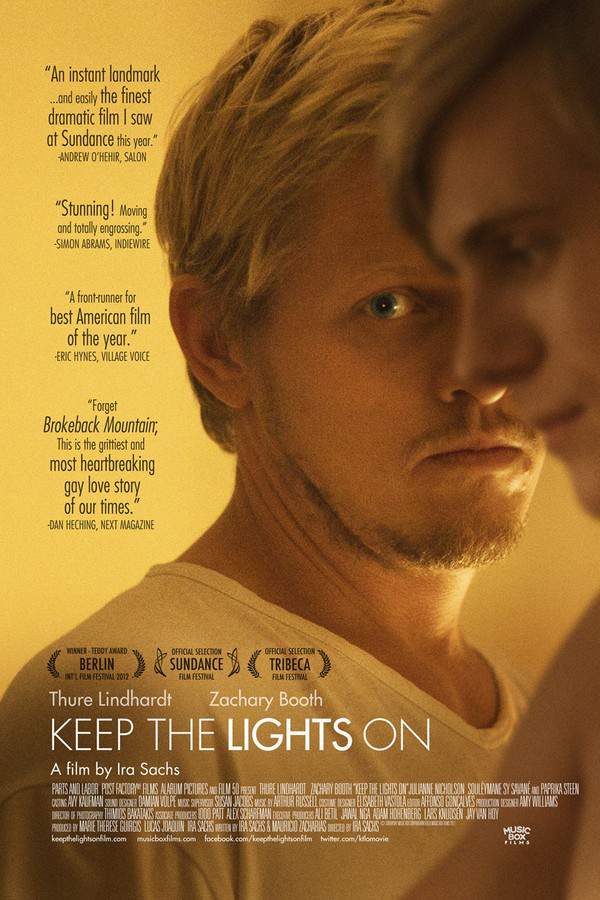


Featured on this page

What's After the Movie?
Not sure whether to stay after the credits? Find out!
Check out our other apps:

SAT Sphere
Build confidence for the Digital SAT.

Mori Atlas
Discover wild places worth protecting.

Luntero
Search smarter for a home in Amsterdam.

Plot Explained
Unravel movie endings and hidden clues.

Pokechamp
Dive into Pokémon data and battle logic.

Driving Theory
Get ready for your European theory test.

Movie Dust
Plan your next cinema trip with ease.

Musemap
Find art and culture as you travel.

Selkobase
Compare credentials before committing.

Local Manual
Turn an unfamiliar country into practical next steps.

Lernavi
Compare school systems before your next move.

GymRoam
Find a workout stop wherever your plans take you.
Explore Our Movie Platform
New Movie Releases (2026)
Famous Movie Actors
Top Film Production Studios
Movie Plot Summaries & Endings
Major Movie Awards & Winners
Best Concert Films & Music Documentaries
Movie Collections and Curated Lists
© 2026 What's After the Movie. All rights reserved.
Privacy Policy