Peter Hujar's Day 2025

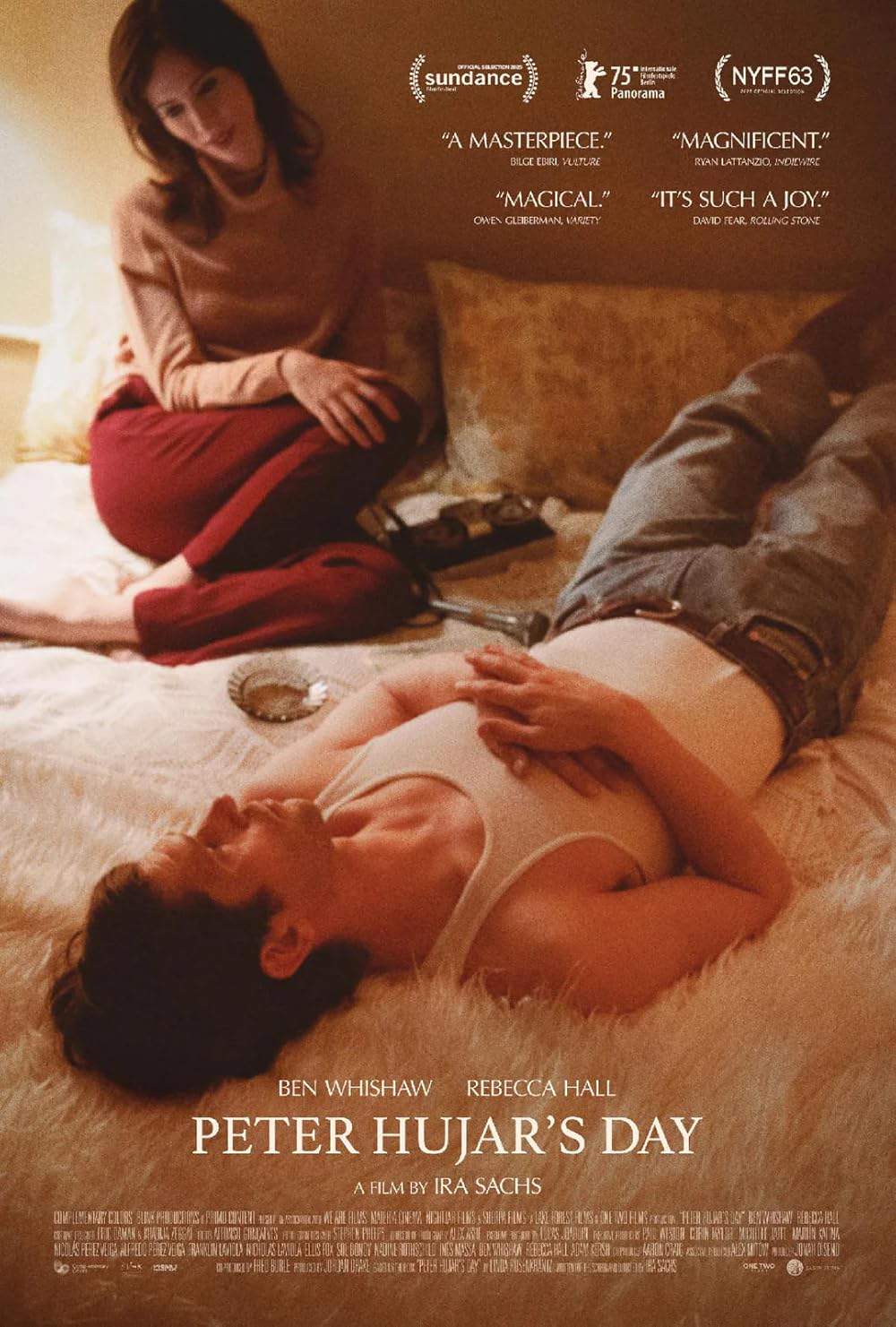
The newly uncovered 1974 audio dialogue between photographer Peter Hujar and his friend Linda Rosenkrantz provides a rare, candid look at New York’s downtown art world. Their conversation weaves together the cultural pulse of the era with Hujar’s personal struggles, artistic epiphanies, and the intimate dynamics that shape an artist’s life.



Does Peter Hujar's Day have end credit scenes?
No!
Peter Hujar's Day does not have end credit scenes. You can leave when the credits roll.
Where to Watch Peter Hujar's Day
See current US streaming, rental, and purchase options for Peter Hujar's Day (2025) via JustWatch.








Meet the Full Cast and Actors of Peter Hujar's Day
Explore the complete cast of Peter Hujar's Day, including both lead and supporting actors. Learn who plays each character, discover their past roles and achievements, and find out what makes this ensemble cast stand out in the world of film and television.

External Links and Streaming Options
Discover where to watch Peter Hujar's Day online, including streaming platforms, rental options, and official sources. Compare reviews, ratings, and in-depth movie information across sites like IMDb, TMDb, Wikipedia or Metacritic.







Ratings and Reviews for Peter Hujar's Day
See how Peter Hujar's Day is rated across major platforms like IMDb, Metacritic, and TMDb. Compare audience scores and critic reviews to understand where Peter Hujar's Day stands among top-rated movies in its genre.

The Movie Echo Score
Peter Hujar's Day elicits a divided response, marrying a modestly crafted visual record with uneven narrative momentum. Critics commend the film’s reverent tone and the nuanced performances of Whishaw and Hall, while several reviewers fault its protracted dialogue and sparse visual storytelling. Viewers who appreciate the film’s archival intimacy find it rewarding, yet others experience the pacing as tedious. Consequently, the work offers moments of artistic resonance but struggles to maintain consistent engagement throughout.
The Movie Echo Score Breakdown for Peter Hujar's Day

Art & Craft
In terms of direction and cinematography, the film receives both praise and criticism. Critics and several viewers note solid camerawork, careful production design, and moments of visual poise that capture 1970s New York. Conversely, some point to flat visual storytelling and editing choices—flashy frames and abrupt music—that draw attention away from the conversation. The overall craftsmanship is competent but uneven.

Character & Emotion
When assessing acting and emotional depth, reviewers largely highlight the chemistry between Whishaw and Hall. Performances are described as tender, nuanced, and capable of conveying the intimacy of a prolonged dialogue. A minority of users, however, find the characters’ conversation overly esoteric and difficult to relate to. Overall, the character work stands out as a strength that elevates the film’s intimacy.

Story & Flow
The narrative unfolds as an extended recorded conversation, emphasizing authenticity over conventional plot structure. Critics praise its originality and the way it captures a specific artistic moment, while others criticize the relentless dialogue for creating a sluggish middle act. Some viewers appreciate the poetic engagement of the exchange, yet the lack of clear narrative propulsion leads to a perception of tediousness for many.

Sensory Experience
Sound design receives commendation for its ability to evoke the ambient atmosphere of 1970s New York, and the musical cues occasionally enhance mood. However, visual styling is described as subdued, with some reviewers noting a scarcity of compelling imagery and the presence of jarring editing cuts. The sensory experience therefore oscillates between immersive moments and distracting technical choices.

Rewatch Factor
The film’s archival quality and strong performances give it a niche appeal that may attract repeat viewings among enthusiasts of art‑house cinema. Yet the heavy reliance on dialogue and uneven pacing discourage broader audiences from returning. Consequently, while it holds lasting value for a specific segment, its overall rewatch potential remains limited.

82
Metascore
6.5
User Score

6.3 /10
IMDb Rating

54
%
User Score
Full Plot Summary and Ending Explained for Peter Hujar's Day
Read the complete plot summary of Peter Hujar's Day, including all major events, twists, and the full ending explained in detail. Explore key characters, themes, hidden meanings, and everything you need to understand the story from beginning to end.
On December 19, 1974, Ben Whishaw embodies Peter Hujar as he sits with writer Linda Rosenkrantz, Rebecca Hall recording the day for her book project about ordinary days in the lives of artists. The scene unfolds in her SoHo apartment, where Peter’s account unfolds like a conversation with the tape rolling, Linda interjecting now and then to prompt details, clarify memory, and coax out moments that might seem trivial but collectively sketch the texture of a day lived by a photographer who is always at work.
Peter starts by retracing the night and morning: he slept through his 8:30 a.m. alarm and wakes to a phone call from Jacqueline de Mornay, an Elle editor, who is on the way to collect his photographs of Lauren Hutton. While he waits, Susan Sontag calls, asking for directions to a gallery show before heading to Paris, and a small web of phone calls and deals begins to form around the day. Linda’s questions nudge Peter to admit a few half-truths—an old name-drop here, a hinted-forgotten detail there—as he recounts the moment when Jacqueline arrives, praises the photographs, but cannot name the payment, leaving Peter to puzzle over the money he’s owed. He flits from one ring to the next—neighbors, artists, editors—venting about one lengthy conversation before slipping back into bed for another hour.
The day clearly travels through errands and encounters. After waking again, Peter buys cigarettes, then phones Allen Ginsberg to arrange a portrait for The New York Times. He travels to the poet’s Lower East Side home, where Peter Orlovsky and others drift through the apartment as Ginsberg finishes calls and prepares to go outdoors. The initial resistance to a conventional indoor shoot softens as Ginsberg, wary at first, is coaxed into a session inside the apartment. Their walk through the neighborhood becomes a meditation—Ginsberg prefers outdoor spaces, wandering through abandoned blocks and even the burned-out Peace Eye Book Store while chanting and meditating. Peter explains the practical limits of the project to him, insisting that this is a real commission for The New York Times rather than a purely artistic favor, and gradually Ginsberg agrees to stay indoors for the portraits. A stop at a vegetable stand for persimmons punctuates the walk, a small detail that lands as part of the memory rather than a separate event. They talk of William S. Burroughs as a note for the following day’s shoot, and part on cordial terms, even as Peter confides that the Ginsberg session, in his own view, never fully connected and the resulting photo set feels more documentary than a true portrait.
Back at Peter’s apartment, the rhythm shifts to quieter, domestic work. He eats a simple meal and spends the evening developing film in the darkroom, carefully avoiding social calls by answering in a way that keeps others at bay. Linda’s reminder to write everything down finally lands on the page as he jots notes and then returns to the negatives. Calls come in from Glenn O’Brien, Vince Aletti, and later Fran Lebowitz, as the two move around the apartment—making tea, smoking, listening to records, sharing a brief, spontaneous dance—while the tape captures their ongoing conversation. The day’s guests arrive because the apartment lacks hot water, and Chinese takeout is shared as they reflect on the Ginsberg session and Peter’s sense that he spends his days in constant labor without a corresponding sense of achievement.
Even as friends come and go, Peter’s mind hovers over issues of artistic ambition. He prints for a restaurant commission and for other clients, initially disappointed by the Ginsberg contact sheets but gradually warming to them as he contemplates the possibility that photography can exist independently of the fame of its subjects. He struggles with fading eyesight while retouching prints, and the conversation with Linda turns to aging, physical decline, and the death of a fellow photographer. The night fades into routine: finishing prints for the next day, practicing a Bach piece on the harpsichord, brushing his teeth, and going to bed exhausted from work and cigarettes. Linda scolds him for smoking, and he admits a wish to quit, even as outside the window sex workers move about, one woman applying makeup in the reflection of a parked detention-center truck.
As the interview draws to a close, Peter reconstructs every significant and trivial moment of the day with a meticulous clarity that only a photographer could offer. The two of them look out at the river, sharing a quiet, reflective silence that seals the day’s memories. It’s a portrait of a life spent documenting others, of a man who measures worth not by grand gestures but by the accumulation of small, truthful fragments—moments of work, conversation, and ordinary life that together illuminate the strange, stubborn beauty of artistic pursuit.

Coming soon on iOS and Android
The Plot Explained Mobile App
From blockbusters to hidden gems — dive into movie stories anytime, anywhere. Save your favorites, discover plots faster, and never miss a twist again.
Sign up to be the first to know when we launch. Your email stays private — always.
Explore the mobile appWatch Trailers, Clips & Behind-the-Scenes for Peter Hujar's Day
Watch official trailers, exclusive clips, cast interviews, and behind-the-scenes footage from Peter Hujar's Day. Dive deeper into the making of the film, its standout moments, and key production insights.
Peter Hujar's Day Themes and Keywords
Discover the central themes, ideas, and keywords that define the movie’s story, tone, and message. Analyze the film’s deeper meanings, genre influences, and recurring concepts.
Peter Hujar's Day Other Names and Titles
Explore the various alternative titles, translations, and other names used for Peter Hujar's Day across different regions and languages. Understand how the film is marketed and recognized worldwide.
Similar Movies To Peter Hujar's Day You Should Know About
Browse a curated list of movies similar in genre, tone, characters, or story structure. Discover new titles like the one you're watching, perfect for fans of related plots, vibes, or cinematic styles.






Quick Links: Summary, Cast, Ratings, More

What's After the Movie?
Not sure whether to stay after the credits? Find out!
Check out our other apps:

SAT Sphere
Build confidence for the Digital SAT.

Mori Atlas
Discover wild places worth protecting.

Luntero
Search smarter for a home in Amsterdam.

Plot Explained
Unravel movie endings and hidden clues.

Pokechamp
Dive into Pokémon data and battle logic.

Driving Theory
Get ready for your European theory test.

Movie Dust
Plan your next cinema trip with ease.

Musemap
Find art and culture as you travel.

Selkobase
Compare credentials before committing.

Local Manual
Turn an unfamiliar country into practical next steps.

Lernavi
Compare school systems before your next move.

GymRoam
Find a workout stop wherever your plans take you.
Explore Our Movie Platform
New Movie Releases (2026)
Famous Movie Actors
Top Film Production Studios
Movie Plot Summaries & Endings
Major Movie Awards & Winners
Best Concert Films & Music Documentaries
Movie Collections and Curated Lists
© 2026 What's After the Movie. All rights reserved.
Privacy Policy