What Is Panchavadi Palam About?
The premise of Panchavadi Palam in 348 words, with nothing given away. The full story follows below.
In a sleepy village where the rhythm of everyday life is punctuated by the occasional clatter of tractors and the murmur of gossip, the promise of a new bridge becomes the centerpiece of a swirling political drama. The prospect of linking the hamlet to the wider world is framed not by engineering marvels but by the desire of a local leader to see his name etched in stone, turning public works into a personal monument. The tension between progress and preservation looms over the landscape, hinting at the absurd lengths people will go to claim a slice of glory.
At the heart of the contest is Dussasana Kuruppu, a politician whose every decision seems to be filtered through the expectations of a domineering spouse, leaving him perpetually on the defensive. He leans on his cunning confidant, Shikhandi Pillai, whose slippery loyalty and sharp wit keep the wheels of ambition turning. Opposing them is the determined Ishak Tharakan, a figure whose own aspirations for the village presidency make him a natural adversary, and whose resolve adds a combustible edge to the negotiations. Together, these characters create a tableau of clashing motives, each maneuvering to tilt the balance of power in their favor.
The film’s tone walks a fine line between dark satire and heartfelt comedy, using the seemingly mundane topic of a bridge to expose the vanity and pettiness that can underlie public service. Rustic scenery and bustling village markets provide a vibrant backdrop, while the dialogue crackles with irony, allowing the audience to savor both the humor and the unease that comes from watching ordinary people become entangled in grandiose schemes. The narrative invites viewers to contemplate how personal ambition can reshape communal spaces, turning a simple crossing into a symbol of contested identity.
As plans are drafted and allegiances shift, the village finds itself caught in a web of promises and posturing. The stakes feel both locally intimate and universally resonant, promising a story where the line between civic duty and ego is forever blurred, leaving the audience eager to see how the fragile equilibrium will hold.
What Happens in Panchavadi Palam?
The complete story of Panchavadi Palam, from the first scene to the last, in 262 words (about 1 minute). Spoilers throughout. Names in the text link to 4 cast member pages.
Spoilers ahead
In a quiet village, a henpecked politician named Dussasana Kuruppu, Gopi, pushes to have his name attached to a brand-new bridge, even if that means demolishing a perfectly serviceable one. He rallies around him his crooked-minded right-hand figure, Shikhandi Pillai, Nedumudi Venu, and together they maneuver through a web of local politics. Opposing them is Ishak Tharakan, Thilakan, a determined leader who aims to thwart the scheme and seize the village presidency for himself. The political chess game quickly shifts from talk of engineering to a contest of loyalties and power.
To avoid a direct clash, the factions agree to relocate the bridge to a distant site, which also requires a new road. This compromise sets the stage for a costly decision, as two tenders—one for the bridge and one for the road—are awarded to two local contractors, one linked to the ruling party and the other backed by the opposition. The arrangement turns public works into a political battleground, with each side hoping the project will cement their control over the village.
On the day the bridge opens, during the wedding of Dussasana Kuruppu’s daughter, the minister of state for public works attends and witnesses the event. As guests stream across the newly finished structure to celebrate, the bridge fails, and the crippled Kathavarayan, portrayed by Sreenivasan, is killed. The tragedy underscores the human cost of political vanity and corruption, turning a ceremonial moment into a catastrophe.
The film closes with the broken bridge looming in the background, a stark image of how power struggles can erode both infrastructure and lives.
Panchavadi Palam Timeline: Every Key Event in Order
12 key events in the order they happen, from “Dussasana pushes for his name on a new bridge” to “Ending shot: broken bridge in the background”. 12 events name a place, across 9 locations.
- 1
Dussasana pushes for his name on a new bridge
A henpecked politician, Dussasana Kuruppu, presses to have his name attached to a new bridge. He argues that publicity will benefit the village, even if it means tearing down the existing bridge. His push sets the stage for political maneuvering and public dissatisfaction.
When:Pre-relocation phase Where:Village
- 2
Sikhandi Pillai engineers the demolition plan
Sikhandi Pillai, Dussasana's trusted ally with a crooked mind, fuels the scheme and polishes the manipulation. He helps push the demolition plan through the party ranks and coordinates with Dussasana. The pair's scheming heightens tensions with opponents.
When:Early planning Where:Village
- 3
Ishak Tharakan opposes the project and fights for the presidency
Ishak Tharakan, the opposition leader, mobilizes to thwart the plan and contest the village presidency. He maneuvers alliances and exposes the potential misuse of public works. His resistance becomes the main counterweight to the ruling faction.
When:Early to mid-planning Where:Village
- 4
Political compromise: relocate the bridge and build a new road
Facing backlash and the risk of stalling development, the groups compromise by relocating the bridge to a distant site, effectively creating a need for a new road. The goal is to keep the bridge operational while preserving political face. The compromise shifts the project from demolition to a coordinated infrastructure plan.
When:Negotiation phase Where:Relocated site / village outskirts
- 5
Tenders issued for bridge and road
Two tenders are issued for the bridge and the road, awarded to local contractors. One contractor is aligned with the ruling party, while the other is backed by the opposition. The tendering process becomes a battleground for political influence and perceived fairness.
When:Tender phase Where:Local government offices
- 6
Contracts awarded along party lines
Bridge contract goes to the ruling party supporter; road contract goes to the opposition backer. The awards cement the political divide and raise questions about conflicts of interest. Public skepticism grows as the works move forward.
When:Post-tender Where:Government offices
- 7
Construction begins at the relocated site
Construction begins for the relocated bridge and the new road, linking the distant site to the village. Workers assemble the components, and the project becomes a visible symbol of the uneasy alliance between parties. The site becomes a focal point for political rhetoric and public anticipation.
When:Construction phase Where:Relocated bridge site
- 8
Bridge completed and opened on the wedding day
The bridge is completed and opened on the same day as the marriage of Dussasana Kuruppu’s daughter and the bridge contractor. The ceremony marks a public triumph and showcases the convergence of politics, business, and personal life. The crowd attends both the wedding and the bridge opening in a single, symbolic moment.
When:Day of the marriage Where:Distant bridge site / wedding venue
- 9
Minister attends the wedding, signaling endorsement
The minister of state for the public works department attends the wedding, signaling government endorsement. Guests mingle from the village and nearby towns, celebrating what is presented as progress. The official presence blurs lines between governance and social ceremony.
When:During the wedding Where:Wedding venue
- 10
Wedding guests cross the bridge to celebrate
Guests cross the bridge to celebrate its inauguration, walking in a procession that showcases the bridge’s supposed safety. The structure bears their weight as it sways under the crowd. Cracks appear and panic spreads, revealing the fragility of the project.
When:Day of the wedding Where:Bridge site / wedding route
- 11
Bridge collapses and Kathavarayan dies
The bridge collapses under the crowd, killing Kathavarayan, the crippled man who had symbolized the town's suffering. The tragedy exposes the cost of political gamesmanship and reckless planning. Emergency responses and blame begin to swirl through the village as investigators probe the incident.
When:Immediately after collapse Where:Bridge site
- 12
Ending shot: broken bridge in the background
The film ends with a broken bridge looming in the background, a stark reminder of ambition without accountability. The concluding shots emphasize the consequences of expedient politics and misused public works. The village is left to confront the cost of the decisions rushed to gain political advantage.
When:End Where:Bridge site
Who Are the Main Characters in Panchavadi Palam?
4 characters, among them Dussasana Kuruppu (Gopi), Ishak Tharakan (Thilakan) and Sikhandi Pillai (Nedumudi Venu): who each one is and the part they play in the story. Every profile links to the actor’s page.
- DK
Dussasana Kuruppu (Gopi)
Played by Gopi
A henpecked village president driven by vanity, he wagers his name on a new bridge to cement power. He colludes with party colleagues and uses the prospect of a public work to outmaneuver rivals. His tactics reveal how personal prestige can override public safety and practicality.
- 🗳️ Politics
- 🏗️ Public works
- 🎭 Satire
- IT
Ishak Tharakan (Thilakan)
Played by Thilakan
An shrewd opposition leader who aims to thwart the bridge project and overturn the village presidency. He maneuvers with calculated moves to gain power and control, embodying the cunning edge of local politics.
- 🗳️ Politics
- 🎭 Satire
- 💡 Strategy
-
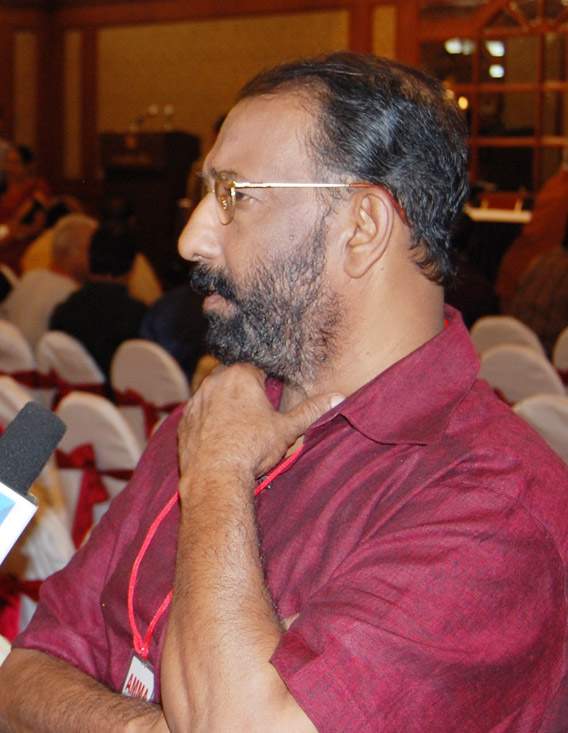
Sikhandi Pillai (Nedumudi Venu)
Played by Nedumudi Venu
The right-hand man with a crooked mind, he schemes to relocate the bridge and secure the winning bid. He thrives on manipulation and uses the feud between parties to advance his own position.
- 💼 Manipulation
- 🧭 Strategy
- 🏗️ Public works
- K(
Kathavarayan (Sreenivasan)
Played by Sreenivasan
A crippled man whose life is cut short when the crowd crosses the relocated bridge during the wedding. His death underscores the human cost of political games and public works gone awry.
- 💔 Tragedy
- 🧭 Consequences
- 🧱 Infrastructure
Where and When Is Panchavadi Palam Set?
Panchavadi Palam is set in Panchavadi. Here is why the place matters to the story.
Where
Panchavadi
Set in a rural village named Panchavadi, the story unfolds around a controversial bridge project that becomes a stage for political maneuvering. The village and its roads form the arena where party loyalties decide who wins tender contracts. The setting highlights everyday life in a close-knit community, where the consequences of power plays ripple through ordinary citizens. The event centers on a public works scheme that exposes how ambition can overshadow safety and practicality.
- 🏘️ Rural village
- 🗳️ Politics
- 🧱 Public works
What Are the Themes of Panchavadi Palam?
3 ideas the story keeps returning to, among them Corruption, Infrastructure and Satire.
-
01
Corruption
The film uses a village-level election and tender process to critique corruption in public works. Dussasana Kuruppu's desire for credit reveals how vanity drives decisions that affect everyone. The story shows how power-hungry politicians manipulate rules and opponents to secure personal advantage.
-
02
Infrastructure
Public works become a battleground for political leverage rather than service to citizens. The two tenders, for a bridge and a road, illustrate how contracts can be shaped by party loyalties. The collapse of the bridge at the wedding turnout exposes the real costs of prioritizing prestige over safety.
-
03
Satire
The film satirizes petty political rivalries and mob mentality. It uses humor to critique how quickly communities rally around drama rather than common sense. The tragic ending underscores the absurdity of political theatrics crossing into real human loss.
What Kind of Film Is Panchavadi Palam?
Dark in tone, with steady pacing and a moderate story, going by the plot summary.
- Tone
- Dark
- Pacing
- Steady
- Story
- Moderate
- Intensity
- High
- Ending
- Bleak
A darkly satirical and tense drama that builds steadily towards a catastrophic, cynical tragedy born from petty political ambitions and systemic corruption.
- satirical
- cynical
- tense
- tragic
- corrupt
- absurd
- political corruption
- abuse of power
- public works
- tragedy
Content notes: structural collapse, death.
Quiz
How well do you remember Panchavadi Palam? Test yourself on the story.