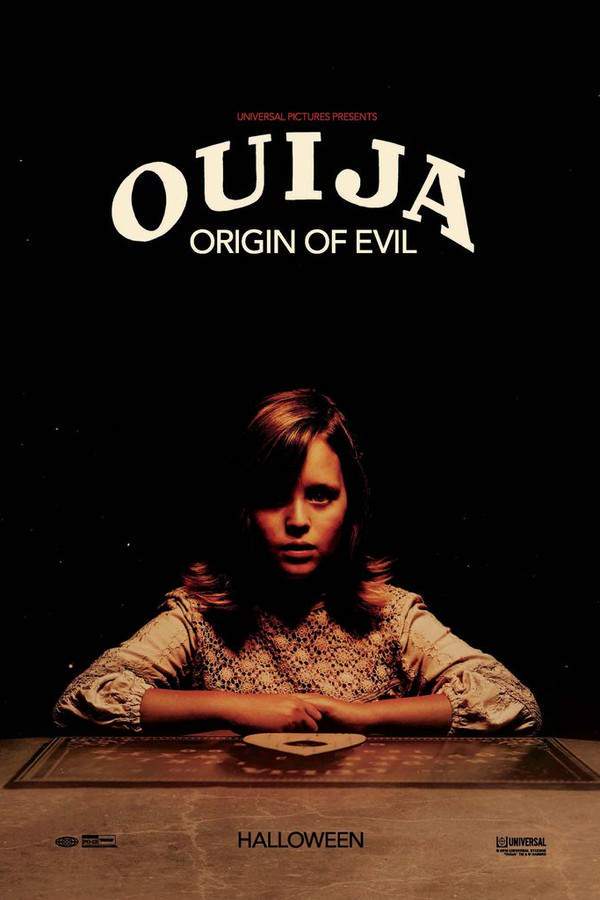
What Is Ouija: Origin of Evil About?
The premise of Ouija: Origin of Evil in 290 words, with nothing given away. The full story and the ending follow below.
In the heat‑baked summer of 1967, Los Angeles teems with flickering neon, restless ambition, and a cultural fascination with the unseen. Amid the city’s glitz and its shadowed back‑streets, a modest house becomes a makeshift stage for a family’s desperate livelihood. The atmosphere is thick with retro charm and a subtle, creeping dread, as the line between performance and true darkness begins to blur.
Alice Zander, a widowed mother with a sharp wit and a pragmatic streak, runs a séance business alongside her two sisters, turning grief into a cash‑cow for the household. Their daughters, Paulina and her younger sister Doris, are both collaborators and reluctant participants, each embodying a different facet of teenage rebellion and curiosity. The trio’s dynamic crackles with a blend of sibling banter, maternal protectiveness, and the uneasy thrill of pretending to commune with spirits for the benefit of skeptical clients.
When the family’s theatrical rituals unintentionally invite something far more authentic than their carefully crafted illusion, the house’s once‑playful ambience shifts to an oppressive stillness. The youngest daughter, Doris, finds herself the focal point of an unseen presence that seems to seep into the very fabric of the home. The surrounding community, from curious neighbors to the local priest Tom, senses the change, adding layers of tension to the already fraught family ties.
The film paints a portrait of a period‑specific world where economic necessity collides with supernatural curiosity, all underscored by a moody, grainy aesthetic that feels both nostalgic and unsettling. As the Zander family grapples with forces they never intended to summon, the story balances intimate domestic drama with the looming threat of an ancient darkness, promising a chilling exploration of what happens when a façade of control gives way to true terror.
What Happens in Ouija: Origin of Evil?
The complete story of Ouija: Origin of Evil, from the first scene to the last, in 470 words (about 2 minutes). Spoilers throughout. Names in the text link to 7 cast member pages.
Spoilers ahead
In Los Angeles, 1967, Mr. Browning, portrayed by Sam Anderson, and his younger wife, Jenny, played by Kate Siegel, visit the home of fortune teller Alice Zander, brought to life by Elizabeth Reaser. During the séance Alice conducts, Mr. Browning seeks to communicate with his deceased wife, while Jenny remains skeptical, believing they are being swindled. As tensions rise, a spirit, disguised as the late wife, frightens Mr. Browning, prompting an emotional show of fear. When Mr. Browning attempts to pay Alice, she declines, feeling guilty for their ruse.
Unbeknownst to them, the entity haunting the séance is Alice’s own teenage daughter, Paulina, depicted by Annalise Basso, with her younger sister, Doris, played by Lulu Wilson, aiding in the deception. After being scolded by Alice for costing them potential earnings, Paulina defends her actions. As events unfold, Paulina sneaks out to join her friends Ellie, played by Halle Charlton, and Mikey, portrayed by Parker Mack, where they toy with a Ouija board, only to send one friend into a panic.
While the girls are at school, Alice naively seeks her own Ouija board, believing it could boost their business. That night, she accidentally connects with a spirit named Marcus through Doris, who becomes a medium for strange and chilling responses from the other side, leaving Paulina both perplexed and intrigued. Doris, in her quest to communicate with their deceased father, Roger, breaks the cardinal rule of the game by playing alone, leading to haunting developments.
Father Tom, played by Henry Thomas, calls Alice to discuss Doris’s unusual homework, written in cursive, showcasing her sudden change in behavior and the development of uncanny abilities tied to the spirit world. As mysterious occurrences escalate, including a notice of foreclosure, Doris presents her mother and sister with money she claims to have found – a supernatural twist that raises questions about the spirit’s demands.
In an attempt to tap deeper into the otherworldly, Alice and Doris hold a séance with Tom. The answers they receive are nothing short of chilling, uncovering dark secrets tied to the house and the past of its previous occupants. Events take a sinister turn when Mikey visits and becomes ensnared by the entity, further trapping the family in a nightmarish scenario.
The climax unfolds with furious supernatural elements as the girls confront the vengeful spirits. When Alice desperately pleads for her daughters’ safety, a harrowing possession occurs, leading to a tragic conclusion. Two months later, we find Lina, portrayed by Lulu Wilson, grappling with the aftermath in a mental hospital, where she attempts to reconnect with her lost sister through dark practices.
As the story closes, an older Lina, played by Lin Shaye, faces her own demons while hinting at her return to a life intertwined with the supernatural, setting the stage for chilling possibilities yet to unfold.
Ouija: Origin of Evil Timeline: Every Key Event in Order
13 key events in the order they happen, from “Visit to Fortune Teller” to “Lina’s Future”. 2 events name a place, across 2 locations.
- 1
Visit to Fortune Teller
In Los Angeles, 1967, Mr. Browning and his younger wife, Jenny, decide to visit the home of fortune teller Alice Zander. While Mr. Browning seeks to connect with his deceased wife during the séance, Jenny remains skeptically aware of the potential deceit happening around them.
When:1967 Where:Los Angeles
- 2
Séance Begins
During the séance conducted by Alice, a spirit disguised as Mr. Browning's late wife appears, frightening him in the process. The emotional show of fear raises tensions, and Alice, feeling guilty about the deceit, declines his offer of payment.
- 3
The Deception Revealed
Unbeknownst to the Browns, the entity haunting the séance is actually Alice's teenage daughter, Paulina, alongside her younger sister, Doris. Their involvement in the ruse creates internal family strife, especially when Alice reprimands Paulina for jeopardizing their profits.
- 4
The Ouija Board Experiment
Paulina sneaks out to join her friends Ellie and Mikey, where they experiment with a Ouija board. The attempt backfires when one friend becomes overwhelmed, signaling the dark power of the board and its potential consequences.
- 5
Alice's New Idea
At school, Alice naively decides to buy a Ouija board, believing it may enhance their business opportunities after the séance. That night, she inadvertently connects with a spirit named Marcus through Doris, invoking chilling and inexplicable responses.
- 6
Doris Plays Alone
In her quest to communicate with their deceased father, Roger, Doris breaks the cardinal rule of the Ouija board by playing alone. This reckless act triggers a series of haunting events, pulling the family deeper into the supernatural realm.
- 7
Father Tom's Concern
Father Tom reaches out to Alice, alarmed by Doris's unusual homework written in cursive. This odd behavior indicates a sudden, unexplained change in Doris and reveals her developing abilities related to the spirit world.
- 8
Foreclosure Notice
As mysterious events escalate within the household, the family receives a notice of foreclosure on their home. This economic pressure coincides with Doris presenting money she claims to have found, raising questions about the true cost of their supernatural interactions.
- 9
Séance with Father Tom
In a bid to explore the supernatural further, Alice and Doris hold a séance with Father Tom. The responses they receive are chilling, revealing dark secrets tied to their home and its past occupants, which heightens the sense of dread.
- 10
Mikey Visits
The situation worsens when Mikey visits the family, only to become ensnared by the vengeful entity haunting them. This moment signifies a turning point as the family is pulled deeper into a nightmare filled with supernatural terror.
Show the other 3 events of Ouija: Origin of Evil Hide the last 3 events
- 11
Confrontation with Spirits
The climax of the story occurs as the girls confront the vengeful spirits, leading to chaotic supernatural events. Alice, desperate for her daughters' safety, witnesses a horrifying possession that spirals the situation out of control.
- 12
Aftermath in Mental Hospital
Two months later, Lina is found grappling with the aftermath of the supernatural events in a mental hospital. She attempts to reconnect with her lost sister through dark practices, highlighting her ongoing struggle with the haunting experiences.
When:Two months later Where:Mental Hospital
- 13
Lina’s Future
As the story concludes, we see an older Lina, played by Lin Shaye, facing her personal demons. The narrative hints at her return to a life entwined with the supernatural, leaving open the possibility of more chilling events to come.
Who Are the Main Characters in Ouija: Origin of Evil?
5 characters, among them Alice Zander (Elizabeth Reaser), Paulina (Annalise Basso) and Doris (Lulu Wilson): who each one is and the part they play in the story. Every profile links to the actor’s page.
-

Alice Zander (Elizabeth Reaser)
Played by Elizabeth Reaser
Alice is portrayed as a well-intentioned but misguided fortune teller who becomes entangled in the supernatural due to her desire for financial stability. Her vulnerability and desperation to provide for her family lead her to explore dangerous paths, revealing her deep love for her daughters despite her flaws. Alice's character arc highlights the tension between protection and neglect in the face of impending doom.
- 👩👧👧 Mother
- 📿 Fortune Teller
- 🕊️ Vulnerability
-

Paulina (Annalise Basso)
Played by Annalise Basso
Paulina is a rebellious teenager experiencing a typical coming-of-age struggle, caught between skepticism and the pull of the supernatural. She embodies a blend of curiosity and defiance, challenging her mother's authority while grappling with issues of identity and loss. Her character serves as a vehicle for exploring the darker implications of their supernatural experiences.
- 👧 Teenager
- 🔍 Curiosity
- 💔 Grief
-

Doris (Lulu Wilson)
Played by Lulu Wilson
Doris is the innocent younger sister who unwittingly becomes a medium for the supernatural events unfolding around her. Her character evolves from a naive child into someone profoundly affected by the spirits they encounter. Doris's innocence and desperation to connect with her deceased father drive much of the film’s emotional weight.
- 👧 Young Girl
- 🕵️♀️ Innocence
- 🌀 Medium
-

Father Tom (Henry Thomas)
Played by Henry Thomas
Father Tom is a compassionate figure who becomes involved as he notices Doris's troubling behavior. His character embodies the struggle between faith and fear as the supernatural phenomena intensify. He represents a rational approach to the emerging chaos, attempting to provide guidance while facing the overwhelming power of dark forces.
- ⛪ Priest
- 🙏 Faith
- 📚 Guidance
-

Lina (Lin Shaye)
Played by Lin Shaye
Lina's journey showcases the long-term effects of trauma from the film's harrowing events. As the older version of one of the sisters, she grapples with her past and seeks to reconnect with the lost elements of her family. Her character represents resilience in the face of ongoing supernatural influences, hinting at the cyclical nature of horror.
- 👵 Survivor
- 💔 Trauma
- 🔄 Resilience
Where and When Is Ouija: Origin of Evil Set?
Ouija: Origin of Evil is set in Los Angeles (1967). Here is why the time and place matter to the story.
When
1967
The year 1967 is significant for its cultural shifts and the rise of counterculture in America. This period was marked by experimentation with new spiritual practices and a fascination with the otherworldly, reflective of a generation seeking answers beyond traditional beliefs. The film effectively utilizes this era's atmospheric nuances to enhance its haunting narrative.
Where
Los Angeles
Los Angeles, known as the City of Angels, is famous for its entertainment industry and vibrant culture. In the context of this film, it represents a time when spiritualism was gaining popularity, and the supernatural was often explored in various forms of art and media. The setting during the late 1960s adds a unique layer to the story, influencing societal attitudes towards the occult and the unknown.
- 🏙️ City
- 🌆 1960s
What Are the Themes of Ouija: Origin of Evil?
2 ideas the story keeps returning to, among them Supernatural and Family.
-
01
Supernatural
The theme of supernatural forces is central to the movie, exemplified by the haunted Ouija board and the spirits that are invoked. It explores the consequences of meddling with the unknown, as characters grapple with the dangers of their actions and the harsh realities of the supernatural world. The narrative serves as a cautionary tale about the allure and peril of spiritual communication.
-
02
Family
Family dynamics are crucial to the film, particularly the bond between the sisters Paulina and Doris, and their relationship with their mother, Alice. As the story unfolds, the impact of grief and loss is highlighted, showing how these themes drive the characters' decisions and ultimately lead to tragic consequences. The film poignantly reflects the fragility of family in the face of supernatural forces.
How Does Ouija: Origin of Evil End?
The last act of Ouija: Origin of Evil and what it means, in 241 words. The ending lands as bleak. Big spoilers: read the plot summary first if you have not seen it.
The final act, in full
The ending of Ouija: Origin of Evil reveals the tragic consequences of untreated trauma and grief within a family. As the story comes to a close, Lina, the youngest sister, desperately tries to silence her sister Doris by sewing her mouth shut, in an attempt to stop her from revealing the spirit’s influence. However, this act ultimately leads to Doris dying, deepening the family’s broken state. Lina, overwhelmed by guilt and trauma, then becomes possessed and kills her mother, Alice. The story concludes with Lina in a psychiatric hospital, where she begins creating her own Ouija board using her blood, symbolizing her ongoing connection to the spirit world and her unresolved pain. A chilling final scene shows her silently summoning the spirit, with a doctor unaware that Doris’s vengeful ghost is silently moving above him. The film’s deeper message is that the ghosts haunting this family are representations of their emotional wounds—particularly Doris’s grief over her lost father and Alice’s denial of her own pain. Their inability to confront and process their suffering leads to destructive outcomes, emphasizing that seeking help and facing trauma is essential to healing. The post-credits scene further ties this story back to the original Ouija, revealing Lina’s true identity and suggesting that the cycle of unresolved grief continues beyond the movie’s ending. Ultimately, Ouija: Origin of Evil presents a haunting cautionary tale: ignoring emotional wounds and pretending to move on only invites further darkness and tragedy.
What Kind of Film Is Ouija: Origin of Evil?
Dark in tone, with steady pacing and a straightforward story, going by the plot summary.
- Tone
- Dark
- Pacing
- Steady
- Story
- Straightforward
- Intensity
- High
- Ending
- Bleak
A steadily escalating and deeply unsettling horror film that builds an atmosphere of oppressive dread around a grieving family whose attempt to scam others backfires with tragic, demonic consequences.
- anxious
- oppressive
- sinister
- fearful
- unsettling
- haunting
- demonic possession
- séance fraud
- grief and loss
- supernatural forces
Content notes: demonic possession, child endangerment, psychological trauma.
Quiz
How well do you remember Ouija: Origin of Evil? Test yourself on the story.