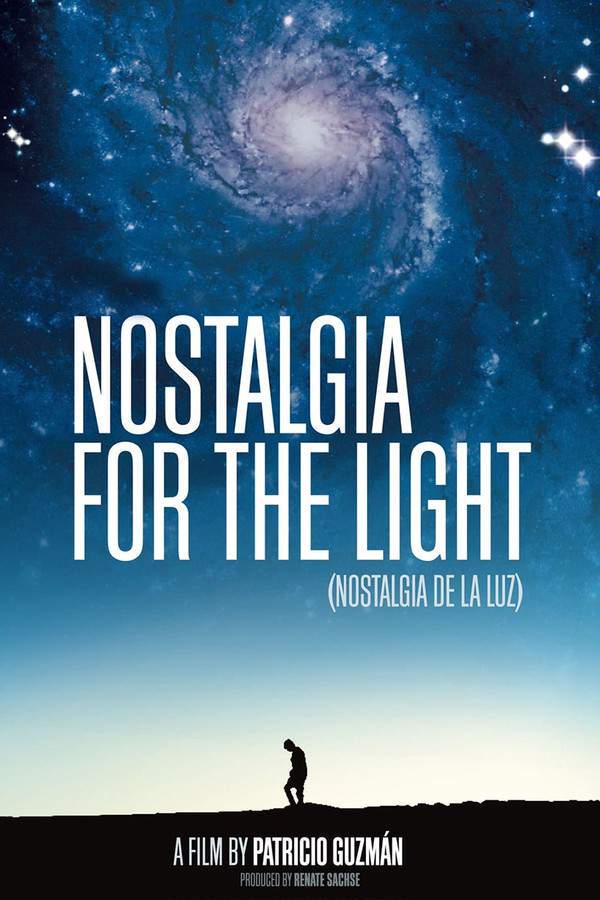
Nostalgia for the Light 2011


Directed by
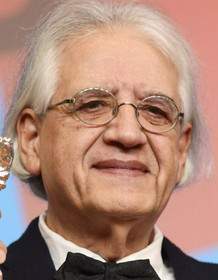
Patricio Guzmán
Made by

Icarus Films
Where to Watch Nostalgia for the Light
See current US streaming, rental, and purchase options for Nostalgia for the Light (2011) via JustWatch.

OVID
SD
Hoopla
SD
Kanopy
HD
Amazon Video
SD
Apple TV Store
HD Streaming availability powered by 
Nostalgia for the Light Plot Summary
Read the complete plot summary and ending explained for Nostalgia for the Light (2011). From turning points to emotional moments, uncover what really happened and why it matters.
Nostalgia for the Light begins by focusing on a telescope and breathtaking images of the Moon. The narrator, Patricio Guzmán, shares his passion for astronomy, reminiscing about his childhood when “only the present moment existed.” As the narrative unfolds, Chile emerges as a pivotal location, attracting astronomers and scientists eager to explore the universe under its remarkably clear skies. Guzmán is soon seen traversing the Atacama Desert, a land so parched it resembles the surface of Mars. This desert, rich in history, serves as a central theme of the documentary, revealing the preserved remains of fish, mollusks, ancient carvings, and even mummified humans due to its extreme dryness.
In this exploration, astronomer Gaspar Galaz](/actor/gaspar-galaz) introduces the idea that astronomy allows us to peer into our past and grasp our origins. He reflects on how science, particularly fields like astronomy and geology, acts as a lens into the past, stating that even their discussion is a journey back in time, factualized by the speed of light. Lautaro Núñez draws parallels between the quests of archaeologists and astronomers, as both seek to reconstruct history from mere remnants left behind.
The documentary also delves into Chile’s tumultuous past under the dictatorship of Pinochet. Luís Henríquez, a survivor of the Chacabuco concentration camp, shares a poignant account of how he and about 20 others, led by a Doctor Alvarez—a man versed in astronomy—immersed themselves in the cosmos. They studied astronomy by day and navigated the stars at night, experiencing a profound sense of freedom that quickly attracted the military’s ire, who feared the knowledge might aid in escape. Another survivor, Miguel Lawner, known as the “architect,” meticulously memorized and later recreated the layout of the concentration camp, using his footsteps to measure the grounds. He cleverly concealed his scaled drawings, destroying them when necessary, all the while contributing to the narrative of survival.
Guzmán presents a powerful metaphor through his own life, as he and his wife, Anita, symbolize Chile itself: while Henríquez bears the weight of memory from the past, Anita, suffering from Alzheimer’s disease, represents the inevitability of forgetting. Valentina Rodríguez recounts her family’s harrowing experience with detention; her grandparents were coerced into betraying her parents’ whereabouts. Despite these tragic circumstances, Valentina embraces the notion that she and her family are part of the universe’s recyclable matter, offering her solace. She expresses hope for her son, who, she believes, will not endure the same dictatorial violence that plagued previous generations.
In the documentary’s closing sentiments, Guzmán emphasizes the significance of memory, asserting, > “those who have a memory are able to live in the fragile present moments. Those who have none don’t live anywhere.” This reflective perspective underlines the film’s poignant message on the importance of remembering history as a way to honor the past while navigating the present.
Nostalgia for the Light Timeline
Follow the complete movie timeline of Nostalgia for the Light (2011) with every major event in chronological order. Great for understanding complex plots and story progression.
Introduction to Astronomy
The film opens with stunning visuals of the Moon and the universe captured through a powerful telescope. The narrator, Patricio Guzmán, reflects on his childhood fascination with astronomy and the significance of living in the present moment.
Exploring the Atacama Desert
Guzmán journeys into the Atacama Desert, which is highlighted as a unique landscape with its Mars-like dryness. This area holds remnants of ancient life, including fossils and mummified humans, serving as a testament to the preservation capabilities of extreme aridity.
Astronomy and History
Astronomer Gaspar Galaz discusses the connection between astronomy and our understanding of the past. He emphasizes that studying the universe enables us to revisit our origins through the lens of science.
The Quest for Knowledge
Lautaro Núñez draws a fascinating parallel between archaeologists and astronomers. Both groups painstakingly reconstruct history from remnants, underlining the shared pursuit of understanding our world through different yet complementary lenses.
A Survivor's Story
Luís Henríquez, a survivor of the Chacabuco concentration camp, recounts his experiences under Pinochet's regime. Together with fellow inmates, he delved into astronomy, using stargazing as a means of finding freedom during oppressive times.
The Military's Fear
The military's reaction to the inmates' astronomical studies reveals their fear of knowledge and enlightenment. They believed that learning about the cosmos could potentially aid in facilitating escape from the harsh conditions of the camp.
The Architect's Legacy
Miguel Lawner, known as the ‘architect,’ meticulously memorized the layout of Chacabuco and created a scale model. He hid his drawings and documents, showcasing the importance of preserving memory even in dire circumstances.
A Metaphor for Chile
Guzmán uses his own life as a metaphor for Chile’s story, juxtaposing the remembrance of trauma with the fading memories of his wife, Anita, who suffers from Alzheimer's. This contrast highlights the struggle between memory and forgetfulness.
Family Trauma
Valentina Rodríguez shares her family's painful history with detention and betrayal during the dictatorship. Her grandparents were forced to betray her parents, which adds to the legacy of suffering experienced by many Chilean families.
Hope for the Future
Despite the trauma, Valentina maintains hope for her son, wishing he will not face the dictatorial violence that plagued earlier generations. She reflects on the idea of being made from the universe's recyclable matter, finding solace in this connection.
The Significance of Memory
In the film's closing thoughts, Guzmán emphasizes the power of memory in navigating life. He asserts that those who remember can exist in the delicate present, while those without memories struggle to find their place in the world.
Reflection on Existence
The documentary's overarching message is a call to honor the past while embracing the present. By reflecting on history, the film encourages viewers to understand their own existence and the stories that shape their identity.
Nostalgia for the Light Characters
Explore all characters from Nostalgia for the Light (2011). Get detailed profiles with their roles, arcs, and key relationships explained.
Patricio Guzmán
Patricio Guzmán serves as the narrator and a reflective presence throughout the documentary. His passion for astronomy intertwines with his commentary on Chile’s history, symbolizing a journey of remembering and exploring both the cosmos and personal memories. His narrative style evokes a deep sense of nostalgia and insight.
Gaspar Galaz
Gaspar Galaz is an astronomer who introduces the concept of using astronomy as a lens to understand history. His reflections highlight the interplay between science and memory, demonstrating how celestial observations can connect individuals to their origins and past experiences.
Luís Henríquez
Luís Henríquez is a survivor of the Chacabuco concentration camp, whose experiences highlight the impact of dictatorship on personal lives. His journey reflects resilience, as he shares how a passion for astronomy provided a semblance of freedom amidst tyranny.
Miguel Lawner
Miguel Lawner, known as the architect, demonstrates immense resourcefulness by memorizing and documenting the concentration camp's layout. His actions serve as a profound testament to survival and resistance against oblivion.
Valentina Rodríguez
Valentina Rodríguez shares her family's traumatic experiences related to political repression and explores the theme of continuity amidst suffering. Her insights connect personal grief with universal concepts, emphasizing hope for future generations.
Nostalgia for the Light Settings
Learn where and when Nostalgia for the Light (2011) takes place. Explore the film’s settings, era, and how they shape the narrative.
Time period
1970s - Present
The movie references historical events from the 1970s, particularly Chile's dark period under Pinochet's dictatorship. During this time, many individuals faced repression, leading to a struggle for memory and survival. The narrative connects this past with the present, emphasizing the importance of remembering history to navigate current realities.
Location
Chile, Atacama Desert
Chile is known for its stunning landscapes and clear skies, particularly in the Atacama Desert, which is one of the driest places on Earth. The Atacama Desert is rich in history, housing preserved remains of ancient sea life and human artifacts due to its arid conditions. Its unique geographic features make it a prime location for astronomers and scientists seeking to study the universe.
Nostalgia for the Light Themes
Discover the main themes in Nostalgia for the Light (2011). Analyze the deeper meanings, emotional layers, and social commentary behind the film.
🌌
Memory
The theme of memory is central to the documentary, as it explores the ways personal and collective histories are preserved and recalled. Memory serves as a connection between the past suffering experienced during dictatorship and the present. The film suggests that remembering history is vital for living meaningfully in the now.
🔭
Exploration
Exploration, both of the cosmos and of personal pasts, is a key theme of the movie. Astronomers navigate the heavens while survivors delve into the memories of their experiences under a repressive regime. This dual quest for knowledge and understanding reflects humanity's innate desire to connect with our origins.

Coming soon on iOS and Android
The Plot Explained Mobile App
From blockbusters to hidden gems — dive into movie stories anytime, anywhere. Save your favorites, discover plots faster, and never miss a twist again.
Sign up to be the first to know when we launch. Your email stays private — always.
Explore the mobile appNostalgia for the Light Spoiler-Free Summary
Discover the spoiler-free summary of Nostalgia for the Light (2011). Get a concise overview without any spoilers.
In the stark, moon‑lit expanse of Chile’s Atacama Desert, the sky opens like a flawless pane of deep‑blue glass, inviting astronomers to trace the light of distant galaxies. The desert itself feels almost otherworldly—its cracked salt flats and wind‑shaped dunes echo the surface of a silent planet, while massive telescopes stand as modern monoliths that scrape the heavens. This juxtaposition of infinite cosmos and unforgiving earth creates a quiet, contemplative atmosphere where the past and the future seem to orbit each other in a slow, deliberate dance.
Amid this landscape, a resilient group of women move with purpose, gathering fragments of metal and debris that have been scattered across the sand. Their harvest is not merely physical; each piece is a whisper of a life once entwined with the stars. The film follows Patricio Guzmán, whose own reflections on memory and the passage of time frame the narrative, while astronomer Gaspar Galaz offers a poetic lens, reminding viewers that light itself is a messenger from history. The women—represented by figures such as Valentina Rodríguez—carry the weight of personal loss, their quiet perseverance a counterpoint to the grand, impersonal scale of the universe they study.
The tone is meditative and luminous, blending the clinical precision of scientific observation with the raw, human yearning for remembrance. The desert’s endless horizons amplify a sense of both isolation and connection, suggesting that every fragment recovered is a piece of a larger, recyclable cosmos. As the camera drifts between the gleaming telescopes and the dust‑kissed relics, the film invites the audience to contemplate how memory, like starlight, travels across vast distances, arriving faint yet undeniable. In this subtle interplay of sky and sand, the story beckons us to consider what it means to hold onto the past while standing under an ever‑expanding future.
Featured on this page

What's After the Movie?
Not sure whether to stay after the credits? Find out!
Check out our other apps:

SAT Sphere
Build confidence for the Digital SAT.

Mori Atlas
Discover wild places worth protecting.

Luntero
Search smarter for a home in Amsterdam.

Plot Explained
Unravel movie endings and hidden clues.

Pokechamp
Dive into Pokémon data and battle logic.

Driving Theory
Get ready for your European theory test.

Movie Dust
Plan your next cinema trip with ease.

Musemap
Find art and culture as you travel.

Selkobase
Compare credentials before committing.

Local Manual
Turn an unfamiliar country into practical next steps.

Lernavi
Compare school systems before your next move.

GymRoam
Find a workout stop wherever your plans take you.
Explore Our Movie Platform
New Movie Releases (2026)
Famous Movie Actors
Top Film Production Studios
Movie Plot Summaries & Endings
Major Movie Awards & Winners
Best Concert Films & Music Documentaries
Movie Collections and Curated Lists
© 2026 What's After the Movie. All rights reserved.
Privacy Policy