
No Way Out 1950

Directed by
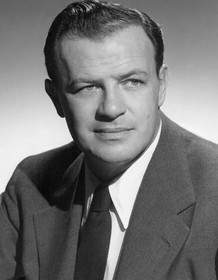
Joseph L. Mankiewicz
Made by

20th Century Fox
Where to Watch No Way Out
See current US streaming, rental, and purchase options for No Way Out (1950) via JustWatch.






No Way Out Plot Summary
Read the complete plot summary and ending explained for No Way Out (1950). From turning points to emotional moments, uncover what really happened and why it matters.
Luther Brooks is the urban county hospital’s first African-American doctor, trained under the watchful eye of chief resident Dan Wharton. Despite Wharton’s encouragement, Luther often doubts his own clinical judgment as he works in the hospital’s prison ward, trying to prove he belongs in a demanding setting.
When the two brothers, Johnny Biddle and Ray Biddle, are brought in after a botched robbery, Luther faces a daunting test. Johnny shows signs of disorientation and dilated pupils, while Ray sprays the room with racist hostility as Luther tries to treat them. The tension is thick, and Luther’s focus is strained by the prejudice swirling around him.
Concerned that Johnny might be suffering from a brain tumor, Luther orders a spinal tap, but Johnny dies during the procedure. Ray’s accusation of Luther’s murder ignites a vengeful resolve, and he vows to make the doctor pay. Wharton supports Luther’s course of action but concedes that the diagnosis may still be wrong, leaving the door open to renewed doubt about the patient’s death.
To settle the question of responsibility, Luther asks for an autopsy on Johnny, but Ray refuses to consent, insisting he doesn’t want his brother’s body “cut up.” The hospital head also blocks the autopsy, fearing a scandal could threaten funding and destabilize the hospital’s future. In a bid to uncover the truth, Luther and Wharton approach Johnny’s widow, Edie Johnson. Edie, who grew up in Beaver Canal with the Biddles, initially refuses to help, yet the conflicts surrounding Johnny’s death pull her into the orbit of the case. She later confronts Ray in the prison ward to understand why he won’t approve the autopsy. Ray argues that Johnny would still be alive if a white doctor had treated him, and accuses the doctors of pressing to autopsy as a way to bury the truth. He also coaxes Edie to inform Rocky Miller about the circumstances, prompting Rocky and his friends to plan an attack on the black section of town.
Edie, accompanied by Ray’s deaf-mute brother George, goes to inform Rocky Miller, and the plan to lash out against the black community takes shape. The city’s black residents hear of the impending violence and prepare to strike first, while a white-backed fear of harm fuels the tension. A black elevator operator’s warning echoes a central question: can a community demand justice when it is so often met with violence?
The race riot explodes, and Luther selflessly tends to the injured while being subjected to hostility from a white bystander who shouts, orders him off and spits in his face. Stunned, Luther steps back but remains determined to help as many victims as he can.
Edie’s visit to Wharton’s home deepens the emotional complexity. Wharton and his maid, Gladys, become part of the broader picture, and Edie learns that Luther has turned himself in for Johnny Biddle’s murder, a move meant to force the coroner to conduct an autopsy. Wharton recognizes that performing the autopsy could reveal the truth and vindicate Luther, while Ray’s anger only grows as the possibility of exposing the truth moves closer to reality.
Ray and George break free, injuring Ray’s wounded leg in the process, and Edie is coerced into contacting Luther. The confrontation moves to Wharton’s empty house, where Ray grips a gun and vents his hatred. Edie arrives, and as the tension peaks, she inadvertently becomes part of a life-saving choice. Luther, wounded but resolute, refuses to let Ray die simply because of racism and enlists Edie’s help in saving him. The sounds of approaching sirens swell in the distance as Luther faces a choice that could redefine both men’s lives.
As the pursuit of justice and survival intersect, the film closes with Luther’s final, defiant word to Ray, spoken in the shadow of the impending rescue:
“Don’t cry, white boy, you’re gonna live.”
No Way Out Timeline
Follow the complete movie timeline of No Way Out (1950) with every major event in chronological order. Great for understanding complex plots and story progression.
Johnny and Ray Biddle admitted to hospital prison ward
Luther Brooks, the hospital's first African-American doctor, tends to the brothers after they are brought in for treatment. Johnny exhibits disorientation and dilated pupils, which worry Luther about his diagnosis. Ray aggressively insults Luther, highlighting the racial tension in the hospital.
Spinal tap performed; Johnny dies during procedure
Convinced Johnny may have a brain tumor, Luther administers a spinal tap to investigate. The procedure tragically ends with Johnny's death, leaving Luther to question whether his diagnosis was correct. The failure seeds doubt and anger among the medical staff and Johnny's family.
Ray accuses Luther; vows revenge
Ray immediately accuses Luther of causing Johnny's death and makes threats of retaliation. Luther confers with his mentor, Dr. Dan Wharton, who defends Luther's actions but concedes the diagnosis might be incorrect. The accusation intensifies the hospital's racial tensions and personal animosities.
Wharton questions treatment; doubts certainty
Wharton defends the treatment Luther chose, insisting there was no clear medical error. He admits the possibility that the diagnosis could be mistaken. The conversation plants the notion that an autopsy might eventually be necessary to settle the truth.
Autopsy request denied by hospital authorities
Luther requests an autopsy to confirm Johnny's cause of death, but Ray refuses to consent. The hospital head denies the autopsy, fearing a scandal that could endanger funding for the hospital. With official support withdrawn, the truth seems blocked from immediate revelation.
Luther and Wharton seek Edie's help
Luther and Wharton visit Edie Johnson, Johnny's widow, to persuade her to authorize the autopsy. Edie, who grew up with the Biddles in Beaver Canal, initially refuses to help. Her loyalty is tested as the crisis deepens and pressures mount from all sides.
Edie pressured to inform Rocky Miller about Johnny's death
Edie visits Ray in the prison ward with the aim of learning why Johnny died and who should know. Accompanied by Ray's deaf-mute brother George, she is steered toward telling Rocky Miller about the circumstances. Rocky and his pals begin to plot actions that will inflame racial tensions.
Beaver Canal gang plans an attack on the black town
Rocky Miller and his associates decide to attack the black section of the city, escalating the threat to Luther's community. The plan heightens fear and resentment across both neighborhoods. Edie's involvement has now aligned with broader, dangerous provocations.
Riot erupts; elevator operator's warning
Luther learns that the black community plans to strike first as tensions boil over. An elevator operator reflects on past assaults and questions whether Black Americans can ever be 'better' than those who kill them. The race riot spreads through the city, and Luther tends to the injured while facing hostility from whites.
Edie visits Wharton; Luther has turned himself in
Edie visits Wharton's home and, with Wharton's maid Gladys present, learns that Luther has surrendered to police in order to push a courtroom autopsy. The personal and professional stakes become entwined, showing how individual betrayals and institutional fear interact.
Autopsy confirms brain tumor; Luther's course was correct
The autopsy confirms that Johnny died from a brain tumor, validating Luther's earlier treatment. Ray's anger intensifies as he believes a conspiracy is being hidden from the truth. The medical verdict deepens the fight between truth and prejudice.
Ray and George escape; head toward Wharton's house
Ray and his brother George overpower the police guard and escape, reinjuring Ray's wounded leg in the process. They converge on Wharton's empty house with the aim of finding Luther. The escape compounds the danger and sets up the final confrontation.
Confrontation at Wharton's house; Edie arrives
Ray holds Luther at gunpoint inside Wharton's house, shouting racist slurs. Edie arrives, witnesses the danger, and helps to turn the tide by influencing the scene and seeking a resolution. Luther is wounded, but he manages to seize Ray's weapon and push for a nonlethal outcome while sirens approach.
Luther seeks to spare Ray; Edie calls for help as sirens approach
In a tense moral moment, Luther refuses to let Ray die from racism and urges Edie to assist in saving him. The two work to get help as police close in, and Luther delivers the defiant final line that underscores the film's anti-racist message. The scene closes on a fragile, uneasy resolution with authorities arriving.
No Way Out Characters
Explore all characters from No Way Out (1950). Get detailed profiles with their roles, arcs, and key relationships explained.
Luther Brooks (Sidney Poitier)
The hospital's pioneering Black physician who battles self-doubt and institutional racism while striving to provide careful, ethical care. He navigates pressure from peers and administrators and must decide how far medical judgment should bend to appease powerful interests. His commitment to patients and integrity drives the autopsy confrontation at the story's heart.
Ray Biddle (Richard Widmark)
Johnny's older brother whose overt racism and volatile temper threaten the patient's life and the hospital's reputation. He weaponizes slurs and prejudice, pushing the medical team toward conflict and complicating any pursuit of the truth.
Johnny Biddle (Dick Paxton)
A patient whose case triggers the central medical mystery. His sudden decline and mysterious death drive the autopsy debate and reveal flaws in the system that capitalizes on appearances and fear of scandal.
Edie Johnson (Linda Darnell)
A Beaver Canal resident and Johnny's widow who becomes entangled in the doctors' struggle for the truth. Her choices, influenced by community pressures and personal loyalties, drive the escalation toward the race riot.
Dr. Dan Wharton (Stephen McNally)
Senior physician and Luther's mentor, whose professional authority is challenged by the autopsy pursuit. He represents the medical establishment's cautious approach to ethics and truth, while navigating personal and institutional pressures.
No Way Out Settings
Learn where and when No Way Out (1950) takes place. Explore the film’s settings, era, and how they shape the narrative.
Location
Urban County Hospital, Beaver Canal district
The action centers on an urban county hospital and the surrounding Beaver Canal district, a poor neighborhood defined by racial segregation. The hospital's prison ward becomes the arena where medical ethics, racism, and funding pressures collide. The Beaver Canal setting underscores the daily hazards faced by Black residents and the pressure on Black physicians to prove themselves.
No Way Out Themes
Discover the main themes in No Way Out (1950). Analyze the deeper meanings, emotional layers, and social commentary behind the film.
🩺
Medicine & Race
No Way Out places Luther Brooks, the hospital's first Black doctor, at the center of a system where race shapes care and opportunity. The film explores how prejudice influences diagnoses, treatment options, and professional standing. Luther's ethical commitment to patients clashes with institutional racism and the fear of scandal or funding loss. The narrative uses medical practice to critique racial inequality in mid-century urban hospitals.
🔬
Truth & Autopsy
The autopsy becomes the instrument that could reveal the truth about Johnny's death, clashing with Ray's refusal and the hospital's desire to protect its reputation. Luther and Wharton push for an examination to confirm the diagnosis, despite political and personal obstacles. The pursuit of truth exposes biases in medical decision-making and accountability. The plot turns on whether science can overcome prejudice.
⚖️
Justice & Riot
Racial tensions erupt into a riot that mirrors the clinic's insecurities and the community's mistrust of white authority. Edie's actions, guided by fear and loyalty, catalyze a confrontation that amplifies the stakes for everyone involved. Luther's restraint and willingness to save even Ray offer a counterpoint to vengeance. The ending ties medical ethics to broader questions of justice and civic responsibility.

Coming soon on iOS and Android
The Plot Explained Mobile App
From blockbusters to hidden gems — dive into movie stories anytime, anywhere. Save your favorites, discover plots faster, and never miss a twist again.
Sign up to be the first to know when we launch. Your email stays private — always.
Explore the mobile appNo Way Out Spoiler-Free Summary
Discover the spoiler-free summary of No Way Out (1950). Get a concise overview without any spoilers.
In the gritty heart of a bustling city, the county hospital stands as a micro‑cosm of the community it serves—a place where hope and desperation collide in crowded corridors and stark emergency rooms. The institution has recently made a historic step: Luther Brooks, the first African‑American physician on staff, battles the weight of expectation while learning the hard edges of a demanding ward under the watchful eye of chief resident Dan Wharton. Their partnership, marked by cautious mentorship and an undercurrent of doubt, sets the tone for a drama that feels both intimate and socially charged.
The fragile peace shatters when two street‑wise brothers are rushed in after a violent encounter. Johnny Biddle arrives disoriented, his brother Ray Biddle bristling with hostility and prejudice, turning the sterile environment into a volatile arena. As Luther attempts to stabilize the pair, he is forced to confront not only the urgency of their injuries but also the lingering racial tensions that pulse through the hallways. The surgeon’s confidence wavers, and the scene crackles with the uneasy mix of professional duty and personal scrutiny.
When tragedy strikes and one of the brothers does not survive, the surviving sibling’s grief erupts into accusation. Ray’s fury is directed squarely at Luther, blaming the doctor for the loss and demanding answers in a city already simmering with distrust. The confrontation escalates, pulling in other figures such as the hesitant Edie Johnson, whose ties to the family add layers of complexity to an already charged encounter. The hospital’s bureaucracy, eager to protect its reputation, looms in the background, hinting at larger forces that may shape the outcome.
Amidst the clamor of sirens, hurried footsteps, and whispered judgments, the film dwells on a tense atmosphere where personal ambition, racial identity, and the desperate search for truth intersect. The stage is set for a confrontation that will test loyalties, challenge assumptions, and expose the fragile line between victim and perpetrator, all within the stark, unforgiving light of a city’s emergency ward.
Movies with Similar Twists and Themes
Uncover films that echo the narrative beats, emotional arcs, or dramatic twists of the one you're exploring. These recommendations are handpicked based on story depth, thematic resonance, and spoiler-worthy moments — perfect for fans who crave more of the same intrigue.


Featured on this page

What's After the Movie?
Not sure whether to stay after the credits? Find out!
Check out our other apps:

SAT Sphere
Build confidence for the Digital SAT.

Mori Atlas
Discover wild places worth protecting.

Luntero
Search smarter for a home in Amsterdam.

Plot Explained
Unravel movie endings and hidden clues.

Pokechamp
Dive into Pokémon data and battle logic.

Driving Theory
Get ready for your European theory test.

Movie Dust
Plan your next cinema trip with ease.

Musemap
Find art and culture as you travel.

Selkobase
Compare credentials before committing.

Local Manual
Turn an unfamiliar country into practical next steps.

Lernavi
Compare school systems before your next move.

GymRoam
Find a workout stop wherever your plans take you.
Explore Our Movie Platform
New Movie Releases (2026)
Famous Movie Actors
Top Film Production Studios
Movie Plot Summaries & Endings
Major Movie Awards & Winners
Best Concert Films & Music Documentaries
Movie Collections and Curated Lists
© 2026 What's After the Movie. All rights reserved.
Privacy Policy