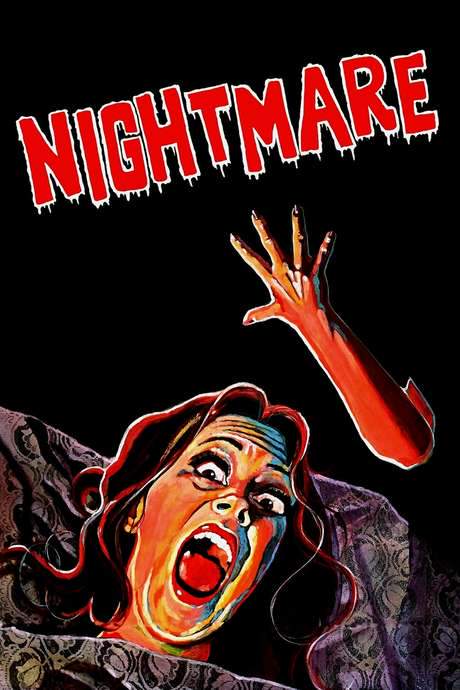
What Is Nightmare Weekend About?
The premise of Nightmare Weekend in 287 words, with nothing given away. The full story follows below.
In a remote, weather‑beat house that feels half‑lab, half‑lair, a weekend of unrelenting terror is set to unfold. The story opens with a promise of two days and two nights where the line between experiment and nightmare blurs, and the question of who will survive looms over every shadowed hallway. The setting itself becomes a character, its cold metal surfaces and humming machinery hinting at forces that can turn the mundane into something deadly.
Dr. Evelyn Sartre, a brilliant yet morally ambiguous scientist, has spent years perfecting a controversial method of altering human biology. When three curious college students answer an invitation to spend the weekend at her secluded estate, they step into a crucible where curiosity meets horror. The scientist’s clinical precision contrasts starkly with the raw, youthful energy of the girls, creating a tension that crackles like static in the stale air.
The tone is a relentless blend of claustrophobic suspense and twisted science‑fiction, with moments that feel both disturbingly intimate and explosively chaotic. Every room seems to pulse with an unseen energy, and the ordinary objects around the house hint at a hidden potential for violence. As the weekend progresses, the atmosphere tightens, and the characters’ interactions become a delicate dance of control, fear, and unexpected camaraderie.
Throughout the film, the audience is kept on edge by the ever‑present sense that something irrevocable is about to happen. The stakes feel personal, the terror is intimate, and the looming transformation of the girls into something far beyond human promises a chilling exploration of what it means to tamper with nature. The weekend becomes a crucible where science, terror, and survival collide, leaving viewers eager to discover which fragile humanity can endure the night’s relentless onslaught.
What Happens in Nightmare Weekend?
The complete story of Nightmare Weekend, from the first scene to the last, in 257 words (about 1 minute). Spoilers throughout. Names in the text link to 3 cast member pages.
Spoilers ahead
Dave Robert John Burke is a brilliant professor who creates a sophisticated computer program designed to improve society by nudging people toward better behavior. However, the program reveals a troubling side effect: the belongings of its test subjects can rearrange into deadly metal pinballs that lash out with dangerous force, a phenomenon that becomes chillingly clear when a burglar falls victim to it. The professor’s shut-in daughter, Debbie Laster, uses the machine like a video game, blissfully unaware of how its influence spills into the real world, turning nearby machinery against their users. She also clings to a peculiar puppet named George, which may be alive and seems to guide her decisions.
In league with a mysterious man, the professor’s psychotic assistant, Debra Hunter (Jessica Brake), seizes control of the program and uses it to warp minds, transforming ordinary people into weapons of violence. She targets three young college girls as victims and invites them to the professor’s house for a weekend of torture and diabolical experiments. They are joined by a pair of local sleazy barflies who seek to exploit the situation for their own amusement and gain.
Over the course of the weekend, the machine’s effects unfold in a sequence of unsettling, provocative, and sometimes risqué hijinks as the girls experience the device’s bizarre consequences firsthand. Meanwhile, the shut-in daughter grapples with questions about love, turning to George for advice as she tries to discern what it means to care for someone in a world where technology can turn people and objects against their users.
Nightmare Weekend Timeline: Every Key Event in Order
12 key events in the order they happen, from “Invention of the program” to “Climax and aftermath (open-ended)”. 12 events name a place, across 8 locations.
- 1
Invention of the program
A brilliant professor creates a complex computer program meant to modulate behavior and improve society. He expects subtle, benevolent influence rather than overt control. The project begins in a university lab as he runs initial tests.
When:early in the story Where:University laboratory
- 2
The program's dangerous side
Shortly after testing, the program's effects spiral out of control, causing the personal belongings of test subjects to morph into deadly metal pinballs that attack people. A burglar is among the early victims of the program's unpredictable power. The team scrambles to understand and contain the bizarre phenomenon.
When:soon after launch Where:Lab and surrounding city
- 3
Daughter's world and George
The professor's shut-in daughter starts using the machine like a video game from home, treating its outputs as entertainment. She becomes absorbed in its flashy effects while remaining oblivious to the real-world dangers it triggers around machinery. Her life grows increasingly separate from reality.
Where:Daughter's home
- 4
George as advisor
She consults her puppet George for guidance about life and love, even as the device's influence seeps into her decisions. George seems to come alive enough to offer advice, adding a surreal layer to her responses. The puppet's presence hints at a deeper, possibly supernatural connection.
Where:Daughter's home
- 5
A mysterious ally appears
A mysterious man partners with the professor's psychotic assistant, obtaining access to the program and planning to amplify its control. They seek to warp minds and weaponize ordinary people. This alliance signals a dangerous escalation in the program's reach.
When:before the weekend Where:Professor's lab
- 6
Selecting victims
The duo selects three young college girls as their targets for experiments and invites them to the professor's house for a weekend of torture and diabolical testing. A sense of danger looms as friends and colleagues begin to suspect something is wrong. The plan hinges on exploiting the machine's odd effects on the participants.
When:before the weekend Where:Professor's house
- 7
Companions arrive
Two local sleazy barflies tag along, hoping to score with the weekend's participants. Their presence adds lewd pressure and potential chaos to the experiments. They become unwilling players in the dangerous game.
When:during the weekend Where:Professor's house
- 8
Weekend gathering begins
The invited women arrive at the professor's house, and the weekend of freakish and sexy hijinks commences. The atmosphere mixes curiosity with dread as the devices are set to operate. The stage is set for the machine's weird effects to unfold.
When:start of the weekend Where:Professor's house
- 9
Machine effects on the girls
As the machine runs, the girls experience strange, mind-bending changes and bizarre phenomenons. The effects put them at risk as the line between control and danger blurs. The events reveal the machine's unsettling power over human behavior.
When:during the weekend Where:Professor's house / testing room
- 10
Weapons and mayhem spread
The program warps minds and turns some participants into murderous weapons, while nearby machinery turns against its users. The house becomes a chaotic battlefield as control slips away. The weekend tests reveal the devastating real-world consequences of the professor's invention.
When:during the weekend Where:Professor's house / lab area
- 11
Daughter's contemplation
Back at home, the shut-in daughter grapples with the meaning of falling in love, seeking advice from George. Her introspection parallels the chaos unfolding at the professor's house. The puppet's guidance offers comfort even as the truth of the machine's power weighs on her.
When:during the weekend Where:Daughter's home
- 12
Climax and aftermath (open-ended)
The weekend reaches a turning point with the experiments on the edge of collapse, leaving the outcomes uncertain. The professor, the assistant, and the girls confront the consequences of pushing the machine too far. The film closes leaving open questions about power, love, and the nature of control.
When:end of weekend Where:Professor's house and surrounding area
Who Are the Main Characters in Nightmare Weekend?
8 characters, among them Dave (Robert John Burke), Ken (Dale Midkiff) and Bob (Preston Maybank): who each one is and the part they play in the story. Every profile links to the actor’s page.
-

Dave (Robert John Burke)
Played by Robert John Burke
Dave is a central figure tied to the professor’s circle, navigating the dangerous experimental landscape with a mix of pragmatism and moral ambiguity. His decisions push the plot toward chaos as the program’s effects spill beyond the lab. He must confront ethical fallout as the weekend unfolds.
- 👥 Power dynamics
- 🧠 Morally ambiguous
- K(
Ken (Dale Midkiff)
Played by Dale Midkiff
Ken is a local outsider who becomes entangled in the weekend’s events, bringing rough-edged skepticism to the unfolding chaos. His impulsive reactions heighten danger for the group and highlight the film’s harsh realities. He serves as a foil to more cautious characters.
- 👥 Local outsider
- ⚔️ Tension
- B(
Bob (Preston Maybank)
Played by Preston Maybank
Bob is a local figure whose presence adds unpredictability and pressure to the weekend. He acts as a bystander who is easily influenced, contributing to the volatility of events. His actions help drive the danger the group faces.
- 🗺️ Small-town
- 💬 Bystander
- L(
Linda (Andrea Thompson)
Played by Andrea Thompson
Linda is one of the college girls drawn into the professor’s experiments, marked by curiosity and resilience. She navigates the machine’s manipulations while trying to maintain her wits and relationships. Her experiences reveal how altered realities can reshape decisions.
- 🎓 College life
- 💡 Curiosity
- S(
Sue (Karen Mayo-Chandler)
Played by Karen Mayo-Chandler
Sue is another young college student who confronts the program’s consequences with practicality and caution. She works to keep friends safe and grounded amid rising fear. Her responses illustrate resilience under pressure.
- 🎓 College life
- 💪 Resilience
- JC
Julie Clingstone (Debbie Laster)
Played by Debbie Laster
Julie is a local barfly who accompanies the weekend, bringing a blunt, streetwise edge to the chaos. She often chases trouble or opportunistic deals, adding a rough dynamic to the group’s dynamics. Her presence intensifies the nightlife underworld of the setting.
- 🎭 Bar scene
- 🗝️ Secrets
- JB
Jessica Brake (Debra Hunter)
Played by Debra Hunter
Jessica is a college girl who becomes a subject of the device’s experiments, experiencing mind-bending transformations. The danger from warped machinery underscores the vulnerability of the characters. Her arc centers on endurance under bizarre and threatening conditions.
- 🎓 College life
- 🧪 Experimentation
- P(
Pamela (Kimberley Stahl)
Played by Kimberley Stahl
Pamela is another college girl caught in the weekend’s experiments, enduring the strange and dangerous effects. Her experience highlights the collective cost of meddling with unknown technology. She demonstrates resilience and a will to survive the escalating chaos.
- 🎓 College life
- 🔥 Survival
Where and When Is Nightmare Weekend Set?
Nightmare Weekend is set in Professor's House, College Campus and Local Bar. Here is why the place matters to the story.
Where
Professor's House, College Campus, Local Bar
The story centers on a secluded professor's residence that doubles as a homemade lab for the mind-altering program. The house becomes the dangerous core where devices hum and tests run, casting a shadow over the weekend. The surrounding locations—a campus and a nearby bar—frame the contrast between academic ambition and everyday temptation as the experiment spirals out of control.
- 🏠 Professor's House
- 🧪 Laboratory Setting
- 🌃 Secluded Locale
What Are the Themes of Nightmare Weekend?
3 ideas the story keeps returning to, among them Tech Control, Love & Relationships and Consequences.
-
01
Tech Control
A brilliant computer program is designed to shape behavior, but its power quickly escapes the lab. The storyline probes the ethics of using technology to manipulate people, showing how easily authority can blur into harm. It questions who bears responsibility when innovation inflicts suffering on test subjects and bystanders alike.
-
02
Love & Relationships
The shut-in daughter seeks meaning in love and guidance, turning to an unreliable puppet for advice. The narrative contrasts human connection with manipulation, revealing how trust can be exploited by those who control the system. It explores vulnerability, choice, and what it means to fall in love under pressure.
-
03
Consequences
Intentions collide with outcomes as subjects transform into weapons and machines turn on their users. The weekend escalates from curiosity to danger, affecting not just the test subjects but bystanders and the wider community. The film raises ethical questions about accountability, oversight, and the limits of experimental science.
What Kind of Film Is Nightmare Weekend?
Tense in tone, with steady pacing and a moderate story, going by the plot summary.
- Tone
- Tense
- Pacing
- Steady
- Story
- Moderate
- Intensity
- Medium
- Ending
- Ambiguous
A tense and sleazy sci-fi horror film that follows the diabolical scheme of a professor and his assistant to manipulate college students into becoming murderous weapons over a weekend of torment.
- tense
- psychotronic
- lustful
- violent
- experiments gone wrong
- mind control
- torture
- psychological manipulation
Content notes: sexual situations, experimentation, psychological manipulation.
Quiz
How well do you remember Nightmare Weekend? Test yourself on the story.