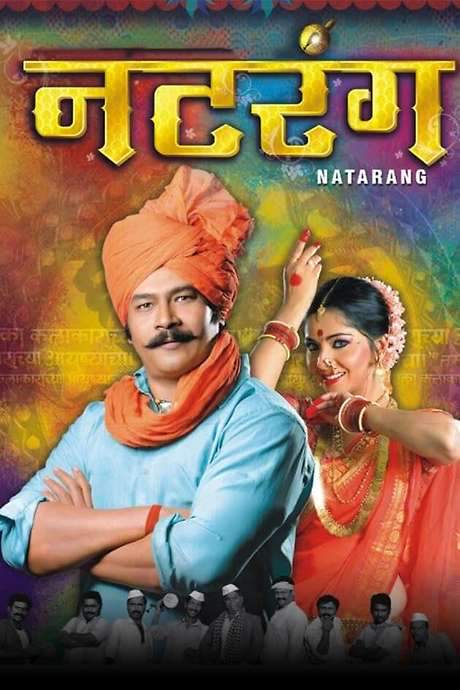
Natrang 2010

Directed by

Ravi Jadhav
Made by

Zee Talkies
Natrang Plot Summary
Read the complete plot summary and ending explained for Natrang (2010). From turning points to emotional moments, uncover what really happened and why it matters.
Gunvantrao Kagalkar, known as Guna, is a poor village labourer who nurtures a deep, enduring love for Tamasha, the vibrant folk theatre that’s a heartbeat of Maharashtra.
When his job disappears, he teams up with his friend and mentor Pandoba to start a small theatre company. To give the project a chance to thrive, Guna believes the troupe must have a female dancer. Pandoba finds Naina, the daughter of his former lover Yamunabai, who is willing to join on one condition: the show must include a “Nachya”—a man who performs in an intentionally effeminate way.
With no easy support from his family, Guna takes on the challenging role himself, driven by an unyielding passion for the art. His dedication helps the performances take off, and the troupe’s work quickly attracts audiences and attention.
But success soon pulls the production into a political power struggle between two local politicians who want to ride its popularity for their own ends. Meanwhile, tragedy strikes at home: Guna’s father dies in the village, and his wife and son endure harassment from angry neighbors. Violence escalates as rival gangs attack the theatre and torch the venue. Guna is unfairly branded as a eunuch and subjected to brutal assault, yet he remains determined to continue.
Despite the rejection of his family and the discouragement of some friends, Guna presses on, kept company by Naina as the show endures and grows. It is implied that Guna and Naina marry, and that their performances gain national and international acclaim, spreading the reach and reputation of their troupe far beyond their village.
The story closes with an older Gunvantrao Kagalkar, celebrated as a living legend of the stage, stepping onto a major awards ceremony stage to accept a lifetime achievement award.
Natrang Timeline
Follow the complete movie timeline of Natrang (2010) with every major event in chronological order. Great for understanding complex plots and story progression.
Guna's Love for Tamasha
Guna grows up with a deep, lifelong love for Tamasha, the vibrant folk theatre of Maharashtra. This art form becomes a guiding heartbeat for him, shaping his dreams and identity. His devotion sets the stage for everything that follows.
Unemployment Sparks a New Plan
When his job disappears, Guna partners with his mentor Pandoba to start a small theatre company. They face the daunting task of building a troupe from scratch and finding ways to draw audiences. This marks the transition from personal passion to organized pursuit.
Naina Joins the Troupe
Pandoba finds Naina, daughter of his former lover Yamunabai, and offers her a place in the troupe on one condition: include a Nachya. Naina agrees, recognizing the artistic opportunity and the need to push the show forward. The inclusion of a male-performed, effeminate role becomes central to the troupe's identity.
Guna Takes the Nachya Role
With no easy support from family, Guna volunteers to play the Nachya, embracing a demanding craft for the art's sake. He trains hard, letting his dedication drive the troupe's evolving performances. This decision cements his personal sacrifice for Tamasha.
Troupe Begins to Thrive
The performances take off, attracting audiences and steadily earning attention beyond the initial village circle. Guna's commitment and Naina's presence help the show gain momentum. The troupe begins to establish a reputation.
Politics Enter the Stage
Two local politicians see the troupe's popularity as a tool for their own power, initiating a political struggle that threatens the group's freedom to perform. The conflict introduces new dangers and pressures on everyone involved. The art becomes entangled with local politics.
Family Tragedy Strikes
Guna's father dies in the village as his wife and son endure harassment from angry neighbors. Personal grief compounds the siege around the theatre, testing the troupe's resilience. The home front sours while the stage becomes a beacon for the community.
Theatre Attacked and Torchied
Violence escalates as rival gangs attack the theatre and set it on fire, threatening to extinguish the troupe's progress. The fire leaves scars on the building and on the people who work there. Yet the fire also forges a renewed resolve to persevere.
Guna Branded and Assaulted
Guna is unfairly branded as a eunuch and subjected to brutal assault, reinforcing the social stigma surrounding his art. He endures the abuse with quiet determination, refusing to abandon the performances. The incident deepens the community's empathy for his struggle.
Naina's Support and Perseverance
Despite family rejection and discouragement from some friends, Naina remains at Guna's side as the show endures and grows. Their partnership becomes a symbol of resilience and artistic grit. The troupe slowly finds renewed purpose.
Rising Fame and an Implication of Marriage
It is implied that Guna and Naina marry as the troupe expands its reach, gaining national and international acclaim. Their performances spread far beyond the village, elevating Tamasha to a wider audience. The legend of the troupe begins to take shape.
A Living Legend Accepts a Lifetime Award
The story closes with an older Gunvantrao Kagalkar stepping onto a major awards ceremony stage to accept a lifetime achievement award. He is celebrated as a living legend of the stage, a testament to decades of artistry and resilience. The film ends on a note of lasting legacy.
Natrang Characters
Explore all characters from Natrang (2010). Get detailed profiles with their roles, arcs, and key relationships explained.
Gunvantrao Kagalkar (Guna) — Atul Kulkarni
A poor village labourer with an inexhaustible love for Tamasha, Guna channels personal pain into art. He is stubborn, relentless, and deeply committed to giving the troupe a chance, even when the odds are against him. His leadership helps the performances take off and eventually brings national and international attention to the troupe.
Naina (Sonalee Kulkarni)
Daughter of Yamunabai, Naina joins the troupe on one condition: the show must include a Nachya. She brings determination and warmth, helping the group grow while navigating social expectations.
Pandoba
The mentor who convinces the troupe to pursue theatre, guiding them through the initial struggles and risks involved in starting a new company.
Yamunabai
Naina's mother and Guna's former lover, her past relationship with Guna adds complexity to current loyalties and family dynamics within the narrative.
Guna's Wife
Guna's family life becomes strained as neighbors harass them and tragedy looms, highlighting the personal costs of pursuing art and public attention.
Guna's Father
Guna's father dies in the village, and his death deepens the emotional stakes, testing Guna's resolve to keep the troupe going amid loss and hostility.
Natrang Settings
Learn where and when Natrang (2010) takes place. Explore the film’s settings, era, and how they shape the narrative.
Location
Maharashtra, India
The story unfolds in a rural village in Maharashtra, where Tamasha—the vibrant folk theatre—is the cultural heartbeat. The village is depicted as tight-knit yet fragile, with strong ties to tradition and family expectations. The backdrop of local politics and social tensions frames the community's response to the troupe's rise.
Natrang Themes
Discover the main themes in Natrang (2010). Analyze the deeper meanings, emotional layers, and social commentary behind the film.
🎭
Theater
Tamasha emerges as a powerful vehicle for personal dignity and communal identity. The film tracks how performance becomes a lifeline for characters facing poverty and social constraints. It explores the tension between traditional norms and modern artistic ambitions, challenging gender roles and public expectations through the troupe's journey.
🗳
Power Politics
Local politicians attempt to harvest the troupe's rising popularity for their own gain, revealing how art can become a political tool. The conflict highlights the friction between artistic integrity and political expediency. The story shows communities grappling with the impact when entertainment becomes a battleground for power.
👪
Family Ties
Family and communal relationships anchor the protagonist, even as hardship and social stigma strain them. The narrative underscored by the care and pressure from relatives reveals how loyalty and expectation shape decisions. The evolving dynamics add emotional depth to the pursuit of art and resilience.

Coming soon on iOS and Android
The Plot Explained Mobile App
From blockbusters to hidden gems — dive into movie stories anytime, anywhere. Save your favorites, discover plots faster, and never miss a twist again.
Sign up to be the first to know when we launch. Your email stays private — always.
Explore the mobile appNatrang Spoiler-Free Summary
Discover the spoiler-free summary of Natrang (2010). Get a concise overview without any spoilers.
In the bustling heart of rural Maharashtra, the timeless thunder of drums and the flash of colorful costumes define everyday life. Here, Guna, a humble labourer, carries an unwavering love for tamasha—the raw, exuberant folk theatre that pulses through the community’s veins. His world is one where rhythm and storytelling clash with the hard realities of village labor, and his dreams glimmer with the promise of stage lights that could lift him beyond the fields.
When a sudden loss of work leaves Guna searching for purpose, he teams up with his long‑time mentor Pandoba to build a modest travelling troupe. Their vision hinges on a daring artistic choice: a “nachya,” a role that embraces an intentionally effeminate performance, challenging conventional expectations. To give the troupe authenticity, they invite Naina, the spirited daughter of a former love, whose own aspirations intertwine with the group’s. The trio’s collaboration sets the stage for a colorful experiment, where tradition meets rebellion and each rehearsal reverberates with both hope and uncertainty.
The film’s tone sways between the joyous roar of a tamasha crowd and the quiet, lingering doubts of those who dare to defy social norms. Guna finds himself at a crossroads, balancing the fierce pride of his artistic calling with the weight of his family’s reputation. As the troupe prepares to step onto the makeshift stage, the audience senses a world on the brink of transformation—where the echo of drums may herald triumph, or a reverberating challenge to everything Guna has ever known.
Featured on this page

What's After the Movie?
Not sure whether to stay after the credits? Find out!
Check out our other apps:

SAT Sphere
Build confidence for the Digital SAT.

Mori Atlas
Discover wild places worth protecting.

Luntero
Search smarter for a home in Amsterdam.

Plot Explained
Unravel movie endings and hidden clues.

Pokechamp
Dive into Pokémon data and battle logic.

Driving Theory
Get ready for your European theory test.

Movie Dust
Plan your next cinema trip with ease.

Musemap
Find art and culture as you travel.

Selkobase
Compare credentials before committing.

Local Manual
Turn an unfamiliar country into practical next steps.

Lernavi
Compare school systems before your next move.

GymRoam
Find a workout stop wherever your plans take you.
Explore Our Movie Platform
New Movie Releases (2026)
Famous Movie Actors
Top Film Production Studios
Movie Plot Summaries & Endings
Major Movie Awards & Winners
Best Concert Films & Music Documentaries
Movie Collections and Curated Lists
© 2026 What's After the Movie. All rights reserved.
Privacy Policy