
My Friend Ivan Lapshin 1985

Directed by
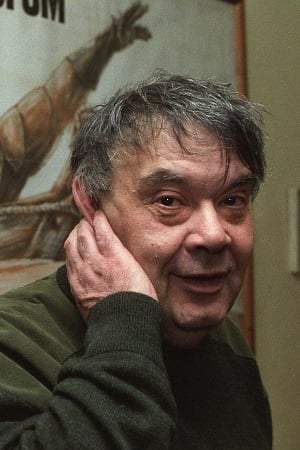
Aleksei German
Made by

Lenfilm
My Friend Ivan Lapshin Plot Summary
Read the complete plot summary and ending explained for My Friend Ivan Lapshin (1985). From turning points to emotional moments, uncover what really happened and why it matters.
Ivan Lapshin, the head of the city’s Criminal Investigation Department in Unchansk, is portrayed with a clear, unyielding sense of duty as the story unfolds. Set in the 1930s and narrated years later by a boy who was only nine at the time, the film invites us into a world where crime, loyalty, and ordinary life intersect in a provincial setting. The CID is on the trail of Solovyov and his gang, whose brutal murders disrupt the uneasy calm of the city, testing Lapshin’s resolve and the cohesion of his team.
The film introduces Lapshin as a former participant in hostilities, a man who believes in decisive action and the necessity of making hard choices. His motto, spoken as a steady refrain that guides him and his comrades, captures the spirit of their work:
“Let’s clean up the land, plant a garden, and we ourselves will still have time to walk in this garden!”
Beyond the badge and the raids, the narrative paints a vivid portrait of daily life in a tight-knit, overcrowded living arrangement. Lapshin rents a small space in a communal apartment from the elderly Patrikeevna, sharing walls and routines with others who press close into a modest, shared existence. The atmosphere is drawn with warmth and quiet humor as four adults and a child navigate the cramped quarters, echoing the era’s social changes and the rough-edged optimism of the time.
Parallel to the crime investigations, the film threads a subtle but intimate love story into the fabric of the city’s life. A local theater actress, portrayed by Natasha Adasova, becomes entangled in a quiet, unspoken love triangle with Lapshin and the visiting journalist Khanin. Khanin and Lapshin have known each other for years, and while Lapshin’s genuine sympathy for the actress begins to complicate his judgments, she confesses a deeper affection for Khanin. The tension between duty and desire adds a human dimension to the pursuit of justice.
The ensemble around Lapshin also illuminates the provincial theater’s inner life during the post-NEP era. The film glimpses the troupe’s behind-the-scenes struggles as they wrestle with traditional classics on stage and the search for bolder, new subjects in art. A window into the theatre’s ambitions shows the characters balancing artistic exploration with practical demands, all while the communal apartment’s everyday grind continues to press in from the margins.
Central to these interwoven arcs is Okoshkin, a diligent UGRO employee whose single-minded drive to marry and move out of the crowded apartment becomes a running thread of comic relief and pathos. His intermittent flirtations with a future beyond the communal rooms offer a counterpoint to the harsher realities faced by Lapshin and his men, and he eventually returns to the life he knows.
Amid the personal dramas lies a deeper, more perilous strain in Khanin’s own life. After his wife’s death, he finds himself overwhelmed by despair and even attempts to end his pain with Lapshin’s pistol. The scene paves the way for a crisis that double-binds friendship and duty: Khanin’s desire to escape his sorrows, and Lapshin’s responsibility to the squad and to the law. When the moment of action arrives, Khanin’s instinct to run with Lapshin toward the danger of a gang operation clashes with his own limits. It is during the operation that the truth about Solovyov’s movements emerges; Khanin notices a silent departure from the barracks, a detail that proves crucial. Solovyov tries to surrender, but Lapshin’s resolve leads to a brutal outcome, and the pursuit ends with Solovyov being surrounded and, as per the code of the time, Lapshin carrying out the sentence.
After his hospital recovery, Khanin invites Lapshin to accompany him to the Far East and Siberia to “show places” Lapshin has never seen, but the offer is declined. The actress lingers in Unchansk, yet Lapshin’s stance toward their relationship hardens; he resolves to keep a respectful distance, recognizing that the demands of his work and the weight of his responsibilities require a certain emotional coolness.
The film’s storytelling layers together the grit of police work, the texture of communal living, and the fragile shimmer of personal longing. It presents a portrait of a city and a time when crime was a constant backdrop to ordinary life, and it does so through a narrator who remembers both the danger and the small, human moments that define a community. The result is a richly textured, emotionally restrained drama that honors its characters—Lapshin, Khanin, Natasha Adasova’s actress, the old Patrikeevna, and the others—without losing sight of the broader social and historical currents that shape their choices.
My Friend Ivan Lapshin Timeline
Follow the complete movie timeline of My Friend Ivan Lapshin (1985) with every major event in chronological order. Great for understanding complex plots and story progression.
Frame narration by a young observer
The film is presented through the eyes of a narrator who is a 9-year-old boy, recounting events that took place in the 1930s many years ago. He guides us into the life of Ivan Lapshin and his circle in Unchansk. The frame establishes the memory-driven and reflective tone of the story.
CID pursuit of Solovyov's gang
The local CID is deeply involved in tracking down Solovyov's gang, whose brutal murders terrorize the city. Lapshin leads the pursuit with a resolute, uncompromising approach. The pursuit sets the tone for his character and the film's tension.
Lapshin's motto and uncompromising stance
Lapshin embodies a hard-nosed ethic: clean up the land and plant a garden, and there will still be time to walk in the garden. He does not compromise in crime-fighting and expects the same from his team. This motto reflects the era's revolutionary vigor and his personal discipline.
Communal living in a crowded apartment
Most of Lapshin's life unfolds in a shared communal apartment, where four adults and a child jockey for space. He rents a corner from Patrikeevna and navigates the tight quarters and the small battles over daily life. The film uses this setting to show both camaraderie and strain.
The two narrative threads: investigation and theatre life
Parallel to the police work, the film delves into the provincial theatre's life, showing classics on stage alongside attempts to forge new subjects in art. The characters interact with the UGRO and the theater world, blurring lines between crime, art, and politics. The setting highlights cultural tension in post-NEP times.
Love triangle forms: actress, Khanin, and Lapshin
Nina Ruslanova, a local theatre actress, captivates Lapshin, but she secretly loves Khanin. Khanin, a visiting journalist, is an old acquaintance who carries a different kind of attraction for her. The trio becomes central to the film's emotional landscape as political duty competes with personal longing.
UGRO official Okoshkin's ambition
Okoshkin, the UGRO employee, sees marriage and moving out as a way to escape communal life. He almost achieves it but ends up back in the shared apartment. His arc mirrors the small-scale routines of the city’s life.
Khanin’s depression and suicide attempt
Khanin, recently widowed, moves into the communal apartment and sinks into despair. He attempts to shoot himself with Lapshin's pistol, a pivotal moment that binds their fates and tests Lapshin's friendship. Lapshin's decision to stay by his side anchors their relationship in crisis.
Promise to take Khanin along to catch robbers
Despite the darkness, Lapshin promises to take Khanin with him on future operations to chase criminals. This pledge suggests a sense of mentorship and loyalty between them. The moment deepens Khanin's will to endure and participate in police work.
The raid reveals Solovyov’s escape and Khanin's alertness
During a raid on barracks, Khanin notices someone slipping away toward the yards. He identifies Solovyov as the suspect and signals trouble, shifting the operation's dynamic. The moment blends investigative instinct with personal risk.
Khanin is stabbed; the pursuit continues
When Khanin tries to detain Solovyov, Solovyov stabs him in the stomach, a traumatic wound that tests the constable’s resolve. The operation proceeds as police surround Solovyov, and the outcome remains uncertain. This event marks the film’s emotional core, forcing choices under pressure.
Solovyov is captured and Lapshin executes him
Solovyov, despite signaling surrender, is ultimately eliminated by Lapshin, who carries out the sentence. The act closes the gang threat and reinforces the character’s hard-edged justice. The confrontation leaves the investigators scarred but resolute.
Khanin recovers and offers a future journey
After healing from his wound, Khanin offers to take Lapshin to the Far East and Siberia to show him places he has never seen. Lapshin declines, choosing to stay in Unchansk and continue his life and duties there. The moment marks a pivot in their personal relationship and Lapshin’s path.
The actress stays in Unchansk; emotional distance remains
The actress seems ready to leave with Khanin but finally remains in Unchansk. Lapshin chooses to keep distance from her, signaling a shift in his emotional investments after the case. The communal life continues to press on around them.
My Friend Ivan Lapshin Characters
Explore all characters from My Friend Ivan Lapshin (1985). Get detailed profiles with their roles, arcs, and key relationships explained.
Ivan Lapshin (Andrei Boltnev)
Head of the CID in Unchansk, Lapshin is a strong-willed lawman who seeks to clean up the land with firmness. He lives in a cramped communal apartment and values duty over sentiment, though he forms a genuine, if complicated, bond with the local actress. His sense of justice drives his actions, even as personal loyalties tug at him.
Natasha Adasova (Nina Ruslanova)
The local theatre actress who captivates Lapshin and Khanin; she harbors a secret affection for Khanin. Her presence on stage contrasts with the pressures of life in a communal apartment, highlighting her role as both romantic pivot and performer navigating post-NEP society.
Khanin (Andrey Mironov)
A visiting theatre journalist with a long-standing friendship with Lapshin, Khanin becomes the second figure in the love triangle. Struggling with despair after his wife’s death, he seeks meaning through friendship, work, and a possible escape to the Far East.
Patrikeevna (Zinaida Adamovich)
The elderly landlady who rents Lapshin a bed in the communal apartment, she embodies the everyday reality of shared living in the 1930s. Her presence anchors the neighborhood’s intimate social network and adds to the film’s sense of home and endurance.
Solovyov (Yuri Pomogaev)
The gang criminal in the case, Solovyov embodies violent danger. Lapshin and the police ultimately surround him, but Solovyov’s betrayal culminates in a fatal confrontation during the raid.
Narrator (Valeri Kuzin) — 9-year-old
Tells the story years later, the narrator provides a child’s perspective on the events, shaping how the town’s past and present are connected. His voice frames the memory of Lapshin’s world and the communal life he observes.
Okoshkin (Aleksei Zharkov)
UGRO employee who is trying to get married and move out of the communal apartment. He embodies a more practical, bureaucratic side of the film’s social world and the push to create stable personal lives.
My Friend Ivan Lapshin Settings
Learn where and when My Friend Ivan Lapshin (1985) takes place. Explore the film’s settings, era, and how they shape the narrative.
Time period
1930s
The story unfolds in the Soviet Union during the 1930s, a period marked by post-NEP reforms and heightened crime control in provincial towns. Veterans of the Civil War linger in memory, while revolutionary songs and a stoic, duty-bound atmosphere color the everyday scene. Life centers on work, art, and the tension between personal longing and social responsibilities.
Location
Unchansk, communal apartment, local theater, police barracks
Unchansk serves as the provincial backdrop where police work, communal living, and artistic life intersect. The communal apartment blocks together several adults and a child, highlighting the era's crowded living conditions. The local theater provides a window into post-NEP cultural life and the social world of the lovers. Police raids and interrogations weave through the town, tying crime to daily life.
My Friend Ivan Lapshin Themes
Discover the main themes in My Friend Ivan Lapshin (1985). Analyze the deeper meanings, emotional layers, and social commentary behind the film.
⚖️
Duty vs Desire
Ivan Lapshin embodies unwavering duty as the CID chief, yet his feelings for the actress tug at his professional boundaries. The film examines how personal loyalty and romantic longing collide with the responsibilities of law and order. Choices are weighed not only by legality but by a sense of justice within a close-knit community.
🎭
Art vs Society
The provincial theater scene sits at the heart of the story, revealing how art tries to redefine social norms in a restrictive era. The love triangle backstage and on stage mirrors the town's struggle between tradition and change. Characters flirt with new subjects and reform through art, while reality intrudes through police work.
🏠
Communal Life
The film casts a bright light on communal living, where multiple adults share a single space and daily rhythms mingle with personal dramas. Small spaces become theaters for friendships, rivalries, and communal songs. This setup intensifies the characters' vulnerability and interdependence.

Coming soon on iOS and Android
The Plot Explained Mobile App
From blockbusters to hidden gems — dive into movie stories anytime, anywhere. Save your favorites, discover plots faster, and never miss a twist again.
Sign up to be the first to know when we launch. Your email stays private — always.
Explore the mobile appMy Friend Ivan Lapshin Spoiler-Free Summary
Discover the spoiler-free summary of My Friend Ivan Lapshin (1985). Get a concise overview without any spoilers.
In a wind‑swept provincial town frozen in the middle of the 1930s, the atmosphere hangs heavy with the quiet terror of Stalin’s Great Purge. Against that backdrop, Ivan Lapshin commands the local Criminal Investigation Department, embodying a relentless sense of duty that shapes the rhythm of everyday life. His mantra—about clearing the land and planting a garden—captures a stoic optimism that coexists with the stark realities of the era, hinting at a world where order must be forged through hard choices.
The city’s pulse is felt most intimately inside a cramped communal apartment, where Lapshin rents a modest room from the elderly Patrikeevna. Four adults and a child navigate the tightly packed corridors, their routines stitching together moments of quiet humor and subtle companionship. This shared domestic space becomes a micro‑cosm of the larger society, offering a warm, almost nostalgic counterpoint to the stern demands of the police precinct and the ever‑present undercurrent of suspicion.
Beyond the police station, the town’s modest theater breathes another layer of life into the story. The local actress, portrayed by Natasha Adasova, finds herself at the center of an understated love triangle that also involves the seasoned journalist Khanin, a longtime friend of Lapshin. Their tangled affections add a human softness to the rigor of duty, while the earnest clerk Okoshkin, dreaming of a future beyond the crowded rooms, supplies a gentle thread of comic relief. Together, these characters paint a portrait of a community striving to maintain dignity, hope, and connection amid an era defined by its unforgiving demands.
Movies with Similar Twists and Themes
Uncover films that echo the narrative beats, emotional arcs, or dramatic twists of the one you're exploring. These recommendations are handpicked based on story depth, thematic resonance, and spoiler-worthy moments — perfect for fans who crave more of the same intrigue.


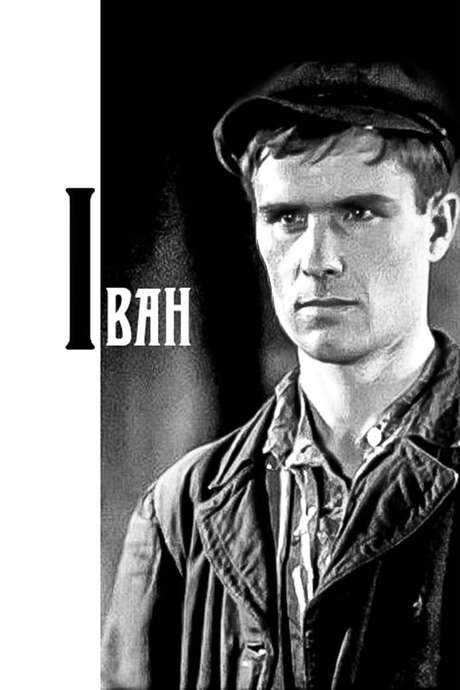
Featured on this page

What's After the Movie?
Not sure whether to stay after the credits? Find out!
Check out our other apps:

SAT Sphere
Build confidence for the Digital SAT.

Mori Atlas
Discover wild places worth protecting.

Luntero
Search smarter for a home in Amsterdam.

Plot Explained
Unravel movie endings and hidden clues.

Pokechamp
Dive into Pokémon data and battle logic.

Driving Theory
Get ready for your European theory test.

Movie Dust
Plan your next cinema trip with ease.

Musemap
Find art and culture as you travel.

Selkobase
Compare credentials before committing.

Local Manual
Turn an unfamiliar country into practical next steps.

Lernavi
Compare school systems before your next move.

GymRoam
Find a workout stop wherever your plans take you.
Explore Our Movie Platform
New Movie Releases (2026)
Famous Movie Actors
Top Film Production Studios
Movie Plot Summaries & Endings
Major Movie Awards & Winners
Best Concert Films & Music Documentaries
Movie Collections and Curated Lists
© 2026 What's After the Movie. All rights reserved.
Privacy Policy