What Is Murder on the Orient Express About?
The premise of Murder on the Orient Express in 251 words, with nothing given away. The full story and the ending follow below.
In the height of the 1930s, the legendary Orient Express glides through snow‑capped landscapes, its opulent compartments a moving micro‑cosm of aristocracy, intrigue and restless ambition. The train’s polished wood, hushed conversations and the rhythmic clatter of wheels create a claustrophobic elegance that feels both timeless and perilously isolated, setting the stage for a story that thrives on whispered secrets and concealed motives.
When Hercule Poirot receives an invitation from his longtime friend Bouc, who oversees the grand railway, the meticulous Belgian detective steps aboard, drawn by the promise of a tranquil journey and the subtle allure of a puzzle waiting to be unraveled. Poirot’s trademark precision and compulsive attention to detail clash delightfully with Bouc’s more relaxed, worldly charm, establishing a dynamic that hints at both camaraderie and friendly rivalry.
The train soon fills with a colourful array of strangers—wealthy industrialists, genteel ladies, mysterious foreigners—each cloaked in their own veneer of propriety while hinting at hidden pasts. As the carriage hurtles toward its destination, a sudden murder shatters the genteel atmosphere, turning polite chatter into a tense examination of alibis, motives, and the fragile trust that binds the passengers together.
Against this backdrop of rolling snow and tightening corridors, Poirot is compelled to sift through the tangled web of relationships and half‑revealed histories. The film balances the elegance of a bygone era with the electric suspense of a classic whodunit, inviting the audience to linger in the flickering lamplight of each compartment and wonder which concealed truth will finally surface.
What Happens in Murder on the Orient Express?
The complete story of Murder on the Orient Express, from the first scene to the last, in 756 words (about 3 minutes). Spoilers throughout. Names in the text link to 6 cast member pages.
Spoilers ahead
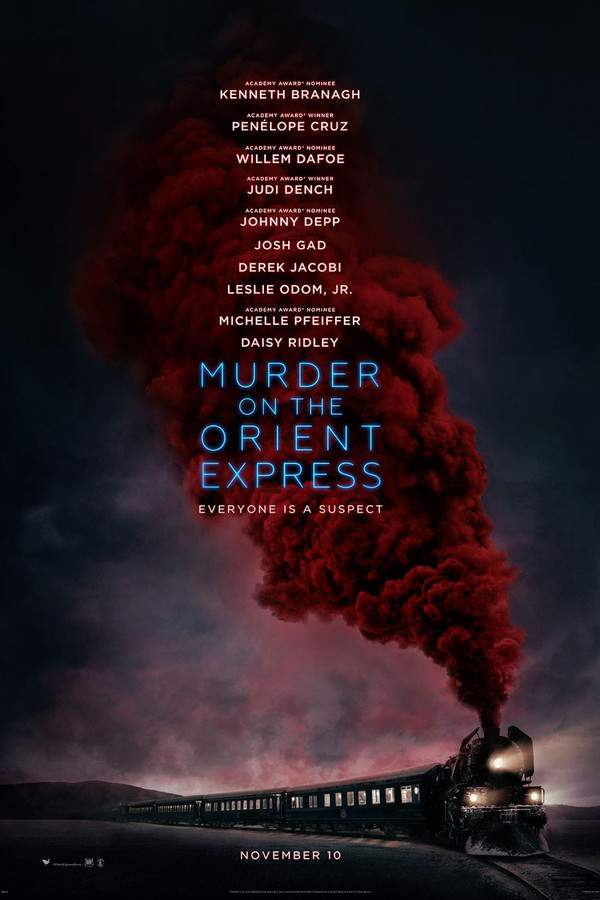
In 1934, the renowned detective Hercule Poirot (Kenneth Branagh) finds himself entangled in a perplexing theft case at the Church of the Holy Sepulchre in Jerusalem. A man marked by his obsessive-compulsive tendencies, Poirot strives for balance in his life and views his extraordinary skill to uncover lies amid truths as somewhat of a curse. While yearning for some peace in Istanbul, he is compelled to return to London to tackle yet another mystery. His close friend, Bouc (Tom Bateman), who manages the Orient Express, extends an invitation for him to stay aboard the illustrious train.
Amidst this setting, businessman Samuel Ratchett (Johnny Depp) solicits Poirot’s services as a bodyguard during their three-day voyage, fearing threats he has received from an anonymous source. Poirot, however, declines this job. That very night, he becomes alert to peculiar sounds emanating from Ratchett’s cabin and witnesses a mysterious figure clad in a red kimono dashing down the corridor. Suddenly, tragedy strikes when an avalanche derails the train, trapping the passengers in its grip.
The following morning unveils the shocking news that Ratchett has been brutally murdered, stabbed multiple times during the night. Teaming up with Bouc, Poirot begins to unearth the identities and alibis of the passengers as repairs to the train get underway. Evidence points towards a single perpetrator responsible for Ratchett’s demise, with Caroline Hubbard (Michelle Pfeiffer) asserting that someone had entered her compartment, providing a potential route for the murderer into Ratchett’s space.
Poirot’s investigation reveals a partially ruined note linking Ratchett to the infamous kidnapping of Daisy Armstrong, a little girl who was taken from her home for ransom and later discovered dead despite the payment being made. Ratchett is exposed as John Cassetti, the very man responsible for Daisy’s abduction and murder. The heartbreaking repercussions of Daisy’s death led to her mother’s tragic demise during childbirth and her father’s subsequent suicide. The case deepens further with the shocking revelation of the nursemaid Susanne, who was wrongfully accused and later took her own life after being unjustly incarcerated.
The train compartments were securely locked that night, leaving only the individuals within that compartment as potential suspects. Even a guard confirmed he saw no one enter Ratchett’s cabin during the crucial time. An analysis of Ratchett’s coffee indicates it was drugged, yet his valet Henry remains in the dark about how it occurred before or after it was served to Ratchett. As new evidence surfaces, including a bloodied handkerchief and a button from a conductor’s uniform found in Hubbard’s room, the mystery intensifies further. Hubbard gets attacked but survives, leaving Poirot grasping at the threads of a complex narrative.
Not long after, Poirot engages in interviews with various suspects, including Mary Debenham (Daisy Ridley), where tension escalates when John Arbuthnot nearly shoots Poirot, only to clarify his intent was not to kill but to assert a point. With each interaction, hidden connections to the Armstrong family emerge, weaving a dense tapestry that Poirot meticulously unravels.
Eventually, he confronts the passengers with two potential theories regarding Ratchett’s death. The simpler one suggests that an outsider masquerading as the conductor carried out the murder, while the more intricate theory indicates that all present had a personal connection to the Armstrong tragedy, yielding a collective motive against Cassetti. In a stunning turn, it becomes evident that Hubbard is actually Linda Arden, a former celebrated actress and mother to Sonia Armstrong, who orchestrated the murder plot alongside the other suspects.
Poirot further uncovers deep links among the passengers to the Armstrong family. Hector Willard MacQueen (Josh Gad), Ratchett’s loyal secretary, bears connections through his father to the kidnapping case, fueling his rage against Cassetti. The plot thickens with revelations about Edward Henry Masterman, Colonel Armstrong’s batman and later servant, and Colonel Arbuthnot, a trusted friend of Armstrong. They all share intertwined histories of grief and vengeance stemming from the past.
Ultimately, as Poirot pieces together this complex puzzle, he challenges the suspects, proposing that all of them took part in Ratchett’s death, each delivering a blow to reserve their collective secret. Tragically, at the conclusion of this moral dilemma, Poirot realizes that true justice will elude him. Cassetti’s crimes justified his death, leaving Poirot to bear the weight of a lie on his mind. He presents a solitary killer theory to the authorities, facilitating the passengers’ escape. As the train gets back on its course, a messenger approaches Poirot, requesting his expertise on a death that has occurred on the Nile, prompting Poirot to take on yet another complex investigation.
Murder on the Orient Express Timeline: Every Key Event in Order
15 key events in the order they happen, from “Poirot's Encounter in Jerusalem” to “Moral Dilemma Resolved”. 14 events name a place, across 3 locations.
- 1
Poirot's Encounter in Jerusalem
In 1934, renowned detective Hercule Poirot finds himself investigating a perplexing theft case at the Church of the Holy Sepulchre in Jerusalem. His obsessive-compulsive tendencies drive him to seek balance in life, yet his extraordinary skill in uncovering lies often feels like a curse.
When:1934 Where:Church of the Holy Sepulchre, Jerusalem
- 2
Return to London
After yearning for peace in Istanbul, Poirot is compelled to return to London to tackle yet another mystery. His close friend Bouc, who manages the Orient Express, invites him to stay aboard the illustrious train, where the next series of events will unfold.
Where:Orient Express
- 3
Ratchett's Request
Onboard the train, business magnate Samuel Ratchett solicits Poirot's services as a bodyguard due to threats he's been receiving from an unknown source. Poirot declines the offer but remains alert and aware of the unusual happenings surrounding Ratchett.
Where:Orient Express
- 4
The Mysterious Figure
That very night, Poirot is drawn to strange sounds coming from Ratchett's cabin. Before he can investigate further, a shadowy figure in a red kimono rushes past him in the corridor, heightening the tension and suspense onboard the express train.
When:Night Where:Orient Express
- 5
Avalanche Disaster
Tragedy strikes when an avalanche derails the train, trapping all passengers within. The sense of danger escalates as the survivors must navigate this fresh threat while the circumstances surrounding Ratchett’s presence onboard remain mysterious.
Where:Mountains
- 6
Discovery of the Murder
The following morning reveals the shocking fact that Ratchett has been brutally murdered in his cabin, stabbed multiple times during the night. With his friend Bouc, Poirot immediately begins to investigate the identities and alibis of the stranded passengers.
When:Morning Where:Orient Express
- 7
Clue from Caroline Hubbard
During the investigation, Caroline Hubbard claims that someone entered her compartment during the night, suggesting a potential route for the murderer. This leads Poirot to consider the possibility that the murderer is among the passengers currently trapped on the train.
Where:Orient Express
- 8
Unraveling the Background
Poirot discovers a ruined note linking Ratchett to the infamous kidnapping case of Daisy Armstrong, which turns out to be a pivotal detail. He learns that Ratchett is actually John Cassetti, the very man responsible for Daisy's abduction and eventual murder.
Where:Orient Express
- 9
Tragic Repercussions
The investigation reveals the heartbreaking consequences of Daisy's death, including her mother's tragic demise during childbirth and her father's suicide that followed. These revelations deepen the emotional complexity of the case and highlight the motives of those involved.
- 10
Compromised Evidence
Poirot learns that the train compartments were securely locked on the night of the murder, leaving only the passengers within the car as suspects. Despite the guard's claims of not seeing anyone enter Ratchett’s cabin, Poirot's analysis leads him to suspect foul play.
Where:Orient Express
Show the other 5 events of Murder on the Orient Express Hide the last 5 events
- 11
Intriguing Interviews
As the investigation unfolds, Poirot conducts interviews with various suspects, including Mary Debenham. Tensions rise dramatically when John Arbuthnot brandishes a firearm, although he quickly clarifies his intent is not murder but to emphasize a point.
Where:Orient Express
- 12
Emergence of Hidden Connections
With each interview, Poirot uncovers hidden ties between the suspects and the Armstrong family, weaving a complex narrative of grief and revenge. The interconnected histories of the individuals aboard the train create a dense tapestry that Poirot strives to unravel.
Where:Orient Express
- 13
Two Theories Presented
Eventually, Poirot confronts the passengers with two theories regarding Ratchett’s murder. The simpler theory suggests an outside killer, while the more intricate one implicates everyone present, revealing their personal connections and motives against Cassetti.
Where:Orient Express
- 14
The Final Revelation
In a stunning twist, it becomes clear that Hubbard, posing as a mere passenger, is actually Linda Arden, mother to Sonia Armstrong. She orchestrated the murder alongside the other suspects, which reveals the meticulous planning behind the act of vengeance.
Where:Orient Express
- 15
Moral Dilemma Resolved
Faced with the truth, Poirot realizes that true justice will elude him as he presents a singular killer theory to authorities. Understanding that the collective actions of the passengers were justified by Cassetti's past, he lets them escape, facing the weight of a lie.
Where:Orient Express
Who Are the Main Characters in Murder on the Orient Express?
4 characters, among them Gerhard Hardman, Miss Mary Debenham and Samuel Ratchett (John Cassetti): who each one is and the part they play in the story. Every profile links to the actor’s page.
-

Gerhard Hardman
Played by Willem Dafoe
Gerhard Hardman is a key supporting character, known for his clever insights and role in the unfolding mystery. His connections and observations provide crucial information that aids Poirot in navigating the investigation. With a keen understanding of human behavior, he serves as a valuable ally in unraveling the complex web of lies.
- 🕵️♂️ Detective
- 📖 Insightful
-

Miss Mary Debenham
Played by Daisy Ridley
Miss Mary Debenham is a poised and enigmatic character, strategically navigating the complexities of the murder investigation. With her strong demeanor, she awakens curiosity in Poirot and raises questions about her true involvement in the events. Her character embodies strength, intelligence, and hidden depths, complicating the mystery further.
- 👩🎓 Intelligent
- 🎭 Mysterious
-

Samuel Ratchett (John Cassetti)
Played by Johnny Depp
Samuel Ratchett, revealed to be the notorious John Cassetti, is central to the dark narrative driving the plot. His enigmatic presence and brutal murder atop the train thrust all passengers into suspicion. Through the unraveling of his past, the audience learns about the weight of guilt and the consequences of one's actions.
- 💼 Businessman
- 🚫 Villain
-

Caroline Hubbard (Linda Arden)
Played by Michelle Pfeiffer
Caroline Hubbard, who is ultimately revealed as Linda Arden, is a pivotal figure in the mystery with her tumultuous emotions and motherly motivations. As a former actress, she brings charm and complexity to the investigation, representing themes of vengeance and justice. Her actions reflect a tragic drive for retribution against those who wronged her family.
- 🌹 Dramatic
- 🛡️ Vengeful
Where and When Is Murder on the Orient Express Set?
Murder on the Orient Express is set in Orient Express, Jerusalem, Istanbul and London (1934). Here is why the time and place matter to the story.
When
1934
Set in 1934, the story reflects a period marked by innovation and the growing complexities of international travel. It captures the tension of a world on the brink of change, intricately woven with the shadows of past tragedies and societal expectations. During this era, the aftermath of the Great Depression influences human behavior, deepening the movie's themes of justice and morality.
Where
Orient Express, Jerusalem, Istanbul, London
The movie takes place aboard the luxurious Orient Express train, known for its elegance and historical significance. Key events unfold in major cities such as Jerusalem and Istanbul, known for their rich cultures and bustling histories. London, a city of mystery and intrigue, serves as Poirot's home base, linking the story's intricate narrative.
- 🚂 Train
- 🌍 Cities
- 🕌 Historic Sites
What Are the Themes of Murder on the Orient Express?
3 ideas the story keeps returning to, among them Justice, Mystery and Tragedy.
-
01
Justice
The theme of justice plays a pivotal role in the narrative as Poirot navigates the moral intricacies surrounding the murder of Ratchett. Throughout the investigation, characters grapple with their conflicting loyalties and the question of whether true justice can be served. The film challenges viewers to consider the gray areas between right and wrong, ultimately leaving Poirot with the realization that justice is not always black and white.
-
02
Mystery
Mystery is at the heart of the film, as Poirot unravels clues and suspects aboard the train. The tightly wound narrative reveals layers of deception and hidden motives, maintaining suspense throughout the investigation. Each character's backstory adds depth to the mystery, underscoring the complexity of human relationships and the consequences of past actions.
-
03
Tragedy
The story is steeped in tragedy, primarily through the impact of Daisy Armstrong's kidnapping and its disastrous fallout. This theme resonates deeply with the characters, each haunted by the past events that shape their motivations and desires for revenge. The collective grief unites the characters in their quest for justice, reflecting on how tragedies can alter lives forever.
How Does Murder on the Orient Express End?
The last act of Murder on the Orient Express and what it means, in 452 words. The ending lands as bittersweet. Big spoilers: read the plot summary first if you have not seen it.
The final act, in full
The ending of Murder on the Orient Express presents a profound twist that challenges traditional notions of justice. Hercule Poirot, having discovered that all the passengers on the train are intimately connected to the tragic kidnapping and murder of Daisy Armstrong—acts committed by the same man, Cassetti—faces a moral dilemma. Cassetti, a man responsible for a horrifying crime that devastated many lives, is already dead in the story’s investigation, and Poirot uncovers the elaborate web of revenge that the passengers have enacted together. Led by Linda Arden, the group devises a plan to murder Cassetti on the train, knowing full well that all of them have a personal connection and a shared motive rooted in grief and justice. They plan a staged attack—drugging him and stabbing him with a dozen different knives—to ensure that the true killer remains anonymous, and that no single person is uniquely responsible.
When Poirot, who arrives last-minute on the train and begins his investigation, quickly spots the inconsistencies and false clues crafted by the passengers, he concludes that everyone involved took part in the killing. His initial suspicion of an external assassin is dismissed, and he recognizes that the act was a joint effort. Ultimately, despite knowing who the murderers are, Poirot chooses not to hand them over to the authorities. Instead, he crafts a clever false story claiming there was a stowaway, allowing the group to go free. His decision stems from his recognition that, while what they did was morally wrong, they were motivated by a desire to avenge the innocent Daisy Armstrong and to punish a man who had escaped justice for too long.
This choice signifies a shift in Poirot’s moral outlook. Traditionally, he values justice above all else, but here he understands that sometimes the moral weight of an act surpasses legal justice. By turning a blind eye, Poirot acknowledges that the passengers’ actions, though criminal, were an emotionally driven response to profound trauma and injustice. It’s a moment that reveals a more empathetic, morally complex side of the detective—one that shows he recognizes the limits of law and the importance of moral righteousness in a world filled with shades of grey.
Ultimately, Poirot’s decision encapsulates the film’s deeper message: sometimes, justice can be imperfect, and taking justice into one’s own hands, driven by compassion or moral necessity, can be justified. He accepts that the passengers’ revenge was a tragic but understandable act and chooses to shield them from punishment. The ending leaves viewers contemplating the thin line between right and wrong, and whether true justice always means the letter of the law. It’s a powerful, thought-provoking conclusion that underscores the film’s exploration of morality, guilt, and the complexity of human motives.
What Kind of Film Is Murder on the Orient Express?
Tense in tone, with steady pacing and a complex story, going by the plot summary.
- Tone
- Tense
- Pacing
- Steady
- Story
- Complex
- Intensity
- High
- Ending
- Bittersweet
A steadily paced, suspenseful mystery that feels intensely claustrophobic and morally complex, as a meticulous detective navigates a web of collective grief and vengeance aboard a stranded train.
- suspenseful
- claustrophobic
- melancholic
- methodical
- anxious
- oppressive
- crime investigation
- collective revenge
- grief and loss
- justice and morality
Content notes: murder, child death, suicide, wrongful imprisonment.
Quiz
How well do you remember Murder on the Orient Express? Test yourself on the story.
Where to Watch Murder on the Orient Express
Stream it on Cinemax and HBO Max, or rent or buy it from Amazon Video and Apple TV Store. US availability and prices from JustWatch.
 Cinemax Amazon Channel
  Cinemax Apple TV channel
  HBO Max
  HBO Max Amazon Channel




Streaming availability in the US, powered by