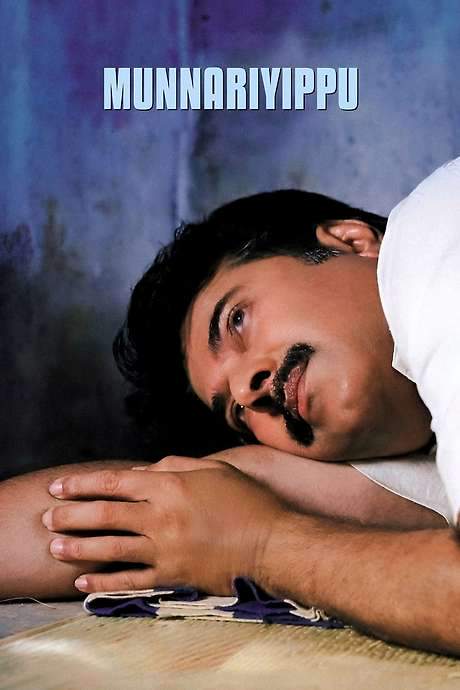
Munnariyippu 2014

Made by

Gold Coin Motion Picture Company
Where to Watch Munnariyippu
See current US streaming, rental, and purchase options for Munnariyippu (2014) via JustWatch.

Streaming availability powered by 
Munnariyippu Plot Summary
Read the complete plot summary and ending explained for Munnariyippu (2014). From turning points to emotional moments, uncover what really happened and why it matters.
Anjali Arakkal, Aparna Gopinath, is a freelance journalist who becomes drawn into a quiet but dangerous world when she interviews a retiring jail superintendent, Rama Moorthy, to ghostwrite his autobiography. Through their conversations, she is introduced to C. K. Raghavan, Mammootty, a prisoner who has served twenty years for a double homicide and continues to plead his innocence. Raghavan’s case—the killings of his wife and the daughter of his employer—casts a shadow over the narrative, and his stubborn insistence on his own version of events makes Anjali curious about the truth behind the verdict and the life he has led inside the walls.
As Anjali digs into Raghavan’s writings, she discovers a world filtered through his own idiosyncratic lens. His words twist and turn, offering reflections on perception, guilt, and the meaning of freedom. He writes lines like, > Does the reflected image in a mirror look back at him or does it accept him and come along with him?, and, > A prison should be a place for people to understand their mistakes and correct them rather than a place for punishment; Life is a struggle before death. < These passages pull Anjali deeper into the mystery, and his distinctive philosophy begins to shape her own view of what it means to be free.
The more Anjali writes, the more the piece gains traction. Proposals pour in for a full biography, and she sees an opportunity to establish herself in the field by telling Raghavan’s story on his terms. Raghavan, poised between suspicion and a strange charisma, agrees to participate, and Anjali starts to document his life with the tacit approval of his supporters. Her editorial instinct and his careful self-portrayal create a tense dance between journalist and subject, with the promise of a compelling feature and even a biography that could redefine his legacy.
As publishers push for a more complete narrative, Anjali and Raghavan navigate the logistics of his release and the fragile arrangements that follow. She arranges a place for him and asks him to write more about events and their meanings, though he hesitates and drifts. When Raghavan meekly dallies with old routines, he is invited by aspirants for a night out, and he opens up about his view of freedom: “Removing elements that obstructs the person is known as freedom. If it happens in home, it is called domestic abuse. If it happens in society, it is revolution. Irrespective of where it happens where there is revolution, blood will spill.” This stark statement unsettles Anjali and shapes the arc of their collaboration.
Facing pressure from publishers and a looming deadline, Anjali must decide how far to push her subject. The tension between her professional goals and Raghavan’s reluctance intensifies, and she contemplates relocating him to a more discreet place. The strain extends to her personal life as well, as her marriage prospects with Chackochan, Prithviraj Sukumaran in a cameo role, seem to be jeopardized by the precarious project. In a pivotal moment, Anjali confronts Raghavan with the diary, the money he has received for rehabilitation, and the critique that his stubbornness and dissatisfaction with accommodations have colored his version of events. He answers with a calm, almost knowing smile and delivers the complete script of his story, tightening the hold he already has over the narrative.
When the time comes to press the issue, Anjali senses danger and insists on a revised approach, but Raghavan reveals his true intent: he desires a new accommodation and, ultimately, a return to jail. The unthinkable happens—he strikes, and Anjali dies from a single blow to the head. The film closes on a stark, chilling image: Raghavan, now back behind bars, sleeps as photographs of Anjali and his other victims are arranged on the jail wall as trophies of his psychotic fixation on a self-styled freedom.
In the end, the story leaves viewers with a haunting meditation on power, control, and the price of liberation. The carefully built personas—journalist and subject, seeker of truth and prisoner of his own myth—collide in a narrative that scrutinizes the temptation of storytelling itself and the darker impulses that can lie beneath the surface of the quest for freedom. The final tableau—Raghavan sleeping in his cell with the faces of those he shaped into his narrative—serves as a stark reminder of how easily truth can be manipulated when the hunger for an extraordinary story eclipses caution and humanity.
Munnariyippu Timeline
Follow the complete movie timeline of Munnariyippu (2014) with every major event in chronological order. Great for understanding complex plots and story progression.
Anjali interviews Rama Moorthy to ghostwrite his autobiography
Anjali, a freelance journalist, interviews retiring jail superintendent Rama Moorthy as she begins ghostwriting his autobiography. The conversation hints at a larger, dangerous world behind the prison system. This initial encounter plants the seed for a deeper investigation into the double homicide saga tied to Rama's era.
Anjali meets Raghavan and learns of the double homicide claim
During her inquiry, Anjali meets C. K. Raghavan, a prisoner who has spent twenty years for a double murder but insists he is innocent. His unwavering insistence casts doubt on the official verdict and invites Anjali to probe his side of the story. The encounter marks the shift from profile to investigation.
Raghavan's writings reveal his worldview
As Anjali delves into Raghavan's writings, she encounters a worldview filtered through his own idiosyncratic lens. His reflections on perception, guilt, and freedom begin to shape her understanding of the case and his truth. The passages pull her deeper into the mystery and challenge her sense of objective reality.
Publishers express interest in a full biography
Publishers push for a complete biography that could redefine Raghavan's legacy, pressuring Anjali to tell his story on his terms. The potential bestseller heightens the stakes and threatens to compromise her objectivity. Anjali grapples with balancing professional ambition and ethical boundaries.
Raghavan agrees to participate; collaboration begins
Raghavan tacitly approves Anjali's approach and begins to participate in the documentation process. Anjali starts collecting material, with the support of his followers who help frame his self-portrayal. As material accumulates, the line between fact and self-mythologizing becomes blurred.
Logistics, relocation, and early tensions emerge
With publishers demanding more, Anjali navigates the logistics of Raghavan's release and possible relocation to a discreet place. She arranges living space for him and asks him to write more about events and their meanings, but he hesitates and drifts. The administrative pressure tests their uneasy alliance.
A night out and Raghavan's provocative views on freedom
At a night out with aspirants, Raghavan articulates a stark philosophy of freedom: removing elements that obstruct the person equals freedom, whether in domestic life or society. His provocative views unsettle Anjali and deepen the aura of control he wields over the project. The exchange crystallizes the power dynamics shaping the biography.
Personal stakes rise as Anjali's life is affected
The project strains Anjali's personal life, including her prospects of marriage with Chackochan. The risk to her future intensifies the tension surrounding the story and her safety. The relationship becomes a mirror of the ethical compromises the piece demands.
The diary, money, and the complete script are laid bare
Confronting Raghavan with the diary, the rehabilitation money, and his criticisms of accommodations, Anjali forces a reckoning with his narrative. He answers with a calm, almost knowing smile and delivers the complete script of his story, tightening his hold over the truth. The power shift signals that the journalist is losing control over the subject.
A dangerous turn: he seeks a new accommodation and return to jail
Raghavan reveals his true intent: he wants a new accommodation and a return to jail, signaling a dangerous turn in their collaboration. Anjali senses the danger but has already pushed for a revised approach to the piece. The tension peaks as the boundaries between truth-telling and manipulation blur.
The murder: Anjali is killed
The conflict culminates in violence when Anjali is struck by Raghavan and dies from a single blow to the head. The film closes on the stark image of Raghavan back in his cell, with photographs of Anjali and his victims arranged on the wall as trophies. The ending probes the cost of pursuing a sensational story at any ethical price.
Final tableau and reflection on power and storytelling
In the aftermath, Raghavan sleeps in his cell while the faces of those he shaped into his narrative watch from the jail walls. The final tableau prompts a meditation on power, control, and the price of liberation. It asks how easily truth can be bent when the hunger for an extraordinary story eclipses humanity.
Munnariyippu Characters
Explore all characters from Munnariyippu (2014). Get detailed profiles with their roles, arcs, and key relationships explained.
Anjali Arakkal (Aparna Gopinath)
Anjali Arakkal is a freelance journalist drawn into a dangerous world when she interviews Rama Moorthy to ghostwrite his autobiography. Her curiosity drives her to pursue Raghavan's life story, testing her professional ethics and personal life. She becomes entangled in a tense power dynamic as she navigates publishers' expectations and the subject's manipulative narratives. Her arc ends with tragedy as she confronts the consequences of chasing a definitive story.
C. K. Raghavan (Mammootty)
Raghavan is a prisoner who has spent twenty years behind bars for a double homicide he insists he did not commit. He wields a distinctive philosophy about freedom and uses his own diary to craft a magnetic, self-serving narrative. His charisma and stubbornness push Anjali to push her limits, while his quiet menace reveals the danger of giving a man a platform. His readiness to revert to jail at the end underscores his desire for control over his own story.
Rama Moorthy (Nedumudi Venu)
Rama Moorthy is the retiring jail superintendent who becomes the subject of Anjali's ghostwritten autobiography. His position of authority frames the power dynamics at work as the journalist seeks a compelling narrative. The conversations with Rama illuminate issues of justice, rehabilitation, and the complexities of prison life.
Chackochan (Prithviraj Sukumaran)
Chackochan is a cameo role depicted as Anjali's fiancé, whose relationship with her is tested by the ethical ambiguities of the biography project. His presence foregrounds how personal relationships can be affected by the pressures of investigative reporting and the danger surrounding the subject.
Munnariyippu Settings
Learn where and when Munnariyippu (2014) takes place. Explore the film’s settings, era, and how they shape the narrative.
Time period
Present day (early 2010s)
The story unfolds in a contemporary Indian context, reflecting modern media practices with journalists, publishers, and rehabilitation programs as backdrop. It engages with questions of truth, sensationalism, and the cost of a tell-all biography in an era of rapid information exchange. The tense arc plays out within a recent historical moment, emphasizing current attitudes toward justice and freedom.
Location
Prison, Kerala, India
Most of the action unfolds within a Kerala jail and its surrounding facilities, where the journalist interviews Rama Moorthy to ghostwrite his autobiography. The prison environment shapes the power dynamics between journalist and subject, echoing the film's themes of control and confinement. The setting underscores how institutions can influence narratives and the perception of freedom.
Munnariyippu Themes
Discover the main themes in Munnariyippu (2014). Analyze the deeper meanings, emotional layers, and social commentary behind the film.
🪞
Truth vs Narrative
Raghavan's writings blur the line between truth and self-fashioning, showing how a story can be engineered to serve a purpose. The journalist's pursuit of a compelling feature collides with ethical boundaries, revealing the lure of a sensational biography. The film examines how perception can be shaped by a charismatic voice, even when that voice may manipulate facts. The final dynamic—Anjali's dependence on Raghavan's diary—highlights the fragility of truth in the face of powerful storytelling.
🔑
Freedom & Control
Raghavan's axiom about removing obstacles to freedom reveals a controversial view of liberation: domestic abuse in a home, revolution in society, and violence as a price of change. The film uses this philosophy to critique the idea that freedom can be achieved by manipulating others or exploiting systems. Anjali's pursuit of the 'truth' is tested as power dynamics skew the narrative toward the subject's self-portrayal. The tension culminates in a grim turn that questions what real freedom means when it requires someone else's silencing.
🎭
Performance & Power
Both journalist and subject perform identities to control the story, turning a real life into a dramatic spectacle. Publishers, editors, and supporters push for a definitive narrative, amplifying sensational aspects while muting ambiguity. The film's final tableau—Raghavan's quiet ownership of the cell and the faces of his victims—forces viewers to confront how stories can become weapons. The theme invites reflection on the ethics of storytelling and the cost of fame.

Coming soon on iOS and Android
The Plot Explained Mobile App
From blockbusters to hidden gems — dive into movie stories anytime, anywhere. Save your favorites, discover plots faster, and never miss a twist again.
Sign up to be the first to know when we launch. Your email stays private — always.
Explore the mobile appMunnariyippu Spoiler-Free Summary
Discover the spoiler-free summary of Munnariyippu (2014). Get a concise overview without any spoilers.
In a stark urban landscape where the hum of everyday life masks deeper currents of yearning, a man who has spent years behind bars finally steps back into the world. His return is marked by a quiet uncertainty; the streets feel both familiar and alien, and the walls of his past linger like shadows that refuse to fade. He carries with him a habit of observing everything through a contemplative lens, turning ordinary moments into riddles about freedom, responsibility, and the nature of existence.
Raghavan is that man—simple in demeanor yet endlessly curious about the world’s hidden meanings. He writes in a voice that oscillates between lyrical introspection and stark realism, framing his experiences as puzzles worth untangling. His philosophy treats confinement not solely as punishment but as a crucible for self‑examination, and he approaches life’s constraints with a blend of quiet defiance and thoughtful resignation. This internal world draws attention from those who sense a story waiting to be told.
Enter Anjali, a freelance journalist eager to carve a name for herself in a competitive field. Her ambition drives her toward stories that challenge the status quo, and she is instantly intrigued by the enigma that surrounds the newly released man. As she delves into his writings and attempts to understand his perspective, a subtle partnership forms—one built on mutual fascination and the shared desire to uncover deeper truths beneath the surface of ordinary life.
Together, they navigate a delicate dance of curiosity and caution, each hoping the other will help illuminate the mysteries they both carry. The film’s tone is an atmospheric blend of introspective drama and lingering suspense, inviting the audience to linger on questions of identity, liberty, and what it truly means to step out of the shadows into the light.
Featured on this page

What's After the Movie?
Not sure whether to stay after the credits? Find out!
Check out our other apps:

SAT Sphere
Build confidence for the Digital SAT.

Mori Atlas
Discover wild places worth protecting.

Luntero
Search smarter for a home in Amsterdam.

Plot Explained
Unravel movie endings and hidden clues.

Pokechamp
Dive into Pokémon data and battle logic.

Driving Theory
Get ready for your European theory test.

Movie Dust
Plan your next cinema trip with ease.

Musemap
Find art and culture as you travel.

Selkobase
Compare credentials before committing.

Local Manual
Turn an unfamiliar country into practical next steps.

Lernavi
Compare school systems before your next move.

GymRoam
Find a workout stop wherever your plans take you.
Explore Our Movie Platform
New Movie Releases (2026)
Famous Movie Actors
Top Film Production Studios
Movie Plot Summaries & Endings
Major Movie Awards & Winners
Best Concert Films & Music Documentaries
Movie Collections and Curated Lists
© 2026 What's After the Movie. All rights reserved.
Privacy Policy