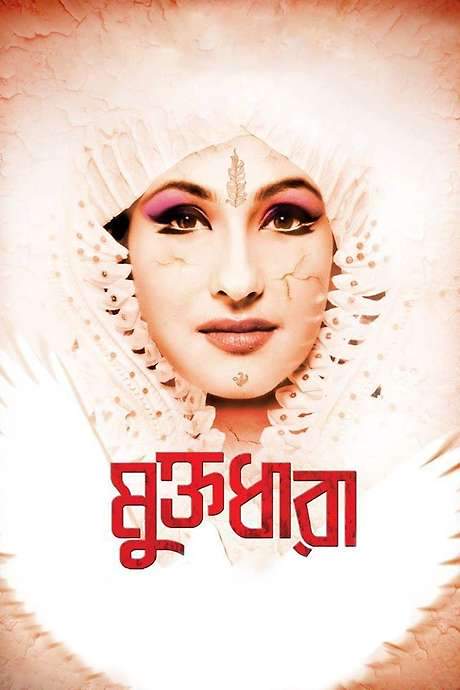
Muktodhara 2012
Directed by

Nandita Roy
Made by

Progressive Films
Muktodhara Plot Summary
Read the complete plot summary and ending explained for Muktodhara (2012). From turning points to emotional moments, uncover what really happened and why it matters.
Niharika Chatterjee is the wife of public prosecutor Arindam Chatterjee, a domineering husband whose grip on their marriage leaves her unhappy. They share a small, affectionate family with a daughter who is deaf and mute, a detail that casts a quiet ache over their home life. In search of meaning and purpose, Niharika throws a party for girls who are physically challenged like her own daughter, inviting a sense of hope and possibility into a life that often feels rigid and unfulfilling.
At this intimate gathering, she encounters the new Inspector General of correctional cells of West Bengal, Brij Narayan Dutta, a figure with reformist ideas and a belief in the transformative power of art. He sees in Niharika not just talent, but a unique opportunity to bring change to the inmates through creativity. He shares his bold vision: help organize a stage event inside the correctional facility that could illuminate the humanity of those behind bars and potentially steer them toward a better path. Niharika, drawn to the chance to use her skills for a cause larger than herself, agrees to help—with one crucial stipulation: her husband must remain in the dark about the plan.
The project gains momentum when they decide to stage Rabindranath Tagore’s Valmiki-Pratibha with the prisoners. The plan reaches the cellular jail, where Yusuf Mohammad, a notorious figure known for crimes including murder and kidnapping, becomes a surprising and compelling centerpiece of the production. It is Brij Narayan Dutta who persuades Yusuf to participate, and the inmate soon becomes Niharika’s principal performer on stage. As rehearsals unfold, Yusuf begins to transform under Niharika’s guidance, revealing a depth and vulnerability that contrasts with his feared reputation.
With the play taking shape, the group hatches a daring escape plan that hinges on the day of the performance. The tension between guilt, obligation, and ambition intensifies as Yusuf wrestles with his choices, and the team moves through a tunnel that leads them toward freedom. Yet the weight of conscience ultimately pulls him back: they choose to abandon a hasty escape if it would betray the very humanity they have been working to reveal. Returning to the prison, they complete the play, giving the inmates—and themselves—a chance to confront their pasts and present a possibility of redemption.
The story culminates in a quiet, powerful acknowledgment of art’s capacity to illuminate truth and human dignity, even within the walls of a correctional facility. What begins as a bold act of reform evolves into a meditation on responsibility, forgiveness, and the complicated heartbeat of change.
Muktodhara Timeline
Follow the complete movie timeline of Muktodhara (2012) with every major event in chronological order. Great for understanding complex plots and story progression.
Niharika's unhappy marriage
Niharika Chatterjee is married to public prosecutor Arindam Chatterjee, and he dominates the relationship, leaving her unhappy at home. The couple also has a young child who is deaf and dumb, highlighting a challenging domestic life.
Niharika hosts a party for physically challenged girls
Niharika organizes a party for girls who are physically challenged like her own daughter, showing her commitment to empowerment. It is at this event that she meets Brij Narayan Dutta, the new Inspector General of correctional cells.
Dutta shares his reform plans and seeks help
Brij Narayan Dutta outlines his ideas for reforming convicts and asks Niharika to help organize an event involving prisoners. He envisions using performance art as a way to rehabilitate inmates.
Niharika agrees with a condition
Niharika agrees to participate on one condition: her husband Arindam must remain in the dark about the project. She weighs personal risk against her sense of purpose.
Decision to stage Valmiki-Pratibha in the jail
Niharika decides to stage Rabindranath Tagore's Valmiki-Pratibha with the inmates, and Dutta approves the concept. The project moves from idea to planned performance inside the correctional facility.
Yusuf Mohammad joins the plan
Yusuf Mohammad, a notorious inmate, is included in the plan and Dutta convinces him to take part as the lead in the play. He becomes Niharika's central protagonist in the stage.
Niharika trains Yusuf and others
Under Niharika's guidance, Yusuf begins to transform, slowly adopting new behavior and toward embodying the character for performance. The training deepens the relationship between instructor and inmates.
Escape plan forms around the play day
As the play day approaches, the inmates and Niharika discuss escaping the correctional home to showcase their performance outside. The plan centers on seizing an opportunity during the prison process.
The tunnel escape
On the day of the play, they attempt to escape through a tunnel from the correctional home. The act signals a dramatic break from routine, but is complicated by the looming possibility of getting caught.
Guilt prompts retreat
As the escape unfolds, Yusuf is overwhelmed by guilt and chooses to return to the prison walls. The escape becomes unsustainable, and their plan to leave collapses.
Return and completion of the play
Despite the failed break, Yusuf and the inmates return to finish the play inside the jail. The performance proceeds and reveals the transformation inspired by their shared efforts.
Aftermath and unnamed resolution
The events leave a lasting impression on the prison's environment, hinting at the potential for reform through art. Arindam remains unaware of the day’s extraordinary events.
Muktodhara Characters
Explore all characters from Muktodhara (2012). Get detailed profiles with their roles, arcs, and key relationships explained.
Niharika Chatterjee
Niharika, wife of public prosecutor Arindam Chatterjee, is unhappy in her marriage and channels her talents into a rehabilitation project. She organizes events for physically challenged women and spearheads the plan to stage a prison play, guiding the inmates with compassion and a reformist vision while keeping her husband in the dark. Her drive centers on using art to foster social change.
Arindam Chatterjee
Arindam is a dominating public prosecutor who embodies traditional masculine authority. His marriage to Niharika is strained as she pursues reformist ideas away from his knowledge. The tension between professional power and personal control frames both their relationship and the broader context of the jail reform effort.
Brij Narayan Dutta
Brij Narayan Dutta is the Inspector General of correctional cells, a reform-minded official who sees potential in the inmates. He supports Niharika’s idea to stage a play as a path to rehabilitation and guides the project within the jail’s confines.
Riki alias Yusuf Mohammad Khan
Yusuf Mohammad, known as Riki, is a notorious criminal who gradually changes as Niharika trains him for the stage production. His arc is driven by guilt and a growing sense of responsibility, culminating in a choice to complete the play rather than escape.
Muktodhara Settings
Learn where and when Muktodhara (2012) takes place. Explore the film’s settings, era, and how they shape the narrative.
Location
West Bengal, India
The story unfolds within the correctional system of West Bengal, focusing on the inmates and the officials who oversee them. The prison environment provides a stark backdrop where art and reform theory are tested in practice. The setting highlights a social reform effort driven by a reform-minded official and a devoted partner, against the backdrop of a domestic and institutional power structure.
Muktodhara Themes
Discover the main themes in Muktodhara (2012). Analyze the deeper meanings, emotional layers, and social commentary behind the film.
🕊️
Redemption
Art becomes a catalyst for personal transformation as Niharika works with inmates to stage a play. Yusuf Mohammad's arc moves from notoriety toward moral reconsideration, propelled by guilt and the chance to redeem himself. The escape plan tests their resolve, but returning to finish the play emphasizes redemption through responsibility and humanity.
⚖️
Reform and Authority
The narrative juxtaposes reformist impulses with power dynamics within the family and the correctional system. Brij Narayan Dutta uses his position to advocate rehabilitation, while Arindam's domineering attitude provides a counterpoint to reform efforts. The collaboration between Niharika and the jail system demonstrates how reform can originate from outside the walls, challenging institutional limits.
🎨
Art as Liberation
The staging of Valmiki-Pratibha inside the jail becomes a vehicle for self-expression and dignity among inmates. Niharika's training turns prisoners into performers, giving them a voice they might not have in confinement. Yusuf's evolving character is tied to the creative process rather than criminal identity. The act of making theatre serves as a liberating force within the penal context.

Coming soon on iOS and Android
The Plot Explained Mobile App
From blockbusters to hidden gems — dive into movie stories anytime, anywhere. Save your favorites, discover plots faster, and never miss a twist again.
Sign up to be the first to know when we launch. Your email stays private — always.
Explore the mobile appMuktodhara Spoiler-Free Summary
Discover the spoiler-free summary of Muktodhara (2012). Get a concise overview without any spoilers.
In the historic walls of a Bengali correctional facility, the daily rhythm of inmates is painted with a quiet yearning for renewal. The film opens a window onto a world where the rigid structures of a prison intersect with fleeting moments of hope, humor, and humanity. A gentle, observant tone guides the viewer through corridors that echo with the sounds of routine, but also with the whispered aspirations of those confined within them.
Niharika Chatterjee finds herself at the center of this juxtaposition. Married to a domineering public prosecutor, Arindam Chatterjee, she carries the weight of an unhappy domestic life while caring for a young child who communicates without words. Her own compassion for the physically challenged, sparked by a community gathering, draws her into an unexpected partnership with the newly appointed Inspector General of correctional cells, Mr. Brij Narayan Dutta. Recognizing her talent and empathy, he invites her to help shape a cultural initiative inside the prison, a proposal she accepts on the condition that her husband remains unaware.
The film balances the gritty reality of incarceration with the transformative power of art. Within the austere environment, Yusuf Mohammad—a well‑known inmate—emerges as a focal point for the creative experiment. As rehearsals begin, the presence of music, drama, and shared purpose begins to soften hardened edges, hinting at the possibility of personal change without prescribing any definite outcome. The atmosphere is at once contemplative and uplifting, letting the audience sense the fragile optimism that can blossom even behind barred doors.
Through its careful pacing and richly drawn characters, the story invites viewers to consider how empathy, collaboration, and cultural expression can become catalysts for redemption. The interplay between personal struggles and collective effort creates a compelling portrait of resilience, leaving the audience curious about how each individual’s journey will unfold within the walls that both confine and inspire.
Featured on this page

What's After the Movie?
Not sure whether to stay after the credits? Find out!
Check out our other apps:

SAT Sphere
Build confidence for the Digital SAT.

Mori Atlas
Discover wild places worth protecting.

Luntero
Search smarter for a home in Amsterdam.

Plot Explained
Unravel movie endings and hidden clues.

Pokechamp
Dive into Pokémon data and battle logic.

Driving Theory
Get ready for your European theory test.

Movie Dust
Plan your next cinema trip with ease.

Musemap
Find art and culture as you travel.

Selkobase
Compare credentials before committing.

Local Manual
Turn an unfamiliar country into practical next steps.

Lernavi
Compare school systems before your next move.

GymRoam
Find a workout stop wherever your plans take you.
Explore Our Movie Platform
New Movie Releases (2026)
Famous Movie Actors
Top Film Production Studios
Movie Plot Summaries & Endings
Major Movie Awards & Winners
Best Concert Films & Music Documentaries
Movie Collections and Curated Lists
© 2026 What's After the Movie. All rights reserved.
Privacy Policy