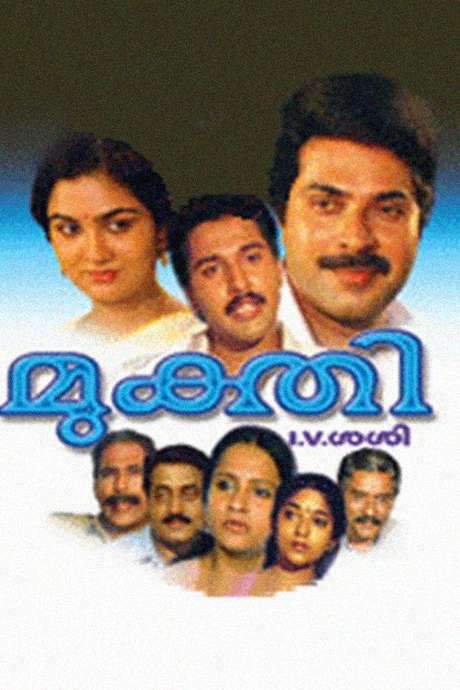



Mukthi Plot Summary
Read the complete plot summary and ending explained for Mukthi (1988). From turning points to emotional moments, uncover what really happened and why it matters.
Haridasan, rising from a humble upbringing, steps into the demanding role of Calicut District Collector with a carefully chosen team behind him: Hameed as ADM and P. K. Nambyar as SP. At his residence, the steady presence of Ravunni Warrier, his loyal helper, grounds the new administrator as he navigates the complexities of public service and family life.
During a visit home, Haridasan reconnects with the tutorial world he left behind, meeting Pillai sir and his daughter Sudharma, whom he hopes to marry. He also returns to a modest household where he greets Amma, his younger brother Sudhi, and sister Shobha, each carrying their own hopes and tensions. The family’s sense of belonging is tested when their maternal uncle, Shekharan, who hadn’t always treated them well, arrives with his wife and daughter. The daughter, Radhika, becomes a figure who seems drawn to Hari, complicating old loyalties.
Hari’s focus increasingly centers on a local hotel run by Viswanathan Nair, which has encroached on government property. As Hari starts probing the matter, Vishwanathan pushes his own agenda: he wants his son Vinod to befriend Sudhi while pressing for his daughter Jayasree’s hand in marriage to Hari’s own prospects. The tangled web of proposals stretches Hari’s patience, and when Amma and the rest of the family urge him to accept a practical alliance, he seeks counsel from his mentor and from Sudhi, whose antics threaten to derail everything.
The tension sharpens as Sudhi is drawn into political maneuvering led by Shekharan’s party, with the Revenue Minister backing Sudhi as a rising star. A suggestion to unite the families through marriage—Radhika to Hari’s family in a bid to consolidate power, and Jayasree to Vinod—tests Hari’s priorities. Amid the wedding preparations, Jayasree discovers a showpiece depicting Sati pining for Shiva, stirring doubts about Hari’s past and testing the trust between Hari and Jayasree.
When Sudhi is caught up in an ongoing struggle involving the Beypore fishermen and the hotel dispute, Hari is forced to balance official action with family loyalties. Sudhi’s insistence on using Hari’s name to aid illegal revenue schemes deepens the rift, and Hari makes his stance clear—he will not tolerate wrongdoing, even if it means disappointing his own brother. Sudhi’s defiance culminates in a confrontation that strains the marriage prospects, prompting Hari and Jayasree to consider a temporary separation so they can discern the path forward.
Amid mounting political pressure, Sudhi rises as a youth leader within Shekharan’s party, and the party’s ambitions grow bolder. The minister’s plan to convert the Beypore crisis into a broader communal confrontation adds a dangerous edge to the already fragile political climate. Radhika, aware of the scheme, informs Hari, who works tirelessly to de-escalate tensions from every possible angle. He bluntly tells Sudhi that he would do anything to bring back his brother, a moment that crystallizes the gravity of Sudhi’s actions.
Tragedy strikes when Sudhi—driven by the political machine—attempts to incite violence at a temple festival and a subsequent clash leads to the deaths of two Hindus and a Muslim. Hari’s efforts to manage the crisis earn him praise from the Chief Minister, yet the fallout intensifies the strain on his personal life. Jayasree returns to Hari, and the couple resolves to repair their marriage, even as Sudhi’s path spirals toward a fatal reckoning. Sudhi’s final choices push him toward a confrontation with the law and the people around him, and he is fatally shot by the police while trying to lead a protest.
The community reacts with mixed emotion—rebukes from Hari’s mother, anger from villagers, and the heavy weight of loss for those who supported Sudhi. Kunjunni steps in, asking what value the job holds in the face of such consequences, while Hari faces the difficult task of rebuilding trust. In the end, Hari returns to the very place where his teaching began: the tutorial college he once led. He sits down to teach another class, watched by Jayasree Nair, Pillai sir, and Sudharma, suggesting that education and perseverance may yet offer a path toward healing and renewal.
Mukthi Timeline
Follow the complete movie timeline of Mukthi (1988) with every major event in chronological order. Great for understanding complex plots and story progression.
Hari becomes Calicut District Collector
Haridasan takes charge as Calicut District Collector with Hameed as ADM and Nambiar as SP. Ravunni Warrier becomes the helper at his residence. He begins setting up his administration and meeting key people in town.
Home visit and courtship hopes
During a visit home, Hari visits the tutorial where Pillai sir works and meets Sudharma, whom he hopes to marry. He also returns to his modest home and gifts Amma, Sudhi, and Shobha. These moments connect his past with his new role.
Family ties and Radhika’s affection
Maternal uncle Shekharan visits with his wife and daughter Radhika, who has affection for Hari. Hari respects his second maternal uncle Kunjunni, though he is a habitual drinker. The family dynamics begin shaping his decisions.
Radhamma alerts to police brutality
Radhamma, a social activist, informs Hari about police brutality against Beypore fishermen. In response, Hari's mother and siblings move to his residence, consolidating the household.
Hotel encroachment and marriage schemes begin
Hari investigates Vishwanathan's hotel encroachment on government property. Vishwanathan schemes to have his son Vinod marry Shobha, while Hari is proposed to marry his daughter Jayasree as a dowry. Hari agrees to the arrangement as a practical solution to family pressure.
Opposition to Radhika’s proposal
Amma proposes marrying Radhika to Hari, but he opposes this and seeks guidance from Pillai sir and Sudharma. The clash between his personal desires and family expectations grows.
Police raid and scheme intensifies
Police raid a hotel to arrest Vinod for being with Shobha, humiliating Hari and his family. Vishwanathan pushes ahead with the marriage plan, and Hari reluctantly agrees to the arrangement as a practical solution.
Sudhi uses Hari’s name; departure and politics beckon
Hari discovers Sudhi using his name to aid an abkari operation and rebukes him. Sudhi leaves home, vowing to be better, while Shekharan and Ammayi push him to join his political party.
Sudhi rises in politics; tensions grow
Sudhi becomes the youth leader of Shekharan's party, backed by the Revenue Minister who hints at marrying Radhika and leveraging the Beypore issue for political gain. Hari and Jayasree's relationship grows tense amid work pressures and suspicions.
Temple festival violence erupts
During the temple festival, Sudhi's followers trigger violence resulting in deaths of two Hindus and a Muslim. Hari works hard to resolve the crisis and earns praise from the Chief Minister for his efforts.
Sudhi’s riot plan is revealed
Sudhi scheming to turn the temple incident into a mosque attack surfaces, aimed at strengthening his party's stance. Radhika informs Hari, who tries to intervene from every angle but the situation spirals.
Sudhi dies; funeral stirs the town
Sudhi is shot by police while trying to stop the protests. His death triggers unrest and a harsh response from Hari's mother and the villagers. Kunjunni saves Hari and questions the value of political life.
Final class at the tutorial
In the film's closing moment, Hari visits the tutorial college he once taught at and teaches a class, with Jayasree, Pillai sir, and Sudharma watching, signaling a return to teaching and reflection.
Mukthi Characters
Explore all characters from Mukthi (1988). Get detailed profiles with their roles, arcs, and key relationships explained.
Haridasan (Mammootty)
A former tutorial college teacher who becomes the Calicut District Collector, Hari is portrayed as principled and compassionate. He navigates family pressures and public demands, attempting to balance reform with empathy. His work includes addressing Beypore's encroachment issue and confronting police brutality while maintaining personal integrity. Throughout, he remains torn between duty, affection for his family, and the political realities around him.
Vishwanathan Nair (Jagannatha Varma)
A wealthy hotel owner with influence who encroaches government property and bends rules to protect his interests. He tries to manipulate Hari through threats and arrangements, including dowry-based marriage proposals and aligning with his own political aims. His ambition illustrates the corrupt nexus between business, politics, and personal power.
Rashika (Shobana)
A modern young woman who admires Hari, her presence adds a layer of romantic pressure to Hari's duty. Her feelings contribute to the tension between Hari's public role and private life.
Sudhi
Hari's younger brother, ambitious and impulsive, he becomes involved with his maternal uncle's political party. He uses Hari's name to assist an abkari operation, leading to familial and political conflict. Sudhi's choices culminate in a clash with Hari and end in his death during a police shooting at a temple festival.
Jayasree Nair (Chithra)
Daughter of Vishwanathan who admires Hari; her modern outlook creates friction with Hari's duties. She and Hari face strain due to work commitments and misunderstandings, leading to a temporary separation before reconciliation.
Sobha (Sithara)
Hari's sister, a supportive family member who anchors the domestic side of Hari's life amidst public turmoil. She influences and participates in family decisions affecting Hari.
Radhamma (Seema)
A social activist who works in Beypore's fishermen community and informs Hari about police brutality. Her activism highlights a call for justice and accountability within the community.
Hameed (Rahman)
As the ADM, he counsels Hari and provides a pragmatic counterpoint to idealism. His advice reflects the tension between practicality and reform in governance.
P. K. Nambyar (Balan K. Nair)
A veteran power broker allied with the Revenue Minister; he embodies political ambition and opportunism. His actions push the plot toward confrontation and unrest.
Ravunni Warrier (Sankaradi)
A family helper and trusted ally who guides Hari through household and social duties. His presence anchors Hari's personal life amid political turbulence.
Mukthi Settings
Learn where and when Mukthi (1988) takes place. Explore the film’s settings, era, and how they shape the narrative.
Location
Calicut, Beypore
Calicut and Beypore in Kerala form the backdrop, portraying a coastal town with a bustling administrative center and a tight-knit fishing community. The Beypore port and government properties feature in the conflict over land and authority, reflecting real-world tensions between commerce and public ownership. The setting anchors Hari's legal and political challenges, from hotel encroachment to police action, within a community bound by tradition and activism.
Mukthi Themes
Discover the main themes in Mukthi (1988). Analyze the deeper meanings, emotional layers, and social commentary behind the film.
⚖️
Power
The film examines how authority is earned and exercised within a developing polity. Hari's ascent to district collector places him at the nexus of reform, favoritism, and political pressure. It highlights the compromises that accompany public service when confronted with entrenched interests and personal loyalties.
🌊
Communal Tension
Rising tensions between communities become a tool for political gain. Sudhi's agitation and planned riot reveal how leaders manipulate religious sentiments to shore up support. The police response and the violence underscore the fragility of peace in a diverse region. The arc shows how personal ambitions collide with communal harmony, affecting Hari's efforts to govern justly.
🕊️
Activism
Radhamma's activism embodies grassroots resistance against oppression and police brutality. The film sets activists against pragmatic politicians who prefer order over justice. It also explores the burdens activists bear within families and communities as truth-tellers confront powerful interests.

Coming soon on iOS and Android
The Plot Explained Mobile App
From blockbusters to hidden gems — dive into movie stories anytime, anywhere. Save your favorites, discover plots faster, and never miss a twist again.
Sign up to be the first to know when we launch. Your email stays private — always.
Explore the mobile appMukthi Spoiler-Free Summary
Discover the spoiler-free summary of Mukthi (1988). Get a concise overview without any spoilers.
In the coastal stretch of Calicut, a modest village familiar with the rhythms of teaching and petty chores suddenly finds itself under the gaze of a powerful new administrator. Haridas, the son of a humble peon, returns home as the appointed District Collector, bringing with him a carefully selected team—ADM Hameed and SP P. K. Nambyar—and the quiet, steadfast support of his longtime helper Ravunni Warrier. The film opens on the clash between the bureaucratic machinery of the state and the intimate world of a family that once knew him only as a schoolteacher, setting a tone that feels both grand in its political scope and deeply personal in its domestic moments.
Back at his ancestral home, Haridas confronts memories of his childhood, re‑encountering his younger brother Sudhakaran, now a rising figure in a rival political faction, and the extended relatives who have lingered on the periphery of their lives. The presence of the well‑meaning but meddling uncle Shekharan, the hopeful suitor Sudharma, and the enigmatic Radhika adds layers of relational tension, hinting at alliances that could both bind and divide. As Haridas strives to uphold the ideals of public service, Sudhakaran’s ambitions pull him toward a different vision of power, turning sibling affection into a fraught rivalry that reflects the broader contest between governance and grassroots politics.
The atmosphere is one of restrained intensity, punctuated by moments of quiet humor and lingering nostalgia. I. V. Sasi’s direction blends the lushness of Kerala’s landscape with the stark corridors of government, while the performances—especially those of Mammootty as Haridas and Rahman as Sudhakaran—infuse the story with gravitas and emotional nuance. The film invites the audience to watch how duty, loyalty, and personal history intersect, leaving a lingering question about whether the bonds of blood can survive the weight of public expectation.
Movies with Similar Twists and Themes
Uncover films that echo the narrative beats, emotional arcs, or dramatic twists of the one you're exploring. These recommendations are handpicked based on story depth, thematic resonance, and spoiler-worthy moments — perfect for fans who crave more of the same intrigue.





Featured on this page

What's After the Movie?
Not sure whether to stay after the credits? Find out!
Check out our other apps:

SAT Sphere
Build confidence for the Digital SAT.

Mori Atlas
Discover wild places worth protecting.

Luntero
Search smarter for a home in Amsterdam.

Plot Explained
Unravel movie endings and hidden clues.

Pokechamp
Dive into Pokémon data and battle logic.

Driving Theory
Get ready for your European theory test.

Movie Dust
Plan your next cinema trip with ease.

Musemap
Find art and culture as you travel.

Selkobase
Compare credentials before committing.

Local Manual
Turn an unfamiliar country into practical next steps.

Lernavi
Compare school systems before your next move.

GymRoam
Find a workout stop wherever your plans take you.
Explore Our Movie Platform
New Movie Releases (2026)
Famous Movie Actors
Top Film Production Studios
Movie Plot Summaries & Endings
Major Movie Awards & Winners
Best Concert Films & Music Documentaries
Movie Collections and Curated Lists
© 2026 What's After the Movie. All rights reserved.
Privacy Policy