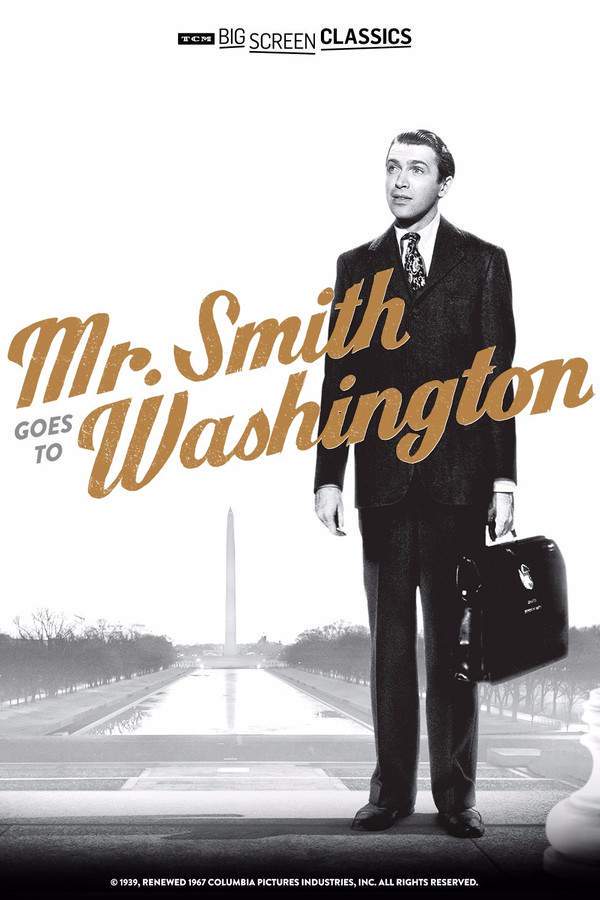
Mr. Smith Goes to Washington 1939
Directed by

Frank Capra
Made by

Columbia Pictures
Where to Watch Mr. Smith Goes to Washington
See current US streaming, rental, and purchase options for Mr. Smith Goes to Washington (1939) via JustWatch.








Mr. Smith Goes to Washington Plot Summary
Read the complete plot summary and ending explained for Mr. Smith Goes to Washington (1939). From turning points to emotional moments, uncover what really happened and why it matters.
In an unnamed western state, Governor Hubert “Happy” Hopper (Guy Kibbee) faces the daunting task of selecting a replacement for the recently deceased U.S. Senator Sam Foley. Under significant pressure from his corrupt political boss, Jim Taylor (Edward Arnold), who insists on choosing his own candidate, Hopper is also swayed by the popular demand for a reformer. His children suggest that he nominate Jefferson Smith (James Stewart), the dedicated head of the Boy Rangers. Caught between the two options, the governor resorts to flipping a coin and, when it finds an unlikely balance next to a newspaper article highlighting one of Smith’s achievements, he makes the unexpected choice, believing Smith’s clean reputation will win public approval while his naïveté will make him easily controllable.
Smith soon finds himself mentored by the seemingly honorable but actually corrupt Senator Joseph Paine (Claude Rains), a close friend of Smith’s late father. Additionally, he becomes infatuated with Paine’s daughter, Susan (not portrayed by an actor listed in the provided information). However, the Washington press quickly dismisses Smith as a simpleton unfit for senatorial responsibilities. In an effort to keep him occupied, Paine suggests that Smith introduce a new bill.
Smith proposes legislation to secure federal funding for a national boys’ camp in his home state, which he believes will be repaid by donations from youngsters across the nation. Initial support comes pouring in, but unbeknownst to him, the location for the camp is already entangled in a dubious public works project orchestrated by Taylor’s political machine, with Paine’s tacit approval.
Paine, torn between his loyalty to Smith and the demands of Taylor, ultimately sides with the political machine. When they falsely accuse Smith of attempting to profit from the land deal, Smith is left reeling from this betrayal and flees in distress. However, Clarissa Saunders (Jean Arthur), Smith’s loyal chief of staff, believes in his integrity and persuades him to mount a filibuster on the Senate floor in an attempt to prove his innocence before the vote for his expulsion.
As Smith delivers impassioned speeches that seem to resonate with his constituents, the overwhelming opposition, fueled by the Taylor machine, works tirelessly to undermine him. Smith’s pleas are systematically ignored by the media in his home state, thereby thwarting any support from the public. Even efforts by the Boy Rangers to promote his cause lead to brutal backlash from Taylor’s operatives.
Just when the odds appear insurmountable, attention begins to shift in Smith’s favor as he approaches his physical limits during the filibuster. Paine makes a desperate move by presenting a stack of letters and telegrams from Smith’s state demanding his ouster, leaving Smith utterly despondent. Yet in the midst of despair, he receives a glimmer of hope from a sympathetic smile from the President of the Senate, H.B. Warner (not portrayed by an actor listed in the provided information). Vowing to persevere until the truth prevails, Smith collapses from exhaustion.
Gripped by guilt over his actions, Paine attempts to take his own life but is thwarted. He subsequently bursts back into the Senate chamber, courageously confessing the nefarious plot against Smith and exonerating his innocence, turning the tide in this gripping tale of courage, corruption, and redemption.
Mr. Smith Goes to Washington Timeline
Follow the complete movie timeline of Mr. Smith Goes to Washington (1939) with every major event in chronological order. Great for understanding complex plots and story progression.
Governor's Dilemma
Governor Hubert "Happy" Hopper faces intense pressure to replace the late Senator Sam Foley. His corrupt political boss, Jim Taylor, insists on choosing a candidate, but public demand for a reformer complicates matters.
Coin Toss Decision
In a random decision-making process, Governor Hopper flips a coin to choose a candidate. The coin lands near an article about Jefferson Smith’s achievements, leading Hopper to nominate him, hoping Smith's clean image will sway public opinion.
Mentorship with Senator Paine
Jefferson Smith is introduced to Senator Joseph Paine, who positions himself as a mentor to the naive newcomer. Despite Paine’s outward appearance of honor, he is deeply enmeshed in the corrupt political framework led by Taylor.
Smith's Infatuation
During this time, Jefferson Smith develops feelings for Senator Paine's daughter, Susan. Amidst the burgeoning romance, he remains blissfully unaware of the machinations at play to undermine his efforts.
Introduction of the Boys' Camp Bill
In an effort to make himself useful, Smith proposes a bill for a national boys' camp, believing it will be funded by donations from across the country. Initially, the bill garners positive feedback from various quarters.
The Hidden Agenda
Smith soon discovers that the proposed camp location is entangled in a corrupt public works project linked to Jim Taylor's powerful political machine. Senator Paine's tacit approval only deepens Smith's trust in the wrong people.
Betrayal and Accusation
As tensions rise, Smith is falsely accused of trying to profit from the land deal, a betrayal that devastates him. He is forced to flee in despair, feeling the weight of the political corruption piling against him.
Clarissa's Intervention
Clarissa Saunders, Smith's dedicated chief of staff, refuses to let him give up. She encourages him to stand up against the accusations by staging a filibuster to prove his innocence before the Senate.
The Filibuster Begins
Smith takes to the Senate floor, delivering passionate speeches that resonate with some constituents. However, the relentless efforts of Taylor's operatives aim to silence him and undermine his position.
Public Opposition Grows
Despite Smith’s compelling speeches, the media in his home state ignores his pleas, erasing any public support for his cause. Even the Boy Rangers are met with brutal backlash for trying to help him.
Despair and Glimmer of Hope
As Smith nears exhaustion, Paine presents a stack of letters demanding Smith's ouster, leaving him in a desperate state. However, a sympathetic glance from the President of the Senate ignites a flicker of hope for Smith.
Collapse from Exhaustion
Pushed to his physical limits, Smith collapses during his filibuster. This moment becomes pivotal, showcasing his determination and sacrifice in the face of overwhelming opposition.
Paine's Redemption
Overcome with guilt from his betrayal, Senator Paine attempts to end his own life but fails. He later returns to the Senate chamber to confess the nefarious scheme against Smith, altering the course of events.
Victory for Integrity
Following Paine's confession, the tide turns in Smith's favor as truth begins to emerge. The story culminates in a celebration of courage, integrity, and the fight against corruption.
Mr. Smith Goes to Washington Characters
Explore all characters from Mr. Smith Goes to Washington (1939). Get detailed profiles with their roles, arcs, and key relationships explained.
Jefferson Smith (James Stewart)
Jefferson Smith is portrayed as an earnest and idealistic young man whose vision for reform is challenged by the political establishment. His naivety often makes him a target, but his determination and moral compass shine through as he battles the corrupt system to champion his cause.
Governor Hubert 'Happy' Hopper (Guy Kibbee)
Governor Hopper is caught between the wishes of his constituents and the corrupt demands of his political boss. His character reflects the challenges faced by leaders as they navigate the pressures of power, ultimately showcasing themes of leadership and moral decision-making.
Senator Joseph Paine (Claude Rains)
Senator Paine is depicted as a once-honorable figure who succumbs to the corrupt influences around him. Torn between loyalty to Smith and his own ambitions, his eventual redemption arc adds complexity to the themes of betrayal and integrity.
Clarissa Saunders (Jean Arthur)
Clarissa is Smith's loyal chief of staff and a strong advocate for his cause. Her belief in his integrity fuels the story’s momentum, and she embodies the theme of supportive friendship, illustrating how personal convictions can inspire leadership.
Jim Taylor (Edward Arnold)
Jim Taylor represents the corrupt political influence in the story, using his power to manipulate and control the situation to his advantage. His character is a personification of the darker side of politics, driving the narrative conflict against Smith's idealism.
Mr. Smith Goes to Washington Settings
Learn where and when Mr. Smith Goes to Washington (1939) takes place. Explore the film’s settings, era, and how they shape the narrative.
Time period
The events of the movie occur during a time of political corruption and reform advocacy in the United States. This period reflects the struggle of an individual against a powerful political machine, highlighting the clash between integrity and systemic corruption.
Location
unnamed western state, Washington D.C.
The movie is set primarily in an unnamed western state, known for its natural beauty and raw wilderness. Washington D.C. serves as the political backdrop, portraying the heart of American democracy, filled with historic buildings and political intrigue.
Mr. Smith Goes to Washington Themes
Discover the main themes in Mr. Smith Goes to Washington (1939). Analyze the deeper meanings, emotional layers, and social commentary behind the film.
🗳️
Political Integrity
The theme of political integrity is central to the narrative, as Jefferson Smith stands against the corrupt practices of influential political figures. His journey embodies the struggle for honesty and transparency in governance, portraying the importance of ethical leadership in the face of adversity.
💔
Betrayal
Betrayal is a significant theme as Smith faces disloyalty from those he trusted, particularly Senator Paine. This emotional turmoil underscores the impact of personal relationships on political choices, emphasizing how betrayal can deeply affect one's mission for justice.
💪
Courage
Smith's unwavering courage to stand up for his beliefs, despite overwhelming odds and personal attacks, illustrates the theme of bravery. His filibuster serves as a powerful testament to the strength of the human spirit when fighting for justice and truth.

Coming soon on iOS and Android
The Plot Explained Mobile App
From blockbusters to hidden gems — dive into movie stories anytime, anywhere. Save your favorites, discover plots faster, and never miss a twist again.
Sign up to be the first to know when we launch. Your email stays private — always.
Explore the mobile appMr. Smith Goes to Washington Spoiler-Free Summary
Discover the spoiler-free summary of Mr. Smith Goes to Washington (1939). Get a concise overview without any spoilers.
In the marble halls of the United States Capitol, a world of grandeur and whispered power looms over every decision. The city’s rhythm is a blend of solemn ceremony and relentless ambition, where the bright sheen of democracy often masks a tangled web of hidden agendas. Against this backdrop, a fresh face steps onto the Senate floor, ready to confront the weight of a nation’s expectations while navigating an environment that rarely rewards innocence.
Jefferson Smith arrives from a modest western state, carrying with him the earnestness of a youth who has spent his life guiding boys through the outdoors and dreaming of a better tomorrow. His reputation as a sincere reformer precedes him, and his commitment to principle feels almost anachronistic amid the capital’s seasoned politicking. Early in his journey, he encounters Joseph Paine, a senior senator whose outward respectability offers a glimpse of mentorship, yet whose presence hints at the subtle compromises that define the corridors of power.
The film’s tone balances hopeful idealism with a growing sense of foreboding, inviting the audience to wonder how a man of such conviction will fare when confronted by the entrenched forces that shape legislation and public opinion. As Smith strides through opulent chambers and bustling press rooms, the story teases the tension between his unshakable belief in justice and the cynical reality that surrounds him. The atmosphere crackles with quiet resistance, suggesting that the true battle may lie not only in the halls of government but also within the heart of a man determined to prove that integrity still has a place in Washington.
Movies with Similar Twists and Themes
Uncover films that echo the narrative beats, emotional arcs, or dramatic twists of the one you're exploring. These recommendations are handpicked based on story depth, thematic resonance, and spoiler-worthy moments — perfect for fans who crave more of the same intrigue.



Featured on this page

What's After the Movie?
Not sure whether to stay after the credits? Find out!
Check out our other apps:

SAT Sphere
Build confidence for the Digital SAT.

Mori Atlas
Discover wild places worth protecting.

Luntero
Search smarter for a home in Amsterdam.

Plot Explained
Unravel movie endings and hidden clues.

Pokechamp
Dive into Pokémon data and battle logic.

Driving Theory
Get ready for your European theory test.

Movie Dust
Plan your next cinema trip with ease.

Musemap
Find art and culture as you travel.

Selkobase
Compare credentials before committing.

Local Manual
Turn an unfamiliar country into practical next steps.

Lernavi
Compare school systems before your next move.

GymRoam
Find a workout stop wherever your plans take you.
Explore Our Movie Platform
New Movie Releases (2026)
Famous Movie Actors
Top Film Production Studios
Movie Plot Summaries & Endings
Major Movie Awards & Winners
Best Concert Films & Music Documentaries
Movie Collections and Curated Lists
© 2026 What's After the Movie. All rights reserved.
Privacy Policy