

What Is Mockingbird Don’t Sing About?
The premise of Mockingbird Don’t Sing in 322 words, with nothing given away. The full story follows below.
In the quiet suburbs of 1970s Los Angeles, a young girl who has spent nearly her entire life confined to a single room finally steps into the world beyond four walls. The film opens with the fragile emergence of Katie Standon, a child whose behavior mirrors that of an animal more than a human, and it is a compassionate psychologist who first believes she can be healed. This modest premise unfolds against a backdrop of muted, observational cinematography that invites the audience to feel the weight of isolation and the tentative hope of rescue.
The family that kept Katie hidden is a study in subdued tension. Her mother, Louise Standon, is a woman coping with failing eyesight and a marriage that feels both protective and oppressive. Her brother Billy lingers in the periphery, while the father, Wes Standon, remains a looming, enigmatic presence. When Katie is finally taken to a children’s hospital, a small but determined group of professionals—educators, linguists, and physicians—gather around her, each hoping to unlock the language and humanity that have been dormant for years. Their quiet dedication is hinted at through careful, intimate scenes of daily routines, whispered conversations in hallways, and the patient work of teaching sign language and basic self‑care.
The tone remains restrained and contemplative, balancing the stark reality of trauma with moments of fragile tenderness. The film’s style leans heavily on observational detail: the soft rustle of hospital curtains, the slow cadence of a therapist’s voice, the hesitant spark in Katie’s eyes as she begins to engage with the world. Rather than dramatizing sensational events, the story dwells on the delicate process of rebuilding trust and the subtle dynamics between genuine care and professional ambition.
Through its measured pacing and focus on human nuance, the movie asks viewers to consider how language, dependency, and autonomy intersect when a child steps out of darkness into a world that is both bewildering and full of possibility.
What Happens in Mockingbird Don’t Sing?
The complete story of Mockingbird Don’t Sing, from the first scene to the last, in 926 words (about 4 minutes). Spoilers throughout. Names in the text link to 1 cast member page.
Spoilers ahead
Katie Standon, portrayed by Tarra Steele, is a girl raised in near-complete isolation in Los Angeles during the 1970s. Since birth she has been confined to her room, deprived of meaningful human contact, and by the time she is thirteen, her world has shrunk to four walls and a fading sense of self. Her mother Louise Standon, who wears cataracts, endures a brutal marriage with Wes Standon, and in a desperate bid to protect Katie, Louise and their son Billy attempt a dangerous escape from their home.
At a welfare office, a sharp-eyed social worker notices something unusual about Katie’s age and behavior, mistaking her for a much younger child. Katie is taken to Children’s Hospital, and the fallout is swift and severe: Louise and Wes are arrested for what authorities describe as the worst case of child abuse they’ve ever seen. The shock of the case ripples through the family and into the community, and as the trial looms, Wes chooses to end his own life. The investigation that follows gives birth to the “Katie Team,” a gathering of experts who set out to unlock Katie’s ability to communicate and relate to others.
Among the investigators is Judy Bingham, portrayed by [Sean Young], a special education teacher who quickly views Katie as a potential vehicle for personal fame, hoping to crown herself as a transformative figure in language acquisition. [Sean Young]’s Judy strides into Katie’s life with a mix of ambition and manipulation, even as others on the team, including UCLA graduate student Sandra Tannen, portrayed by [Melissa Errico], appear to be genuinely invested in Katie’s welfare.
Katie is placed in the care of Dr. Norman Glazer, played by [Joe Regalbuto], at Children’s Hospital. For the next four years, the Glazer family helps Katie learn to function in more normal, ordinary ways. She makes notable progress in acquiring vocabulary, learning sign language, mastering hygiene, and displaying emotions such as anger when appropriate, yet she never fully develops the grammatical structure that would mark a typical language boom. Louise, meanwhile, undergoes cataract surgery and visits Katie sporadically, a reminder of the fragile ties that still bind them.
When Katie turns eighteen, the system cuts off the steady funding that had sustained her progress, and she returns to Louise’s care. The wheels of foster care soon turn again, and Katie is placed with another family, a change that brings new stresses and, eventually, grave mistreatment. After a particularly brutal incident—an incident connected to vomiting—Katie ceases to eat and stops speaking, fearing further abuse if she speaks at all.
Sandra Tannen fights to keep Katie’s best interests at the forefront, working with Norman to advocate for her, and even though Sandra envisions a life for Katie with her support, Louise pulls Katie out of the hospital before any formal decision can be made about such an arrangement. Sandra is left without a goodbye, and Louise implies dire consequences if she ever sees Katie again.
As the truth behind Katie’s isolation emerges, Louise reveals the painful origin of Katie’s condition. Wes had adored his own mother, and after her death in an accident he projected his feelings onto Katie. A doctor later confirms that Katie was intellectually disabled, and Wes’s fear of losing her to outside authorities led him to lock her away. Louise’s own fear of blindness further complicates the family dynamic, and Wes ends up alone in his protective role.
Sandra eventually confronts Judy, and the two former allies clash as the history of Louise’s life—long acquaintances and entangled loyalties—comes into view. The footage of Katie that has been stored on videotape begins to intrude into the narrative, with Sandra watching, reflecting, and addressing the viewers as if speaking to Katie directly. She writes on a typewriter, hinting at a wish to reconnect with the girl she has kept at arm’s length, and the film closes with a sequence showing Katie on a sunlit beach, a symbolic breath of freedom.
The film closes with a series of epilogues that reveal where the key figures ended up. Judy continues her relentless pursuit of the “Katie Team” until her death in 1988. Louise, now blind again, resides in a nursing home in Southern California. Sandra Tannen has become a professor of linguistics at UCLA and has two teenage daughters, yet she remains barred from any contact with Katie, who continues to live in a nearby foster home. A final on-screen note asserts that Katie’s struggle to acquire language lent credence to the Critical Period Hypothesis, a clinical and linguistic debate that framed her life as both a caution and a case study.
The story unfolds with a restrained, observational tone that respects the gravity of the experiences at the heart of Katie’s world. It foregrounds the tensions between genuine care and professional ambition, between protective love and controlling fear, and between the desire to unlock the human mind and the limits of what can be cured by therapy alone. The emotional cadence shifts between intimate family moments and the broader, often unsettling, social systems that shape Katie’s life, inviting the audience to consider how language, dependency, and autonomy intersect in the most vulnerable moments of growth.
Note: Throughout, the film grounds its heavy themes in concrete, human details—on-screen depictions of daily routines, whispered conversations in hallways, and the quiet perseverance of people trying to do right by a child who has known little of the world beyond four walls. The result is a complex portrait of memory, trauma, and the hard-won advances that arrive when compassion meets scientific inquiry.
Mockingbird Don’t Sing Timeline: Every Key Event in Order
12 key events in the order they happen, from “Katie's isolation begins in 1970s Los Angeles” to “Beaches, epilogues, and the final note”. 12 events name a place, across 11 locations.
- 1
Katie's isolation begins in 1970s Los Angeles
Katie is raised in near-total isolation in Los Angeles, confined to her room from birth. By the time she is thirteen, her world has shrunk to four walls and a fading sense of self. This early seclusion sets the stage for the later interventions and conflicts around her care.
When:1970s Where:Los Angeles, CA
- 2
Welfare intervention and hospital intake
At the welfare office, a sharp-eyed social worker notices Katie's unusual age and behavior. Katie is taken to Children's Hospital, triggering a cascade of investigations into the Standon family. The case draws public attention and raises questions about care and control.
When:Late 1970s Where:Los Angeles
- 3
Arrest and Wes's suicide
Louise and Wes Standon are arrested for alleged child abuse following authorities' investigation. The shock reverberates through the family and the community, and soon Wes takes his own life, unable to cope with the consequences. The tragedy compounds the case and catalyzes the ensuing inquiry into Katie's welfare.
When:Late 1970s Where:Los Angeles, CA
- 4
The Katie Team forms
A team of experts is assembled to understand Katie's communication and potential for progress. Judy Bingham joins with ambition to become a transformative figure in language acquisition, while other researchers bring a mix of motives and concerns. The group begins documenting and analyzing Katie's abilities in a clinical setting.
When:Late 1970s–1980s Where:Children's Hospital / University setting
- 5
Katie enters care under Dr. Norman Glazer
Katie is placed in the care of Dr. Norman Glazer at the hospital. Over four years, she makes notable gains in vocabulary, signs, hygiene, and expressed emotions, though she never experiences a full grammatical language boom. The progress is steady, but signs of strain appear in the family dynamics around her.
When:Early 1980s Where:Children's Hospital
- 6
Louise's cataract surgery and sporadic visits
Louise undergoes cataract surgery and her visits to Katie become sporadic. The fragile bond between mother and daughter persists in fits and starts, framing Katie's ongoing development within a tense family backdrop. Katie continues to improve in small, meaningful ways under the care team.
When:Early 1980s Where:Louise's home / hospital
- 7
Turning eighteen and funding ends
When Katie turns eighteen, the state funding that sustained her progress is withdrawn and she returns to Louise's care. The transition destabilizes her routine, and she soon steps into the foster system again. The change precipitates new uncertainties about her future.
When:Mid-1980s Where:Louise's home / Foster care
- 8
A new foster family and abuse
Katie is placed with another family, but she endures mistreatment within the foster system. A brutal vomiting-related incident becomes a turning point, and she ceases to eat and stops speaking out of fear of further abuse. The trauma compounds her withdrawal from communication.
When:Mid- to late-1980s Where:Foster home
- 9
Sandra fights for Katie’s best interests
Sandra Tannen campaigns to keep Katie's welfare at the forefront, collaborating with Norman to advocate for a possible future where she could thrive. Louise abruptly pulls Katie out of the hospital before any formal plan can be enacted. The tug-of-war reveals tensions between care, control, and parental fears.
When:Late 1980s Where:Hospital / Louise's home
- 10
Origins of the isolation are revealed
The narrative reveals that Wes's reverence for his own mother fueled his disordered behavior toward Katie. A doctor confirms Katie's intellectual disability, and Wes's fear of losing her drives him to lock her away. The truth reframes the prior events and personality dynamics in the family.
When:Late 1980s Where:Family home / medical setting
- 11
Confrontation and footage intrudes
Sandra confronts Judy, and the history of loyalties comes to the surface as videotaped footage of Katie intrudes into the narrative. Sandra writes on a typewriter, signaling a wistful wish to reconnect with the girl she kept at arm's length. The revelation deepens the emotional weight of the story.
When:Late 1980s Where:Hospital / Studio
- 12
Beaches, epilogues, and the final note
Katie appears on a sunlit beach, a symbolic breath of freedom after years of confinement. The epilogues reveal Judy's death in 1988, Louise's return to nursing home life, and Sandra's later career as a UCLA linguistics professor, while Katie remains nearby in foster care. The film closes by linking language, trauma, and the Critical Period hypothesis to the real stakes of her story.
When:1988–1990s Where:Beach; UCLA; nursing home
Who Are the Main Characters in Mockingbird Don’t Sing?
6 characters, among them Katie Standon (Tarra Steele), Louise Standon (Kim Darby) and Wes Standon (Jack Betts): who each one is and the part they play in the story. Every profile links to the actor’s page.
- KS
Katie Standon (Tarra Steele)
Played by Tarra Steele
A girl raised in near-complete isolation in Los Angeles, Katie communicates through limited vocabulary, sign language, and subtle expressions. Her world has been tightly controlled for years, shaping a wary, perceptive, and emotionally cautious demeanor. As she progresses under medical care, she shows moments of anger or relief that reveal her inner complexity, even as she struggles to fully grasp social grammar and independence.
- 🗣️ Quiet communicator
- 🧠 Intelligent
- 🕊️ Cautious
- LS
Louise Standon (Kim Darby)
Played by Kim Darby
Katie’s mother who endures a brutal marriage and fiercely protects her child. Louise and Wes attempt a dangerous escape from their home to shield Katie, revealing a desperate, protective impulse. Her later life intersects with vulnerability—she undergoes cataract surgery and experiences periods of distance from Katie, complicating their bond.
- 🗺️ Protective
- 🪟 Fragile
- 🧭 Complex
- WS
Wes Standon (Jack Betts)
Played by Jack Betts
Wes adores his mother and, after her death, projects his feelings onto Katie by locking her away to protect her from authorities. His actions are born of fear and protection gone awry, culminating in his suicide when the system intervenes. He remains a conflicted figure whose love is overshadowed by control and tragedy.
- 🧠 Complex
- 🛡️ Overprotective
- 💔 Tragic
-
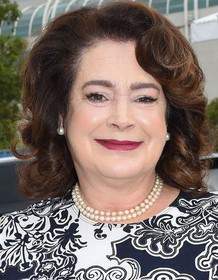
Dr. Judy Bingham (Sean Young)
Played by Sean Young
A special education teacher who enters Katie’s life with ambition and a hunger for recognition. She views Katie as a potential vehicle for personal fame and a transformative breakthrough in language acquisition. Judy’s charisma and drive collide with other team members’ genuine care, highlighting the ethical tensions in high-stakes advocacy.
- 🏅 Ambitious
- 🎭 Problematic influence
- 🧭 Motivated
- ST
Sandra Tannen (Melissa Errico)
Played by Melissa Errico
A UCLA graduate student in linguistics who fights to keep Katie’s best interests at the forefront. She collaborates with Norman to advocate for a life for Katie with sustained support, even as Louise withdraws Katie from hospital care. Sandra’s commitment contrasts with the more sensational aims of others on the team.
- 🧠 Dedicated
- 🗣️ Advocate
- 👥 Academic
- DN
Dr. Norman Glazer (Joe Regalbuto)
Played by Joe Regalbuto
Katie’s medical caretaker at Children’s Hospital who guides her through years of therapy and social integration. He is part of the effort to expand Katie’s vocabulary, hygiene, and emotional expression, while navigating the limits of medical intervention. Norman’s role anchors the clinical side of the debate about care and autonomy.
- 🏥 Clinician
- 🧭 Steady
- 🧩 Mediator
Where and When Is Mockingbird Don’t Sing Set?
Mockingbird Don’t Sing is set in Los Angeles and California (1970s–1980s). Here is why the time and place matter to the story.
When
1970s–1980s
The story unfolds across the 1970s through the late 1980s, tracing Katie’s isolation, the hospital interventions, and the foster-care cycle. Public institutions and medical practices of the era shape her care and the ethical debates surrounding her case. The timeline culminates with Judy’s death in 1988 and Katie’s ongoing life in a nearby foster home.
Where
Los Angeles, California
Set in Los Angeles, the Standon family home anchors Katie's confinement within a sunlit but claustrophobic urban landscape. The story moves through public welfare offices and Children’s Hospital, reflecting the city’s public social systems. The film closes with Katie on a sunlit beach nearby, offering a symbolic breath of freedom within Southern California.
- 🏙️ Los Angeles
- 🧭 Southern California
- 🏖️ Beach scenes
What Are the Themes of Mockingbird Don’t Sing?
3 ideas the story keeps returning to, among them Language, Trauma and Ethics.
-
01
Language
Language becomes both the target of intervention and a test of personhood. Katie learns vocabulary, signs, and social cues, yet never fully achieves the grammar and fluency of a typical speaker. The effort reveals how communication can empower, while also exposing the limits of therapy when autonomy and identity are at stake. The narrative questions who controls whose voice in the pursuit of scientific progress.
-
02
Trauma
Katie’s four-wall isolation constitutes a deep, lifelong trauma that shapes every interaction. The study of her condition exposes the long-lasting impact of deprivation on attachment, expression, and resilience. Families and professionals must navigate fragile boundaries between care and control as they attempt healing. The film underscores how trauma resists simple cures even with dedicated intervention.
-
03
Ethics
The story probes the ethics of medical and linguistic intervention, highlighting tensions between welfare, ambition, and consent. Judy’s pursuit of fame clashes with Katie’s welfare, prompting questions about manipulation and responsibility. The narrative invites reflection on the power dynamics within expert teams and the cost of professional success for a vulnerable child.
What Kind of Film Is Mockingbird Don’t Sing?
Dark in tone, with steady pacing and a moderate story, going by the plot summary.
- Tone
- Dark
- Pacing
- Steady
- Story
- Moderate
- Intensity
- High
- Ending
- Bittersweet
A harrowing and somber drama that methodically details a devastating true case of child abuse and the long, emotionally taxing process of recovery, creating a viewing experience defined by its clinical gravity and traumatic undertones.
- harrowing
- somber
- clinical
- oppressive
- traumatic
- restrained
- extreme child abuse
- psychological trauma
- language acquisition
- scientific ethics
Content notes: child abuse, imprisonment, suicide, psychological trauma, mistreatment in foster care.
Quiz
How well do you remember Mockingbird Don’t Sing? Test yourself on the story.
Where to Watch Mockingbird Don’t Sing
Stream it on Cineverse and Fawesome, or rent or buy it from Fandango At Home. US availability and prices from JustWatch.
Stream 7
 Cineverse
  Fawesome
  FlixHouse
  fuboTV
  Plex
Plex  Plex Channel
  Tubi TV
 Rent or buy 1

Streaming availability in the US, powered by 
