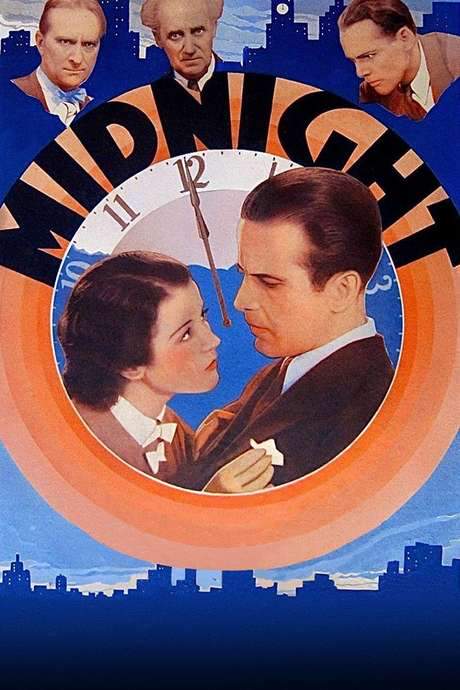
Midnight 1934

Directed by

Chester Erskine
Made by

all star productions
Where to Watch Midnight
See current US streaming, rental, and purchase options for Midnight (1934) via JustWatch.












Midnight Plot Summary
Read the complete plot summary and ending explained for Midnight (1934). From turning points to emotional moments, uncover what really happened and why it matters.
A woman named Ethel Saxton, Helen Flint, is on trial for shooting her husband to death; her defense is that she did not mean to kill him, but fired under extreme emotional pressure because she could not stand that he was leaving her. The court and spectators entertain a glimmer of mercy, treating this as a crime of passion, a momentary flare of emotion rather than calculated harm. Yet the jury, led by Edward Weldon, O. P. Heggie, weighs the evidence with careful scrutiny. When he asks whether she picked up the money her husband had gathered to leave with, and she says yes, the mood shifts. That single detail is presented as a possible sign of premeditation, and the idea that the act was planned harder than the moment of heat festers in the room. The verdict comes quickly and cruelly, and Ethel Saxton is convicted of first-degree murder, sentenced to death, and prepared for a fate she bears with quiet dignity.
On the evening of Ethel’s execution, the weight of Weldon’s decision presses down on him and those around him. Friends gather at his house to offer support and distraction—bridges and small talk fill the air—yet reporters swarm the doorstep, hungry for sensation. An unscrupulous journalist has bribed Weldon’s son-in-law to rig a fake radio broadcast from inside the house, amplifying sensational details of the impending execution and probing Weldon’s emotions for a public reckoning. The scene casts a halo of sorrow over the solemn moment, turning personal duty into a public spectacle.
Into this charged atmosphere steps Stella Weldon, Sidney Fox, a young woman drawn to a man named Gar Boni, Humphrey Bogart who appears at the trial and quickly captivates her. In the weeks that follow, she falls deeply in love with him, even as he warns that he is leaving town that night because the romance feels too intense for him to handle. He travels with a gun he insists is necessary for his work, a detail that unsettles Stella and intensifies the tension of their farewell. She pleads with him to stay, even threatening to meet him at the train station at midnight if he does not return to share one more moment.
As the fake broadcast continues to manipulate emotions, Weldon finds himself torn between his legal duty and his personal loyalties. He steps outside to address the waiting press with an emotional, if cautious, statement about the integrity of the law and the necessity of upholding it, even when it hurts those he loves. At that pivotal moment, a gunshot erupts in Gar Boni’s car across the street and a second tragedy darkens the night, cutting through the public spectacle with a brutal twist.
When Stella returns home carrying Gar Boni’s gun, she declares that she has shot him. The family quickly schemes to craft a self-defense narrative, urging Weldon to let the story evolve to protect her. Yet Weldon remains acutely aware of the law’s demands, and he contacts the District Attorney, Moffat Johnston, to report the truth. The investigators soon uncover a crucial clue: the bullet that killed Gar Boni did not come from Stella’s gun, but from a car across the street, revealing that Gar fell victim to a gangland rubout rather than a crime of passion. The revelation shifts the entire moral calculus, and Stella collapses into tears in her father’s arms as the weight of his earlier stance—his commitment to the rule of law—receives vindication, even as the family grapples with the emotional fallout of the night’s double tragedy.
Midnight Timeline
Follow the complete movie timeline of Midnight (1934) with every major event in chronological order. Great for understanding complex plots and story progression.
Ethel Saxton goes on trial
Ethel Saxton is on trial for shooting her husband to death. Her defense argues she did not mean to kill him, firing only under extreme emotional pressure as he prepared to leave her. Spectators believe she may have a chance at acquittal if the case is judged a crime of passion.
Defense frames the act as a crime of passion
During the trial, the defense frames the case as a crime of passion rather than premeditation. The emotional context leads many spectators to believe she could be spared if the jury accepts the sudden heat of the moment as a defence. The courtroom mood is cautious but hopeful for an acquittal.
Foreman probes the money detail
Jury foreman Edward Weldon asks Ethel if she picked up the money her husband had collected to leave with after the shooting. Her affirmative answer becomes the catalyst for a claim of premeditation, challenging the defense's position. The question shifts the jury's interpretation of the crime.
Verdict and sentence
The jury convicts Ethel of first-degree murder after considering the money detail and the emotional defense. She is sentenced to death, ending the trial with a stark and final judgment. The courtroom echoes with the weight of the verdict.
Evening at Weldon household
On the evening of Ethel’s execution, Weldon copes with the consequences of his role as foreman. Friends visit and try to distract him with bridge and chatter, while reporters cluster outside. An unscrupulous journalist bribes Weldon’s son-in-law to set up a fake radio broadcast designed to manipulate his emotions about the case.
Stella Weldon meets Gar Boni
Stella, Weldon’s daughter, meets the charming Gar Boni at the trial and falls quickly for him. In the ensuing weeks, their romance deepens, though Gar’s friends warn that she is getting too serious for what he wants. The relationship adds tension to the family and the case.
Gar declares he is leaving town
Gar tells his friends that he is leaving town tonight because Stella is getting too serious for what he wants. He arrives later and reveals that he is carrying a gun, claiming it is for his work. The admission casts a shadow over the relationship.
Stella notices the gun
During their conversations, Stella notices Gar is carrying a gun in his car and confronts him about it. He maintains that the weapon is for his work, not for threatening her, but the moment raises questions about danger surrounding the couple. The tension sets the stage for further tragedy.
Journalist broadcasts and Edward's statement
A journalist pretends to broadcast details of Ethel screaming and collapsing as she goes to the chair, while we see her fear in intercut scenes. Edward is pressured by emotion and opens his front door to deliver a heartfelt statement to reporters about the law and his perceived rightness. The scene blurs truth and spectacle.
Execution night and another gunshot
The switch is pulled at the death house and Ethel is executed. In Gar’s car, Stella and Gar have their last argument and a gun goes off, adding a second crime to the night’s events. The two tragedies unfold in parallel as the town watches.
Stella returns with Gar's gun
Stella enters the house carrying Gar Boni’s gun and claims that she shot him in self defense. The family pushes Edward to help exculpate her and craft a story that absolves her of responsibility. Edward wrestles with his oath to the law and his love for his daughter.
Edward informs the DA and investigation begins
Edward contacts the district attorney to reveal the full truth about the night’s events. DA’s men inspect the murder scene and discover the bullet that killed Gar Boni came from another car across the street, indicating a gangland rubout rather than a crime of passion. The truth begins to swell into the case against Stella’s guilt.
The truth changes the outcome
The bullet’s source confirms Gar Boni was killed in a gangland rubout, not by Stella in a moment of passion. Stella weeps in Edward’s arms, and his earlier stance on the law is vindicated by the new evidence. The family’s pressure to protect her is overshadowed by the urgent pursuit of the truth.
Midnight Characters
Explore all characters from Midnight (1934). Get detailed profiles with their roles, arcs, and key relationships explained.
Gar Boni (Humphrey Bogart)
Charming, roguish man who enters Stella's orbit with a sense of danger. He carries a gun described as for his work, hints at a nomadic, risky lifestyle, and catalyzes the emotional passion surrounding Stella while foreshadowing violence.
Edward Weldon (O. P. Heggie)
Jury foreman whose authoritative, principled stance is tested by his daughter's romance and the press of public opinion. He struggles between his memory of past pronouncements about the 'law' and the pressure to compromise for family.
Stella Weldon (Sidney Fox)
Edward's daughter who pursues a rapid, passionate relationship with Gar Boni. She is impulsive and emotionally driven, and ultimately carries the drama of the double murder scheme into the family's orbit.
Ethel Saxton (Helen Flint)
Defendant on trial for shooting her husband, insisting the act came from extreme emotional pressure rather than intent. Her dignity under sentence underscores the tragedy at the heart of passion crimes.
District Attorney Plunkett (Moffat Johnston)
The prosecuting attorney driving the case forward, representing the state and the hunt for truth within the court's boundaries. His role emphasizes the legal process and moral stakes.
Elizabeth McGrath (Cora Witherspoon)
Member of the social circle surrounding the case; her interactions illuminate the courtroom's social dynamics and add pressure on the characters.
Richard McGrath (Granville Bates)
A figure connected to Elizabeth McGrath's circle; his presence contributes to the social backdrop of the trial and community reactions.
Arthur Weldon (Richard Whorf)
A member of the Weldon family whose role helps frame the personal, domestic context around the legal drama.
Mrs. Weldon (Margaret Wycherly)
Edward's wife, a figure in the family’s inner circle whose reactions reflect the tension between public duty and private care.
Ada Biggers (Katherine Wilson)
A member of the social milieu around the case, representing the community context in which the trial unfolds.
Joe Biggers (Lynne Overman)
A friend or associate in the community who participates in the trial's social environment and media reach.
Midnight Settings
Learn where and when Midnight (1934) takes place. Explore the film’s settings, era, and how they shape the narrative.
Location
Courtroom, Weldon House, Death House, Train Station
Most of the film's action unfolds in a courtroom during Ethel Saxton's trial, while the Weldon family home becomes a pressure-filled hub of personal drama. The death house later serves as the ominous execution site that tests the characters' beliefs about justice. Scenes outside the home and at the train station extend the story into public and urban spaces.
Midnight Themes
Discover the main themes in Midnight (1934). Analyze the deeper meanings, emotional layers, and social commentary behind the film.
⚖️
Law vs Morality
The foreman Edward Weldon wrestles with the duty to apply the law impartially against the pull of personal conscience and family loyalty. The narrative shows how legal rigor can collide with human sympathy in high-stakes cases. The outcome exposes how truth and justice can be endangered by subjective interpretations of guilt and motive. The film questions whether justice is best served by strict adherence to rules or by considering the human story behind a crime.
📰
Media Manipulation
Journalists and a staged radio broadcast manipulate public perception to influence the verdict and the emotional climate at home. The impersonation of a live broadcast intrudes on private grief and tests the integrity of the judicial process. The film critiques sensationalism and its power to shape justice by fanning fear and rumor.
💔
Love vs Duty
The Weldon family is torn between personal desires and the expectations of law. Edward faces a painful choice between protecting his daughter and upholding his earlier judgments about justice. Stella's longing for Gar Boni complicates the family ties and pressures the father to bend, but the truth eventually restores the balance between love and law.

Coming soon on iOS and Android
The Plot Explained Mobile App
From blockbusters to hidden gems — dive into movie stories anytime, anywhere. Save your favorites, discover plots faster, and never miss a twist again.
Sign up to be the first to know when we launch. Your email stays private — always.
Explore the mobile appMidnight Spoiler-Free Summary
Discover the spoiler-free summary of Midnight (1934). Get a concise overview without any spoilers.
The film opens in a city where the tick of the clock feels like a judge’s gavel, and midnight looms as a moment of irrevocable consequence. A courtroom’s stale air is charged with the weight of a single decision that will reverberate through families and strangers alike, setting a tone that blends stark legal drama with an undercurrent of personal dread. The environment is both intimate and public, a stage where justice and compassion clash in the shadows of the night.
Edward Weldon presides over a jury that must navigate the fine line between evidence and emotion. As the foreman, he carries the quiet authority of a man who believes in the rule of law but cannot escape the human stories that sit behind each testimony. His sense of duty is tinged with an uneasy awareness that the outcome will shape more than a courtroom record—it will echo in the lives of those he holds dear.
Ethel Saxon stands at the center of the legal storm, a woman whose fate hangs in the balance as the execution hour approaches. The narrative hints at a tangled past, suggesting motives that are as complex as the moral questions they raise. Her presence adds a palpable tension to the proceedings, inviting the audience to contemplate the fragile line between passion and premeditation without revealing the precise nature of her alleged act.
Across the street, Stella Weldon wrestles with a different kind of urgency. Drawn to the enigmatic Garboni, she finds herself caught in a web of affection and danger that mirrors the impending legal climax. Their relationship glimmers with the promise of romance and the threat of betrayal, providing a personal counterpoint to the looming verdict. As midnight draws near, the film balances the stark formality of the courtroom with the intimate turbulence of a family on the brink, creating a mood that is both suspenseful and deeply human.
Movies with Similar Twists and Themes
Uncover films that echo the narrative beats, emotional arcs, or dramatic twists of the one you're exploring. These recommendations are handpicked based on story depth, thematic resonance, and spoiler-worthy moments — perfect for fans who crave more of the same intrigue.


Featured on this page

What's After the Movie?
Not sure whether to stay after the credits? Find out!
Check out our other apps:

SAT Sphere
Build confidence for the Digital SAT.

Mori Atlas
Discover wild places worth protecting.

Luntero
Search smarter for a home in Amsterdam.

Plot Explained
Unravel movie endings and hidden clues.

Pokechamp
Dive into Pokémon data and battle logic.

Driving Theory
Get ready for your European theory test.

Movie Dust
Plan your next cinema trip with ease.

Musemap
Find art and culture as you travel.

Selkobase
Compare credentials before committing.

Local Manual
Turn an unfamiliar country into practical next steps.

Lernavi
Compare school systems before your next move.

GymRoam
Find a workout stop wherever your plans take you.
Explore Our Movie Platform
New Movie Releases (2026)
Famous Movie Actors
Top Film Production Studios
Movie Plot Summaries & Endings
Major Movie Awards & Winners
Best Concert Films & Music Documentaries
Movie Collections and Curated Lists
© 2026 What's After the Movie. All rights reserved.
Privacy Policy