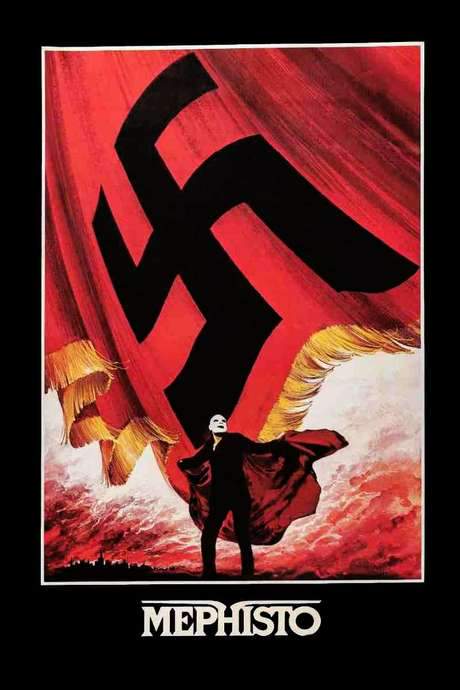
Mephisto 1981


Directed by

István Szabó
Made by

Mafilm
Where to Watch Mephisto
See current US streaming, rental, and purchase options for Mephisto (1981) via JustWatch.








Mephisto Plot Summary
Read the complete plot summary and ending explained for Mephisto (1981). From turning points to emotional moments, uncover what really happened and why it matters.
Höfgen, portrayed by Klaus Maria Brandauer, embodies a Mephistopheles-meets-Faustus dilemma: he trades conscience for a place at center stage, ingratiating himself with the Nazi Party to keep his job and climb the social ladder.
The first third follows his ascent in provincial theaters, where a restless, passionate actor toils for notice, occasionally dancing and singing and taking film parts to stay visible. He even founds a Bolshevik theater with a friend to generate work during the avant-garde surge of the early 1930s, all before the Nazis seize power. Initially, Hendrik is more successful in his social and romantic life than on the stage. Both threads collide when his new wife Barbara Bruckner, Krystyna Janda, watches him perform the ultimate role, Mephisto, just as the political climate grows dangerous.
As the Nazi threat rises, Höfgen returns to Germany drawn by the promise of forgiveness for his earlier theatrical escapades and a longing to perform in his native tongue. He does not hesitate when the regime offers him stardom, and soon the public and the regime alike applaud his talents. The national theatre becomes his arena, and he wields his Mephisto persona to navigate the brutal cultural restrictions, expanding his power while quietly excusing the moral compromises he makes to help friends who would otherwise be targeted.
Throughout, the plot circles the irony at the story’s heart: Höfgen’s lifelong dream is to become Germany’s greatest actor, capable of delivering Hamlet and Mephisto with unparalleled mastery. Yet the path to that dream requires him to sacrifice his conscience, and in the end, it is not Mephisto that dominates his fate but a Faustian bargain gone awry. The Nazi leader—an ominous figure in the film’s world—looms as the true Mephisto, a chilling reminder that power can rewrite art and ethics alike.
The film’s temperature rises as Höfgen’s ascent depends less on raw talent and more on intimate ties with those in power. His dealings reveal a man who rationalizes every concession as a necessary compromise, while the consequences ripple through the lives of those around him, including the circle of actors and friends who stand by him as the regime tightens its grip. In the end, the story leaves viewers pondering whether true artistry can survive within a system built on coercion, surveillance, and fear, and whether any individual’s ascent can ever be truly separate from the moral costs it exacts.
Mephisto Timeline
Follow the complete movie timeline of Mephisto (1981) with every major event in chronological order. Great for understanding complex plots and story progression.
Early struggle for center stage
Höfgen toils in provincial theaters, a passionate, frustrated actor hungry for the lead. He dances, sings, and accepts small film parts to gain notice, determined to break through. The first third of the film follows this grind as he pursues recognition.
Founding a Bolshevik theatre
With a friend, Höfgen founds a Bolshevik theatre to generate more work and experiment with avant-garde forms. The venture signals his appetite for risk and artistic prestige before the rise of the Nazis. This period is set in the early 1930s in Germany.
Mephisto on stage before the regime
Höfgen delivers a defining Mephisto performance, while his wife watches with a mix of pride and unease. The role foreshadows the moral compromises that will come with power. The scene takes place on a theatre stage just before the Nazi rise to power.
Exile and protest around the regime
As the Nazis rise, Höfgen's wife, leading actors, and friends choose exile or protest. The social circle fractures, highlighting the moral costs of staying aligned with a dangerous regime. Höfgen remains in Germany, observing the changing landscape.
Return to Germany for forgiveness
Höfgen returns home, lured by promises of forgiveness for his earlier communist theater escapade. He craves the chance to act in his native language and relaunch his career. The decision marks his first step toward complicity with the regime.
Nazi offer of stardom
The Nazi party offers Höfgen a path to stardom, and he does not hesitate to accept. He steps into a world of state support, censorship, and influence. The lure of fame begins to eclipse his earlier moral concerns.
Rise to national prominence
Great roles and accolades come quickly, and Höfgen revels in his growing status. He reclaims the Mephisto role and becomes a central figure in the national theatre. His career becomes inseparable from the regime's cultural apparatus.
Running the national theatre
Höfgen agrees to run the national theatre, navigating cultural restrictions and brutality with a practiced charm. He uses his position to shape the stage while keeping his friends safe through political favors. The line between art and ideology blurs as power consolidates.
Moral compromises and favors
He justifies compromising his conscience by leaning on close relationships with Nazi officials. The regime becomes a tool to shield people he cares about. Yet each favor deepens his entanglement with a system that consumes ideals.
The Faustian bargain for fame
The film makes explicit the irony: Höfgen's dream of becoming Germany's greatest actor requires selling his soul. He seems to achieve Hamlet and Mephisto on stage, yet the sacrifice costs him his humanity. Fame comes at a price that he initially refuses to fully admit.
Realization of who controls Mephisto
In a bitter twist, Höfgen realizes he is not playing Mephisto but Faustus, as the Nazi leader embodies the devil's role. The depiction of a Göring-like figure as the true Mephisto reframes his choices. He confronts the moral emptiness of his alignment.
Consequences and the price of compromise
The story traces the erosion of Höfgen's conscience and the personal costs of his collaboration. His dream of glory is shadowed by the regime's brutality and the betrayal of friends.
Mephisto Characters
Explore all characters from Mephisto (1981). Get detailed profiles with their roles, arcs, and key relationships explained.
Hendrik Höfgen (Klaus Maria Brandauer)
Höfgen is an ambitious actor who craves the spotlight and is willing to trade his conscience for career success. He navigates provincial theatre, avant-garde ventures, and later the Nazi regime, using charm and calculated moves to gain influence. His ascent is fueled by vanity and a belief that he can control his fate, even as he becomes entangled in moral compromises. The role of Mephisto mirrors his inner bargain, yet the film makes clear the true devil is power itself.
Barbara Bruckner (Krystyna Janda)
Barbara Bruckner is Höfgen’s wife, whose presence frames his personal life while his career ascends. She witnesses his Mephisto performance and his compromises, offering a personal anchor amid political turmoil. Her perspective highlights the cost of ambition on family and love, showing a different moral center in the story.
Mephisto Settings
Learn where and when Mephisto (1981) takes place. Explore the film’s settings, era, and how they shape the narrative.
Time period
1930s-1940s
The story moves from the avant-garde theatre scene of the early 1930s to the tightened cultural control of the Nazi era. Höfgen’s ascent occurs as the regime consolidates power, demanding loyalty from artists. The period is defined by censorship, propaganda, and moral testing for those in the arts.
Location
Germany
Set against Germany’s cultural life before and during the Nazi rise to power, the film unfolds in theatres and political rooms across the country. It portrays the pressures on actors to conform to regime expectations and the consequences of collaboration. The setting emphasizes the tension between art, fame, and moral responsibility.
Mephisto Themes
Discover the main themes in Mephisto (1981). Analyze the deeper meanings, emotional layers, and social commentary behind the film.
⚖️
Moral compromise
Mephisto explores how survival and success can coerce a talent into sacrificing conscience. Höfgen justifies expediency with personal gains, friendships, and love. The film shows that moral lines blur when power promises protection and status. The audience is left weighing whether art is worth its price.
🎭
Art vs Power
Art becomes a tool for political legitimacy as Höfgen accepts roles and favors to secure his position. The Mephisto character within the play becomes a mirror for his own bargains with the regime. The story reveals how artistic brilliance can be harnessed by authoritarian systems to legitimize oppression. The consequences ripple through colleagues and audiences alike.
🗝️
Complicity
Complicity threads through friendships, colleagues, and lovers as the regime strengthens its grip. The protagonist’s success relies on a network of allies who benefit from his choices, while victims suffer in silence. The film asks whether awareness of wrongdoing is enough to resist or if silence itself is a form of participation. Ultimately, Höfgen’s choices define his fate and reveal the price of staying in the center of power.

Coming soon on iOS and Android
The Plot Explained Mobile App
From blockbusters to hidden gems — dive into movie stories anytime, anywhere. Save your favorites, discover plots faster, and never miss a twist again.
Sign up to be the first to know when we launch. Your email stays private — always.
Explore the mobile appMephisto Spoiler-Free Summary
Discover the spoiler-free summary of Mephisto (1981). Get a concise overview without any spoilers.
In the charged atmosphere of pre‑World War II Germany, the world of theater teeters between avant‑garde experimentation and the tightening grip of an emerging totalitarian regime. The stage becomes a pressured arena where every applause can carry hidden implications, and the cultural elite must constantly navigate the line between artistic expression and political conformity.
Höfgen, a restless and ambitious actor, long ago dreamed of mastering the greatest roles the German repertoire could offer. When he finally lands the titular part in a bold Faustian play, his performance ignites a sudden surge of public and official acclaim. The triumph brings him into the orbit of powerful patrons, while his marriage to Barbara Bruckner adds a personal dimension to his rising profile, grounding his newfound fame in a relationship that mirrors the play’s own themes of compromise and desire.
The film unfolds with a tone that is both elegiac and unsettling, spotlighting the seductive allure of fame against the backdrop of a regime that demands loyalty in exchange for opportunity. As Höfgen basks in the limelight, he discovers that the greatest challenge may not be mastering his craft, but learning how to keep his conscience intact while his public persona increasingly serves the expectations of those who control the stage. The story invites the audience to consider whether true artistry can survive when the applause is conditioned by fear, and whether a performer’s most convincing role might be the one he plays for society itself.
Movies with Similar Twists and Themes
Uncover films that echo the narrative beats, emotional arcs, or dramatic twists of the one you're exploring. These recommendations are handpicked based on story depth, thematic resonance, and spoiler-worthy moments — perfect for fans who crave more of the same intrigue.

Featured on this page

What's After the Movie?
Not sure whether to stay after the credits? Find out!
Check out our other apps:

SAT Sphere
Build confidence for the Digital SAT.

Mori Atlas
Discover wild places worth protecting.

Luntero
Search smarter for a home in Amsterdam.

Plot Explained
Unravel movie endings and hidden clues.

Pokechamp
Dive into Pokémon data and battle logic.

Driving Theory
Get ready for your European theory test.

Movie Dust
Plan your next cinema trip with ease.

Musemap
Find art and culture as you travel.

Selkobase
Compare credentials before committing.

Local Manual
Turn an unfamiliar country into practical next steps.

Lernavi
Compare school systems before your next move.

GymRoam
Find a workout stop wherever your plans take you.
Explore Our Movie Platform
New Movie Releases (2026)
Famous Movie Actors
Top Film Production Studios
Movie Plot Summaries & Endings
Major Movie Awards & Winners
Best Concert Films & Music Documentaries
Movie Collections and Curated Lists
© 2026 What's After the Movie. All rights reserved.
Privacy Policy