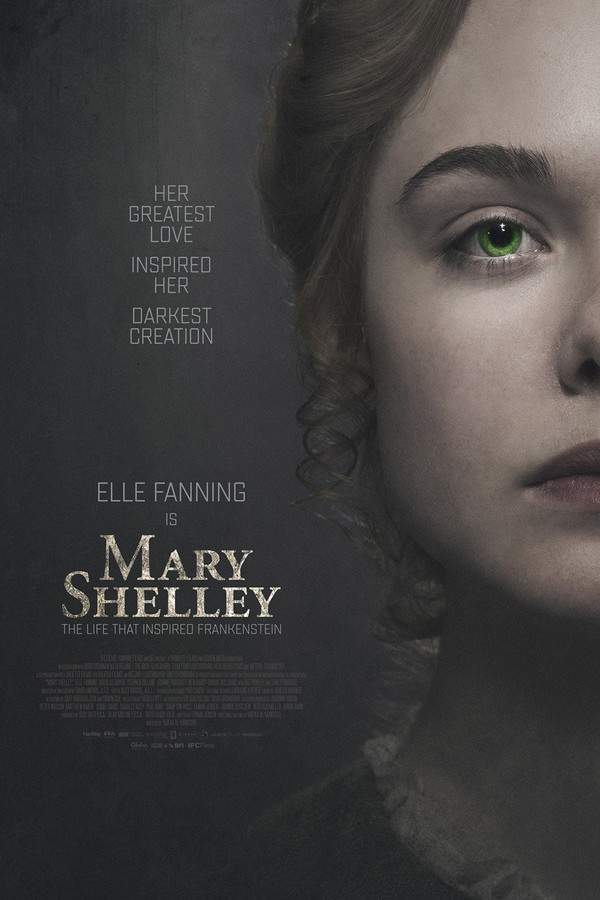
Mary Shelley 2018


Directed by

Haifaa Al-Mansour
Made by

IFC Films
Where to Watch Mary Shelley
See current US streaming, rental, and purchase options for Mary Shelley (2018) via JustWatch.

Acorn TV Apple TV channel
HD
AcornTV Amazon Channel
HD
AMC Plus Apple TV channel
HD
AMC+
HD
AMC+ Amazon Channel
HD
AMC+ Roku Premium Channel
HD
Philo
HD
Shudder
HD
Sundance Now
HD
Kanopy
HD
Plex
HD
Plex Channel
HD
Pluto TV
SD
The Roku Channel
HD
Amazon Video
HD
Apple TV Store
HD
Fandango At Home
HD
Google Play Movies
SD
YouTube
SD Streaming availability powered by 
Mary Shelley Plot Summary
Read the complete plot summary and ending explained for Mary Shelley (2018). From turning points to emotional moments, uncover what really happened and why it matters.
Mary Wollstonecraft dies shortly after giving birth to her daughter Mary Godwin [Elle Fanning]. Sixteen years later, Mary Godwin [Elle Fanning] is living with her father, William Godwin [Stephen Dillane], her stepmother, and her stepsister Claire Clairmont [Bel Powley].
A tense clash with her stepmother pushes the family to send Mary away, but William Relents and sends her to Scotland to stay with a good friend and his daughter, where Mary [Elle Fanning] meets and falls in love with the radical and unconventional poet Percy Bysshe Shelley [Douglas Booth], who is already married.
Called home under the pretense that Claire is on her deathbed, Mary returns to find Claire confessing it was a ruse to bring her back. While at home, William Godwin [Stephen Dillane] brings Percy Shelley [Douglas Booth] into the household as a new student, and the two rekindle their affections.
Mary and Claire are confronted in the street by Shelley’s wife and daughter; the wife begs Mary to stay away from Percy. Mary lies, insisting that Shelley is only her father’s student, while Percy explains that his wife and child are “only that in name,” and that he supports them financially but has nothing to do with them, all the while claiming to love Mary.
The couple elopes, taking Claire [Bel Powley] with them. Shelley’s lack of money forces them to borrow against his wealthy father’s estate to set themselves up in lavish fashion in Bloomsbury. At a dinner party, Shelley flirts with Claire, and Mary encounters a friend who later makes advances toward her. When Mary complains about the flirting, Shelley tells her that lovers should be free, and he demands the same freedom for himself. He even calls her a hypocrite, and Mary’s disappointment in him grows.
One night, Shelley’s creditors arrive unexpectedly, and the trio must flee in the rain, finding cheap lodgings. Mary gives birth, but the baby does not survive long. Claire announces that she is pregnant by Byron, and that he has invited them to stay with him at a villa near Geneva. When they arrive, Byron makes it clear that the invitation is more wishful thinking than a real arrangement, yet he asks them to stay.
Bad weather keeps them indoors for days, and Byron challenges the group to write a ghost story; this sparks Mary’s imagination and she dreams of galvanism. A message arrives that Byron’s wife has just drowned herself. Throughout the visit, Byron treats Claire with increasing contempt. She confronts him, but he shrugs it off, quipping that their affair was “a lapse in judgement.” He promises to provide financially for Claire’s baby, but nothing more.
The trio returns to England, where Mary begins writing Frankenstein. Publishers refuse to accept the manuscript under a female author, deeming the subject matter unsuited for a lady, but a foreword by Shelley helps it pass as anonymous. The book becomes a success, initially credited to Shelley until he publicly reveals the true author. The couple’s bond is rekindled.
Mary’s father later ensures a second publication of Frankenstein under her own name, securing a solid income for Mary. In the final shots, Mary, dressed in black, walks with a young son, and an afterword explains that Mary and Shelley married and stayed together until his death at 29, with Mary never remarrying.
“a lapse in judgement”
Mary Shelley Timeline
Follow the complete movie timeline of Mary Shelley (2018) with every major event in chronological order. Great for understanding complex plots and story progression.
Wollstonecraft's death and Mary's birth
Mary Wollstonecraft dies shortly after giving birth to Mary Godwin, shaping the girl's early life and future ambitions. The film frames this moment as a catalytic start to Mary’s path toward independence and writing. This event sets the emotional backdrop for Mary’s lifelong pursuit of identity and voice.
Sixteen years later: life with Godwin and the stepmother's push to send her away
Sixteen years pass and Mary is living with her father William Godwin, her stepmother, and her stepsister Claire Clairmont. A negative encounter with her stepmother triggers the decision to send Mary away to grow more freely. William relents, hoping to give Mary space to become her own person.
Mary's Scottish sojourn and the meeting with Percy Shelley
Mary is sent to stay with a good friend in Scotland, where she meets Percy Bysshe Shelley, a radical poet who is already married. The encounter marks the beginning of a transformative relationship in Mary's life. This meeting becomes the catalyst for the later events surrounding her works and fame.
Claire's ruse and the renewed connection with Shelley
Mary is summoned home when Claire pretends she is on her deathbed, but the ruse is exposed. William Godwin later brings Percy Shelley to the household as a new student, and Mary and Shelley renew their affections. The renewed bond sets the stage for the couple's controversial life together.
The elopement and life in Bloomsbury
Mary and Shelley elope, taking Claire with them, and settle in Bloomsbury with little money. Shelley borrows against his wealthy father's estate to fund their lavish lifestyle, straining finances and complicating their relationships. The early years of their union are marked by ambition and precarious money matters.
Open relationship debates and love's tension
At a dinner party, Shelley flirts with Claire while Mary meets a friend who makes advances toward her. Shelley argues that lovers should be free and pushes Mary to accept multiple partners, challenging traditional boundaries. The couple grapples with desire, autonomy, and trust.
Galvanism and Byron arrive on the scene
The trio attends a public galvanism demonstration where a dead frog twitches under electricity, and the poet Lord Byron is in the audience. Claire is drawn to Byron, adding volatile dynamic to the group’s romantic entanglements. The event deepens their sense of celebrity and danger in their circle.
Creditors force flight and the birth tragedy
Shelley's creditors arrive unexpectedly, forcing the group to flee in the rain to cheaper lodgings. Mary gives birth during this upheaval, but her baby dies soon after. Claire reveals she is pregnant by Byron, foreshadowing further complications with their social circle.
Geneva invitation and Byron's conflicted hospitality
The group travels to a villa near Geneva, where Byron’s invitation proves more wishful than welcoming. Byron makes it clear he will not be a steady provider, and his treatment of Claire grows contemptuous. The stay intensifies the group’s tensions as romantic loyalties crumble.
Frankenstein takes shape back in England
After returning to England, Mary begins writing Frankenstein. Publishers resist releasing the work under a woman’s name, but with a foreword by Shelley it is accepted for anonymous publication. The book becomes a success, initially credited to Shelley until Mary’s authorship is revealed.
Mary secures authorship and income
Mary’s father arranges a second publication of Frankenstein under her own name, ensuring she derives income from the work. This marks a turning point in her independence as a writer. Shelley supports the move, even as their relationship continues to evolve.
The marriage and lasting partnership
Mary and Percy eventually marry and remain together until his death at age 29. The film notes that Mary never remarries after his death. Their lifelong partnership leaves a lasting imprint on her legacy as a writer and thinker.
Closing scenes and Frankenstein’s legacy
In the final scenes, Mary is shown walking with a young son, reflecting on the life she built and the legacy of Frankenstein. An afterword confirms their marriage and lifelong bond, and that Mary did not remarry after Shelley’s death. The film closes on Mary’s enduring identity as a writer and partner.
Mary Shelley Characters
Explore all characters from Mary Shelley (2018). Get detailed profiles with their roles, arcs, and key relationships explained.
Mary Shelley (Elle Fanning)
Daughter of the pioneering feminist Mary Wollstonecraft, Mary grows into a sharp, passionate writer who must balance love, autonomy, and social expectation. She navigates complex romantic entanglements while seeking her own voice, eventually becoming the author of Frankenstein. Her strength lies in sensitivity and a fierce drive for self-definition.
Percy Bysshe Shelley (Tom Sturridge)
A radical, charismatic poet whose devotion to intellectual freedom fuels both romance and conflict. He pushes boundaries and advocates open relationships, while facing financial and moral complexities. His influence helps Mary discover her own power, even as the relationship strains under pressure.
Claire Clairmont (Bel Powley)
Claire is a decisive, ambitious companion who stirs the group's dynamics and complicates loyalties. She becomes entwined with Byron and later with the broader Romantic circle, catalyzing events that influence Mary and Shelley's path.
William Godwin (Stephen Dillane)
Mary’s father, a philosopher who values intellectual freedom. He supports her growth and negotiates opportunities to publish, aiming to ensure her independence within a constrained society.
Mrs. Godwin (Joanne Froggatt)
Mary’s stepmother, whose negative stance prompts Mary to seek freedom by leaving home. She embodies social pressure and the friction within family life.
Isabel Baxter (Maisie Williams)
A member of Mary’s circle in Scotland, Isabel adds to the domestic and social backdrop of Mary’s early years. She represents friendship and the support network that informs Mary’s development.
Samuel Coleridge (Hugh O'Conor)
A fellow poet whose presence situates the group within the Romantic literary milieu. His interactions contribute to the intellectual atmosphere surrounding Mary and Shelley.
Harriet Shelley (Ciara Charteris)
Shelley’s wife, a social figure bound by conventional expectations. Her reactions and presence highlight the complexities of marriage within the Romantic circle.
Lord Byron
A famed Romantic poet who appears as a magnetic but morally ambivalent figure. His presence tests loyalties and foreshadows the transitory nature of bohemian circles.
Mary Shelley Settings
Learn where and when Mary Shelley (2018) takes place. Explore the film’s settings, era, and how they shape the narrative.
Time period
Early 19th Century
Set in the years surrounding Mary Shelley’s youth and early adulthood, the story unfolds amid Romantic poetry, scientific curiosity, and rising female authorship. The era’s social constraints clash with the characters’ appetite for freedom, shaping choices from elopement to intellectual experiments. Key events occur during the 1810s and 1820s, culminating in Frankenstein’s creation and Mary’s emergence as a recognized writer.
Location
Scotland, Bloomsbury (London), Geneva
The film moves from a Scottish setting where Mary is sent for growth, to the literary milieu of Bloomsbury in London, and finally to a villa near Geneva during the Byron circle. Scotland represents a break from strict domestic expectations, while Bloomsbury showcases the bustling, reform-minded literary world. Geneva serves as a backdrop for creative ferment, romance, and the shocks of high-society bohemia that shape Mary’s writing.
Mary Shelley Themes
Discover the main themes in Mary Shelley (2018). Analyze the deeper meanings, emotional layers, and social commentary behind the film.
❤️
Forbidden Love
Mary’s romance with Percy Bysshe Shelley defies social norms, including his existing marriage. The relationship pushes her toward independence and risk, challenging parental and societal authority. Their elopement and the ensuing upheaval anchor the emotional core of the film. The romance exposes vulnerability, passion, and the cost of pursuing love on one’s own terms.
✍️
Creative Force
Romance and turmoil ignite Mary’s literary ambitions, culminating in Frankenstein. The group’s discussions on science, galvanism, and storytelling fuel her imagination. The public publication arc—initial anonymity, then credit shifted to Shelley, then a Mary-authored edition—frames the tension between inspiration and authorship. The narrative portrays writing as both revelation and struggle within a restrictive era.
📚
Female Authorship
The story foregrounds Mary’s fight to be recognized as a writer in a male-dominated literary world. Publishers resist a female name, prompting her father to secure a second publication under her own name. The arc highlights the slow, hard-won path to literary legitimacy and financial independence. Mary’s ultimate recognition emerges from persistence and family support after Shelley's influence wanes.

Coming soon on iOS and Android
The Plot Explained Mobile App
From blockbusters to hidden gems — dive into movie stories anytime, anywhere. Save your favorites, discover plots faster, and never miss a twist again.
Sign up to be the first to know when we launch. Your email stays private — always.
Explore the mobile appMary Shelley Spoiler-Free Summary
Discover the spoiler-free summary of Mary Shelley (2018). Get a concise overview without any spoilers.
In the bustling streets of 18th‑century London, salons hum with radical ideas and the clatter of carriage wheels mixes with the electric spark of new scientific curiosity. The city’s fog‑laden avenues hide a world where intellectual fervor collides with bohemian excess, setting a richly atmospheric backdrop for a story of love, loss, and restless imagination.
Mary Wollstonecraft Godwin arrives from a household steeped in feminist thought, raised under the watchful eye of her philosophic father. Though privileged with a brilliant mind, she feels the weight of expectations and a yearning to carve her own identity beyond the shadow of her mother’s legacy. Her early days are marked by a restless curiosity, a desire to explore the boundaries of thought and feeling that the vibrant London milieu offers.
Percy Shelley bursts onto her life as a magnetic, unconventional poet whose radical ideas and haunting verses stir something deeper within her. Their connection ignites a passionate, tempestuous romance that pulls them into a whirlwind of artistic collaboration and emotional intensity. Together they navigate a world of lavish gatherings, daring conversations, and the intoxicating freedom of a lifestyle that defies conventional norms.
Against this backdrop of fierce affection and inevitable heartache, Mary confronts personal tragedies that churn her emotions into a vivid, almost otherworldly imagination. The turbulence of her inner life begins to shape a narrative born of both scientific wonder and gothic dread—an embryonic tale that will later echo through the ages and redefine horror literature. The film lingers on her creative fires, inviting viewers to feel the electric charge of inspiration that flickers behind every whispered promise and lingering sorrow.
Movies with Similar Twists and Themes
Uncover films that echo the narrative beats, emotional arcs, or dramatic twists of the one you're exploring. These recommendations are handpicked based on story depth, thematic resonance, and spoiler-worthy moments — perfect for fans who crave more of the same intrigue.


Featured on this page

What's After the Movie?
Not sure whether to stay after the credits? Find out!
Check out our other apps:

SAT Sphere
Build confidence for the Digital SAT.

Mori Atlas
Discover wild places worth protecting.

Luntero
Search smarter for a home in Amsterdam.

Plot Explained
Unravel movie endings and hidden clues.

Pokechamp
Dive into Pokémon data and battle logic.

Driving Theory
Get ready for your European theory test.

Movie Dust
Plan your next cinema trip with ease.

Musemap
Find art and culture as you travel.

Selkobase
Compare credentials before committing.

Local Manual
Turn an unfamiliar country into practical next steps.

Lernavi
Compare school systems before your next move.

GymRoam
Find a workout stop wherever your plans take you.
Explore Our Movie Platform
New Movie Releases (2026)
Famous Movie Actors
Top Film Production Studios
Movie Plot Summaries & Endings
Major Movie Awards & Winners
Best Concert Films & Music Documentaries
Movie Collections and Curated Lists
© 2026 What's After the Movie. All rights reserved.
Privacy Policy