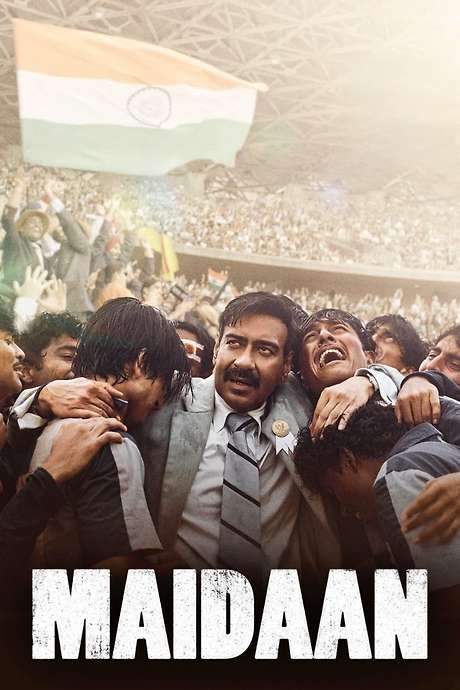
Maidaan 2024


Made by

Zee Studios
Where to Watch Maidaan
See current US streaming, rental, and purchase options for Maidaan (2024) via JustWatch.


Streaming availability powered by 
Maidaan Plot Summary
Read the complete plot summary and ending explained for Maidaan (2024). From turning points to emotional moments, uncover what really happened and why it matters.
In Helsinki during the 1952 Summer Olympics, the Indian national football team suffers a crushing 10-1 defeat to Yugoslavia, casting a long shadow over the federation’s confidence in its leadership. The All India Football Federation places the blame squarely on the head coach Syed Abdul Rahim [Ajay Devgn], and Rahim asks for permission to rebuild the squad with fresh, capable players. Though many federation members resist, President Anjan [Baharul Islam] ultimately backs his plan, allowing Rahim to go out across the country to scout for new talent. Rahim envisions a more cohesive unit drawn from different corners of India, assembling a new team that includes Tulsidas Balaram [Sushant Waydande] from Secunderabad, Peter Thangaraj [Tejas Ravishankar] from Hyderabad, and Chuni Goswami [Amartya Ray] along with P. K. Banerjee [Chaitanya Sharma] and other promising players from Calcutta and beyond. This reshaping stirs resentment in Roy Choudhary [Gajraj Rao], a Calcutta-based journalist who resents the shift away from his region and resists Rahim’s changes.
By the time the 1956 Summer Olympics roll around in Melbourne, the Indian squad has grown tighter and more disciplined. An incident where an Australian player disrespects Neville D’Souza [Vishnu G. Varrier] becomes a catalyst for India, and Neville rises to the occasion by scoring a hat-trick as India dominates the match, winning 7-1 and signaling a new confidence for Rahim’s reworked team. The performance helps India reach a respectable fourth place at these Games, but internal pressures within the federation persist. Roy Choudhary and Subhankar Sengupta (the latter portrayed by Rudranil Ghosh) maneuver behind the scenes as Rahim fights to maintain his authority, underscoring the political dimensions that accompany the on-field battles. Rahim presses on, convinced that a gold medal at the Asian Games could vindicate his approach and secure the future of Indian football under his guidance.
The next major turning point arrives at the 1960 Summer Olympics, where India faces a strong France side and plays to a hard-fought 1-1 draw. The federation uses this result to question Rahim’s methods once again, and he is eventually relieved of coaching duties for underperformance. Alongside the professional setback, Rahim learns he has developed lung cancer, a consequence of years of heavy smoking, and the prognosis casts a long shadow over his remaining time. The news could have broken his resolve, but his wife Saira [Priyamani] stands by him, urging him not to give up and to keep pursuing his dream of leading India to a gold medal.
Determined to prove himself one last time, Rahim asks the federation for one final chance to coach the national team, promising that if they do not win gold, he will step away from coaching for good. After a tense debate, Subhankar—now serving as federation president—relents under pressure from other federation members, and Rahim is reinstated with a clear objective: to win the gold at the 1962 Asian Games in Jakarta. Rahim must also contend with financial hurdles; the Finance Ministry refuses to fund the trip, but Rahim persuades the ministers, agreeing to send only 16 players to Jakarta to stretch funds and maximize chances.
Jakarta brings its own set of trials. Thangaraj, the team’s goalkeeper, suffers an injury before the first match and is replaced by Pradyut Burman [Tanmay Bhattacharjee], a decision that weakens the defense and feeds into a tough opening defeat to South Korea. Rahim works to restore balance, stressing formation, discipline, and coordinated pressing, and the team begins to respond. In the next match against Thailand, Jarnail Singh [Davinder Singh Gill] is gravely injured by an opponent, and Rahim responds with a new, tougher mindset: the Indians play more aggressively and secure a 4-1 victory. A public diplomat’s criticism of India’s stance on Israel and Taiwan sparks protests among Indonesians, throwing diplomatic tensions into the mix and heightening the stakes for the athletes.
On the day of the final, the stakes could not be higher. The Indian team faces South Korea in a bruising contest, and the environment is chaotic: the team bus is attacked by protesters, and security forces have to step in for protection. Rahim’s health deteriorates as he coughs up blood, yet he delivers a stirring speech that galvanizes his players. The revelation of Roy Choudhary’s change of heart adds an extra layer of drama, as he shifts from adversary to ally in the moment of truth. Thangaraj and Jarnail Singh return to the lineup, and the team rises to the occasion. India battles South Korea to a tense 2-1 victory, securing the country’s only gold medal in football at the Asian Games.
In the end, Rahim’s legacy is a testament to perseverance, tactical evolution, and quiet leadership under pressure. The 1962 triumph—achieved despite financial constraints, political opposition, and a personal battle with illness—cements Rahim’s reputation as a pivotal architect of modern Indian football. The film captures the emotional highs and lows of the journey: the heartbreak of early defeats, the exhilaration of surprising victories, the political infighting behind the scenes, and the unwavering dedication of players who push through adversity to reach the pinnacle of continental sport. The narrative honors the characters who stood with Rahim along the way, including the players, coaches, journalists, and family members whose lives intersected with a pivotal chapter in Indian football history.
Maidaan Timeline
Follow the complete movie timeline of Maidaan (2024) with every major event in chronological order. Great for understanding complex plots and story progression.
1952 Helsinki: Debacle and Rahim's rebuilding plan
India suffer a crushing 10-1 defeat to Yugoslavia in the 1952 Helsinki Olympics. The All India Football Federation blames coach Syed Abdul Rahim for the dismal performance. Rahim seeks permission to form a new national side with fresh players, and the federation grants him support to scout across the country. He begins assembling a squad from Secunderabad, Hyderabad and Calcutta, while Roy Choudhary resents the lack of Calcutta representation.
1956 Melbourne: D'Souza's hat-trick and India’s win
An Australian player insults Neville D'Souza, forcing him to tie his shoes before the match. D'Souza delivers a superb hat-trick, helping India to a decisive 7-1 victory. India finishes fourth at the Melbourne Olympics. Concurrently, Roy Choudhary and Subhankar plot Rahim's removal and the rise of Subhankar as federation president.
1956-57: Political plotting against Rahim
Off the field, Roy Choudhary and Subhankar oppose Rahim, planning to remove him from the federation and install Subhankar as President. Their maneuvering reflects the internal politics of Indian football at the time. Rahim remains focused on rebuilding the team amid growing opposition.
1960 Rome: France draw; Rahim's health crisis and reinstatement
In the 1960 Rome Olympics, India draws France 1-1, and Rahim is dismissed as coach for underperformance. Around the same time, Rahim learns he has lung cancer from years of smoking. He resolves to spend his remaining days with his family, but asks the federation to let him coach again, promising retirement if gold isn’t won. Subhankar initially resists, but the federation eventually votes to reinstate him.
1962: 16-player limit approved after funding negotiations
The Indian team prepares for the Jakarta Asian Games, but the Finance Ministry refuses funds due to insufficient money. Rahim personally speaks with Finance Minister Morarji Desai and secures permission for only 16 players to travel. He excludes several players, including his own son Hakim, to meet the limit.
1962 Jakarta: Thangaraj injured; Pradyut Barman steps in
In Jakarta, goalkeeper Thangaraj is injured before the first match and is replaced by Pradyut Barman, weakening the defense. In the opening game, India loses to South Korea and teammates blame one another for the defeat. Rahim begins to refocus the squad on fundamentals to regroup.
1962 Jakarta: Formation and Thailand comeback
Rahim emphasizes formation and coordination, urging the players to play as a connected unit. In the next match against Thailand, Jarnail Singh is gravely injured by an opponent, and Rahim instructs the team 'to make them pay for it' with more aggressive play. India earns a 4-1 victory and regains momentum.
1962 Jakarta: Diplomatic tensions and Indonesian protests
An Indian diplomat publicly criticizes the decision not to allow Israel and Taiwan to participate, provoking anger among Indonesians and sparking protests. The controversy adds pressure on the Indian team and national authorities. Rahim and his players must navigate both sport and politics on the ground.
1962 Jakarta: Final day bus attack and Rahim's resolve
On the day of the final against South Korea, the team bus is attacked by protesters and the military is brought in for security. Rahim's health deteriorates and he begins coughing up blood, yet he delivers an inspiring speech to motivate the squad. Roy Choudhary experiences a change of heart and begins supporting the team.
1962 Jakarta: Rejoining players for the final
Thangaraj and Jarnail Singh rejoin the team for the decisive match, reuniting key players after setbacks and injuries. The squad pulls together under Rahim's leadership to face the challenge. The atmosphere is tense, but determination drives the performance.
1962 Jakarta: India wins gold in football
The Indian team defeats South Korea 2-1 in the final, clinching India’s only gold medal in football at the Asian Games. The players overcome injuries, political pressure, and logistical hurdles to achieve a historic victory. Rahim's vision and perseverance are celebrated as the team achieves a landmark triumph.
Maidaan Characters
Explore all characters from Maidaan (2024). Get detailed profiles with their roles, arcs, and key relationships explained.
Syed Abdul Rahim (Ajay Devgn)
A visionary coach who rebuilds India’s national team and presses for a long-term plan. He confronts federation politics, mobilizes talent from across the country, and commits to returning to coaching despite personal health battles. His leadership is defined by strategic thinking, relentless optimism, and a willingness to make difficult choices for the team’s glory.
Saira (Priyamani)
Rahim’s devoted wife who provides emotional support and encouragement during his toughest moments. She urges him to persevere, even when the odds are stacked against him. Her role anchors Rahim’s personal life to his professional pursuit of a gold medal.
Roy Choudhary
A powerful journalist from Calcutta who holds a grudge against Rahim for forming a team with relatively few Calcutta players. His influence showcases the media’s role in shaping public opinion and federation politics. His attitude shifts as events unfold, reflecting the complex ethics of sports reporting.
Neville D'Souza
A gifted forward who rises to prominence and delivers a remarkable performance, including a hat-trick that stuns the Australians. His on-field talent embodies the team’s potential when given opportunity and belief. He becomes a symbol of India’s evolving football prowess on the world stage.
Peter Thangaraj
The team’s goalkeeper whose skills become crucial in defense and morale. His injury creates a moment of challenge that the team must overcome, testing Rahim’s tactical adjustments. Thangaraj’s presence emphasizes the importance of steadiness between the posts.
Chuni Goswami
A key man from Calcutta who contributes leadership and technical skill as the squad coalesces. His experience helps guide younger teammates, reinforcing the collective identity of the Indian team. He embodies the bridge between traditional football strength and modern tactical awareness.
Subhankar Sengupta
The federation president who is initially reluctant to authorize Rahim’s rebuild but finally supports the coach under mounting pressure. His arc highlights the political side of Indian football and the power struggles behind national sport programs. His stance shifts as the team’s path to success becomes clear.
Jarnail Singh
A resilient teammate who endures on-field challenges and contributes to the team’s fighting spirit. His injuries test the squad’s depth, prompting Rahim to adapt formations and motivate the group. He represents the grit and teamwork that underpins India’s gold-medal run.
Maidaan Settings
Learn where and when Maidaan (2024) takes place. Explore the film’s settings, era, and how they shape the narrative.
Time period
1950s–1960s
The film is set in the post-independence era of India, spanning the 1950s to the early 1960s. It centers on the national team’s efforts in major international competitions during that period, highlighting both sporting ambition and the political dynamics of the federation. The era is defined by resilience in the face of limited resources and rising nationalism through sports.
Location
Helsinki, Melbourne, Jakarta
The story unfolds across three major venues: Helsinki during the 1952 Summer Olympics, Melbourne for the 1956 Games, and Jakarta as the site of the 1962 Asian Games. Each city serves as a crucible where Indian football battles political pressure, limited resources, and the quest for glory. The travels between these cities mirror the broader national aspiration of post-independence India to leave a mark on the world stage.
Maidaan Themes
Discover the main themes in Maidaan (2024). Analyze the deeper meanings, emotional layers, and social commentary behind the film.
🏅
Leadership
Rahim emerges as a decisive coach who rebuilds a fragmented team. He scouts talent from across the country and unites players from diverse regions under a common goal. The narrative traces his strategic choices, his ability to withstand political pressure, and his willingness to take personal risks for the team’s future. His leadership is the thread that transforms failure into a hopeful pursuit of gold.
💪
Resilience
The team faces injuries, betrayals, and public protests, yet refuses to capitulate. Rahim’s calm guidance helps players adapt tactics and recover confidence after defeats. The players grow tougher, learning to translate adversity into cohesion and purpose. The arc culminates in a breakthrough performance that redefines the team’s possible future.
🇮🇳
Patriotism
Football becomes a vehicle for national pride, with federation politics and media scrutiny intensifying the stakes. The film portrays how sport is entangled with politics, public perception, and international image. Through trials and triumphs, the team’s success is framed as a reflection of the country’s perseverance and identity.

Coming soon on iOS and Android
The Plot Explained Mobile App
From blockbusters to hidden gems — dive into movie stories anytime, anywhere. Save your favorites, discover plots faster, and never miss a twist again.
Sign up to be the first to know when we launch. Your email stays private — always.
Explore the mobile appMaidaan Ending Explained
Unravel the ending of Maidaan (2024) with our detailed explanation. Understand the final scenes, character fates, and unresolved questions.
In the film’s climax, Rahim returns to the national side against a tide of politics and personal loss. Despite his deteriorating health and a last‑minute government funding cutoff, he convinces the authorities to let the team travel to Jakarta. There, the players endure hostile crowds, relentless boos, and the weight of a nation that has doubted them. Rahim, ever the steady voice, tells the squad to ignore the chants and play for themselves. The Indian side battles through a shaky start, finds rhythm, and reaches the final against a powerful South Korean team. In a tightly contested match, India scores twice while South Korea manages only one, sealing a 2‑1 victory that crowns the team with the Asian Games gold medal. The triumph fulfills Rahim’s lifelong dream of seeing India rise on the football stage.
The celebration is bittersweet. As the euphoria spreads, Rahim’s condition worsens; he watches his players lift the trophy, knowing his own time is almost up. The film closes with Rahim’s quiet departure a year later, leaving behind a legacy of vision, grit, and a belief that a nation can achieve greatness even when it begins with bare feet. His story, framed by that final match, underscores how perseverance and a single‑minded coach turned a footnote of history into a celebrated chapter for Indian sport.
Maidaan Spoiler-Free Summary
Discover the spoiler-free summary of Maidaan (2024). Get a concise overview without any spoilers.
In the early years of independent India, the nation’s spirit is mirrored on dusty pitches and bustling streets, where football becomes a canvas for dreaming bigger than the ordinary. The film paints a vivid portrait of a country stepping into the world stage, its hopes and anxieties echoed in stadium chants and the rhythm of daily life. The era’s palpable optimism, tinged with the weight of post‑colonial expectations, creates a backdrop that feels both grand and intimate—a period drama where sport is as much a political statement as a game.
At the heart of this world stands Syed Abdul Rahim, a visionary coach whose belief in unity and discipline transforms a ragtag collection of talent into a symbol of national pride. His singular devotion to the sport is matched only by his personal struggle, hinting at a man whose private battles fuel his public ambition. Through his eyes, the audience senses the relentless pursuit of excellence, the quiet moments of strategy, and the emotional currents that flow beneath every training session.
Surrounding Rahim is a cast of earnest, conflicted figures who shape his journey. Anjan, the supportive president, offers institutional backing while navigating bureaucratic tides. Subhankar, an influential federation member, embodies the resistance of tradition clashing with new ideas. Roy Choudhary, a sharp‑tongued journalist, watches with skeptical eyes, his pen poised to record every triumph and misstep. Meanwhile, Rahim’s wife, Saira, provides a steadfast personal anchor, reminding him that ambition is tempered by love and duty.
The tone of the film is one of restrained reverence, blending the grit of sport with the poetic cadence of a nation finding its voice. It invites viewers to feel the tension between aspiration and limitation, hinting at battles both on and off the field. As the story unfolds, the promise of a golden era lingers—an invitation to witness how one man’s belief can inspire a collective heartbeat, without yet revealing the final scores of history’s match.
Movies with Similar Twists and Themes
Uncover films that echo the narrative beats, emotional arcs, or dramatic twists of the one you're exploring. These recommendations are handpicked based on story depth, thematic resonance, and spoiler-worthy moments — perfect for fans who crave more of the same intrigue.
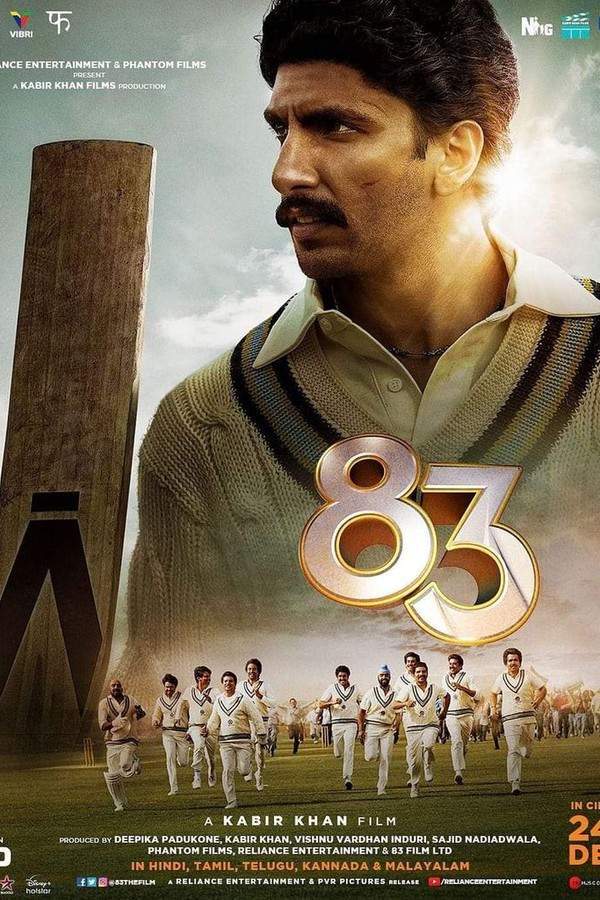
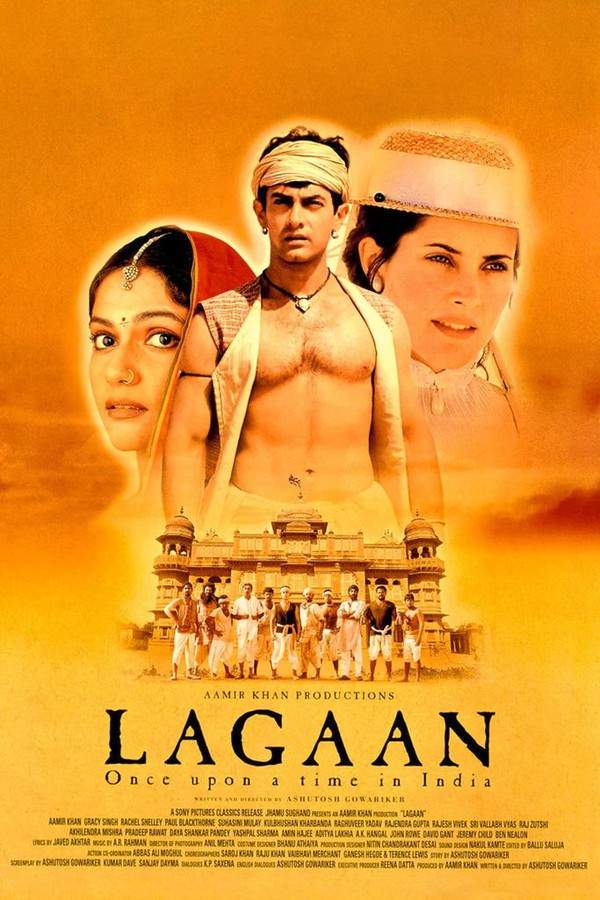
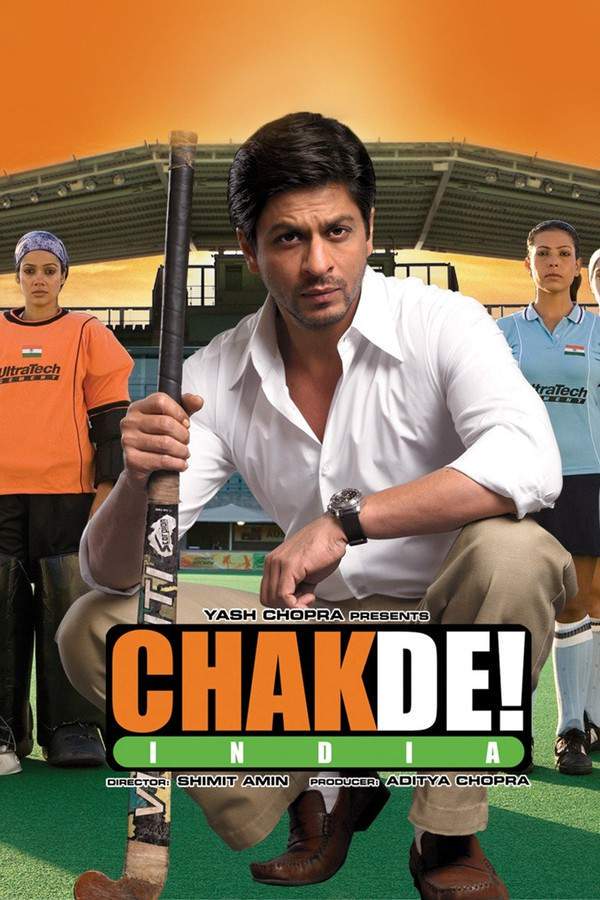
Featured on this page

What's After the Movie?
Not sure whether to stay after the credits? Find out!
Check out our other apps:

SAT Sphere
Build confidence for the Digital SAT.

Mori Atlas
Discover wild places worth protecting.

Luntero
Search smarter for a home in Amsterdam.

Plot Explained
Unravel movie endings and hidden clues.

Pokechamp
Dive into Pokémon data and battle logic.

Driving Theory
Get ready for your European theory test.

Movie Dust
Plan your next cinema trip with ease.

Musemap
Find art and culture as you travel.

Selkobase
Compare credentials before committing.

Local Manual
Turn an unfamiliar country into practical next steps.

Lernavi
Compare school systems before your next move.

GymRoam
Find a workout stop wherever your plans take you.
Explore Our Movie Platform
New Movie Releases (2026)
Famous Movie Actors
Top Film Production Studios
Movie Plot Summaries & Endings
Major Movie Awards & Winners
Best Concert Films & Music Documentaries
Movie Collections and Curated Lists
© 2026 What's After the Movie. All rights reserved.
Privacy Policy