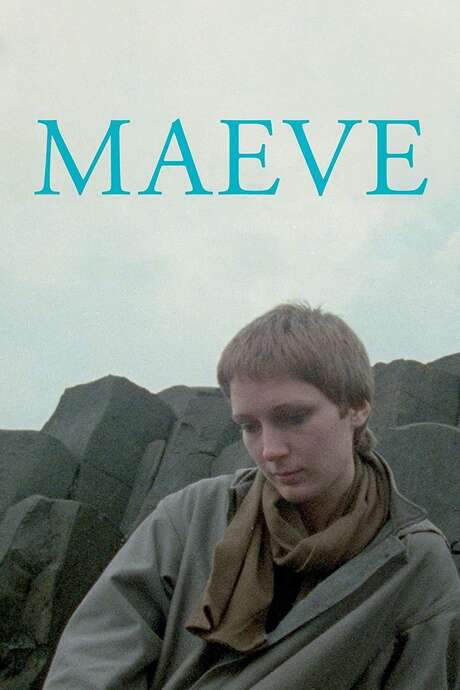



Where to Watch Maeve
See current US streaming, rental, and purchase options for Maeve (1981) via JustWatch.


Streaming availability powered by 
Maeve Plot Summary
Read the complete plot summary and ending explained for Maeve (1981). From turning points to emotional moments, uncover what really happened and why it matters.
In Belfast during the Troubles, a soldier knocks on Martin Sweeney’s door and warns him about a bomb. While waiting it out, the soldier writes to his daughter, Maeve, Mary Jackson who is at a party.
Maeve has just landed at the airport and boards a bus bound for Belfast. While on the bus, the film flashes back to a younger Maeve visiting her then-boyfriend, Liam Doyle, John Keegan. Shortly after getting off the bus, there is another flashback to Maeve confronting her sister Roisin, Bríd Brennan. Later that day, loyalist marches are happening on their street. As the family watch the marches on TV, something is thrown at and smashes their window. The flashback ends with the family moving out of the dominantly unionist street.
While Maeve is riding home in a taxi, they are stopped by soldiers because of an active bomb threat. There, she’s reunited with her parents, who are already waiting outside.
Roisin is stopped by soldiers while coming home from work. They question her and bring her home. By the fireplace, she tells Maeve the story of a sleepover during a friend’s birthday where a soldier walked into the room and got into bed between them, stating that he’s dying to have sex with one of them. The soldier left after they screamed.
In a flashback, Maeve and Liam walk into a pub. Maeve expresses desire to leave because her uncles, Joe and Colm, are also there. Joe buys them drinks and invites them to their table. He tells the story of when he and Colm buried a box of gelignite under a flowerbed in Martin’s house, an operation which landed Mark Mulholland as Martin a year in the Crumlin Road Gaol. As they’re laughing, Maeve gets up and says, “You did that to your own brother and he never told on you.” When Joe suggests that her mother, Eileen, might have informed on them, she states that her mother Trudy Kelly kept the family together while he was in prison. She smashes the glasses on the table and runs out, with Liam running after her. She tells him that she has to get away from Belfast.
Roisin tells Maeve a story about a masked man attempting to hijack the taxi she and Eileen were in. Roisin and the driver got out, but Eileen leapt at the man and berated him. The man lunged back. Two other men intervened and told them to get back in the taxi and drive away.
In a flashback, Maeve waits in the van while a man opens the van door and asks whether they came from the Free State in an accusing manner. The memory shifts again to Maeve and Liam on a hill, where they argue about how the past should be remembered, with Maeve insisting that his view excludes her and erases her presence.
Back home, Maeve tells Roisin she’s worried about her in case she ends up “giving in.” Roisin responds begrudgingly, to which Maeve tells her, “Women’s sexuality is so abused that it’s almost an act of liberation to turn yourself into a sex object.”
They go out for the night, joining up with two of Roisin’s friends. They get into a taxi with a drunk man already in it. He harasses Maeve while Roisin’s friends egg him on. The film flashbacks to Liam giving Maeve a visit in London. The two are now broken up. He confronts her about moving to London and not knowing what she’s doing, and she replies saying she has a right to not know what she’s doing.
Maeve, Roisin and Eileen go into a pub. Liam is also there, but they don’t interact. The women leave, laughing. As they’re walking home, a gunshot rings out in the distance, followed by automatic fire. They run down the road and stop at a brick wall. More gunshots ring out, and they drop down and sit, laughing.
Maeve and Eileen are at home talking. Eileen recounts her perspective of the time she saw Maeve off at the airport. She gets worked up when she reminds Maeve that she never looked back to say goodbye. The film flashbacks to Maeve in class at a convent. Later, she’s in a hospital bed talking to Roisin, who leaves when three nuns show up, demanding that Maeve explain herself. The scene fades out here. A scene of Maeve crying in the hospital bed is shown, and a woman comforts and sings to her.
Maeve walks out of a bookstore and runs into Liam. They have an argument about the aims of the Irish republican movement. She laments that the movement doesn’t include women’s rights in it. He sees her protestations as a hindrance to the movement.
Maeve, Roisin and Eileen are at the Giant’s Causeway. A man squats beside Maeve and starts talking to her. She leaves, and the man continues soliloquying.
Martin retells an instance where he was being chased by police forces and a man was forcing him to drive at gunpoint. The newspapers had falsely stated his van was being used as a getaway car. The film ends with him saying, “First time they got me into Castlereagh, I thought I’d break. See, I used to think these things would never happen to me. Even when they did. Cos you see, that’s the only way to go on. Aye. All the time I’m afear’d it is going to happen.”
Maeve Timeline
Follow the complete movie timeline of Maeve (1981) with every major event in chronological order. Great for understanding complex plots and story progression.
Bomb warning at Martin Sweeney's door
A soldier knocks on Martin Sweeney's door to warn him about a bomb on the street. While they wait, Martin writes a message to his daughter Maeve, who is at a party. The scene establishes the ever-present danger in Belfast and hints at a family trying to carry on amid threat.
Maeve heads to Belfast; memories surface on the bus
Maeve, newly landed, boards a bus bound for Belfast. On the ride, the film flashes back to Maeve as a younger woman visiting her boyfriend Liam Doyle, and they share an intimate moment. The present journey is braided with memories of her past.
Younger Maeve and Liam's closeness
The flashback shows Maeve visiting her boyfriend Liam Doyle, and the two share a tender, intimate moment. The memory underscores Maeve's emotional ties to the city before its divisions harden. Place: Liam's place
Maeve confronts the boy who harmed her sister
Shortly after the bus flashback, younger Maeve confronts a boy who hits her sister Roisin. The moment marks Maeve's protective stance amid a harsher world. It shows how violence intrudes on family life.
Loyalist marches; window smashed; family moves
Loyalist marches unfold on their street as the family watches on TV. A window is smashed by a thrown object, driving fear into the household. The incident prompts the family to abandon their dominantly unionist neighborhood.
Taxi ride halted by bomb threat; parents outside
Maeve rides home in a taxi when soldiers stop the vehicle due to an active bomb threat. She is reunited outside with her waiting parents, grounding the present in the danger around them. The moment emphasizes how daily life is punctured by violence.
Roisin questioned by soldiers; sleepover memory
Roisin is stopped by soldiers and brought home, where by the fireplace she recounts a disturbing sleepover in which a soldier intruded into bed with them. The memory shows how violence penetrates intimate spaces. Place: Roisin's home; Time: Present
Gelignite confession in the pub
In a flashback inside a pub, Joe and Colm’s past actions are revealed when they bury a box of gelignite under a flowerbed, a crime that lands Martin in Crumlin Road Gaol. Maeve decides she must get away from Belfast after hearing the confession. Place: Pub; Time: Flashback
Hijack memory; Eileen intervenes
Roisin tells of a masked man attempting to hijack a taxi; Eileen intervenes, leaping at the man while others pull him away. The scene shows women resisting danger in a hostile environment. Place: Taxi; Time: Present
Van wait and Free State accusation
A flashback shows a young Maeve in the van while Martin sells cakes, as a man challenges them about coming from the Free State and others accuse them. Martin drives off, trying to escape suspicion. Place: Van; Time: Flashback
Three soldiers; hill memory and memory debate
Three soldiers force Maeve and Roisin to jump; later, Maeve and Liam share a hill-top moment where they debate how they remember the past and whether it erases her. The scene juxtaposes collective memory with intimate fracture. Place: On a hill outside Belfast; Time: Present/Flashback
Home talk; fear of giving in; sexuality
Back home with Roisin, Maeve expresses fear that Roisin might 'give in' to the pressure around her. Maeve's provocative line about women's sexuality being an act of liberation reveals feminist tension within the family. Place: Maeve's home; Time: Present
London visit; confrontation about uncertain future
The memory of Liam visiting Maeve in London surfaces as they argue about moving there and Maeve's right to not have everything figured out. The scene deepens Maeve's struggle with belonging and choice. Place: London; Time: Flashback
Giants Causeway; a solitary encounter
At the Giant's Causeway, a man sits beside Maeve and talks, continuing the pattern of uneasy encounters that punctuate her journey. The scene underscores her search for agency amid historical forces. Place: Giant's Causeway; Time: Present
Final monologue: Castlereagh and fear
Martin recounts a brush with police and the false newspaper claim that his van was a getaway car. He ends with the grim line that fear never fully leaves him, encapsulating the film's meditation on endurance. Place: Martin's recollection; Time: Ending
Maeve Characters
Explore all characters from Maeve (1981). Get detailed profiles with their roles, arcs, and key relationships explained.
Maeve (Mary Jackson)
Maeve is a young Belfast woman navigating love, politics, and personal autonomy against the backdrop of the Troubles. She questions the aims of the republican movement and pushes back against male-dominated narratives. Her journey moves between urgent present-day moments and flashbacks to her youth and time in London.
Roisin (Brid Brennan)
Roisin is Maeve’s bold companion, fearless in confronting violence and injustice. She observes checkpoints and soldiers with defiance and wit, providing a counterpoint to Maeve’s reflective mood. Their bond anchors the film’s exploration of female solidarity.
Martin Sweeney
Martin is Maeve’s uncle, a figure shaped by family loyalty and the risks of the past. His recollections reveal gelignite plots and prison time, illustrating how the Troubles entangled generations in cycles of crime and consequence.
Eileen
Eileen is the mother who holds the family together amid upheaval. Her perspective provides emotional ballast and a window into how mothers cope with violence surrounding them. She anchors the film in intimate costs of political conflict.
Liam Doyle
Liam is Maeve’s former lover and a voice from the republican movement who clashes with Maeve over the movement’s priorities. Their relationship tests Maeve’s commitment to political goals and personal freedom.
Joe Sweeney
Joe is a witty, impulsive uncle whose stories of the past reveal how kinship persists despite violence. His actions highlight the tension between loyalty and moral accountability.
Colm Sweeney
Colm is Maeve’s other uncle, part of the family’s complicated history with the conflict. His presence underscores the generational impact of violence and the burden of secrets.
Young Maeve
Flashbacks show a younger Maeve confronting the era’s limits and her own budding independence. These moments illuminate how early experiences shape her future choices.
Young Roisin
Flashbacks present Roisin as a child encountering the era’s tensions, hinting at the long-lasting effects of communal violence on friendships and family.
Maeve Settings
Learn where and when Maeve (1981) takes place. Explore the film’s settings, era, and how they shape the narrative.
Time period
The Troubles, late 20th century
The story unfolds during the decades of sectarian conflict in Northern Ireland, when bomb threats, soldiers on the streets, and checkpoints interrupted daily life. Flashbacks reveal Maeve’s youth and the choices that shaped her present. The setting captures the era’s gender and political tensions, including limited space for women’s voices within the movement.
Location
Belfast, Northern Ireland, Giant's Causeway, Crumlin Road Gaol
Set in Belfast amid the Troubles, the city is depicted as a divided, bomb-scarred landscape where families face marches and threats. Key locations include a family home on a predominantly unionist street, the airport, a taxi ride, and a visit to the Giant's Causeway. The film also references the Crumlin Road Gaol as a symbol of political imprisonment and the era's collective memory.
Maeve Themes
Discover the main themes in Maeve (1981). Analyze the deeper meanings, emotional layers, and social commentary behind the film.
⚔️
Conflict
The Troubles provide the backdrop for fear, violence, and disruption. Soldiers, bomb threats, and protests punctuate daily life and influence family decisions. The narrative shows how political violenceSeeps into intimate spaces, shaping relationships and futures.
🕯️
Memory
Flashbacks reveal past choices and loyalties, illustrating how trauma is remembered and transmitted. The characters wrestle with competing recollections that shape identity and present actions. Memory serves as a bridge between Maeve’s youth and her current struggles.
💃
Feminism
Maeve challenges the male-dominated aims of the movement, arguing for women’s rights and autonomy. The film treats sexuality as a form of liberation and resistance to objectification. Through Maeve and Roisin, it questions whether true liberation can exist within a political framework that marginalizes women's voices.

Coming soon on iOS and Android
The Plot Explained Mobile App
From blockbusters to hidden gems — dive into movie stories anytime, anywhere. Save your favorites, discover plots faster, and never miss a twist again.
Sign up to be the first to know when we launch. Your email stays private — always.
Explore the mobile appMaeve Spoiler-Free Summary
Discover the spoiler-free summary of Maeve (1981). Get a concise overview without any spoilers.
In a city still echoing the uneasy lull of the Troubles, a quiet plane lands and a lone figure steps onto the tarmac, beginning a homecoming that feels both ordinary and charged with history. Maeve returns to Belfast after years away, and the familiar streets immediately awaken fragments of a past that never quite settled. The film paints the capital with a muted palette—rain‑slick cobblestones, low‑lit rooms, and the distant hum of protest—that mirrors the internal landscape of someone trying to reconcile who she was with who she might become.
The arrival sets off a quiet ripple through a close‑knit family, each member carrying their own versions of the city’s memory. Roisin, her sister, embodies the stubborn resilience of those who stayed, while their mother, Eileen, offers a steadier, if weary, anchor. Through subtle glances and brief conversations, the narrative hints at long‑held secrets and the subtle ways loyalty and love have been shaped by a world where political lines often cut through private lives. Even the briefest exchange carries weight, suggesting that the personal and the political have always been tangled threads in this household.
Stylistically, the film moves fluidly between present moments and lyrical flashbacks, allowing the viewer to drift through time as naturally as Maeve does. Everyday scenes—a bus ride, a shared taxi, a bustling pub—become windows onto larger questions about identity, memory, and the role of women in a society still finding its voice. The tone is intimate yet expansive, inviting contemplation without ever spelling out the specifics of past conflicts, and it treats the city itself as a character that both shelters and challenges its inhabitants.
At its core, the story follows Maeve as she navigates the delicate balance between revisiting old relationships—particularly those with her sister, her mother, and a former lover, Liam—and confronting the lingering shadows of a city in transition. The film promises a thoughtful exploration of how returning home can spark both reconciliation and unease, leaving the audience to wonder which parts of the past will stay hidden and which will finally surface.
Movies with Similar Twists and Themes
Uncover films that echo the narrative beats, emotional arcs, or dramatic twists of the one you're exploring. These recommendations are handpicked based on story depth, thematic resonance, and spoiler-worthy moments — perfect for fans who crave more of the same intrigue.




Featured on this page

What's After the Movie?
Not sure whether to stay after the credits? Find out!
Check out our other apps:

SAT Sphere
Build confidence for the Digital SAT.

Mori Atlas
Discover wild places worth protecting.

Luntero
Search smarter for a home in Amsterdam.

Plot Explained
Unravel movie endings and hidden clues.

Pokechamp
Dive into Pokémon data and battle logic.

Driving Theory
Get ready for your European theory test.

Movie Dust
Plan your next cinema trip with ease.

Musemap
Find art and culture as you travel.

Selkobase
Compare credentials before committing.

Local Manual
Turn an unfamiliar country into practical next steps.

Lernavi
Compare school systems before your next move.

GymRoam
Find a workout stop wherever your plans take you.
Explore Our Movie Platform
New Movie Releases (2026)
Famous Movie Actors
Top Film Production Studios
Movie Plot Summaries & Endings
Major Movie Awards & Winners
Best Concert Films & Music Documentaries
Movie Collections and Curated Lists
© 2026 What's After the Movie. All rights reserved.
Privacy Policy