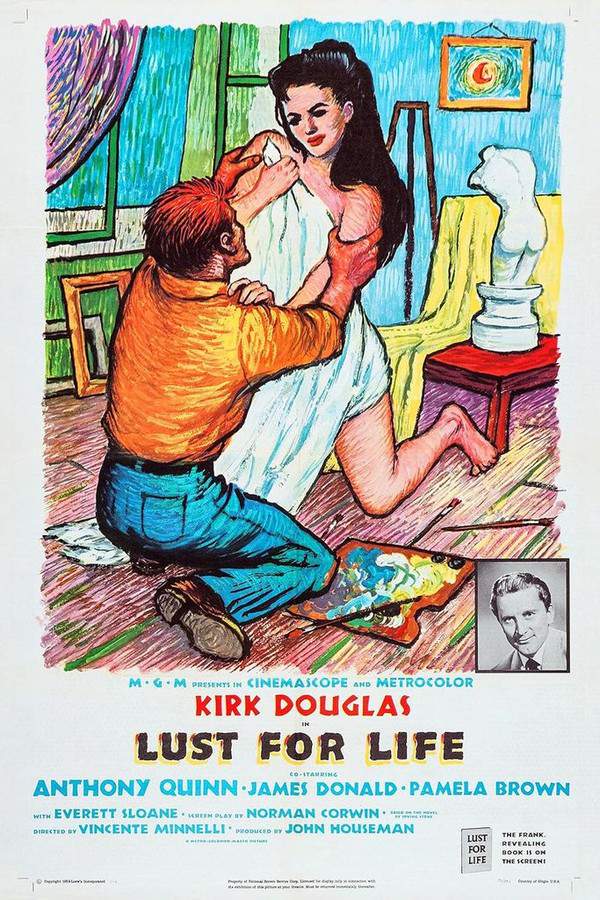
Lust for Life 1956

Directed by
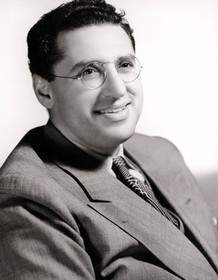
George Cukor
Made by

Metro-Goldwyn-Mayer (MGM)
Where to Watch Lust for Life
See current US streaming, rental, and purchase options for Lust for Life (1956) via JustWatch.







Lust for Life Plot Summary
Read the complete plot summary and ending explained for Lust for Life (1956). From turning points to emotional moments, uncover what really happened and why it matters.
Vincent [Kirk Douglas] has trained to be a minister, like his father, but the church authorities deem him unsuitable. They assign him to a very poor mining community, where the harsh conditions and the miners’ daily grind pull at his conscience and he begins to sketch their world, choosing to tell their stories with his drawings rather than through sermons. The church leaders frown on his growing social activism and his care for the disadvantaged, marking a rift between his ideals and institutional doctrine.
He returns home to his father’s house, where a woman he obsessively loves—his cousin—rejects him because he cannot support himself. He follows her to her family home and, in a fervent display of devotion, places his hand over a candle flame, only to learn that she’s disgusted by him and wants nothing to do with him again.
He shifts toward art, and his cousin Anton Mauve [Anthony Quinn] steps in with paint and supplies, encouraging him to paint. His brother Theo van Gogh [James Donald] provides steadfast financial and moral support, becoming a crucial lifeline as Vincent grapples with poverty and pursuit of a true artistic voice. He also experiences a difficult chapter with a prostitute who leaves him, a reminder of how far he is from conventional success.
Yet his passion for painting only grows stronger, and he pursues his art with a fierce, sometimes painful, insistence on capturing what he sees, even as his inner vision feels elusive and imperfect. After his father’s death, he travels to Paris with Theo, where he encounters the world of the Impressionists and discovers new possibilities for color, light, and form.
The bond with Theo proves complex, and Vincent eventually heads to sunny Arles, hoping to forge a more independent path. There, Paul Gauguin (a fellow artist he met in Paris) joins him for a period, and life seems briefly bright and productive. But the intensity of Vincent’s obsession proves too much for Gauguin, and their collaboration ends in conflict, prompting Gauguin’s departure. In the aftermath, Vincent’s anguish erupts as he cuts off his own ear.
Seizures and instability follow, and he voluntarily suspends himself in a mental institution where he is allowed to paint. He signs himself out and, with Theo’s support, returns to a rural landscape to resume his work. While painting cornfields, he is haunted by the presence of the crows and the stubborn ache of not being able to render his vision exactly as he sees it. In a final, desperate moment, he pulls a revolver and shoots himself, dying in his bed a few days later.
In this sweeping chronicle, the film follows a life driven by a relentless search for truth in color and light, a struggle between spiritual duty and artistic impulse, and a love of humanity that persists even amid poverty, rejection, and despair. The portrayal captures the tenderness of his relationships, the frustration of his creative process, and the fragile arc of a genius who remains compelled to paint what the world looks like to him, until the last breath. [Kirk Douglas]
Lust for Life Timeline
Follow the complete movie timeline of Lust for Life (1956) with every major event in chronological order. Great for understanding complex plots and story progression.
Ministerial training thwarted by church authorities
Vincent trains to follow in his father’s footsteps as a minister, but church authorities deem him unsuitable for clerical work. They refuse to appoint him to any official position and instead send him to a very poor mining community. This rejection pushes him toward a broader, more compassionate calling beyond the pulpit.
Moved to mining community, first immersion in miners' plight
He moves into the mining community and becomes deeply absorbed in the miners’ daily life. He witnesses their hardship firsthand and begins sketching their routines and struggles. The experience marks the start of his commitment to depicting ordinary people's plight.
Return home; cousin rejects him due to poverty
After some time away, he returns to his father’s house seeking stability. A woman he loves, his cousin, rejects him because he cannot support himself financially. In a desperate gesture of devotion, he places his hand over a candle flame, hoping to prove his commitment, but she remains unmoved and refuses to see him again.
Turns to drawing; Mauve supplies paints
He turns to drawing as a means of expression and solace. Anton Mauve provides paints and art materials and encourages him to paint, offering practical support and belief in his talent. This encouragement becomes a turning point toward serious artistic work.
Theo Van Gogh's financial and moral support
Vincent's brother Theo van Gogh offers steady financial and moral support, helping him to pursue painting despite hardship. The brothers' partnership sustains his practice and keeps him attached to the possibility of a career. This familial backing is crucial to his ongoing artistic development.
Relationship with a prostitute ends due to poverty
He briefly becomes involved with a prostitute, seeking companionship amid poverty. The relationship dissolves when money runs out, underscoring his precarious finances. These experiences deepen his emotional vulnerability and sense of isolation.
Full commitment to painting; struggle to capture reality
He dedicates himself to painting, but struggles to render on canvas what he actually sees. The process is meticulous and fraught with frustration, yet it also fuels his relentless pursuit of light and color. He labors at the easel, hoping to capture truth beyond mere likeness.
Father's death; moves to Paris with Theo; discovers Impressionists
After their father's death, he travels to Paris with Theo, where he encounters the Impressionists and a broader avant-garde. The new milieu broadens his artistic horizons and influences his technique. Theo continues to support him as he absorbs these influences.
Gauguin joins in Paris; tensions rise; Gauguin leaves; ear-cutting
In Paris, Paul Gauguin joins him for a spell, and their collaboration brings vitality to his work. The two clash, and Gauguin eventually leaves for good. Following the fallout, Vincent commits a traumatic act by severing his own ear.
Seizures and institutionalization
A mental collapse leads to seizures, and he voluntarily admits himself to a mental institution where he is allowed to paint. The sterile setting provides a new, constrained space for his creative expression. This period contrasts with his previous bursts of inspiration.
Return to rural landscape with Theo's help
He signs himself out and returns to a rural area with Theo's assistance to resume painting. The rural setting offers fresh light and forms that inspire his work anew. He continues to create landscapes, moving away from city subjects.
Despair over perception; suicide attempt and death
While painting cornfields, he is tormented by the sight of crows and the inability to translate what he sees to canvas. In a moment of despair, he pulls out a revolver and shoots himself. He dies in bed a few days later, marking the end of his turbulent life.
Lust for Life Characters
Explore all characters from Lust for Life (1956). Get detailed profiles with their roles, arcs, and key relationships explained.
Vincent van Gogh (Kirk Douglas)
An intensely passionate artist whose initial religious zeal evolves into a radical, socially conscious striving to paint what he sees. He endures poverty and social rejection while pursuing a deeper truth through art. His unwavering commitment strains every relationship and pushes him toward extreme acts in pursuit of expression.
Theo van Gogh (James Donald)
Vincent’s loyal brother who provides practical and moral support, acting as a steady anchor amid his brother’s turmoil. He funds and encourages Vincent’s art, sustaining him through failed starts and volatile phases. The relationship highlights family bonds amid creative upheaval.
Paul Gauguin (Anthony Quinn)
A fellow artist whose arrival in Paris and Arles matches Vincent’s surge of inspiration and volatility. Their friendship fuels ambitious painting yet also sparks clashes over art and temperament. Gauguin’s departure marks a turning point that intensifies Vincent’s instability.
Anton Mauve (Niall MacGinnis)
Vincent’s cousin and early mentor who provides paint and encouragement. His support helps kickstart Vincent’s painting, offering a bridge from poverty to a fledgling artistic practice. The relationship underscores the role of family ties in nurturing talent.
Kee Vos-Stricker
A cousin whom Vincent ardently loves but who rejects him due to his inability to support himself. This rejection deepens his emotional isolation and fuels his drive to prove himself through art.
Lust for Life Settings
Learn where and when Lust for Life (1956) takes place. Explore the film’s settings, era, and how they shape the narrative.
Time period
Late 19th century
Set in the late 19th century, the film traces Vincent’s evolution from a conflicted clerical aspirant to a revolutionary painter. It spans the 1880s–1890s, a period of intense artistic change and social upheaval in Europe. The era’s religious debates, poverty, and burgeoning art movements shape his volatile path.
Location
Netherlands, Paris, Arles, Rural countryside
The story moves from a Dutch mining community where Vincent is first positioned to address social hardship, to the artistic circles of Paris, and finally to the sunlit countryside of Arles that becomes his open-air studio. It also touches on rural areas where he attempts to translate his vision onto canvas. These varied settings reflect a life split between struggle, expatriate discovery, and the headlong pursuit of painting.
Lust for Life Themes
Discover the main themes in Lust for Life (1956). Analyze the deeper meanings, emotional layers, and social commentary behind the film.
🎨
Obsession
Vincent’s relentless drive to render what he sees drives him into isolation and conflict with authority. His art becomes both lifeline and torment, blurring the line between genius and madness. Relationships falter as the need to paint overwhelms practical concerns. The film centers on how artistic fixation reshapes life and fate.
💸
Poverty
Financial hardship constrains Vincent, forcing him to rely on others while he pursues painting. The scarcity of money amplifies his emotional volatility and tests loyalties within his circle. Poverty is shown not just as lack of funds, but as a catalyst for intense dedication to art. It frames how survival and creativity tug at the same thread.
🧠
Mental Health
The narrative highlights Vincent’s seizures, erratic behavior, and perceived detachment from reality. His periods of clarity coexist with episodes of distress, culminating in institutionalization and a painful struggle for autonomy. The film portrays mental strain as both a source of artistic insight and profound human suffering.

Coming soon on iOS and Android
The Plot Explained Mobile App
From blockbusters to hidden gems — dive into movie stories anytime, anywhere. Save your favorites, discover plots faster, and never miss a twist again.
Sign up to be the first to know when we launch. Your email stays private — always.
Explore the mobile appLust for Life Spoiler-Free Summary
Discover the spoiler-free summary of Lust for Life (1956). Get a concise overview without any spoilers.
In a richly painted portrait of 19th‑century Europe, the film follows a man torn between worship and creation. Born into a devout family, Vincent initially trains for the ministry, only to find the rigid expectations of the church at odds with his own yearning to give voice to the struggling souls he encounters. The stark world of a mining community becomes his first canvas, where the grit of daily labor fuels a restless urge to translate suffering into line and shade.
As his spiritual doubts deepen, Vincent discovers a different kind of calling in the act of painting itself. Guided by the steady hand of his brother Theo, whose unwavering support provides both financial lifeline and emotional anchor, and encouraged by the seasoned brushwork of Anton Mauve, he begins to chase a vision that blurs the line between reality and inner sensation. The film captures his relentless pursuit of color and light, framing his art as a desperate dialogue with a world that both inspires and alienates him.
A pivotal turn arrives when he steps into the bustling salons of Paris, where the avant‑garde challenges his preconceptions and expands his palette. There he meets the fierce and charismatic Paul Gauguin, whose fiery temperament both ignites and destabilizes Vincent’s creative momentum. Their volatile partnership crackles with intensity, hinting at a mentorship that will shape the very core of his artistic identity while testing the limits of his fragile psyche.
Through sweeping cinematography and a throbbing, melancholic score, the story immerses viewers in the turmoil of a genius forever chasing the perfect hue. It paints a world where brilliance and anguish coexist, inviting the audience to feel the pulse of an artist whose quest for truth in color becomes a haunting, almost tangible presence that lingers long after the final brushstroke.
Featured on this page

What's After the Movie?
Not sure whether to stay after the credits? Find out!
Check out our other apps:

SAT Sphere
Build confidence for the Digital SAT.

Mori Atlas
Discover wild places worth protecting.

Luntero
Search smarter for a home in Amsterdam.

Plot Explained
Unravel movie endings and hidden clues.

Pokechamp
Dive into Pokémon data and battle logic.

Driving Theory
Get ready for your European theory test.

Movie Dust
Plan your next cinema trip with ease.

Musemap
Find art and culture as you travel.

Selkobase
Compare credentials before committing.

Local Manual
Turn an unfamiliar country into practical next steps.

Lernavi
Compare school systems before your next move.

GymRoam
Find a workout stop wherever your plans take you.
Explore Our Movie Platform
New Movie Releases (2026)
Famous Movie Actors
Top Film Production Studios
Movie Plot Summaries & Endings
Major Movie Awards & Winners
Best Concert Films & Music Documentaries
Movie Collections and Curated Lists
© 2026 What's After the Movie. All rights reserved.
Privacy Policy