
Look Who’s Back 2015

Directed by

David Wnendt
Made by
Constantin Film
Look Who’s Back Plot Summary
Read the complete plot summary and ending explained for Look Who’s Back (2015). From turning points to emotional moments, uncover what really happened and why it matters.
In 2011, Adolf Hitler wakes up in a vacant lot in Berlin, the garden outside the bunker where his body was burnt, with no memory of what happened after 1945. Homeless and destitute, he interprets every sight and sound through a Nazi lens, drawing sharp, misleading conclusions about the world around him. For example, he believes that Turks living in Germany prove that Karl Dönitz persuaded Turkey to join the Axis, and he even thinks that Wikipedia is named for Wikinger (Vikings).
On the street, he crosses paths with a Shop Owner, Lars Rudolph, and the chance encounter marks the first time people start to encounter him as a recognizable figure. Yet those around him refuse to accept that he is the real thing; they mistake him for a comedian or a method actor rather than a resurrected historical figure. This misunderstanding fuels the stark irony at the film’s core: a man who embodies the worst of history becomes a modern-day sensation simply by speaking his mind in a world that does not believe him.
Hitler’s unconventional ascent accelerates when he appears on a variety television show called Whoa, dude!, where he breaks from the script and broadcasts his radical views to a widening audience. The responses are swift and powerful: videos of his impassioned rants flood the internet, turning him into a new kind of celebrity—one who thrives on controversy and attention rather than on the past’s reckoning. The public spectacle is amplified by the media machine around him, and even the serious press can’t help but react in astonishment.
Meanwhile, institutions that would ordinarily condemn such a figure find themselves pressed into an uneasy corner. The newspaper Bild fights to discredit him, but a dramatic legal twist forces the publication to praise him instead, underscoring the bizarre dynamics of fame in the digital era. The tension between notoriety and memory intensifies as he navigates a society that recognizes him without accepting his reality, feeding the satire that drives the film forward.
As his influence grows, he is confronted by Neo-Nazis who mistake his public persona for mockery rather than an authentic echo of history. They attack him, not realizing that they are confronting the very man whom history once tried to erase. The plot uses these clashes to probe how power shifts when a figure from the darkest chapters of the past becomes a symbol in the present’s media-saturated landscape.
In the end, Hitler leverages the peculiar fame he has acquired to re-enter the political arena, a provocative turn that asks stubborn questions about resonance, accountability, and the price of notoriety. The film closes with a provocative reflection on how fragile public memory can be when amplified by modern platforms, and it leaves viewers to consider what it means for history to collide with the spotlight.
Look Who’s Back Timeline
Follow the complete movie timeline of Look Who’s Back (2015) with every major event in chronological order. Great for understanding complex plots and story progression.
Hitler wakes up in 2011 Berlin
Adolf Hitler awakens in a vacant Berlin lot with no memory of his 1945 demise. He is homeless and must navigate a city that has moved on without him. This surreal awakening kicks off his improbable re-entry into history.
He projects a Nazi lens onto modern life
He instinctively reads modern life through his old Nazi worldview, misinterpreting everyday events. He believes Turks in Germany indicate an Axis alliance and he even claims that Wikipedia is named Wikinger. His skewed perspective shows how out of touch he remains with the present.
People recognize him but doubt his identity
People recognize a striking resemblance but refuse to believe he is the real Hitler. Some dismiss him as a comedian or a method actor playing a part. The disbelief creates a tension that fuels both curiosity and fear in the streets.
Appearances on Whoa, Dude! TV show
He appears on a variety TV show called Whoa, Dude!, going off script to broadcast his views. The performance captivates audiences and immediately thrusts him into the spotlight. It marks his first major exposure to a wide audience.
Rants go viral on YouTube
Videos of his angry rants explode on YouTube, turning him into a modern celebrity. The clips spread rapidly, drawing followers and critics alike and forcing traditional media to respond. His online fame redefines what it means to be a historical figure in the digital age.
Bild's legal salvo backfires
Bild, Germany's leading tabloid, hatches a plan to take him down with sensational coverage. A legal battle ensues, and to everyone's surprise the lawsuit backfires. The paper is forced to praise him, highlighting the odd power dynamics of media in the modern era.
Neo-Nazis attack him
Neo-Nazis attack him on the streets, misreading his popularity as mockery of Hitler's memory. He survives the assault while the controversy intensifies. The incident underscores how fame can attract both adulation and violence from extremist factions.
Celebrity status solidifies
Despite the backlash, his popularity grows and he becomes a performing celebrity with mass appeal. He capitalizes on the attention, appearing on more shows and interviews. The transformation from homeless destitution to fame is abrupt but undeniable.
Opens door to politics
The notoriety begins to attract political interest, and he starts exploring a political comeback using his platform. His influence hinges on attention rather than traditional policy discourse. The path to formal politics seems more about presence than program.
Public reaction and media framing
Public opinion remains deeply divided, with some drawn to his magnetic persona and others condemning the exploitation of a painful past. Media framing continues to shape how people perceive his political potential. The cultural conversation around him grows ever more complex.
End result: re-entry into politics
In the end, he uses his popularity to re-enter politics. The film closes on him stepping back into public life as a political figure, not through a moral awakening but by weaponizing modern media and public fascination. His unlikely journey from exile to influence completes its arc.
Look Who’s Back Characters
Explore all characters from Look Who’s Back (2015). Get detailed profiles with their roles, arcs, and key relationships explained.
Adolf Hitler (Oliver Masucci)
A resurrected Hitler wakes up in a 2011 Berlin setting and interprets modern society through a Nazi lens. He is shockingly charismatic and opportunistic, quickly leveraging media appearances to rebuild influence. He navigates contemporary culture with a mix of ignorance and calculation, turning public curiosity into real celebrity.
Joko Winterscheidt
A popular TV host who encounters Hitler on the Whoa, Dude! show. He becomes part of the rising spectacle around Hitler, contributing to the satire of modern media. His interactions help propel Hitler’s public image and test the boundaries of entertainment and politics.
Klaas Heufer-Umlauf
As himself, Klaas participates in the media spectacle surrounding Hitler’s return to visibility. His involvement underscores the film’s meta-commentary on television and celebrity culture. He contributes to the satire by navigating the ethical lines of entertainment and politics.
Shop Owner (Lars Rudolph)
A Berlin shop owner who encounters Hitler early on, representing ordinary citizens reacting to the improbable return. He becomes a grounded counterpoint to the spectacle, illustrating everyday skepticism and practicality in the face of absurd revival.
Mancello (Michael Ostrowski)
A media-connected ally who helps Hitler navigate the modern media landscape. He acts as a conduit between the revived figure and contemporary pop culture, contributing to the rise of Hitler’s notoriety.
Bild CEO (Christian Harting)
Represents the press establishment, illustrating how media power coolly manipulates narratives. The character embodies the satirical take on how a major newspaper can influence public opinion and political outcomes.
Neo-Nazi #1 (Aaron Hildebrandt)
An extremist figure who embodies the ongoing threat of revived Nazism. He clashes with Hitler and serves as a foil that exposes the dangers of militant nostalgia within contemporary society.
Look Who’s Back Settings
Learn where and when Look Who’s Back (2015) takes place. Explore the film’s settings, era, and how they shape the narrative.
Time period
2011
The events take place in 2011, placing a resurrected Hitler into the contemporary German media landscape. The era is defined by smartphones, YouTube virality, and 24/7 news cycles that shape public perception. This time frame contrasts starkly with Hitler's 1940s worldview, highlighting how history interacts with modern technology.
Location
Berlin, Germany
Most of the action unfolds in Berlin, spanning streets, vacant lots, and media venues. The opening places Hitler in a Berlin vacant lot near the site of his supposed burial, anchoring the story in the city. The urban backdrop—cafés, billboards, and TV studios—frames his misreadings of modern German life.
Look Who’s Back Themes
Discover the main themes in Look Who’s Back (2015). Analyze the deeper meanings, emotional layers, and social commentary behind the film.
🔥
Power
Hitler's sudden fame reveals how charisma and media can translate into political influence in a modern democracy. His ability to mobilize crowds demonstrates the seductive power of spectacle over substance. The film critiques how audiences may be drawn to shocking personas, blurring lines between entertainment and politics. It shows the dangers of demagoguery re-emerging under the cover of satire and ratings.
🗞️
Memory
The public treats the resurrected figure as a performance or joke rather than a historical threat. Memory becomes malleable as media frames the figure for ratings. The film interrogates how German memory negotiates painful past with present-day media culture. It invites viewers to reflect on how history is consumed.
🎬
Celebrity & Satire
Reality TV, talk shows, and viral videos propel a controversial persona to influence political life. The film uses satire to expose the complicity of entertainment in shaping political narratives. It questions whether fame can legitimize harmful ideas. Hitler's ascent reveals the blurred boundary between entertainment and political life.

Coming soon on iOS and Android
The Plot Explained Mobile App
From blockbusters to hidden gems — dive into movie stories anytime, anywhere. Save your favorites, discover plots faster, and never miss a twist again.
Sign up to be the first to know when we launch. Your email stays private — always.
Explore the mobile appLook Who’s Back Spoiler-Free Summary
Discover the spoiler-free summary of Look Who’s Back (2015). Get a concise overview without any spoilers.
In a bewilderingly ordinary Berlin of the early 2010s, an impossible miracle occurs: a man who appears to be the notorious dictator Adolf Hitler awakens amidst the remnants of his wartime bunker. The city, alive with bustling cafés, traffic lights, and the constant hum of smartphones, is a far cry from the world he once ruled. Yet the streets are full of strangers who recognize him instantly, though no one dares to label him for what history remembers. Instead, they interpret his sudden presence through the lens of contemporary culture, treating him as an eccentric performer or a provocative artist.
The film follows his disorienting pilgrimage through modern life, where every billboard, headline, and online search becomes a puzzle to solve with a mindset forged in the 1940s. He mistakes the diversity of the capital for geopolitical alliances, misreads the purpose of Wikipedia, and interprets everyday encounters as extensions of his old ideology. His blunt, anachronistic commentary, delivered with unsettling conviction, catches the attention of a popular variety show. When he steps onto the stage and veers wildly off‑script, his raw monologues explode across social media, turning him into an instant internet sensation.
Against a backdrop of bright neon signs, frantic newsrooms, and the relentless churn of viral content, the story balances dark satire with a bewildering sense of absurdity. The tone is sharply comedic yet unsettling, inviting viewers to watch a historical nightmare colliding with the relentless appetite of modern fame. As audiences grapple with the surreal spectacle of the past confronting the present, the film probes how quickly society can elevate even the most controversial figure into a celebrity, leaving the line between mockery and reverence deliciously ambiguous.
Movies with Similar Twists and Themes
Uncover films that echo the narrative beats, emotional arcs, or dramatic twists of the one you're exploring. These recommendations are handpicked based on story depth, thematic resonance, and spoiler-worthy moments — perfect for fans who crave more of the same intrigue.
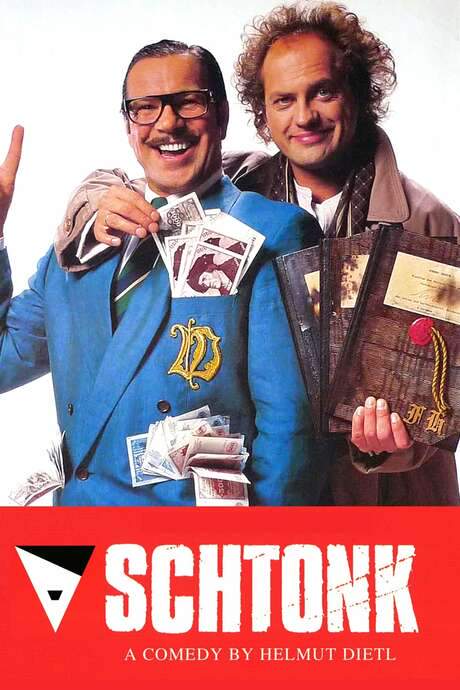
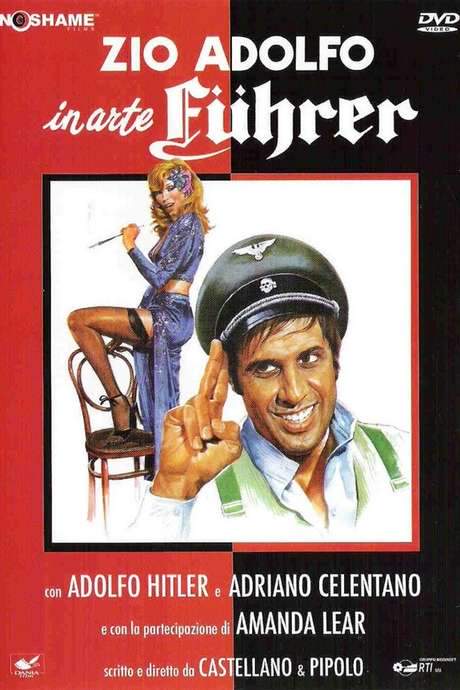


Featured on this page

What's After the Movie?
Not sure whether to stay after the credits? Find out!
Check out our other apps:

SAT Sphere
Build confidence for the Digital SAT.

Mori Atlas
Discover wild places worth protecting.

Luntero
Search smarter for a home in Amsterdam.

Plot Explained
Unravel movie endings and hidden clues.

Pokechamp
Dive into Pokémon data and battle logic.

Driving Theory
Get ready for your European theory test.

Movie Dust
Plan your next cinema trip with ease.

Musemap
Find art and culture as you travel.

Selkobase
Compare credentials before committing.

Local Manual
Turn an unfamiliar country into practical next steps.

Lernavi
Compare school systems before your next move.

GymRoam
Find a workout stop wherever your plans take you.
Explore Our Movie Platform
New Movie Releases (2026)
Famous Movie Actors
Top Film Production Studios
Movie Plot Summaries & Endings
Major Movie Awards & Winners
Best Concert Films & Music Documentaries
Movie Collections and Curated Lists
© 2026 What's After the Movie. All rights reserved.
Privacy Policy