What Is Lili About?
The premise of Lili in 291 words, with nothing given away. The full story follows below.
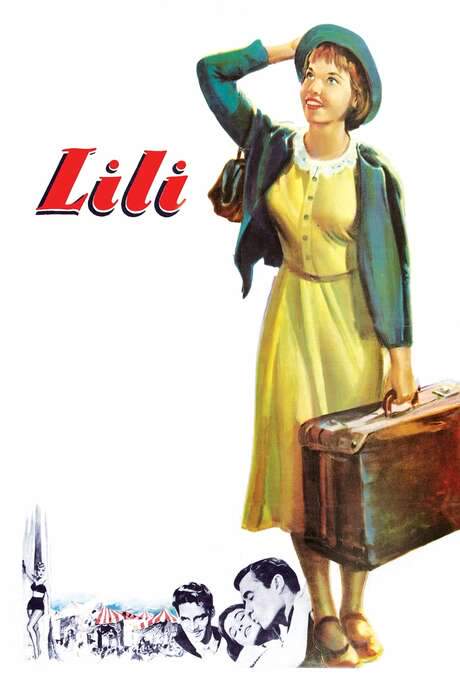
In a sleepy provincial town, a wide‑eyed country girl named Lili finds herself adrift after a hopeful search turns up empty. The streets are lined with weathered stalls and the distant echo of distant trumpets, hinting at a world that moves to the cadence of itinerant performers. When a suave, silver‑tongued magician—Marc, known on stage as Marcus the Magnificent—steps in to rescue her from an uncomfortable encounter, she is instantly drawn into the glittering, slightly off‑kilter realm of the traveling circus that has rolled into town.
The circus itself is a kaleidoscope of color and curiosity: tented arenas where the ordinary gives way to the extraordinary, and behind the curtains, a troupe of puppeteers breathe life into wooden characters that seem to speak directly to the heart. Lili discovers an unexpected confidante in a lively band of puppets—a brash boy, a sly fox, a vain ballerina, and a gentle giant—while remaining blissfully unaware of the hands that animate them. Her natural ease with these silent partners catches the attention of the audience, and soon the troupe sees in her a fresh spark that could revitalize their act.
As the circus staff extend an invitation for her to join their performance, Lili stands at a crossroads between the familiar safety of her past and the alluring promise of a new, performative life. The atmosphere is tinged with a dreamy optimism, yet undercurrents of longing and uncertainty linger, hinting that the bright lights of the big top may not simply be an escape but a test of what truly satisfies her heart’s desire. The film balances whimsical spectacle with a tender exploration of youthful yearning, inviting viewers to wonder whether the world of the circus can become a home—or merely a dazzling illusion.
What Happens in Lili?
The complete story of Lili, from the first scene to the last, in 643 words (about 3 minutes). Spoilers throughout. Names in the text link to 5 cast member pages.
Spoilers ahead
Naive country girl Lili Daurier arrives in a provincial town hoping to locate an old friend of her late father, only to discover that he has died. A local shopkeeper offers her employment, then tries to take advantage of her. She is rescued by a handsome, smooth-talking carnival magician, Marc, whose stage name is Marcus the Magnificent. Lili is infatuated with him and follows him to the carnival, where on learning that she is 16, he helps her get a job as a waitress. Lili is fired on her first night when she spends her time watching the magic act instead of waiting tables. When Lili consults the magician for advice, he tells her to go back to where she came from. Homeless and heartbroken, she contemplates suicide, unaware that she is being watched by the carnival’s puppeteer Paul Berthalet. He strikes up a conversation with her through his puppets—a brash red-haired boy named Carrot Top, a sly fox, Reynardo, a vain ballerina, Marguerite, and a cowardly giant, Golo. Soon, a large group of carnival workers is enthralled watching Lili’s interaction with the puppets, as she is seemingly unaware that there is a puppeteer behind the curtain. Afterwards, Paul and his partner Jacquot offer Lili a job in the act, talking with the puppets. She accepts, and her natural manner of interacting with the puppets becomes the most valuable part of the act.
Paul was once a well-known dancer, but suffered a leg injury in World War II. He regards the puppet show as far inferior to his old career, which embittered him. Lili refers to him as the Angry Man. Although he falls in love with Lili, he can only express his feelings through the puppets. Fearing rejection due to his physical impairment, he keeps his distance by being unpleasant to her. Lili continues to dream about the handsome magician, wishing to replace his assistant Rosalie.
Soon, Marc receives an offer to perform at the local casino and decides to leave the carnival, to the joy of Rosalie, who announces to everyone that she is his wife. Lili is heartbroken and innocently invites Marc to her trailer. His lecherous plans are interrupted by Paul, and he leaves. When Lili finds Marc’s wedding ring in the seat cushions and tries to chase him, Paul stops her, calls her a fool, and slaps her.
Two impresarios from Paris who have been scouting the show come to see Paul and Jacquot. They recognize Paul as the former dancer and tell him that his act with Lili and the puppets is ingenious. Paul is ecstatic about this and the offer, but Jacquot tells the agents that they will have to let them know. He then tells Paul that Lili is leaving.
Lili takes the wedding ring to Marc and tells him that every little girl has to wake up from her girlish dreams. She has decided to leave the carnival. On her way out, she is stopped by the voices of Carrot Top and Reynardo, who ask her to take them with her. As they embrace her, she finds they are shaking. She remembers somebody is behind the curtain and pulls it away to see Paul. Instead of telling her how he feels, he tells her of the agents’ offer. She confronts him about the difference between his real self, seemingly incapable of love, and his puppets. Paul tells her he is the puppets, a creature of many facets and many flaws. He concludes by telling her, “This is business.”
Not any more, retorts Lili, who walks away.
Walking out of town, she imagines that the puppets, now life-sized, have joined her. As she dances with each puppet in turn, they all turn into Paul. Coming back to reality, Lili runs back to the carnival and into Paul’s arms. They kiss passionately as the puppets applaud.
Lili Timeline: Every Key Event in Order
15 key events in the order they happen, from “Lili arrives in a provincial town and learns her father's friend has died” to “Return to the carnival; reconciliation and kiss”. 15 events name a place, across 13 locations.
- 1
Lili arrives in a provincial town and learns her father's friend has died
She arrives in a provincial town hoping to locate an old friend of her late father, only to learn that the friend has died. The disappointment leaves her feeling alone and ready to seek work wherever she can. This setback sets the stage for her unexpected road into the carnival world.
When:upon arrival Where:Provincial town
- 2
A shopkeeper's trap and a rescue by Marcus the Magnificent
A local shopkeeper offers Lili a job but tries to take advantage of her. Marcus the Magnificent intervenes with charm and authority, saving her from the man’s schemes. Lili is immediately drawn to him and follows him toward the carnival.
When:same day Where:Provincial town
- 3
Lili learns she is 16 and gets a waiter job at the carnival
On learning Lili is only 16, Marcus uses his influence to help her secure a job as a waitress at the carnival. He brings her into the fold by arranging the position. Lili follows him to the carnival, dazzled by his world.
When:early days at carnival Where:Carnival grounds
- 4
Lili is fired on her first night
On her first night, Lili spends her time watching the magic act instead of waiting tables and is dismissed. The firing underscores how the carnival values performance over ordinary work. She leaves the dining area humiliated and adrift.
When:first night Where:Carnival dining area/backstage
- 5
Marcus advises her to go back; heartbreak begins
When Lili seeks guidance, Marcus coldly tells her to go back to where she came from, shattering her dreams. His blunt dismissal highlights the transactional nature of his world. She drifts toward homelessness and despair in the carnival’s shadow.
When:shortly after firing Where:Backstage/carnival grounds
- 6
Paul the puppeteer notices Lili
Paul, the carnival puppeteer, begins watching her from the wings and starts talking through his puppets. The puppets draw Lili into his private world, foreshadowing a complicating bond. Her vulnerability makes her an ideal audience for his performance.
When:soon after Where:Behind the curtain / puppet stage
- 7
Paul and Jacquot recruit Lili for the puppet act
Paul and his partner Jacquot offer Lili a place in the act, recognizing her natural way with the puppets. She accepts and soon becomes a key part of the performance. Her interaction with the puppets becomes central to the show’s appeal.
When:shortly after recruitment Where:Carnival stage/backstage
- 8
Paul's backstory and his controlled affection
Paul reveals his bitterness over a World War II injury and his failed career as a dancer. He rarely shows real warmth, instead expressing his feelings through the puppets. Lili senses the danger and complexity behind his quiet mood.
When:during development Where:Behind the curtain
- 9
Paris impresarios scout and recognize Paul
Two impresarios from Paris visit, recognizing Paul as the former dancer and praising the act with Lili and the puppets. They offer a possible high-profile opportunity, raising the stakes for everyone involved. Jacquot warns Paul that they’ll need to decide whether to pursue it.
When:after the act gains traction Where:Carnival/backstage
- 10
Marcus leaves for the casino; Rosalie proclaims wife; Lili confronts
Marcus accepts a casino engagement and leaves the carnival, while Rosalie publicly proclaims that she is his wife. Lili is heartbroken and later invites Marcus to her trailer, where his lecherous plans are interrupted by Paul. When Lili finds Marcus’s wedding ring, Paul slaps her in a bitter confrontation.
When:around departure Where:Casino/carnival grounds; Marcus's trailer
Show the other 5 events of Lili Hide the last 5 events
- 11
Lili decides to leave the carnival
Motivated by Marcus’s betrayal and the agents’ offer she has heard about, Lili resolves to leave the carnival. On the way out, Carrot Top and Reynardo urge her to take them with her, signaling that she has become their anchor.
When:immediately after Marcus leaves Where:Carnival grounds / exit
- 12
Lili discovers Paul behind the curtain
As she is about to leave, Carrot Top and Reynardo’s voices fade, and Lili pulls back the curtain to reveal Paul behind the puppets. He hints at the agents’ offer and tries to define their relationship through his puppets. The moment exposes the power dynamics at the heart of the act.
When:at the exit Where:Behind the curtain
- 13
Confrontation: real self vs puppets
Lili questions the chasm between Paul’s persona and his true self, challenging him on what he is when the show is off. Paul claims that he is the puppets, a creature of many facets and flaws. He insists this is business, a line she refuses to accept.
When:same moment Where:Backstage
- 14
A vision of life with the puppets; realization of Paul
Walking out of town, Lili imagines the puppets joining her as life-sized companions. The puppets gradually turn into Paul, revealing the heavy cost of the show’s world. She begins to understand the connection she has with him.
When:on the road Where:Highway out of town
- 15
Return to the carnival; reconciliation and kiss
Reality returns as Lili dashes back to the carnival and reunites with Paul, running into his arms. They kiss passionately, and the puppets applaud as the screen closes on their alliance. The final image suggests a union between Lili and Paul beyond the stage.
When:final Where:Carnival
Who Are the Main Characters in Lili?
9 characters, among them Lili Daurier (Leslie Caron), Paul Berthalet (Mel Ferrer) and Marc (Marcus the Magnificent) (Jean-Pierre Aumont): who each one is and the part they play in the story. 5 of them link to the actor’s page.
- LD
Lili Daurier (Leslie Caron)
Played by Leslie Caron
A naive country girl drawn to the carnival world, Lili quickly learns that life with the puppets can be more honest than the men who court her. She grows from starry-eyed dreamer into a perceptive participant in the act, whose natural warmth makes the puppets come alive. Her journey is a mix of vulnerability, resilience, and a restless desire for belonging.
- 🎭 Young heroine
- 🪞 Self-discovery
- 💃 Transformation
-

Paul Berthalet (Mel Ferrer)
Played by Mel Ferrer
A former dancer whose career was cut short by a WWII injury, Paul channels his talent into puppetry and keeps his true feelings buried behind a harsh exterior. He is complicated, emotionally guarded, and driven by a stubborn pride that masks fear of rejection. Through the puppets, he communicates what he cannot say aloud and gradually shows a capacity for love.
- 🎭 Puppeteer
- 🧠 Complexity
- 💔 Guarded
- M(
Marc (Marcus the Magnificent) (Jean-Pierre Aumont)
Played by Jean-Pierre Aumont
The carnival’s handsome, smooth-talking magician who pursues opportunities beyond the carnival circuit. His flirtatious charm and ambition make him a catalyst for Lili’s heartbreak and for the troupe’s shifting dynamics. He embodies the lure of bigger stages, often at the expense of genuine connections.
- 🎩 Magician
- 💫 Charmer
- 💔 Unfaithful
- J(
Jacquot (Kurt Kasznar)
Played by Kurt Kasznar
Paul’s partner and manager-like figure in the puppet act, pragmatic and business-minded. He weighs loyalty to the troupe against the temptations of bigger venues presented by Paris impresarios. He functions as a foil to Paul’s volatile temperament.
- 🤝 Manager
- 🧭 Pragmatic
- 🪄 Puppetry
- R(
Rosalie (Zsa Zsa Gabor)
Played by Zsa Zsa Gabor
Marc’s wife and a figure around whom jealousy and ambition swirl. She represents the seductive lure of status and the fragile line between personal desire and professional alliances. Her presence intensifies the love triangle at the heart of the carnival world.
- 💃 Dancer
- 💖 Ambition
- CT
Carrot Top (Puppet)
A brash red-haired puppet who interacts with Lili and the crowd, serving as a vehicle for misdirection and comic relief. The puppet’s banter helps reveal underlying tensions between characters, especially Paul. Carrot Top exemplifies how the act blends humor with emotional stakes.
- 🎭 Puppet
- 🧸 Toy
- R(
Reynardo (Puppet)
A sly fox puppet embodying cunning and swagger, one of the puppet cast that keeps Lili engaged and curious about the act’s inner life. Reynardo participates in the dialogue that shifts Lili’s understanding of art and affection.
- 🦊 Puppet
- 🎭 Symbol
- M(
Marguerite (Puppet)
A vain ballerina puppet who personifies performance vanity and theatrical vanity. Through her, the story questions what it means to be seen and to perform for others. Marguerite is a vocal element in the puppets’ ensemble.
- 👯♀️ Puppet
- 💃 Stage
- G(
Golo (Puppet)
A cowardly giant puppet that adds physical humor and dramatic contrast within the act. Golo’s presence allows the troupe to explore fear, bravado, and the vulnerability behind a larger-than-life performance.
- 🧸 Puppet
- 🗡️ Vignette
Where and When Is Lili Set?
Lili is set in Provincial town, Carnival, Paris and Local casino (1950s). Here is why the time and place matter to the story.
When
1950s
The narrative sits in the post-World War II era, a time when European touring shows sought fresh talent after the war's upheaval. Glamour and dreams mix with disillusionment as performers chase fame on a shifting entertainment circuit. Paul carries the scars of his WWII injury into his puppetry, turning personal vulnerability into art. The setting reflects a transitional moment when traditional vaudeville meets mid-century showbiz.
Where
Provincial town, Carnival, Paris, Local casino
The story unfolds across a dusty provincial town dominated by a traveling carnival, with bright tents and a bustling midway that hides backstage tensions. The carnival grounds serve as the heart of Lili's interactions, while the nearby casino offers a glimpse of a more glamorous, high-stakes world. Paris appears as the dream destination, where impresarios scout acts, signaling a shift from roadside entertainment to bigger stages. Behind the scenes, a puppet workshop where Paul guides the act anchors the show's more intimate drama.
- 🎪 Carnival
- 🏘️ Provincial town
- 🗺️ European setting
What Are the Themes of Lili?
3 ideas the story keeps returning to, among them Love Puppets, Art vs Commerce and Self-Discovery.
-
01
Love Puppets
The relationship between Lili and Paul is mediated by puppets, turning romance into a performance that reveals more about both of them than spoken words. Paul uses his puppets to express feelings he cannot summon in real life, trapping his love in the theatrical world. Lili's evolving bond with the puppets mirrors a growing awareness of art's power to shape perception and emotion. The grand finale returns their love to reality, as they choose to step off the stage together.
-
02
Art vs Commerce
The act transitions from a handmade carnival spectacle to a commercial product under the Paris impresarios' gaze. The tension between artistic integrity and market demands threads through the puppetry act, with Paul’s bitterness about his former career coloring his decisions. Marc's departure to the casino exposes the fickle lure of bigger stages and the fragility of trust within the troupe. Lili's presence reveals whether art can survive as true expression or must bow to business.
-
03
Self-Discovery
Lili begins as a naïve girl who seeks only a friend but discovers her own agency through performance and heart. The puppets function as a mirror for Paul’s inner life, forcing her to confront the difference between illusion and real feeling. Her choice at the end—to walk back into Paul’s arms—signifies a turn toward self-definition rather than naïve romance. The film frames love as a collaborative art that requires mutual courage and openness.
What Kind of Film Is Lili?
Hopeful in tone, with steady pacing and a straightforward story, going by the plot summary.
- Tone
- Hopeful
- Pacing
- Steady
- Story
- Straightforward
- Intensity
- Medium
- Ending
- Happy
A whimsical yet melancholic romance set in a traveling circus, where a young girl's innocent fantasies about a magician are gently corrected by the bitter but caring puppeteer who expresses love through his characters, culminating in a dreamlike and hopeful resolution.
- whimsical
- melancholic
- romantic
- nostalgic
- dreamlike
- hopeful
- coming of age
- unrequited love
- found family
- illusion vs reality
Content notes: suicidal ideation, attempted exploitation.
Quiz
How well do you remember Lili? Test yourself on the story.
Where to Watch Lili
Stream it on HBO Max and TCM, or rent or buy it from Amazon Video and Apple TV Store. US availability and prices from JustWatch.
Stream 3
 HBO Max
  HBO Max Amazon Channel
  TCM
TCM 




Streaming availability in the US, powered by