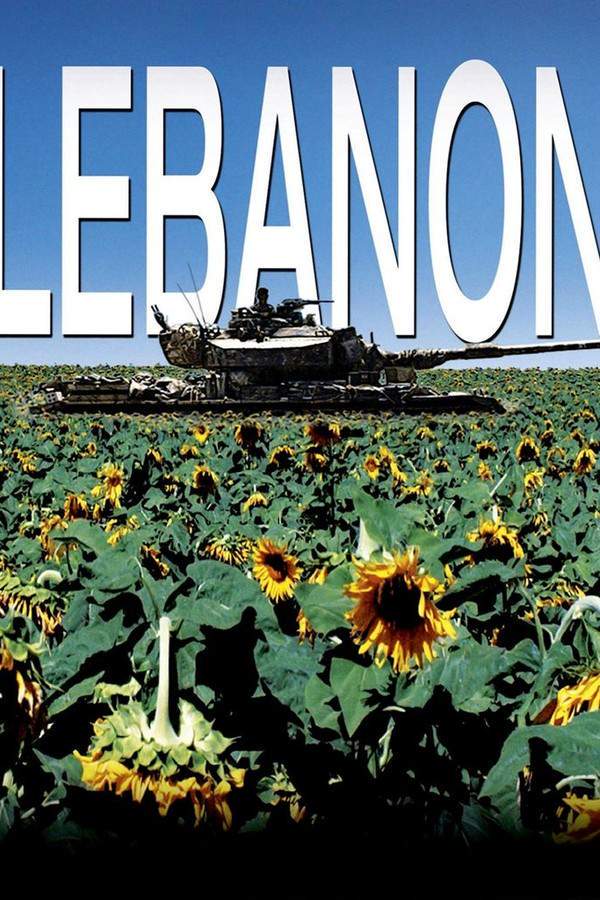
Lebanon 2010

Directed by

Samuel Maoz
Made by

Sony Pictures Classics
Where to Watch Lebanon
See current US streaming, rental, and purchase options for Lebanon (2010) via JustWatch.






Lebanon Plot Summary
Read the complete plot summary and ending explained for Lebanon (2010). From turning points to emotional moments, uncover what really happened and why it matters.
The film confines its narrative to a single, claustrophobic perspective: a Sho’t battle tank as the world outside disappears, and warfare is witnessed exclusively from within. Set against the backdrop of the 1982 Lebanon War, the crew’s life inside the armored shell becomes the entire universe they know. Four Israeli soldiers form the core of this enclosed world: the driver in the hull, the loader, the gunner, and the commander in the turret. Their voices, their silences, and their movements shape every heartbeat of the story, with the gun’s bearing and the turret’s range marking the tempo of their day.
As the mission unfolds, the tank carries more than equipment and orders. For a portion of the time, the body of a dead Israeli soldier is kept inside the vehicle, awaiting airlift away. A Syrian POW is present, drawing a line of humanity through the contingency of captivity, while a visiting higher officer adds a layer of official gravity to the already tense atmosphere. At another moment, a visiting Phalangist arrives and threatens the POW with torture and a gruesome fate, injecting a chilling reminder of the war’s pervasive brutality. These figures intrude into the crew’s limited world, testing loyalties and complicating moral choices while the four men try to hold steady in their cramped cocoon.
The mission itself is shrouded in peril and ethical conflict. They are ordered to clear a Lebanese area of hostiles, and part of that command includes the use of phosphorus grenades, a tactic condemned by international treaties. The insistence on this weapon casts a shadow over the crew’s sense of right and wrong, turning every citation of orders into a quiet confession of doubt. The men weigh obedience against humanity as the tank becomes a crucible where policy, instinct, and fear collide.
Within this metal tomb, the gunner’s hesitation—rooted in the fact that he has never fired the cannon in combat before—becomes a focal point for the drama. His reluctance to pull the trigger begins a chain of events that leads to casualties: a fellow Israeli soldier is killed, and an innocent bystander pays the price in a subsequent crisis born of poor judgment and split-second decisions. The loss underscores the precarious balance between duty and deadly consequence, and it gnaws at the crew’s cohesion as they navigate the consequences of their choices from inside their iron chamber.
The environment inside the tank amplifies every strain. Heat and smoke fill the space, filth and stench cling to the air, and the cramped quarters squeeze the soldiers physically and psychologically. Equipment failures, navigational problems, and conflicting information pile up, feeding a steady undercurrent of tension that erupts into recurring quarrels. The outside world remains perpetually distant, a distant echo heard only through the sight and sound of the weapon, until even that window— the gunsight—offers a limited, sharpened view of the chaos outside.
Yet beneath the surface conflict, the film probes deeper questions about how people behave when pushed to the edge. The four men must improvise, interpret, and respond to rapidly shifting circumstances, all while bearing the weight of orders, the fragility of their own lives, and the lives of others who find themselves caught in the crossfire. The tank becomes more than a weapon; it’s a microcosm of war itself, a portable chamber where fear, loyalty, anger, and human vulnerability collide with the machinery that magnifies every decision.
In the end, the story remains faithful to its premise: warfare as a contained experience, where the exterior battlefield collapses into an interior moral contest. The film’s attention to sound—the hydraulic whine of the traversing gun turret with every change in direction—serves as a constant reminder of how war is felt just as much in the nerves and in the rhythm of the metal as it is in the bullets that fly. This is not a broad portrait of a campaign, but a precise, unsettled examination of a day when a crew, a vehicle, and a narrow strip of land intersect under pressure, forcing each man to confront what he believes, what he fears, and what he might become under the weight of war.
Lebanon Timeline
Follow the complete movie timeline of Lebanon (2010) with every major event in chronological order. Great for understanding complex plots and story progression.
Crew settles into the Sho't tank
The four Israeli soldiers settle into the Sho't tank, taking their positions as driver, loader, gunner, and commander. The outside world becomes a narrow vista through the gunsight, and every movement of the turret is matched with the whine of hydraulic machinery. The claustrophobic interior establishes the movie's perspective from inside the machine.
Orders to clear Lebanese personnel with forbidden phosphorus grenades
They receive orders to clear an area of Lebanese personnel, with the controversial allowance to use phosphorus grenades despite international bans. The directive underscores the moral ambiguity and the pressure to complete the mission at any cost. The crew debates the implications as they prepare to engage.
Gunner's hesitation
The gunner reveals that he has never fired the cannon in combat and is visibly hesitant to engage. His caution creates tension and fear of a reckless mistake under pressure. The other crew members react to this moment with a mix of concern and impatience.
A deadly consequence: friend and civilian casualties
A fellow Israeli soldier is killed during a later incident caused by poor judgment. An innocent man also dies as a result of that same miscalculation, underscoring the deadly cost of uncertain decisions. The event leaves the crew shaken and aware of their own fallibility.
The dead soldier's body stays inside the tank
The dead Israeli soldier's body remains in the hull for part of the mission, a grim reminder of the cost of war. Heat, smoke, filth, and a stifling stench fill the cramped interior as time passes. The body’s presence weighs on the crew and intensifies the claustrophobic mood.
A Syrian POW is brought in; Phalangist threatens him
A Syrian prisoner is kept within the tank, and a visiting Phalangist threatens him with torture and a gruesome death. The scene emphasizes how the war corrupts ethics and turns captives into bargaining chips. The tension inside the vehicle grows as fear and anger mingle.
A visiting higher officer arrives
A higher officer visits to observe and direct the crew, amplifying the sense of oversight and accountability. His presence needles the crew, who must justify their actions under scrutiny. The exchange highlights the wider political stakes of the operation.
Decision to use phosphorus grenades is reaffirmed
The crew is ordered to deploy phosphorus grenades, reinforcing their mandate to do whatever it takes to clear the area. The decision deepens the moral conflict and foreshadows possible consequences for civilians and soldiers alike. The mechanical sounds of the tank echo as the plan is set in motion.
Conflicting information and quarrels plague the crew
Information proves conflicting and commands arrive from different sources, fueling arguments among the crew. Disagreements over strategy and safety escalate into quarrels that threaten their cohesion. The heat and stress intensify the emotional toll of leadership under fire.
Equipment failure and navigational problems
The tank’s systems struggle: hydraulics whine, instruments misread targets, and the crew must improvise to keep moving. Navigational errors compound the danger as they press further into hostile territory. The mechanical strain mirrors the moral strain inside the crew.
Heat, smoke, filth and cramped quarters take their toll
The interior becomes a constant barrage of heat, smoke, and stench. Filth and cramped space press on the crew, depressing morale and sharpening tensions. They fight to remain functional despite the oppressive conditions.
Airlifted removal of the dead soldier marks the slow exit
As the mission winds down, the dead Israeli soldier is airlifted away, finally removed from the tank's interior. The mission ends with a sense of unresolved guilt and futility as they reflect on what occurred within the armored shell. The film closes on the high cost of war as seen from a single vehicle.
Lebanon Characters
Explore all characters from Lebanon (2010). Get detailed profiles with their roles, arcs, and key relationships explained.
Driver
Sits in the hull and controls the tank’s movement, facing the claustrophobic heat and vibration. The driver must stay focused under pressure as navigational challenges and operational stress threaten the mission.
Loader
Operates inside the turret, handling ammunition under extreme heat and noise. The loader’s competence is crucial as the crew battles a failing tank and tense, uncertain orders.
Gunner
The gunner has never fired the cannon in combat and grows hesitant under fire, contributing to tragedy through a loss of confidence and judgment.
Commander
The tank’s commander orchestrates actions under duress, attempting to maintain order while information is conflicting and the environment deteriorates.
Syrian POW
A prisoner of war kept inside the tank, whose fate and treatment become a point of tension amid the crew’s confrontations with allied forces.
Phalangist
A visiting Phalangist who threatens the POW with torture, illustrating the presence of external threats and the moral ambiguity of alliances.
Dead Israeli Soldier
The body of a dead Israeli soldier remains inside the tank for part of the operation, a stark reminder of the human cost of war.
Lebanon Settings
Learn where and when Lebanon (2010) takes place. Explore the film’s settings, era, and how they shape the narrative.
Time period
1982
Set during the 1982 Lebanon War, the conflict frame shapes the crew’s choices and the hazards they face. The period’s brutal, high-stakes atmosphere is reflected in the tank’s deteriorating condition and the urgency of each decision.
Location
Lebanon, inside a Sho't battle tank
The action unfolds almost entirely inside a Sho't battle tank during the 1982 Lebanon War. The crew navigates a cramped, heat-swept interior where filth and stench mix with mechanical noise. The outside world becomes a distant panorama seen only through the tanksight, as every turret movement is accompanied by hydraulic whines. The setting emphasizes claustrophobia and the fragility of life inside modern armored warfare.
Lebanon Themes
Discover the main themes in Lebanon (2010). Analyze the deeper meanings, emotional layers, and social commentary behind the film.
🔒
Confinement
The tank confines its crew physically and morally, turning a small space into a pressure chamber. Heat, smoke, filth, and stench intensify fear and heighten tensions. The closed world magnifies the impact of every choice and mistake. Even a dead body inside the tank becomes a constant, unnerving presence.
⚖️
Morality
Orders to clear Lebanese personnel with forbidden phosphorus grenades place duty against international law on display. The gunner’s hesitation and the resulting casualties reveal how ethics can fray under stress. Training and loyalty collide with the consequences of actions taken in a split second. The crew must weigh immediate orders against longer-term consequences.
🎖️
Leadership
The crew’s dynamics are tested by a visiting higher officer and the constraints of the tank’s failing state. The commander must balance operational goals with the harsh realities of limited information and cramped contact with life-and-death decisions. Command decisions under fire expose how leadership shapes or erodes morale. The narrative probes how authority is exercised when every moment counts.

Coming soon on iOS and Android
The Plot Explained Mobile App
From blockbusters to hidden gems — dive into movie stories anytime, anywhere. Save your favorites, discover plots faster, and never miss a twist again.
Sign up to be the first to know when we launch. Your email stays private — always.
Explore the mobile appLebanon Spoiler-Free Summary
Discover the spoiler-free summary of Lebanon (2010). Get a concise overview without any spoilers.
In the scorching summer of 1982, a small Israeli unit is thrust into the heart of a volatile Lebanese town during the First Lebanon War. Their assignment—secure a contested area—places them inside a solitary Sho’t battle tank, a steel box that becomes both shelter and prison as the surrounding streets swirl with uncertainty. The world beyond the armored hull is reduced to the narrow sight of a gunsight, framing a landscape that is at once distant and immediate, hinting at the chaos that lurks just outside the metal walls.
Inside, the crew is composed of four distinct personalities, each defined by their role and the weight it carries. the driver keeps the tank moving through heat‑filled corridors, while the loader wrestles with the constant demand of readiness. the gunner, never having fired the cannon in combat, confronts a hesitant resolve, and the commander balances orders with the mounting pressure of an escalating mission. Their cramped quarters amplify every sound—the hydraulic whine of the turret, the clatter of equipment, the stifling breath of men trapped together—forcing an intimacy that reveals both camaraderie and underlying tension.
The film’s tone is a stark, unflinching study of war viewed through a single, confined perspective. Realism is heightened by the sensory details of heat, smoke, and the metallic odor of spent ammunition, while the ever‑present threat of equipment failure and ambiguous intelligence cultivates a sense of unease. Commands to employ prohibited phosphorus grenades add a layer of moral ambiguity, suggesting the thin line the crew must tread between duty and conscience.
As the tank rolls deeper into an environment that grows increasingly hostile, the crew’s external struggle mirrors an internal battle against fear, doubt, and the ghosts of past choices. The limited view through the gunsight offers only fragmented glimpses of the surrounding turmoil, leaving the audience to wonder how far the pressure will push these men before the metal shell itself begins to feel like a crucible.
Movies with Similar Twists and Themes
Uncover films that echo the narrative beats, emotional arcs, or dramatic twists of the one you're exploring. These recommendations are handpicked based on story depth, thematic resonance, and spoiler-worthy moments — perfect for fans who crave more of the same intrigue.


Featured on this page

What's After the Movie?
Not sure whether to stay after the credits? Find out!
Check out our other apps:

SAT Sphere
Build confidence for the Digital SAT.

Mori Atlas
Discover wild places worth protecting.

Luntero
Search smarter for a home in Amsterdam.

Plot Explained
Unravel movie endings and hidden clues.

Pokechamp
Dive into Pokémon data and battle logic.

Driving Theory
Get ready for your European theory test.

Movie Dust
Plan your next cinema trip with ease.

Musemap
Find art and culture as you travel.

Selkobase
Compare credentials before committing.

Local Manual
Turn an unfamiliar country into practical next steps.

Lernavi
Compare school systems before your next move.

GymRoam
Find a workout stop wherever your plans take you.
Explore Our Movie Platform
New Movie Releases (2026)
Famous Movie Actors
Top Film Production Studios
Movie Plot Summaries & Endings
Major Movie Awards & Winners
Best Concert Films & Music Documentaries
Movie Collections and Curated Lists
© 2026 What's After the Movie. All rights reserved.
Privacy Policy