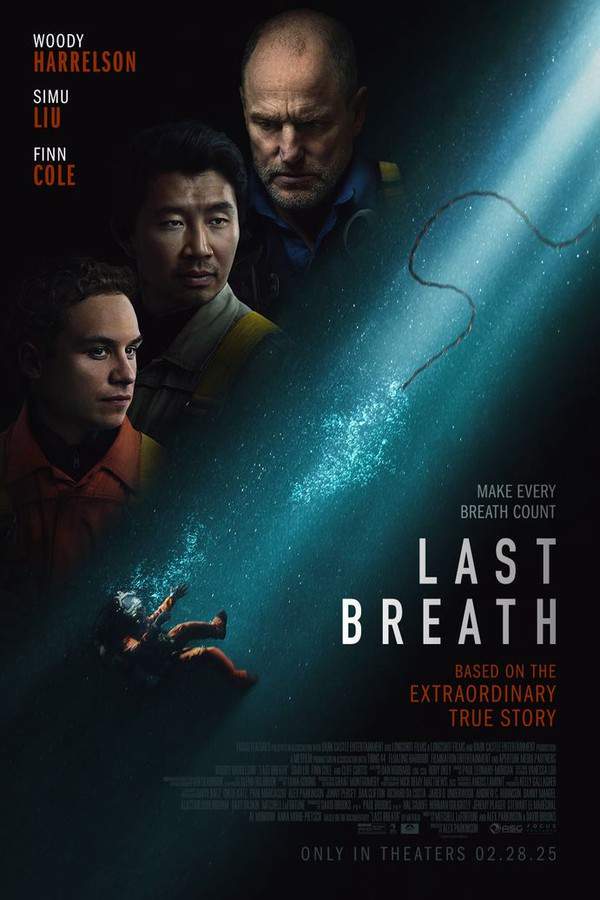
What Is Last Breath About?
The premise of Last Breath in 255 words, with nothing given away. The full story and the ending follow below.
In the cold, relentless depths of the North Sea, a world of steel rigs, humming sonar and swirling currents becomes a silent stage for a true‑life drama. The documentary blends raw archival footage, voice‑recorded communications, and intimate interviews, giving the viewer a breath‑by‑breath immersion into a realm where a single malfunction can turn routine maintenance into a life‑or‑death test. The tone is unflinching yet reverent, letting the stark beauty of the underwater landscape accentuate the fragile line between control and chaos.
Chris Lemons is introduced as a seasoned commercial diver whose expertise has taken him beneath 100 metres of water countless times. When a sudden equipment failure strands him on the seabed with only five minutes of emergency gas, the film pauses on the stark geometry of his predicament: an isolated figure in a dark, pressure‑crushed world while the surface world drifts beyond reach. Alongside his teammates Duncan Allcock and David Yuasa, the situation highlights the delicate choreography of teamwork, technology, and human endurance that defines deep‑sea work.
The story unfolds as a meditation on survival, patience, and the sheer will to live when every second counts. By weaving together the immediacy of the divers’ own recordings with reflective commentary from those who witnessed the event, the film creates a palpable tension that lingers long after the screen goes dark. It invites viewers to contemplate not just the mechanical challenges of underwater rescue, but the inner resolve that fuels a diver’s fight against an unforgiving environment, leaving the outcome hanging in the cold, dark water.
What Happens in Last Breath?
The complete story of Last Breath, from the first scene to the last, in 459 words (about 2 minutes). Spoilers throughout. Names in the text link to 7 cast member pages.
Spoilers ahead
This documentary presents a real offshore diving accident with a careful, factual lens. It blends authentic on-site footage and audio captured from divers’ voice communications equipment and helmet cameras, with interviews of several people involved and carefully reconstructed scenes to tell the story with clarity and restraint. The film’s approach is to let the events speak for themselves, weaving technical detail with human perspective to build a complete picture without sensationalism.
The film features insights from the ship’s crew, including Michal Cichorski, Kjetil Ove Alvestad, Duncan Allcock, Glenn Brunskill, Stuart Anderson, Filippo De Filippi, and Craig Frederick. Their firsthand accounts anchor the narrative, and their perspectives help explain how the sequence unfolded beneath the waves.
At the center is Chris Lemons, who, along with his colleagues Duncan Allcock and David Yuasa, was carrying out repairs about 100 meters below the surface of the North Sea, aboard the support vessel Bibby Topaz. The vessel’s dynamic positioning system, supplied by Kongsberg Maritime, failed, and the ship began to drift in rough seas. This drift dragged the divers away from their worksite and ultimately caused the umbilical tether—providing heliox breathing gas, heated suit water, power for the light, and a critical communications link to the bell and surface—to snap. Lemons was left with only five minutes’ worth of breathable gas in the emergency cylinders strapped to his back, a precarious situation that intensified the danger of the unfolding incident.
The reasons behind the peril are described as unclear to Lemons and his colleagues, though factors such as the cold water and having breathed a gas mix with a high partial pressure of oxygen are cited as contributing conditions. The documentary carefully presents these elements without assigning blame, focusing instead on how the situation pressed the divers and the surface team to act with the information and tools available at the moment.
Despite the dire setup, Lemons’ story takes a remarkable turn. He survived for roughly thirty minutes, first located by a remotely operated underwater vehicle and then retrieved with the help of Yuasa, who pulled him back aboard the diving bell. The rescue is depicted with a mix of archival footage, re-creations where appropriate, and candid recollections, offering a clear sense of the physical and emotional stakes involved in the recovery.
Throughout, the film emphasizes the interplay between human decision-making and technical systems under extreme conditions. It presents a measured, informative portrait of undersea work—highlighting the fragility of complex operations, the rapid consequences of equipment failure, and the vital importance of teamwork and communication. The result is a comprehensive, easy-to-read account that remains faithful to the real events while offering a deeper understanding of what went wrong, what happened next, and how such incidents are reviewed to improve safety in the future.
Last Breath Timeline: Every Key Event in Order
12 key events in the order they happen, from “Dive begins to repair equipment” to “Documentary captures the incident”. 11 events name a place, across 10 locations.
- 1
Dive begins to repair equipment
Lemons, Allcock, and Yuasa descend to the North Sea, 100 meters below the surface, to repair underwater equipment. The operation is supported by the Bibby Topaz on the surface. The divers rely on a working life-support system and communications links to the surface during the repair.
When:During dive Where:North Sea, 100 m depth
- 2
Dynamic positioning failure
Bibby Topaz's dynamic positioning system fails in rough seas, causing the vessel to drift. The drift risks separating the divers from their work area and from critical gas and light lines.
When:During dive Where:Off the North Sea work site
- 3
Divers drift from work area
As the vessel drifts, the divers are carried away from the planned repair zone. The growing distance amplifies danger and makes maintaining contact harder.
When:During drift Where:North Sea, underwater near the work site
- 4
Umbilical snaps
The drift places extreme stress on the diver's tether, and the umbilical snaps. This severs the supply of heliox, hot water, power for lighting, and surface communications.
When:During tether snap Where:Underwater near the work site
- 5
Limited breathable gas remains
Lemons is left with only five minutes of breathable gas in his emergency cylinders on his back. The narrow remaining time heightens the urgency of any rescue attempt.
When:During emergency gas depletion Where:Underwater, 100 m depth
- 6
Environmental factors complicate rescue
Reasons for Lemons' survival are unclear, but the cold water and a high oxygen partial pressure in the breathing mix contribute to the hazardous environment. The documentary suggests these factors helped extend his life underwater.
When:During emergency conditions Where:North Sea, underwater
- 7
Rescue window remains critical
The situation necessitates rapid rescue; the team coordinates using surface and underwater resources to locate the diver. Time is critical as air supply dwindles.
When:During emergency Where:North Sea, near the work site
- 8
ROV locates Lemons
A remotely operated vehicle locates Lemons after roughly 30 minutes underwater. This discovery provides the turning point needed for a rescue plan.
When:Approximately 30 minutes into incident Where:North Sea, underwater
- 9
Yuasa retrieves Lemons
David Yuasa reaches Lemons and pulls him back onboard the diving bell. The successful extraction marks a pivotal moment in the incident.
When:Immediately after discovery Where:Bibby Topaz diving bell
- 10
Rescue completes
Lemons is pulled back inside the diving bell, ending the immediate danger. He survives for around 30 minutes in the hazardous conditions until rescue is secured.
When:Immediately after extraction Where:Bibby Topaz, near surface
- 11
Survival beyond the minutes
Lemons survives for around 30 minutes in the hazardous conditions before rescue. The documentary notes that the reasons for his survival are not fully explained, but cold water and the breathing gas mix played a role.
When:During rescue Where:North Sea
- 12
Documentary captures the incident
The documentary uses genuine footage and audio recorded at the time of the accident, including helmet cameras and voice communications. It also includes interviews with those involved and reconstructed footage to tell the story from multiple perspectives.
Who Are the Main Characters in Last Breath?
9 characters, among them Dynamic Positioning Officer — Michal Cichorski, Chief Engineer — Kjetil Ove Alvestad and Bellman — Duncan Allcock: who each one is and the part they play in the story. 7 of them link to the actor’s page.
- DP
Dynamic Positioning Officer — Michal Cichorski
Played by Michal Cichorski
On the surface vessel, he operates the dynamic positioning system to keep the Bibby Topaz steady during the crisis. His role is crucial to preventing further drift and enabling the rescue operations below. The film presents him as focused and precise under pressure.
- 🧭 DP Control
- 🧊 Surface Operations
- CE
Chief Engineer — Kjetil Ove Alvestad
Played by Kjetil Ove Alvestad
As Chief Engineer, he oversees the vessel's systems that sustain the dive operation, including power, heating, and gas supply. His expertise is called upon when the DP failure threatens the mission, highlighting the importance of engineering reliability. He appears as methodical and calm in the face of crisis.
- 🧰 Engineering
- 🌐 Maritime Tech
- B—
Bellman — Duncan Allcock
Played by Duncan Allcock
A diver and colleague, he faces dangerous underwater conditions while assisting with repairs. He helps manage life support and keeps lines of communication open during the emergency. His on-screen presence adds credibility to the on-site dangers of deep-water work.
- 🪝 Diving Team
- 🧭 Offshore Operations
- LS
Life Support Supervisor — Glenn Brunskill
Played by Glenn Brunskill
He monitors breathing gas, suit temperature, and life-support telemetry from the surface. In the crisis, his role becomes pivotal as any system failure could cost a life. He provides expert testimony about safety procedures and emergency responses.
- 🫁 Life Support
- 🔬 Monitoring
- DS
Dive Supervisor — Craig Frederick
Played by Craig Frederick
Oversees the actual diving operation, ensuring procedures are followed and risks are managed. He communicates with the divers and surface teams, guiding responses to equipment and environmental changes. His presence anchors the technical reality of the dive mission.
- 🧭 Dive Supervision
- 🚢 Vessel Ops
- SA
Stuart Anderson
Played by Stuart Anderson
A crew member who contributes to the surface perspective, offering insight into the operations and decision making during the crisis. He helps contextualize how information moves between the surface and the dive team. His on-screen presence adds to the documentary’s sense of immediacy.
- 👥 Crew
- 🗣️ Testimony
- FD
Filippo De Filippi — DPO
Played by Filippo De Filippi
As the Dive Planning Operator, he helps coordinate dives, gas management, and safety protocols from the surface. His input in the film underlines the planning and contingency measures that surround every dive. He contributes to the narrative of how pre-dive preparation intersects with real-time events.
- 🧭 DPO
- 🔧 Planning
- CL
Chris Lemons
A diver working on repairs who endures a dangerous situation after his gas supply is compromised. The incident shows his endurance under cold water and the importance of quick thinking and backup systems. His survival story lies at the center of the film's tension.
- 🧊 Diver
- 🫁 Survival
- DY
David Yuasa
David Yuasa, Lemons' colleague, locates him with a remote vehicle and assists with recovery back to the diving bell. His actions are presented as crucial to the rescue and safe return to surface. The sequence emphasizes teamwork under extreme duress.
- 🛰️ Recovery
- 🧭 Rescue
Where and When Is Last Breath Set?
Last Breath is set in North Sea and Bibby Topaz. Here is why the place matters to the story.
Where
North Sea, Bibby Topaz
Set in the North Sea, the film follows a high‑risk underwater repair operation aboard the Bibby Topaz. The action takes place 100 metres below the surface, where divers rely on a tethered system for heliox breathing gas, suit heating, lighting, power, and a surface communications link. Rough seas and cold water create a relentless environment that heightens every decision. The setting underscores the fragility of life when technology, crew, and the sea collide.
- 🌊 Ocean
- 🛠️ Offshore Engineering
- ❄️ Cold Water
What Are the Themes of Last Breath?
3 ideas the story keeps returning to, among them Survival, Technology and Documentation.
-
01
Survival
The film centers on a diver's struggle to stay alive after the tether is severed and his breathing gas becomes limited. He survives for around 30 minutes, relying on a five‑minute emergency gas supply and his training to push through the cold water and oxygen mix. The narrative shows how quick thinking, composure under pressure, and determined effort can influence an outcome in a life‑or‑death moment. The rescue by a colleague and remote support demonstrates human endurance under extreme conditions.
-
02
Technology
The dynamic positioning system failure allows the Bibby Topaz to drift, turning a routine operation into a crisis. The story contrasts engineering precision with the unpredictable sea, highlighting how equipment limits can shape outcomes. The documentary probes the fragility of relying on machines when the environment remains hostile. It asks how much control people have when technology falters.
-
03
Documentation
Last Breath blends genuine footage and on‑site audio with interviews to recount events. The reconstructed scenes sit alongside real recordings, inviting reflection on memory, accountability, and truth in documentary storytelling. Viewers are shown what is known, what is reconstructed, and what remains uncertain. This approach foregrounds the documentary's pursuit of authenticity amid ambiguity.
How Does Last Breath End?
The last act of Last Breath and what it means, in 302 words. The ending lands as happy. Big spoilers: read the plot summary first if you have not seen it.
The final act, in full
The ending of Last Breath delivers a miraculous conclusion to a nightmare scenario, resolving the tension not with a cinematic twist, but with a real-life medical anomaly. After the support vessel Bibby Topaz suffers a catastrophic failure in its dynamic positioning system, the ship drifts away from the dive site, dragging the divers’ lifelines with it. While one diver manages to return to the bell, Chris Lemons’ umbilical cord snags on the seabed structure and snaps, leaving him stranded in the pitch-black ocean with only a few minutes of emergency oxygen. As his air runs out, the film depicts him slipping into unconsciousness, presumably dying, while his colleagues race against time to reset the ship’s computer systems.
The climax sees diver Dave Yuasa descending back into the chaos to retrieve his friend. In a feat of immense physical strength, Yuasa drags Lemons’ body back to the diving bell, where Duncan Allcock immediately begins CPR. The outcome defies all medical logic: after roughly 30 minutes without oxygen, Lemons chokes back to life. The film explains that this survival is scientifically baffling. While the human brain typically sustains irreversible damage after just a few minutes without air, the combination of the freezing water and the extreme depth likely slowed Lemons’ metabolic rate to a crawl, preserving his vital organs in a state of suspended animation.
Ultimately, the resolution is both humble and awe-inspiring. The movie concludes by revealing that the real Chris Lemons survived the ordeal with no lasting physical or neurological effects. In a deviation from the dramatic tension of the film, the epilogue notes that in reality, Lemons regained consciousness almost immediately after resuscitation and was conversing normally within minutes. The ending underscores that his survival remains a celebrated mystery of human resilience, a “miracle” that continues to confound the scientific community.
What Kind of Film Is Last Breath?
Tense in tone, with variable pacing and a straightforward story, going by the plot summary.
- Tone
- Tense
- Pacing
- Variable
- Story
- Straightforward
- Intensity
- High
- Ending
- Happy
An intensely suspenseful and claustrophobic documentary that plunges the viewer into a desperate underwater fight for survival, culminating in a remarkable and hopeful true story.
- suspenseful
- claustrophobic
- desperate
- anxious
- hopeful
- survival
- deep sea diving
- accident and rescue
- will to live
- true story
Content notes: accident trauma, life-threatening situation, drowning peril.
Quiz
How well do you remember Last Breath? Test yourself on the story.
Where to Watch Last Breath
Stream it on Hoopla, or rent or buy it from Amazon Video and Apple TV Store. US availability and prices from JustWatch.
Stream 1
 Hoopla




Streaming availability in the US, powered by