
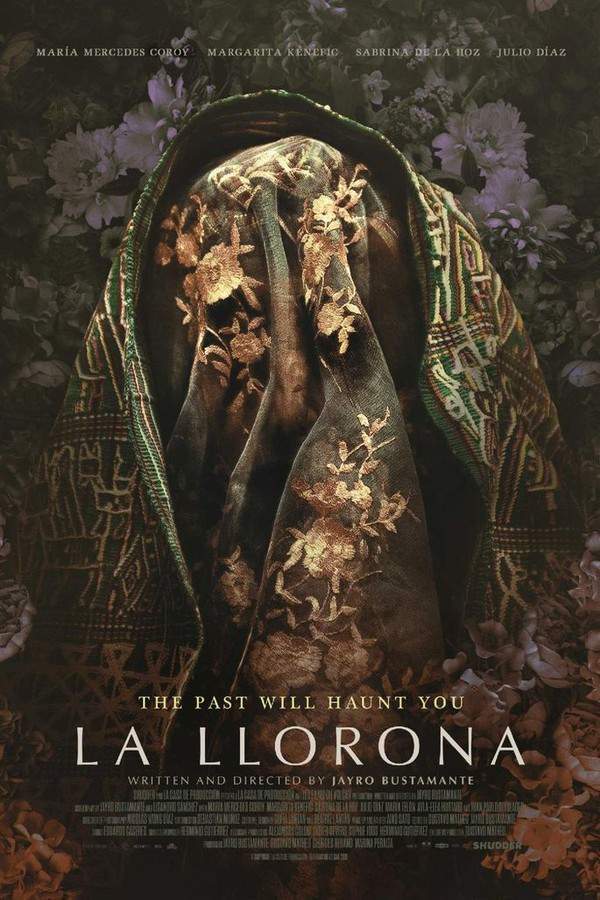
La Llorona 2019

Directed by

Jayro Bustamante
Made by

La Casa de Producción
La Llorona Plot Summary
Read the complete plot summary and ending explained for La Llorona (2019). From turning points to emotional moments, uncover what really happened and why it matters.
Former Guatemalan dictator Monteverde (based on Efraín Ríos Montt) is convicted for orchestrating the genocide of the native Mayans in 1982–83. Now elderly, he lives with his wife Carmen, his daughter Natalia, granddaughter [Sara](/ actor/ayla-elea-hurtado) and their security guard Letona. During the trial, [Natalia] is troubled by indigenous women’s accounts of brutal acts by Monteverde’s army, while [Carmen] dismisses them as lies. The high court overturns the verdict, ruling the crime cannot be conclusively proven, sparking relentless protests outside Monteverde’s home that keep the family confined inside.
The tension thickens when the house is unsettled by a sequence of supernatural disruptions. The housekeeper, Valeriana, brings in a young woman named Alma to work as a maid, and water-related phenomena begin to intensify. One night, Monteverde glimpses Alma wading through the pool and entering the house. The family discovers him watching Alma wash her dress, his reaction revealing a long-held attraction to indigenous women. Carmen confides in [Natalia] that Monteverde’s impulses have always leaned toward native women, deepening the sense of a hidden history within the household. Alma has a painful past—she has a son and a daughter who died—and she later teaches [Sara] to hold her breath underwater, binding the girl’s fate to the water-world that haunts the home.
Outside, the protests persist and grow louder, effectively trapping the family. Inside, Carmen experiences nightmare visions of being a Kaqchikel woman abducted with two children by soldiers, and the walls fill with flyers about disappeared people from decades earlier. [Valeriana] hints that Alma’s origins may be shrouded in mystery, and Alma herself carries an unspoken trauma that binds her to the house. The atmosphere thickens as the living and the dead intersect: the protestors include a man who appears on the flyers, a stark reminder of the long memory of the violence.
Valeriana tries to purify the house with a Mayan cleansing, while Alma teaches [Sara] to breathe with the water’s rhythm. In a climactic moment, the family witnesses the spirit-world erode the boundaries of the home. [Letona] encounters the spirits of two Kaqchikel children, who calmly lead him away, as if drawing him into the same unseen wave of history that saturates the house. A ritual by Valeriana unfolds, accompanied by the wail of a woman, and Carmen slips into a trance that reveals Alma’s last moments: watching her children drown as soldiers close in, and herself being executed by Monteverde.
The revelation crashes into the present as Carmen, overwhelmed by the remembered horror, strangles Monteverde in both the trance and the waking world. The funerary sequence that follows hints at the continuation of the violence beyond the man’s death: at Monteverde’s funeral, an old general slips away to the bathroom, where a woman’s wail grows into the sound of water flooding the room, suggesting that the past’s wounds still surge beneath the surface.
La Llorona Timeline
Follow the complete movie timeline of La Llorona (2019) with every major event in chronological order. Great for understanding complex plots and story progression.
Trial conviction for genocide (1982–83)
Monteverde is convicted in a Guatemala court for orchestrating genocide against the Maya during 1982–83. The courtroom presents testimonies and evidence about brutal violence committed by the army. The verdict establishes a stark historical backdrop for the characters and the story that follows.
High Court overturns the verdict
The High Court overturns the conviction, ruling that the crime cannot be conclusively proven. Prosecutors condemn the decision as a betrayal of the victims, while Monteverde’s supporters celebrate the acquittal. The ruling shifts the narrative from closure to ongoing moral and social crisis.
Public protests outside Monteverde's home
Outraged by the overturned verdict, nonstop protests erupt outside Monteverde’s home. Demonstrators carry banners and flyers honoring the disappeared. The public pressure traps the family inside the house and fuels a tense atmosphere.
Sleep-disrupting weeping and near-violence
The sound of a woman weeping interrupts Monteverde’s sleep, and he narrowly misses shooting his wife in a moment of fear. The near-violent incident deepens the sense of menace surrounding the household. The event foreshadows the unraveling of control within the home.
Staff quit; Alma hired as a maid
Most of the Kaqchikel staff quit in response to the mounting tension and fear. Valeriana brings in a young maid named Alma to replace them and keep the household functional. Alma’s arrival marks the beginning of a sequence of uncanny events.
Water-based supernatural activity begins
Strange phenomena involving water start to occur within the house. Alma is seen moving through the pool and washing in ways that defy ordinary explanation. The family grows increasingly unsettled by the inexplicable occurrences.
Carmen questions Valeriana and Monteverde’s past
Carmen confides to Natalia that Monteverde has long been attracted to native women. She voices suspicion that Valeriana may secretly be his daughter. The revelations deepen the thread of family secrets and tensions.
Alma’s past hinted through her children
Natalia learns Alma had a son and a daughter who died, hinting at a hidden past connected to the violence. This revelation adds layers to Alma’s presence and the house’s haunted atmosphere. The information links Alma to the broader history of disappearances.
Disappeareds' memory infiltrates protests
Protests outside the home continue, and the facade is covered with flyers about the disappeared. Sara and Alma notice that one of the men on the flyers is present among the protesters. The line between past traumas and present conflict becomes personal.
Valeriana performs a cleansing ritual
Valeriana grows suspicious that a dark force is at work and attempts a Mayan cleansing ritual to purge the house of evil. The ritual emphasizes the blend of spiritual practice with a political and traumatic history. The ceremony heightens the supernatural tone of the film.
Underwater danger and a violent attack
Sara uses her grandfather’s oxygen cylinder to extend her breath underwater, following Alma’s guidance. In a panic, Monteverde shoots Alma, accidentally wounding Sara’s arm. The act intensifies the peril surrounding the family and heightens the supernatural stakes.
Spirits and a ceremonial vigil
The house is surrounded by the spirits of the disappeared, and Letona encounters the spirits of the two children. Valeriana performs a Mayan ceremony to pacify the unrest as a wailing voice pierces the night. The boundary between life, death, and memory becomes palpable.
Carmen's trance reveals Alma’s last moments
Carmen enters a trance and re-experiences Alma’s nightmare of soldiers drowning Alma’s children. She witnesses Alma’s murder at Monteverde’s hands, though the scene also mirrors their own violent past. Returning to wakefulness, Carmen begins to act on the haunting truth by violently attacking Monteverde.
Monteverde’s funeral and a spectral omen
At Monteverde’s funeral, an old general excuses himself to the bathroom and hears a woman’s wail. The room begins to flood with water, suggesting that the ghosts of the past are not done with the living. The ending underscores the inescapable link between memory and catastrophe.
La Llorona Characters
Explore all characters from La Llorona (2019). Get detailed profiles with their roles, arcs, and key relationships explained.
Letona - Juan Pablo Olyslager
The household security guard whose loyalty is tested as the family is besieged by both the legal proceedings and eerie, supernatural disturbances. He serves as the practical, watchful eye of the home, yet the unfolding events pull him into the spectral justice around the dictator's crimes. His experiences in the haunted house reveal a conflict between duty and a deeper, unseen truth that unsettles him.
Alma - María Mercedes Coroy
A young indigenous woman brought in as a maid, whose background and memories of loss connect the living to the past atrocities. Alma teaches Sara to hold her breath, and her presence becomes the catalyst for the house's supernatural events. Her vulnerability and resilience underscore the human cost of violence and displacement, culminating in a tragic fate tied to the dictator's actions.
Valeriana - María Telón
The devoted housekeeper who suspiciously senses dark forces at work. She leads a Mayan cleansing attempt to expel the evil spirit, grounding the house in traditional practices. Her intuition and ritual knowledge provide a counterbalance to the family’s skepticism and play a key role in the ritual response to the haunting.
Natalia - Sabrina De La Hoz
Monteverde’s daughter who initially questions the indigenous accounts of brutality. She becomes entangled in the escalating crisis and witnesses the escalating supernatural and political turmoil. Her perspective shifts from doubt to confrontation with the country’s painful history, making her a voice for organized memory within the family.
Carmen - Margarita Kénefic
Monteverde’s wife, who dismisses the indigenous testimonies as lies at first. She experiences nightmares in which she is a Kaqchikel woman, hinting at an insider’s trauma. In a trance-like culmination, she strikes down the dictator in both dream and reality, embodying the tragic fusion of personal and communal guilt.
Sara - Ayla-Elea Hurtado
The granddaughter who becomes a focal point of the haunting’s human cost. She learns to hold her breath under water, symbolizing the community’s endurance and the child’s vulnerability. Sara’s presence, injury, and reactions anchor the emotional stakes of the film and its meditation on memory and survival.
Enrique Monteverde
The former dictator whose crimes against indigenous people set the story in motion. Though elderly, his life is shadowed by the genocide and the consequences of his rule. The haunting and protests escalate around him, culminating in violence that mirrors the historical atrocities he is accused of orchestrating.
La Llorona Settings
Learn where and when La Llorona (2019) takes place. Explore the film’s settings, era, and how they shape the narrative.
Time period
Present-day Guatemala, with flashbacks to the early 1980s
The story primarily takes place in contemporary times, focusing on the family inside the house during modern-day unrest. It periodically dives into memories of the genocide of 1982–83 that shaped the country’s history. This temporal contrast shows how past atrocities reverberate into the present, influencing characters’ choices and fates.
Location
Guatemala, Monteverde's home
The action unfolds in a Guatemalan mansion owned by a former dictator, a site where private life clashes with national trauma. The house sits amid ongoing protests outside, reflecting a society still haunted by past violence. Within these walls, domestic life and political memory intertwine as the supernatural elements intensify the sense of collective unresolved guilt.
La Llorona Themes
Discover the main themes in La Llorona (2019). Analyze the deeper meanings, emotional layers, and social commentary behind the film.
💧
Haunting
Water and wailing apparitions frame the narrative, turning a private home into a site of collective memory. The spirits of the disappeared seep into daily life, forcing the family to confront historical violence. The supernatural events become a metaphor for unresolved guilt and the demand for accountability. Flooding imagery reinforces the idea that trauma cannot be contained.
🧭
Memory & Justice
The trial and protests reveal how communities seek remembrance and redress for genocide. The film ties past massacres to present political tensions, showing memory as a catalyst for action. Characters grapple with truth, complicity, and the ethical weight of history. The narrative argues that memory without justice sustains fear and oppression.
🌿
Indigenous Resilience
Kaqchikel traditions and Mayan ritual practices anchor a counter-narrative to state violence. Valeriana’s cleansing and Alma’s presence link the living to the disappeared, affirming cultural continuity. The story presents indigenous wisdom as a source of strength amid oppression and trauma. Rituals become acts of resistance and pathways to healing.

Coming soon on iOS and Android
The Plot Explained Mobile App
From blockbusters to hidden gems — dive into movie stories anytime, anywhere. Save your favorites, discover plots faster, and never miss a twist again.
Sign up to be the first to know when we launch. Your email stays private — always.
Explore the mobile appLa Llorona Spoiler-Free Summary
Discover the spoiler-free summary of La Llorona (2019). Get a concise overview without any spoilers.
Enrique, a retired general, lives alone in a sprawling mansion that has become a reluctant stage for a relentless chorus of protestors demanding accountability for the shadows of his past. The house, once a symbol of power, now feels like a fortress under siege, its walls echoing with chants and the restless sighs of a nation that refuses to forget. As the demonstrations swell day after day, an atmosphere of unease settles over the estate, turning ordinary evenings into an unsettling limbo between silence and the distant clamor outside.
Within the manor, Enrique’s family attempts to navigate the pressure together. His wife Carmen maintains a poised exterior while grappling with the weight of history, and their daughter Natalia wrestles with the stories she hears from the community, each tale adding another layer to the growing tension. Their young granddaughter Sara, innocent yet observant, wanders the corridors, her curiosity sometimes leading her to places where the house’s quiet becomes oddly oppressive. The household’s long‑standing staff, largely drawn from the very community now protesting, begin to drift away, leaving gaps that are filled by new faces who bring their own quiet resilience.
The new housekeeper, Valeriana, arrives with a young maid named Alma, whose presence seems to awaken an undercurrent that has lingered beneath the polished surfaces of the home. A faint, mournful wail drifts through the night, and water—whether in the pool, a dripping faucet, or the condensation on glass—takes on an almost spectral quality, hinting at forces that move unseen. Even the loyal security guard Letona senses the shift, his usual vigilance tinged with an instinctive wariness that something beyond the protestors’ shouts is slipping through the cracks of the mansion’s grandeur.
The film cloaks this personal and political reckoning in a slow‑burning gothic tone, where the oppressive heat of the Guatemalan landscape meets the chilling echo of forgotten voices. It offers a study of power’s lingering ghosts, the uneasy coexistence of denial and memory, and the way a family’s private walls can become a mirror for a nation’s unresolved grief. The mood is one of mounting dread and quiet suspense, inviting the audience to wonder what unseen hand might finally stir the stillness of the house.
Movies with Similar Twists and Themes
Uncover films that echo the narrative beats, emotional arcs, or dramatic twists of the one you're exploring. These recommendations are handpicked based on story depth, thematic resonance, and spoiler-worthy moments — perfect for fans who crave more of the same intrigue.

Featured on this page

What's After the Movie?
Not sure whether to stay after the credits? Find out!
Check out our other apps:

SAT Sphere
Build confidence for the Digital SAT.

Mori Atlas
Discover wild places worth protecting.

Luntero
Search smarter for a home in Amsterdam.

Plot Explained
Unravel movie endings and hidden clues.

Pokechamp
Dive into Pokémon data and battle logic.

Driving Theory
Get ready for your European theory test.

Movie Dust
Plan your next cinema trip with ease.

Musemap
Find art and culture as you travel.

Selkobase
Compare credentials before committing.

Local Manual
Turn an unfamiliar country into practical next steps.

Lernavi
Compare school systems before your next move.

GymRoam
Find a workout stop wherever your plans take you.
Explore Our Movie Platform
New Movie Releases (2026)
Famous Movie Actors
Top Film Production Studios
Movie Plot Summaries & Endings
Major Movie Awards & Winners
Best Concert Films & Music Documentaries
Movie Collections and Curated Lists
© 2026 What's After the Movie. All rights reserved.
Privacy Policy