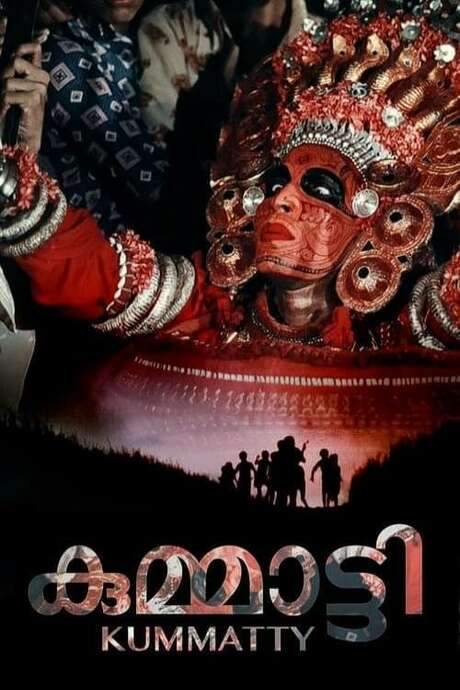
Kummatty 1979

Directed by

Govindan Aravindan
Made by

General Pictures
Where to Watch Kummatty
See current US streaming, rental, and purchase options for Kummatty (1979) via JustWatch.







Kummatty Plot Summary
Read the complete plot summary and ending explained for Kummatty (1979). From turning points to emotional moments, uncover what really happened and why it matters.
The film opens with the sun rising over the mountains, unveiling a quiet hamlet set against a brownish-green landscape and expansive blue skies, while a man’s song threads through the morning air. Here, a young boy named Chindan begins his day, brushing his teeth, helping his mother with the vegetables, and setting off for school. As he and his friend walk toward the temple, they share a simple moment of curiosity, listening to the temple priest’s offering and watching an old woman sweep the floors. In a playful impulse, Chindan whispers a tease to the old woman, then darts away to join his friend.
Throughout the village, fields glow with pale whiteness as children carry their books and walk toward school. A lesson about elections and voting unfolds, grounding the world of these youngsters in everyday democracy. Back at home, Chindan tugs at a caged parrot, enjoying a few carefree moments before the day’s adventures pull him toward the river with his schoolmates. A tense moment arises when he spots a black dog and considers throwing a stone, but he stops himself, letting the animal slip away.
That afternoon, curiosity leads Chindan and friends to a woman who lies in a sweaty, unconscious state in her home, while a doctor hovers nearby and works with anxious hands. The scene stirs something in Chindan, a sense of wonder at the unknown powers at work in the world around him. The following morning, the old temple woman visits with a pot of water; the children seize the pot and vanish, and she curses them with a warning voice that lingers in their minds.
Just see, I’m going to send you to Kummatty.
As Chindan and his friends sing a playful tune about Kummatty’s descent, they wander through grass, across fields, and beneath towering trees, the landscape becoming a liminal space between childhood innocence and myth. By dawn, a wandering man arrives in the village, carrying a cloth sack and a rack of bohemian animal masks. Chindan and two girls notice him, tracing his songs as he rests under a tree near the temple. The man’s eerie melodies ripple through the night, drawing every child’s attention as they study by the glow of oil lamps and candles.
The next morning, the group watches as the man bathes in an ancient pool, while the old woman watches from behind a wall. He then goes to the school, where his tambourine and lively song lure the children into a moment of shared joy. When Chindan returns from the market, he finds the masks left behind under the tree and studies them with a mix of fear and fascination before the man is encountered again and simply asks him to move on. From that day, the children begin to refer to the mysterious figure as Kummatty, the Bogeyman, a title that blends fear with a hint of friendly wonder.
Chindan’s insistence on Kummatty’s magical powers grows, though some friends doubt him and even watch as Kummatty shaves his beard in the underbrush. On another occasion, Kummatty invites Chindan to approach and introduces himself, conjuring a fruit from nowhere. The old woman witnesses the moment and, soon after, Chindan’s friends join in the belief that Kummatty holds real magic. A festival scene arrives as one friend dresses as a deity, walking through the village to the cheers of the crowd.
When Kummatty’s health falters, Chindan runs for help, bringing a doctor to the old woman’s aid. Then, during a moment of farewell, Kummatty gathers his masks and prepares to move on, but Chindan and the other children beg him to stay. As a parting gift, Kummatty performs a final trick for his beloved pupils, guiding them to wear the masks and lie on all fours in a playful tableau. He closes his eyes, chants a mystic mantra, and one by one the children transform into animals—a monkey, a donkey, a goat, a cow, an orangutan, an elephant, a peacock, a horse—and even Chindan becomes a dog.
The joyful moment collapses into confusion as the dog-changed Chindan is pursued by the very black dog he once spared. Kummatty returns the children to human form, but Chindan remains trapped as a dog, while the others resume their lives. The village wakes to search for the missing boy, tears and fear mixing with the flame-lit torches that illuminate the night. The boy-turned-dog is found at a grand mansion where a girl keeps many dogs as pets, and he is claimed as her new pet. He is chained to a tree, and the other dogs bark at him from their kennel.
Days stretch into a lengthy illness for Chindan the dog. A veterinarian tries to diagnose him, but the doctor’s verdict is clear: only open nature can restore him. The girl’s father negotiates with his daughter, trading a Pomeranian for the chance to free Chindan, but the dog’s fate remains uncertain. Back home, Chindan’s mother and father pray to multiple deities in a desperate bid to reverse the transformation, but their hopes wane as the old temple woman passes away.
A year passes. Then a faint, familiar melody returns to Chindan’s ears, guiding him to the village’s edges where he discovers that Kummatty has returned. The two share a heartfelt reunion, and Kummatty recognizes that the dog is Chindan. With a joyous embrace, Chindan becomes human once more, and the village gathers for a moment of communal marvel. The film closes with a quiet, symbolic gesture: Chindan frees the family’s caged parrot, tossing it into the Malabar sky, as a montage follows—birds of every kind wheeling through an open, limitless expanse, embodying freedom and the unbounded reach of imagination.
Kummatty Timeline
Follow the complete movie timeline of Kummatty (1979) with every major event in chronological order. Great for understanding complex plots and story progression.
Mornings in the hill hamlet
The film opens with a sunrise over the mountains and the village landscape, grounding us in the quiet beauty of everyday life. Chindan wakes, brushes his teeth, and heads to school while his mother prepares vegetables. The calm morning sets the stage for the world of wonder to unfold.
Temple visit and the tease of Kummatty
Chindan and a friend go to the temple to receive offerings while an old woman sweeps the floors. Chindan, in playful mischief, whispers 'Kummatty' and then runs away, hinting at the bogeyman's looming presence in the village. The moment blends mischief with a creeping sense of myth.
Lessons of voting and the fields
Children walk to school through lush white fields as they are taught about elections and the rules of voting. The lesson situates civic life within the rural landscape, expanding Chindan’s world beyond games. The fields become a canvas for community life and curiosity.
A parrot, a near-harm, and a choice
Back home, Chindan plays with a caged parrot and almost throws a stone at a black dog. He stops himself, choosing mercy over aggression as the dog vanishes into the distance. The moment threads gentle compassion into the fabric of his adventures.
River games with friends
Chindan gathers his school friends and plays by the river, the group enjoying carefree moments beneath the open sky. The river setting amplifies a sense of freedom and innocence that will be tested later. Their laughter fills the landscape with a sense of communal youth.
Whispers about illness and a ritual
The next day, three men discuss a woman’s deteriorating health and visit her house, where a doctor attempts to pull negative energy from her body. Chindan watches with piqued curiosity, standing at the edge of science and superstition. The scene introduces the village’s tension between belief and medicine.
A curse and a growing legend
The old temple woman brings a pot of water, which the children snatch away, prompting a curse: she vows to send them to Kummatty. Chindan and friends sing about Kummatty’s descent, turning myth into a living rumor that tugs at their imagination.
The mysterious man with masks arrives
A man arrives in the village with a cloth sack and bohemian animal masks hanging on a rod. Chindan and two girls spot him as he sings and rests under a tree, his presence both eerie and captivating. His arrival stirs a nocturnal curiosity that travels through the village.
Kummatty’s dawn reveal
In the following morning, the children watch the man bathe in the ancient pool and later witness him performing at the school with a tambourine. The village bursts with excitement as the figure of Kummatty becomes a shared legend. The line between play and myth begins to blur.
Magic tricks and bird biscuits
Chindan quietly befriends Kummatty, who conjures fruit for him, and then reveals biscuits shaped like birds to all the children. The simple tokens of magic deepen the sense of innocent wonder and friendship. The spectacle solidifies Kummatty’s role in their imaginative world.
Kummatty falls ill and a healer’s concern
The next day, Chindan helps the old woman by bringing her water to the temple and learns that Kummatty is ill. He races to a doctor, hoping to help, while the bond between child and bogeyman strengthens the emotional stakes. The illness tests the village’s faith in the mystical visitor.
The departure and the animal transformation
Kummatty gathers his masks and leaves for another place, and Chindan and his friends beg him to stay. As a farewell trick, Kummatty makes the children wear the masks and sit on all fours; they transform into animals, with Chindan becoming a dog. The village watches in astonishment as magic upends their identities.
Chindan the dog and a search for freedom
Chindan, now a dog, ends up at a mansion where a girl keeps many dogs. He is chained at a tree while the other dogs bark from the kennel at night. The girl’s family debates his fate, and a plan to release him in open nature emerges, offering a Pomeranian in exchange.
The one-year wait and the returning magic
One year later, Chindan hears faint melodies he longed to hear and runs toward the voice, discovering that Kummatty has returned. Kummatty recognizes the dog as Chindan and embraces him, enabling a miraculous return to humanity. The village gathers to witness the moment, and the film closes with a hopeful montage of birds flying freely as Chindan frees his parrot.
Kummatty Characters
Explore all characters from Kummatty (1979). Get detailed profiles with their roles, arcs, and key relationships explained.
Chindan (Master Ashokan)
A curious, imaginative boy whose fascination with Kummatty drives the film. He shows empathy and courage, playing a bridge between everyday village life and magical folklore. His belief in the extraordinary often contrasts with adults' skepticism, shaping his journey.
Kummatty (Ramunni)
A magical bogeyman figure who appears in charming, mysterious ways. He teaches through playful tricks, yet his powers blur the line between joy and danger. His disappearance and return anchor the children’s belief in the fantastical.
Old temple woman
An elderly figure who presides over temple life and temporarily curses the children with the idea of Kummatty. She embodies tradition and caution, acting as a catalyst for the village’s belief in folklore.
Village doctor
The local doctor who helps the ailing woman and represents rational, medical intervention in contrast to magical beliefs. He aids the community yet mingles with the story’s tension between science and superstition.
Girl with dogs
A girl who houses many dogs and briefly keeps Chindan as a pet, illustrating themes of modernity, captivity, and the clash between freedom and control within a wealthy household.
Kummatty Settings
Learn where and when Kummatty (1979) takes place. Explore the film’s settings, era, and how they shape the narrative.
Location
Malabar region village
A rural hamlet in the Malabar region, framed by a temple and a flowing river. Lush fields, tall trees, and a close-knit community define daily life, where children walk to school and interact with temple rituals. The arrival of a bohemian man with masks and songs injects a magical layer into the ordinary village.
Kummatty Themes
Discover the main themes in Kummatty (1979). Analyze the deeper meanings, emotional layers, and social commentary behind the film.
🪄
Folklore & Magic
Kummatty blurs the line between play and reality, inviting children to believe in invisible forces. Encounters with Kummatty fuel a sense of wonder and shape the children's world through songs, masks, and mischief. The film uses folk traditions to celebrate communal imagination.
🧒
Childhood & Imagination
Chindan and his friends explore their world with curious, carefree imagination. Their bond endures through fear and joy, testing boundaries as they encounter the magical. The story shows how imagination can empower, yet complicate, childhood.
🔄
Transformation & Return
The children watch Kummatty perform tricks that transform them into animals, only to return to human form. Chindan himself becomes a dog, highlighting themes of belonging and loss. The reunion underscores memory, home, and the enduring friendship between children and the mythical figure.

Coming soon on iOS and Android
The Plot Explained Mobile App
From blockbusters to hidden gems — dive into movie stories anytime, anywhere. Save your favorites, discover plots faster, and never miss a twist again.
Sign up to be the first to know when we launch. Your email stays private — always.
Explore the mobile appKummatty Spoiler-Free Summary
Discover the spoiler-free summary of Kummatty (1979). Get a concise overview without any spoilers.
In the verdant hills of Malabar, a sleepy village awakens each day to the rhythm of chores, school bells, and whispered prayers. The landscape is a tapestry of wet fields, ancient temples, and winding rivers, where the ordinary hums beneath a quiet sense of wonder. Children dart through the narrow lanes, their world measured in games, lessons about elections, and the simple thrill of teasing an old temple‑keeper. Amid this gentle routine, the arrival of a lone traveler – a man with a sack of painted animal masks and a melodic voice that seems to echo from the hills themselves – unsettles the balance between the mundane and the magical.
The village’s youngsters, especially Chindan, are drawn to the stranger’s uncanny presence. His songs ripple through the night, and his enigmatic gestures hint at the folklore of a trickster known as Kummatty. The name drifts through the children’s conversations like a chant, half‑fearful, half‑curious, suggesting a being that can bend reality with a smile or a sigh. As the days pass, the strangers’ brief performances and the lingering scent of incense foster an atmosphere where myths feel tangible, and the line between story and lived experience begins to blur.
The film’s tone is rooted in lyrical realism, bathing everyday life in a soft, amber glow while allowing moments of the uncanny to flicker like fireflies. It captures the delicate dance of childhood imagination confronting an older world of rituals and superstitions. Within this setting, Chindan and his friends stand at the threshold of discovery, their innocence poised to meet the enigmatic charm of the wandering magician, hinting at a journey where the ordinary may give way to the extraordinary.
Featured on this page

What's After the Movie?
Not sure whether to stay after the credits? Find out!
Check out our other apps:

SAT Sphere
Build confidence for the Digital SAT.

Mori Atlas
Discover wild places worth protecting.

Luntero
Search smarter for a home in Amsterdam.

Plot Explained
Unravel movie endings and hidden clues.

Pokechamp
Dive into Pokémon data and battle logic.

Driving Theory
Get ready for your European theory test.

Movie Dust
Plan your next cinema trip with ease.

Musemap
Find art and culture as you travel.

Selkobase
Compare credentials before committing.

Local Manual
Turn an unfamiliar country into practical next steps.

Lernavi
Compare school systems before your next move.

GymRoam
Find a workout stop wherever your plans take you.
Explore Our Movie Platform
New Movie Releases (2026)
Famous Movie Actors
Top Film Production Studios
Movie Plot Summaries & Endings
Major Movie Awards & Winners
Best Concert Films & Music Documentaries
Movie Collections and Curated Lists
© 2026 What's After the Movie. All rights reserved.
Privacy Policy