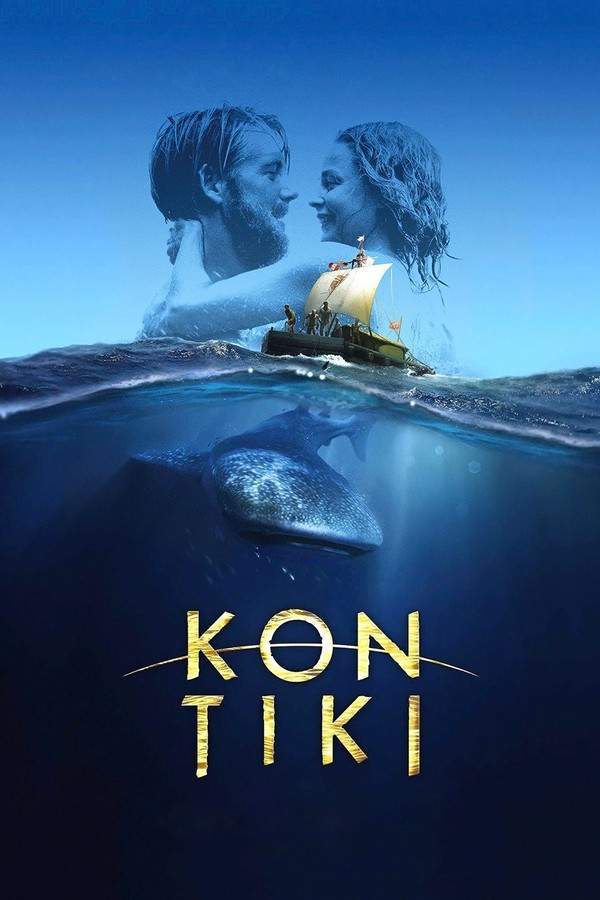
Kon-Tiki 2013


Directed by

Espen Sandberg
Made by

Weinstein Company, The
Where to Watch Kon-Tiki
See current US streaming, rental, and purchase options for Kon-Tiki (2013) via JustWatch.

Amazon Prime Video
HD
Amazon Prime Video with Ads
HD
Hoopla
SD
Kanopy
HD
Amazon Prime Video Free with Ads
HD
Fandango at Home Free
HD
Plex
HD
Plex Channel
HD
Tubi TV
SD
YouTube Free
HD
Amazon Video
HD Fandango At Home
HD
Google Play Movies
SD
YouTube
SD Streaming availability powered by 
Kon-Tiki Plot Summary
Read the complete plot summary and ending explained for Kon-Tiki (2013). From turning points to emotional moments, uncover what really happened and why it matters.
This dramatized account centers on Thor Heyerdahl Jakob Oftebro and his audacious 1947 Kon-Tiki expedition, a voyage conceived to test a bold challenge to the era’s prevailing ideas about how Polynesia was settled. While most scholars believed that Polynesia’s islands were peopled from Asia, Heyerdahl argues that ancient South Americans could have reached the Pacific islands long before Columbus set sail. To make his case tangible, he points to striking clues: shared features between South American statues and the Polynesian moai, and the echoes of Hanau epe folklore about an ancient people said to have inhabited Easter Island. He decides to prove that ancient technology could overcome the vast ocean, so he commissions and helps construct a balsawood raft named Kon-Tiki, built with the same techniques that indigenous builders might have used 1,500 years earlier.
Heyerdahl, who cannot swim or sail, does not undertake the journey alone. He gathers a small crew of five men and even a macaw named Lorita to accompany him. The team faces a grueling test of skill, endurance, and improvisation as they assemble the vessel and chart a course from the Peruvian coast toward the islands of Polynesia. The voyage spans roughly 4,300 nautical miles (about 8,000 km or 4,900 miles) and lasts three months, during which the raft is tossed by storms, battered by waves, and threatened by the ever-present dangers of the open sea. The crew must rely on simple, time-honored sailing techniques, close teamwork, and a stubborn determination to press onward despite fatigue, seasickness, and the constant fear that the fragile raft might fail at any moment.
As Kon-Tiki rides the Pacific, the men conduct a living experiment, attempting to recreate a journey that ancient mariners could have made with the resources available to them. The voyage becomes more than a search for evidence; it is a rigorous test of human endurance, faith, and the will to explore unknown horizons. The film underscores the fragile line between daring belief and scientific inquiry, showing how Heyerdahl’s theory, whether proven or not, pushes scholars to reexamine long-held assumptions about the movement of people across vast oceans.
Support from unexpected quarters, including backing from the United States government, helps sustain the mission as the crew nears its destination. Upon reaching Polynesia, Heyerdahl’s long-held ideas receive both attention and skepticism from the broader scientific community, fueling ongoing debates about the peopling of the Pacific. The narrative then follows Heyerdahl back home, where personal life has changed in his absence: he divorces from his wife and makes a new beginning by conceiving the Kon-Tiki Museum in Oslo, a testament to the voyage and the questions it provoked.
Throughout the journey, the film blends historical detail with human drama, portraying not only the scientific curiosities driving Heyerdahl but also the interpersonal dynamics among the crew, the strains of isolation at sea, and the enduring allure of adventure. The story invites viewers to weigh the allure of bold hypotheses against the rigorous demands of evidence, all while delivering a vivid portrait of a man driven to seek connections across oceans, cultures, and time. It is a story about curiosity, courage, and the enduring impulse to push beyond the known limits of technology and belief, even when the risks are immense and the outcome remains uncertain.
Kon-Tiki Timeline
Follow the complete movie timeline of Kon-Tiki (2013) with every major event in chronological order. Great for understanding complex plots and story progression.
Heyerdahl articulates the theory of a South American origin for Polynesia
Thor Heyerdahl articulates a bold hypothesis: that Polynesia could have been populated by peoples from South America in pre-Columbian times. He aims to test this theory by undertaking a hands-on experiment that replicates ancient seafaring methods. The purpose is to challenge the prevailing belief that Polynesia was settled only by Asian migrations.
Folklore and statues bolster his theory
Heyerdahl notes apparent similarities between South American statues and Polynesian moai, suggesting possible links across the Pacific. Polynesian folklore also mentions the Hanau epe, an ancient tribe said to have inhabited Easter Island. These observations support his experimental approach and motivate the voyage.
Construction of the balsawood raft Kon-Tiki
A raft is built using techniques thought to have been used 1,500 years ago by indigenous Pacific peoples. The team uses simple, sturdy materials to create Kon-Tiki, the vessel that will carry their journey. The project becomes a physical test of whether ancient crossing was feasible.
Kon-Tiki named after Inca sun god
The raft is christened Kon-Tiki, a nod to the Inca sun god of storm and light. The name signals the expedition's mythic and historical ambitions. The choice reflects Heyerdahl's intent to echo ancient maritime practice.
Crew assembled and Lorita the macaw joins
Heyerdahl gathers a crew of five men to sail with him, and a macaw named Lorita becomes the expedition's mascot. The diverse group shares a sense of adventure and a willingness to undertake a dangerous reenactment. Their companionship anchors the voyage as much as the raft itself.
Launch from the Peruvian coast
Kon-Tiki is launched from the Peruvian coast, setting off on a treacherous Pacific crossing. The crew faces the uncertainties of the open sea with limited onboard technology. The voyage is framed as a test of what ancient mariners could achieve with basic tools.
Three months at sea
The journey spans roughly three months aboard the primitive raft, a grueling test of endurance. The crew contends with the monotony, weather, and the isolation of the vast ocean. The voyage progresses slowly, yet purposefully toward the target Polynesian islands.
Storms and oceanic perils
Storms lash Kon-Tiki, testing its seaworthiness against towering waves and powerful winds. The crew battles fatigue and fear as sharks circle the raft, underscoring the hazards of ancient sea travel. The perilous conditions force the crew to rely on discipline and seamanship.
U.S. government support
During the expedition, Heyerdahl receives support from the United States government, providing resources and legitimacy to the project. This backing helps sustain the crew and underlines the voyage's scientific aims.
Arrival in Polynesia
After crossing the vast Pacific, the Kon-Tiki voyage reaches Polynesia, validating a major component of Heyerdahl's theory. The crew experiences a sense of accomplishment and demonstrates that such a crossing was feasible with ancient techniques. The encounter marks the practical culmination of years of planning.
Return home and personal consequences
Return to his homeland follows the voyage, during which Heyerdahl divorces from his wife. The expedition's success elevates his public profile and cements his reputation as an intrepid explorer. The personal cost of the journey becomes part of his story as well.
Kon-Tiki Museum in Oslo
Motivated by the expedition's enduring legacy, Heyerdahl opens the Kon-Tiki Museum in Oslo to preserve and showcase the voyage. The museum serves both as a tribute to the crew and as a demonstration of the voyage's scientific and cultural implications. It ensures the Kon-Tiki's story remains accessible to future generations.
Kon-Tiki Characters
Explore all characters from Kon-Tiki (2013). Get detailed profiles with their roles, arcs, and key relationships explained.
Thor Heyerdahl
An experimental ethnographer and adventurer who drives the Kon-Tiki mission to test a bold theory about Polynesian settlement. He designs and builds the balsawood raft and leads the crew through months at sea, despite not being an accomplished swimmer or sailor himself. His relentless curiosity and leadership push the expedition forward, even as personal risks mount.
Lorita (macaw)
The macaw Lorita accompanies the crew on the Kon-Tiki, providing companionship amid the isolation of the open ocean. The bird's presence adds a touch of life and morale to the voyage, reminding the crew of nature beyond their raft. Lorita symbolizes resilience and the human need for connection during extreme journeys.
Crew Member A
One of the five men aboard Kon-Tiki, contributing practical seamanship and a steadying presence during the voyage. He faces long watches and the strain of isolation, helping to maintain discipline and order on the raft. His role exemplifies teamwork and resilience under pressure.
Crew Member B
A member responsible for the raft’s handling and ropework, balancing caution with the need to push forward through rough seas. He shares in the crew’s risks and contributes to the overall durability of the voyage. His vigilance helps avert crises and keeps the journey on course.
Crew Member C
participant in the voyage who helps sustain morale and supports leadership during tense moments. He engages with the scientific observations and adds to the group’s sense of purpose. His presence reinforces the human element of exploration.
Crew Member D
A crew member who contributes to raft maintenance and on-deck repairs, ensuring the Kon-Tiki remains seaworthy despite the beating of waves. He tackles technical challenges with practical problem-solving. His work is crucial to the mission’s continuation.
Crew Member E
One of the five crew members who records observations and participates in the experimental aspects of the journey. His contributions help document the voyage's progress and validate or challenge the expedition’s hypotheses. He embodies the blend of curiosity and discipline essential to exploratory science.
Kon-Tiki Settings
Learn where and when Kon-Tiki (2013) takes place. Explore the film’s settings, era, and how they shape the narrative.
Time period
1947
The voyage is set in 1947, in the early postwar era when curiosity about human roots and global exploration ran high. It spans roughly three months, highlighting the era's penchant for ambitious, hands-on experiments. The period framing emphasizes the blend of science and daring characteristic of mid-20th-century exploration.
Location
Peru, Pacific Ocean, Polynesia (Easter Island), Oslo
The story unfolds starting from the Peruvian coast and travels across the vast Pacific aboard a balsawood raft. Much of the action takes place at sea, battling storms and the elements as the crew pursues their bold test. The journey culminates in Polynesia and ends with the crew's return and the establishment of the Kon-Tiki Museum in Oslo.
Kon-Tiki Themes
Discover the main themes in Kon-Tiki (2013). Analyze the deeper meanings, emotional layers, and social commentary behind the film.
🌊
Survival
The expedition tests the crew's endurance against relentless seas, storms, and the isolation of the open ocean. They rely on primitive techniques and collective discipline to keep the raft afloat. Survival becomes a measure of character, leadership, and mutual trust under extreme conditions.
🧭
Discovery
Heyerdahl's voyage is framed as a direct test of a controversial theory about Polynesian origins. It presents exploration as a blend of empirical evidence-gathering and myth-making, as the crew observes and records every anomaly. The voyage demonstrates that long sea crossings with ancient technology were plausibly achievable, challenging prevailing narratives.
🔬
Science and Belief
The project merges ethnography, archaeology, and engineering into a living experiment. Practical experimentation informs theoretical questions, illustrating how hands-on inquiry can shape or reshape belief. The narrative shows how data collected at sea feeds back into scientific argument and public understanding.

Coming soon on iOS and Android
The Plot Explained Mobile App
From blockbusters to hidden gems — dive into movie stories anytime, anywhere. Save your favorites, discover plots faster, and never miss a twist again.
Sign up to be the first to know when we launch. Your email stays private — always.
Explore the mobile appKon-Tiki Spoiler-Free Summary
Discover the spoiler-free summary of Kon-Tiki (2013). Get a concise overview without any spoilers.
In the restless post‑war world of the late 1940s, a bold hypothesis challenges the accepted narrative of how the far‑flung islands of Polynesia were first settled. Driven by the conviction that ancient South Americans could have crossed the Pacific, Thor Heyerdahl sets out to turn theory into tangible proof. He commissions a handcrafted balsa‑wood raft—named Kon‑Tiki—and gathers a modest crew of five adventurous men, each bringing a different blend of skill, optimism, and skepticism. Together, they aim to sail from the rugged Peruvian coastline toward the distant Tuamotu archipelago, relying solely on the rudimentary tools and seafaring techniques that would have been available to peoples centuries ago.
The film immerses the viewer in a stark, elemental world where the ocean’s boundless horizon dominates every frame. The Pacific becomes both a character and a crucible, its shifting moods—from tranquil azure to brooding tempest—mirroring the inner currents of doubt and determination swirling among the voyagers. The visual palette is dominated by natural light, weathered wood, and the raw textures of the sea, creating an atmosphere that feels simultaneously historic and immediate.
Heyerdahl himself is portrayed as a charismatic, stubborn idealist whose academic rigor collides with a childlike wonder at the unknown. Though he cannot swim or steer a traditional vessel, his magnetic enthusiasm draws his companions into a shared experiment that tests the limits of human endurance. The crew’s dynamics unfold with quiet humor, subtle tension, and moments of camaraderie, each man confronting his own fears while contributing to the collective resolve.
Amid this fragile construction of hope, the story hints at larger questions about cultural exchange, scientific ambition, and the thin line between daring imagination and rigorous inquiry. The tone balances reverent awe for the natural world with an undercurrent of suspense, inviting the audience to wonder whether the ancient seas might once have carried travelers farther than history has recorded.
Movies with Similar Twists and Themes
Uncover films that echo the narrative beats, emotional arcs, or dramatic twists of the one you're exploring. These recommendations are handpicked based on story depth, thematic resonance, and spoiler-worthy moments — perfect for fans who crave more of the same intrigue.



Featured on this page

What's After the Movie?
Not sure whether to stay after the credits? Find out!
Check out our other apps:

SAT Sphere
Build confidence for the Digital SAT.

Mori Atlas
Discover wild places worth protecting.

Luntero
Search smarter for a home in Amsterdam.

Plot Explained
Unravel movie endings and hidden clues.

Pokechamp
Dive into Pokémon data and battle logic.

Driving Theory
Get ready for your European theory test.

Movie Dust
Plan your next cinema trip with ease.

Musemap
Find art and culture as you travel.

Selkobase
Compare credentials before committing.

Local Manual
Turn an unfamiliar country into practical next steps.

Lernavi
Compare school systems before your next move.

GymRoam
Find a workout stop wherever your plans take you.
Explore Our Movie Platform
New Movie Releases (2026)
Famous Movie Actors
Top Film Production Studios
Movie Plot Summaries & Endings
Major Movie Awards & Winners
Best Concert Films & Music Documentaries
Movie Collections and Curated Lists
© 2026 What's After the Movie. All rights reserved.
Privacy Policy