
Kiss of Death 1947

Directed by
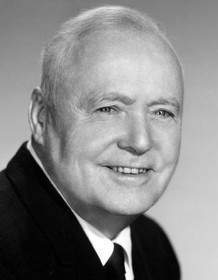
Henry Hathaway
Made by

20th Century Fox
Kiss of Death Plot Summary
Read the complete plot summary and ending explained for Kiss of Death (1947). From turning points to emotional moments, uncover what really happened and why it matters.
On Christmas Eve, a down-on-his-luck ex-convict Nick Bianco [Victor Mature] and three colleagues pull off a jewelry-store heist. They get away for a moment, but the injured proprietor hits the silent alarm, turning a quick score into a desperate scramble. In the chaos, Nick strikes a police officer and is wounded and arrested, beginning a case that will ripple through his life.
Assistant District Attorney Louis D’Angelo [Brian Donlevy] tries to persuade Nick to name his accomplices in return for a light sentence. Nick believes that his partners, along with his lawyer Earl Howser [Taylor Holmes], will look after his wife and two young daughters while he serves time, so he refuses to cooperate. The system responds with a sentence that shocks him: a twenty-year term that alters the trajectory of everything he knows.
Three years later, at Sing Sing, Nick learns that his wife has taken her own life after months without word from him. The news lands with a blunt weight, and the prison walls feel even more confining as he grapples with what he could have done differently.
Nick is visited by Nettie Cavallo [Coleen Gray], a former babysitter for his daughters, who brings troubling news: his children are in an orphanage. The encounter rekindles a sense of responsibility, but it also creates pressure to trade information for a chance at freedom. Nick contemplates revealing everything to D’Angelo, yet time has already closed the door on using that confession to shave years off his sentence. Instead, D’Angelo keeps Nick in the city jail and uses him as an informant, maintaining the illusion of his usefulness to the system while quietly shaping perceptions around his guilt.
To keep Nick tethered to the obligations of his confinement, Howser arranges for Tommy Udo [Richard Widmark], a psychopathic killer who shared time with Bianco, to handle a looming problem. When Udo arrives at the tenement of Nick’s former accomplice, he discovers the man is gone, and only the mob-connected mother remains. Udo punctures the illusion of safety by binding her to a wheelchair and pushing her down a flight of stairs, a brutal reminder of the lengths he will go to tie up loose ends.
Freed on parole at D’Angelo’s explicit urging, Nick visits Nettie and reaffirms his love for her and their children. Yet to stay out, he must keep working with D’Angelo. He stages a convenient, almost casual reunion with Udo, posing as an old prison buddy to gain the killer’s trust. The two men spend a night touring clubs—some of them shadowed by narcotics activity—while Nick quietly feeds back to D’Angelo, who is satisfied that he can secure a charge against Udo and a conviction later. After this, D’Angelo scales back Nick’s involvement, signaling that Nick should focus on keeping his own life stable.
Nick starts anew in Astoria, Queens, building a life with Nettie and their children. When Udo’s trial finally arrives, D’Angelo brings Nick into the courtroom on the premise of testimony, but Udo is acquitted, leaving Nick to face the grim reality that danger—whether legal or criminal—will always be chasing him.
Believing that Udo will seek revenge, Nick sends Nettie and the kids out of the city to keep them safe. He heads to East Harlem and tracks Udo to Luigi’s restaurant, where Udo is waiting with threats against Nettie and the children. Nick reminds Udo of the night when incriminating information about Udo slipped out into the world, a reminder that could crush him in a courtroom or on the street.
Nick phones D’Angelo and asks him to come with the police to the restaurant within two minutes. He steps outside and prepares for what comes next. Udo steps out to his waiting car, and a tense confrontation culminates in a manhunt. Udo fires first, and Nick is shot as police close in; the killer is quickly surrounded, and the arrest follows. Wounded but alive, Nick finds solace in the knowledge that he and Nettie can still dream of a quiet, loving life together.
The story drifts between grit and moral reckoning, painting a portrait of a man who tries to do right by his family in a world that makes that task perilous. It threads together the pressures of the legal system, the lure of informant deals, and the violence that follows those choices, all while tracing Nick Bianco’s stubborn resilience. In the end, the film leaves Nick and Nettie looking toward a future they hope will be safer and simpler, even as the memory of the past lingers as a constant, fragile thread.
Kiss of Death Timeline
Follow the complete movie timeline of Kiss of Death (1947) with every major event in chronological order. Great for understanding complex plots and story progression.
Jewelry store robbery and Nick's arrest
Nick Bianco and three accomplices rob a jewelry store on Christmas Eve. The proprietor triggers the alarm, forcing a hurried escape. In the ensuing confrontation, Nick assaults a police officer, is wounded, and taken into custody.
D'Angelo offers leniency to name accomplices; Nick refuses
The Assistant District Attorney, Louis D'Angelo, tries to persuade Nick to name his partners in exchange for a lighter sentence. Nick refuses, convinced his wife and children will be cared for while he is imprisoned. As a result, he is given a twenty-year sentence.
Three years into prison: Nick learns of his wife's suicide
Three years into his sentence at Sing Sing, Nick discovers that his wife has committed suicide after not writing for three months. The revelation shocks him and underlines the personal cost of his incarceration.
Nettie visits; daughters in an orphanage; decision to talk to D'Angelo
Nettie Cavallo, who used to babysit Nick's daughters, visits him in prison and reveals that his children are in an orphanage. He considers cooperating with D'Angelo to win a lighter sentence and see his kids, but the time elapsed undermines that option. D'Angelo instead keeps Nick in the city jail and uses him as an informant.
Howser brings in Tommy Udo to deal with Rizzo
Howser arranges for Tommy Udo, a violent former prisoner, to deal with Pete Rizzo. Udo arrives at Rizzo's tenement, where Rizzo's mother is present, and ultimately kills her by binding her to a wheelchair and pushing her down stairs. The murder signals Udo's readiness to eliminate threats.
Nick is released on parole; visits Nettie; must keep working
Nick is freed on parole at D'Angelo's urging and visits Nettie, renewing his vows. To stay out of trouble and see his children, he must continue working for D'Angelo and maintain a clean image.
Nick meets with Udo to gather evidence; D'Angelo approves
Nick stages a chance encounter with Udo, posing as an old prison pal. Udo takes him to several clubs where narcotics are smoked, and Nick reports back to D'Angelo. Satisfied that he has enough to indict Udo, D'Angelo releases Nick from further work.
Nick starts a new life in Astoria with Nettie and the children
Nick relocates with Nettie and their children to Astoria, Queens, attempting to build a normal life away from his criminal past. He keeps his past mostly hidden as he negotiates family life.
Udo's trial begins; acquitted; Nick testifies
Udo's trial opens and, despite Nick's testimony, Udo is acquitted. D'Angelo summons Nick to testify, hoping to secure a conviction, but the verdict underscores Udo's immunity from Nick's information.
Nick anticipates revenge; Nettie and the girls sent to the country
Fearing Udo's retaliation, Nick sends Nettie and the children to the country for safety. He remains in the city, bracing for further danger while trying to protect his family from the shadows of his past.
Final confrontation at Luigi's: Nick confronts Udo
Nick locates Udo at Luigi's restaurant in East Harlem and calls D'Angelo to bring police in exactly two minutes. Udo leaves to wait in his sedan; a confrontation ensues, and Udo shoots Nick. Police arrive, Udo is shot and arrested, but Nick is badly wounded yet survives.
Aftermath: Nick and Nettie look toward a peaceful life
Though badly wounded, Nick survives and, with Nettie by his side, looks forward to a peaceful life together. The future remains fragile, but the couple clings to the possibility of a normal family life.
Kiss of Death Characters
Explore all characters from Kiss of Death (1947). Get detailed profiles with their roles, arcs, and key relationships explained.
Nick Bianco (Victor Mature)
An ex-convict who refuses to name his partners, wagering on a chance to reunite with his daughters. He navigates a corrupt system by trading information with the DA while trying to protect his family. His stubborn pride, tempered by vulnerability, drives his choices as he confronts loyalty, guilt, and the limits of self-preservation.
Louis D'Angelo (Brian Donlevy)
The Assistant D.A. who uses Nick as an informant to build a case, blurring ethical lines for political advantage. He keeps Nick close to manage outcomes while pursuing his own agenda. His manipulation highlights how power and ambition can corrupt the legal process.
Nettie Cavallo (Coleen Gray)
A former babysitter who reconnects with Nick and becomes a core emotional anchor for his family. She embodies loyalty and moral clarity in a world of compromise. Her presence emphasizes the personal stakes behind the crime and the impact on innocent lives.
Tommy Udo (Richard Widmark)
A psychopathic killer who embodies unrestrained violence and danger. He relentlessly presses Nick into a tangled web of crime, serving as a brutal obstacle Nick must outmaneuver. His actions catalyze the film’s most intense confrontations.
Earl Howser (Taylor Holmes)
A go-between for criminals who influences Nick's fate through backroom deals and appearances of propriety. He helps steer outcomes while enabling the criminal network’s ambitions. His role reveals how outsiders can shape justice from the shadows.
Kiss of Death Settings
Learn where and when Kiss of Death (1947) takes place. Explore the film’s settings, era, and how they shape the narrative.
Time period
Mid-1940s
The events occur in the mid-1940s New York, starting on Christmas Eve and spanning several years. Nick Bianco’s life shifts from a botched jewelry-store robbery to prison, parole, and a tense informant arrangement with the district attorney. The period’s urban crime climate shapes the characters’ choices, emphasizing urgency, danger, and moral ambiguity.
Location
New York City, Sing Sing Prison, Astoria (Queens), East Harlem
The story unfolds across New York City, moving from gritty urban streets to Sing Sing Prison. It also visits neighborhoods like Astoria in Queens and East Harlem, anchoring the drama in a densely populated, crime-prone environment. The setting contributes to a classic noir atmosphere, with dim diners, crowded tenements, and the looming presence of law enforcement and criminal networks.
Kiss of Death Themes
Discover the main themes in Kiss of Death (1947). Analyze the deeper meanings, emotional layers, and social commentary behind the film.
⚖️
Justice vs. Corruption
The film probes how the legal system can be manipulated by personal agendas. D'Angelo uses Nick as a pawn to build a case, blurring ethical lines and prioritizing outcome over integrity. Nick’s reluctance to betray his partners exposes the fragility of trust in a system driven by deals and expedience. The narrative questions whether true justice can survive in a world where power and self-interest override principle.
👪
Family and Sacrifice
Nick’s family is the emotional core that anchors his decisions, and their safety drives his calculations. The suicide of his wife and the looming threat to his children intensify the stakes beyond mere crime. Nettie’s presence further complicates loyalties, highlighting the human cost of crime and the tough choices people make to protect loved ones. The theme explores what a person is willing to sacrifice for family.
🗡️
Revenge and Survival
Vengeance and survival drive the cat-and-mouse dynamics between Nick and Udo. Udo’s brutal acts escalate tension and push Nick toward a climactic confrontation. The restaurant showdown becomes a test of wits, nerve, and moral resolve, where every move could mean life or death. The ending reinforces that in a world of crime, staying alive often requires hard, strategic choices.

Coming soon on iOS and Android
The Plot Explained Mobile App
From blockbusters to hidden gems — dive into movie stories anytime, anywhere. Save your favorites, discover plots faster, and never miss a twist again.
Sign up to be the first to know when we launch. Your email stays private — always.
Explore the mobile appKiss of Death Spoiler-Free Summary
Discover the spoiler-free summary of Kiss of Death (1947). Get a concise overview without any spoilers.
In a gritty post‑war city where neon signs flicker over rain‑slicked sidewalks, the atmosphere feels both weary and electric, a place where every promise is shadowed by a hidden cost. The world of Nick Bianco is one of hard‑won routine and fragile hope: an ex‑convict freshly released, determined to rebuild a life that has long been on hold. He carries the weight of his past like a worn badge, and the restless hum of the streets constantly reminds him that the line between redemption and relapse is razor thin.
Nick returns to a modest home that still holds the echo of his wife’s laughter and the promise of two young daughters. He leans on the help of Louis D’Angelo, a sharp‑tongued assistant district attorney who offers him a chance to navigate the legal maze, and Earl Howser, a seasoned lawyer who promises protection for his family. An unexpected visit from Nettie Cavallo, a trusted confidante from his children’s early years, adds a tender thread of loyalty and perhaps something more, deepening the emotional stakes as Nick tries to keep his world from unraveling.
Yet the city’s underbelly refuses to let him forget the darkness he once inhabited. Tommy Udo looms as a menacing presence, a volatile figure whose very name conjures a sense of imminent danger. Their past connection hints at an uneasy cat‑and‑mouse game, a constant reminder that the shadows can reach out with a cold, vengeful grip at any moment. The tension between Nick’s yearning for normalcy and the relentless pull of this threatening specter drives the film’s relentless, noir‑tinged pulse.
The story unfolds as a study of moral compromise, where loyalty, love, and survival intersect against a backdrop of corrupt institutions and unforgiving streets. Nick’s resolve is tested not just by external threats but by the internal battle to protect what matters most, leaving the audience poised on the edge of anticipation, wondering how far a man will go when every breath feels like a wager.
Movies with Similar Twists and Themes
Uncover films that echo the narrative beats, emotional arcs, or dramatic twists of the one you're exploring. These recommendations are handpicked based on story depth, thematic resonance, and spoiler-worthy moments — perfect for fans who crave more of the same intrigue.

Featured on this page

What's After the Movie?
Not sure whether to stay after the credits? Find out!
Check out our other apps:

SAT Sphere
Build confidence for the Digital SAT.

Mori Atlas
Discover wild places worth protecting.

Luntero
Search smarter for a home in Amsterdam.

Plot Explained
Unravel movie endings and hidden clues.

Pokechamp
Dive into Pokémon data and battle logic.

Driving Theory
Get ready for your European theory test.

Movie Dust
Plan your next cinema trip with ease.

Musemap
Find art and culture as you travel.

Selkobase
Compare credentials before committing.

Local Manual
Turn an unfamiliar country into practical next steps.

Lernavi
Compare school systems before your next move.

GymRoam
Find a workout stop wherever your plans take you.
Explore Our Movie Platform
New Movie Releases (2026)
Famous Movie Actors
Top Film Production Studios
Movie Plot Summaries & Endings
Major Movie Awards & Winners
Best Concert Films & Music Documentaries
Movie Collections and Curated Lists
© 2026 What's After the Movie. All rights reserved.
Privacy Policy