What Is Keep an Eye Out About?
The premise of Keep an Eye Out in 346 words, with nothing given away. The full story follows below.
In a cramped, dimly lit precinct that feels more like a surreal theater than a police station, an ordinary night takes a disquieting turn. When a man’s lifeless form is discovered near his apartment building, the mundane rhythm of city life shatters, and the boundaries between routine procedure and something far stranger begin to dissolve. The atmosphere is thick with a lingering claustrophobia, punctuated by the hum of fluorescent lights and the faint echo of a distant siren, suggesting that reality itself may be as uncertain as the clues that surround it.
Louis Fugain is thrust into the center of this unease, a seemingly everyday citizen whose life is suddenly interrogated under the stark glare of law enforcement. He is polite yet bewildered, trying to piece together a narrative that can exonerate him while the world around him tilts into absurdity. His internal struggle—balancing fear, confusion, and an instinct to clear his name—creates a tense, almost palpable intimacy with the audience, who are invited to experience the dread of being misunderstood by an institution that feels both familiar and alien.
Across the interrogation table sits Captain Buron, whose methodical calm masks an unsettling eccentricity. His questions are relentless, his demeanor cool, and his occasional off‑hand remarks hint at a mind that drifts between professional duty and a more enigmatic, perhaps even theatrical, perspective on truth. The captain’s presence infuses the scene with a dry, deadpan humor that undercuts the gravity of the situation, leaving viewers questioning whether his interrogations are meant to extract facts or to perform a strange ritual of power.
The film drifts between stark procedural realism and a dream‑like haze where memory, perception, and imagination intersect. As Louis navigates a maze of testimonies, fleeting visions, and an interrogation that feels both invasive and oddly performative, the line between what is happening and what is imagined becomes increasingly opaque. This lingering ambiguity shapes a tone that is at once tense, absurd, and darkly comic, inviting the audience to wonder how far reality can stretch before it snaps back—or simply becomes part of the act.
What Happens in Keep an Eye Out?
The complete story of Keep an Eye Out, from the first scene to the last, in 599 words (about 3 minutes). Spoilers throughout. Names in the text link to 5 cast member pages.
Spoilers ahead
In a large office, Commissaire Buron, Benoît Poelvoorde, continues the interrogation of Louis Fugain, Grégoire Ludig seated before him, even denying him a break to eat. Fugain had found a man bathed in blood outside his home, searched the corpse, and then called for help—a detail that surprises Buron and keeps the questioning going as the tension thickens.
Buron steps out for a moment to speak with his son, Orelsan Sylvain Buron, and to grab a hot dog, a small pause that contrasts with the intensity back in the room. Meanwhile, another part of the case unfolds: Philippe, Marc Fraize, a rookie one-eyed policeman, is assigned to shadow Fugain and see whether he truly fits the night’s puzzling tale. Philippe tries to connect by showing his badge and starting a conversation, but he clumsily trips over an open drawer and dies right there, a square object piercing his eye as he falls. The shock of the moment leaves Fugain panicked, and he quickly hides the body in a cupboard, scrubbing away any blood traces.
When Buron returns, the interrogation resumes with his usual calm, slow cadence. Fugain’s narrative becomes tangled as his neighbor’s testimony surfaces: Narta, Jeanne Rosa, swears she saw Fugain leave her apartment seven times during the night. Fugain proceeds to recount his movements in meticulous detail, while Buron smokes and listens, even describing a strange vision of a hole in his own chest as if the two of them share a surreal bond through memory and reality.
As the questioning continues, Fugain’s memories begin to mingle with his reality. He sees Philippe, now a figure from his recollections, appear and interact with him, and then Philippe’s wife also materializes in the stream of memories. Fugain even hints that he will rendezvous with them again in a few days, asserting that Philippe will die accidentally. Hunger gnaws at Fugain, and Buron, irritated by the complaint, recalls his own hunger after a harrowing helicopter crash on a desert island, a memory that bleeds into Fugain’s impression of the case.
Fugain’s hunger and discomfort give way to more unsettling visions: Buron materializes in Fugain’s apartment, and the interrogation scene spirals into a collage of memories and imagined conversations. Outside, a colleague, Champonin, presents the forensic report: the dead man was the victim of a digestive hemorrhage, an accident that would suggest Fugain’s release. Yet Champonin soon discovers an eye on the floor, a clue that points to Philippe’s involvement.
As the truth begins to blur, the curtain literally rises: the police station reveals itself as a stage, and the audience rises to its feet, applauding the performance. Philippe, still alive, emerges from a closet, shedding his disguise because, in this moment, he and the others are revealed to be actors, not real police at all. Fugain remains the sole person convinced he’s the prime suspect, and the others acknowledge their roles in the elaborate play.
With the confounding reveal, the group heads to a brewery to debrief and joke about acting and the critics’ reviews they’ve earned. They share a quiet, reflective bite of dinner, discussing how performances shape perception and memory, and how lines between truth and illusion can blur when life imitates art. When they part ways, Fugain expresses gratitude to Buron for the strange, enlightening experience, while Buron resumes his stern authority, handcuffs in place, and informs him that the interrogation will resume in the morning. Fugain is taken back to the police station, and Buron returns home, leaving the case—and the night—to linger in the memory of what was real, and what was merely performed.
Keep an Eye Out Timeline: Every Key Event in Order
15 key events in the order they happen, from “Interrogation starts in the police office” to “Ending: arrest and return to normal life”. 15 events name a place, across 13 locations.
- 1
Interrogation starts in the police office
In a large office, Commissaire Buron continues the interrogation of Fugain and does not allow him to eat. Buron presses for answers while Fugain offers cautious, evasive responses. The tension in the room grows as the clock ticks.
When:Night Where:Police station, Buron's office
- 2
Discovery of the corpse outside Fugain's home
Fugain discovers a man bathed in blood outside his home and searches through the victim's pockets. He calls for help, which startles Buron and sharpens the sense that the case is moving forward. The discovery immediately escalates the stakes of the interrogation.
When:Night Where:Outside Fugain's home
- 3
A quick break: Buron eats a hot dog with his son
Buron goes out for a few moments to talk with his son and to eat a hot dog. This brief break provides a stark contrast to the grim interrogation back inside. He returns to press Fugain with renewed intensity.
When:During break Where:Outside the police station
- 4
Philippe is assigned and dies unexpectedly
Philippe, a novice one-eyed policeman, is tasked with monitoring Fugain. He tries to display his police badge, trips over an open drawer, and dies as a square object pierces his eye. Fugain panics and watches as chaos erupts around him.
When:Early investigation Where:Police station / hallway
- 5
Fugain hides the body and cleans up
In a panic, Fugain hides the body in a cupboard and wipes away traces of blood. He works quickly to cover up the scene before the interrogation continues. The room fills with a tense, suspect atmosphere as Buron resumes questioning.
When:Immediately after murder Where:Fugain's home
- 6
Neighbor testimony about Fugain's movements
During the interrogation, Fugain's neighbor says she saw him leave her home seven times during the night. The testimony adds a puzzling layer to the suspect's movements. Buron notes the inconsistency and presses Fugain for precise details.
When:During interrogation Where:Police interrogation room / neighbor's testimony location
- 7
Fugain recounts his night; Buron smokes
Fugain explains in detail what he did during the night while Buron listens and smokes. As he speaks, Buron remarks on a strange sensation, describing a hole in his own chest which blurs the line between memory and reality.
When:During interrogation Where:Interrogation room
- 8
Pregnancy news and odd family interaction
Philippe's wife announces she is pregnant and searches for her husband. Fugain lies that he left because of a stomach ache, and the couple's exchange is peppered with 'That's why', a cadence that annoys Buron.
When:During interrogation Where:Police station / hallway
- 9
Memory merges with reality: encounters with Philippe and his wife
Fugain's memories mingle with reality as Philippe appears in his recollections and interacts with him, followed by Philippe's wife. He predicts that he will meet them again a few days later during the interrogation and that Philippe will die accidentally.
When:During interrogation Where:Memory flashbacks
- 10
Hunger and desert island fantasy
Fugain complains of hunger; Buron compares his own hunger during a desert island helicopter crash. Fugain envisions Buron on a beach and is given an oyster; not knowing how to eat it, he crunches the shell.
When:During interrogation Where:Memory sequence (beach)
Show the other 5 events of Keep an Eye Out Hide the last 5 events
- 11
Buron’s apartment moment and resemblance
Buron appears in Fugain's apartment and the two react to screams; outside, Buron notices a striking resemblance between Fugain's spy neighbor and one of his colleagues.
When:During investigation Where:Fugain's apartment
- 12
Forensic report and the eye’s telltale clue
Champonin brings the forensic report: the man found dead by Fugain died from a digestive hemorrhage, an accident. He finds an eye on the ground and deduces that it belongs to Philippe.
When:After initial interrogation Where:Police station
- 13
Curtain reveal: the station is a theater
The curtain opens; the police station is revealed to be the stage of a theater. The audience stands and applauds while Philippe, still alive and unscarred, comes out of the closet and removes his disguise. They are all actors except Fugain.
When:Curtain moment Where:Police station theater stage
- 14
Brewery dinner and the truth about acting
They go to a brewery to discuss acting and first critics, sharing stories as if in rehearsal. The line between reality and performance becomes even blurrier as they reflect on the experience.
When:After the reveal Where:Brewery
- 15
Ending: arrest and return to normal life
Fugain thanks Buron for the experience, but Buron cuffs him and says the interrogation will resume in the morning. Fugain is escorted back to the police station, and Buron returns home, the case left altered by the theater twist.
When:Night to morning Where:Police station
Who Are the Main Characters in Keep an Eye Out?
14 characters, among them Commissioner Buron (Benoît Poelvoorde), Louis Fugain and Philippe, the one-eyed policeman: who each one is and the part they play in the story. Every profile links to the actor’s page.
-
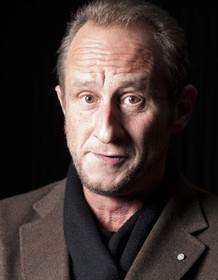
Commissioner Buron (Benoît Poelvoorde)
Played by Benoît Poelvoorde
A stern, probing detective who pushes Fugain through a relentless interrogation. His calm exterior hides a tolerance for pressure, and he occasionally confuses his own memories with the unfolding scene as the case blurs with theater. He orchestrates the shift from a real investigation to a staged performance.
- 🎭
- 🕵️ Interrogator
- 👀 Authority
-

Louis Fugain
Played by Grégoire Ludig
The prime suspect whose account is tangled with memory and fear. He alternates between confident explanations and nervous lies, and his memories begin to fracture as the interrogation progresses. Fugain's perception is distorted as the line between truth and theater narrows.
- 🕵️ Suspicion
- 🧠 Memory
- 🗣️ Alibi
-

Philippe, the one-eyed policeman
Played by Orelsan
A novice officer who tries to project confidence by showing his badge, but dies suddenly, his eye pierced by a square. In a twist, he appears alive later, revealing the events are part of a staged performance. His fate becomes a catalyst for the revelation of the play-like nature of the investigation.
- 🕵️
- ⚰️ Death
- 👁️ One-eyed
- C
Champonin
Played by Philippe Duquesne
Colleague who presents the forensic report, calling the victim's death an accident due to digestive hemorrhage. He anchors the investigation in pseudo-science while the theater twist undermines the certainty of the results.
- 🧪 Forensics
- 🧭 Clarity
- CT
Chevalet, the victim
Played by Johnny Malle
The man found dead becomes a plot device whose status as victim or prop shifts as the reality-of-the-scene is questioned. His death triggers the interrogation but is later reframed within the theatrical reveal.
- ⚰️ Victim
- 🧩 Plot
-

Fiona, Philippe's wife
Played by Anaïs Demoustier
Philippe's wife, who reveals she is pregnant, introducing a personal stakes element into the interrogation. Her presence in the story adds emotional tension and hints at hidden pressures beneath the police routine.
- 💍
- 🫶 Family
- N
Narta
Played by Jeanne Rosa
The neighbor who testifies about Fugain's movements, contributing to the mounting pressure on Fugain. Her testimony becomes a thread in the web of misdirection and performance.
- 🗣️ Witness
- 🕵️♀️ Neighbor
- F/
Franchet / Carine Lustain
Played by Jacky Lambert
A colleague with a dual role or appearance in the scene, contributing to the ensemble cast and the sense of theater within the investigation.
- 🎭
- 🧩 Ensemble
- TC
The conductor in red underpants
Played by Laurent Nicolas
A quirky figure who appears as part of the stage world within the station, underscoring the film's playful blurring of roles and authority.
- 👖
- 🎭 Cameo
- LF
Louis Fugain (young)
Played by Nahel Ange
The younger version of Fugain seen in memory, reinforcing how past events haunt the present interrogation and shape the suspect's narrative.
- 🧒
- 🕳️ Memory
- D
Daniel
Played by Vincent Grass
A character who occupies the broader world around the station, hinting at the environment in which this case unfolds.
- 🧭
- 🗺️ Supporting
- P2
Policeman 2
Played by Pedro Winter
A member of the police team who adds to the procedural texture of the scene.
- 👮
- 🧩 Supporting
- L
Louise
Played by July Messéan
A character who appears in the police world, contributing to the ensemble dynamics.
- 👩
- 🗂️ Supporting
- TV
The victim's cry
Played by Alain Chabat
The voice-line from the victim adds a surreal layer to the mystery and helps set the theatrical mood of the piece.
- 🎤
- 🗣️ Voice
Where and When Is Keep an Eye Out Set?
Keep an Eye Out is set in Police station, Theater stage and Brewery. Here is why the place matters to the story.
Where
Police station, Theater stage, Brewery
Most of the action unfolds inside a police station where a tense interrogation of Fugain takes place. The narrative later reveals that the police station doubles as a theater stage where actors play the roles, blurring lines between performance and reality. After the interrogation, the group goes to a brewery to discuss the play and critics.
- 🏛 Police station
- 🎭 Theater
- 🍺 Brewery
What Are the Themes of Keep an Eye Out?
3 ideas the story keeps returning to, among them Reality, Memory and Time.
-
01
Reality
The interrogation unfolds as a staged performance, and the later reveal that the police station is a theater space forces the viewer to question what is real. Characters miscommunicate, and guilt seems to hinge on perception as much as events. The film uses theater as a lens to blur truth and fiction, turning confession into performance.
-
02
Memory
Fugain's memories mingle with reality, making it unclear whether what he recalls happened or was imagined on stage. The loop between remembered actions and what actually occurred drives the suspense and misdirection. The narrative relies on unreliable memory to sustain doubt about who is guilty.
-
03
Time
Time feels fluid as memories surface alongside present interrogation, and the stage-projection of events reshapes the sequence of cause and effect. Flashbacks and dreamlike sequences merge with the live scene, creating an ambiguity about when things happened. The pacing mirrors the shift from investigation to theatrical reveal.
What Kind of Film Is Keep an Eye Out?
Whimsical in tone, with steady pacing and a complex story, going by the plot summary.
- Tone
- Whimsical
- Pacing
- Steady
- Story
- Complex
- Intensity
- Medium
- Ending
- Ambiguous
A whimsical and surreal dark comedy that blends a tense police interrogation with absurdist humor and a mind-bending twist where performance art blurs the line between reality and fiction.
- absurd
- surreal
- bizarre
- playful
- confusing
- unsettling
- investigation
- interrogation
- theater
- performance
Content notes: blood, accidental death, dead body.
Quiz
How well do you remember Keep an Eye Out? Test yourself on the story.