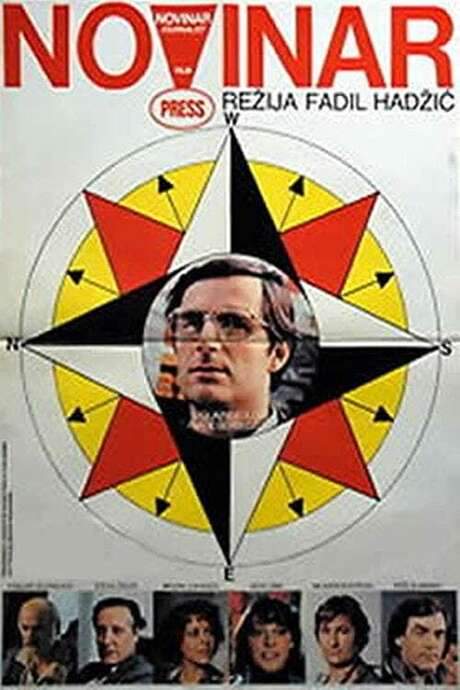
Journalist 1979
Directed by

Fadil Hadžić
Made by

Radna
Journalist Plot Summary
Read the complete plot summary and ending explained for Journalist (1979). From turning points to emotional moments, uncover what really happened and why it matters.
Vlado Kovač Rade Šerbedžija is a journalist at a Zagreb daily newspaper. One morning, in a drunken outburst, he attacks a newsstand and throws the newspapers to the ground. This incident triggers a tense meeting of the journalists’ communist organization, where Kovač’s case becomes the focal point of a broader debate about control and freedom in reporting. The root cause of his revolt is his sense that journalistic freedom is narrowing at the paper: the article about the workers’ strike at the Mikros tools factory was halted by Mirko, the editor Tonko Lonza. In the same session, Kovač is sharply confronted by Tomac Stevo Žigon and is defended by Nada Vera Zima, a colleague who recognizes the importance of his reporting and its costs.
Things take a turn for the worse for Kovač when Tomac becomes the new editor. He respects Kovač as a highly capable journalist and tries to win him over, but Kovač remains steadfast in his principles. Kovač’s wife Milena Zupančič criticizes him for vanity and alcohol abuse, leaves him, and files for divorce, highlighting the personal toll of his professional battles. There is a shift in the Mikros strike when the Party decides to side with the workers, and Tomac now offers Kovač a chance to craft an article mirroring the originally censored piece, which Kovač refuses, choosing integrity over conformity.
Kovač then befriends Kos Fabijan Šovagović, an aging journalist whose life mirrors his own: highly educated, devoted to his craft, yet gradually worn down by disillusion and alcoholism. When Kos dies from an alcohol overdose, Kovač writes his obituary — only to find it heavily censored in the newspaper the next day, a stark reminder of how perception and memory can be controlled by editors and authorities alike.
Journalist Timeline
Follow the complete movie timeline of Journalist (1979) with every major event in chronological order. Great for understanding complex plots and story progression.
Vlado's drunken outburst at the newsstand
In the morning, Vlado Kovač erupts in a drunken outburst and attacks a street newsstand, scattering the papers across the ground. The incident shocks his colleagues and sets off a chain reaction within the newsroom. The event exposes his volatile state and becomes the trigger for disciplinary discussions by the journalists' organization.
Journalists' communist organization holds a meeting
A meeting of the journalists' communist organization is convened to discuss Kovač's behavior and position. The group debates whether his conduct reflects on the press and what should be done about him. The discussion reveals underlying tensions about journalistic freedom within the newspaper.
Censorship becomes the root cause
It emerges that Kovač's article about the Mikros tools workers' strike was blocked by editor Mirko. The blocked piece is portrayed as the central symptom of broader censorship within the paper. The meeting highlights the conflict between truth-telling and the editorial line.
Confrontation with the editor
Tomac, the incoming editor, sharply confronts Kovač over the censorship issue. Nada, Kovač's colleague, defends him, arguing for professional integrity. The exchange marks a turning point in their working relationship.
Tomac assumes control and reaches out
Tomac becomes the editor and attempts to win Kovač over with offers and promises of change. Kovač remains steadfast, refusing to compromise his principles. The dynamic sets the stage for growing tension between them.
Kovač's personal life unravels
Kovač's wife leaves him and files for divorce, criticizing his self-centeredness and alcohol abuse. The personal setback compounds his professional frustration. The separation deepens his alienation from the newsroom and his peers.
The party shifts to support the workers
There is a political turn as the Party decides to side with the Mikros workers, changing the leverage of the strike. Tomac uses this shift to propose fresh coverage that would challenge Kovač's censored piece. The move underscores the intersection of politics and journalism in the story.
Kovač is asked to write the censored piece
Tomac commissions Kovač to craft an article similar to the one originally blocked, but Kovač refuses to produce it. He stands by his refusal to participate in censorship and pressure. The refusal deepens his isolation within the newsroom.
Kovač befriends Kos, the veteran journalist
Over time, Kovač befriends Kos, an older, highly educated journalist who shared the same dedication to the craft. The relationship reveals how ambition can sour into cynicism and alcoholism. Their bond mirrors Kovač's own trajectory in the newsroom.
Kos's death and the obituary
Kos dies from an alcohol overdose, leaving Kovač to write his obituary. The piece arrives with the weight of their shared history and professional ideals. It marks a personal tragedy that foregrounds the cost of their era's cynicism.
Obituary is censored the next day
Kos's obituary for Kos is heavily censored in the newspaper the following day, erasing much of his legacy. The censorship serves as a stark reminder of the system's grip on individual stories. This act deepens Kovač's disillusionment with the press.
The toll of censorship persists
The sequence underscores the ongoing censorship and its toll on Kovač and the profession. He remains isolated as the newsroom's pressures and political forces continue to shape the truth-telling he believes in. The film closes with a somber meditation on journalism under constraint.
Journalist Characters
Explore all characters from Journalist (1979). Get detailed profiles with their roles, arcs, and key relationships explained.
Vlado Kovač — Rade Šerbedžija
Vlado Kovač is a committed journalist whose frustration with limited journalistic freedom spills into a drunken outburst that triggers a newsroom crisis. He clashes with the new editor and with the party's censorship. Despite his brilliance, he wrestles with self-destructive tendencies and ultimate loyalty to the truth. His fight to publish the uncensored piece about the Mikros strike defines the film's critique of state-controlled media.
Nada — Vera Zima
Nada stands as Kovač's ally in the newsroom, defending his work during the journalists' meeting. She embodies professional loyalty and pragmatic support, trying to keep integrity within a system of political pressure. Her presence shows that not all colleagues capitulate to censorship.
Mirko — Tonko Lonza
Mirko is the editor who initially blocks Kovač's article, embodying the censorship that constrains journalism. When the party shifts its stance, he becomes a pivot point in the newsroom power struggles, balancing loyalty and control. His decisions reveal how editorial leadership can bend to political winds.
Stanko Kos — Fabijan Šovagović
Stanko Kos is an older, once-idealistic journalist who has become embittered by years in the trade. He copes with disillusionment through alcohol, a reflection of the era's toll on journalists. His death from an overdose and the censored obituary expose the brutal consequences of censorship and the erasure of memory.
Tomac — Stevo Žigon
Tomac becomes the editor when the party takes a heavier hand. He tries to win Kovač over but ultimately supports the state's control of the press. His arc illustrates how power can reshape newsroom loyalties and steer editorial direction.
Kovačeva supruga — Milena Zupančič
Kovač's wife condemns his self-centeredness and alcoholism, leaves him, and files for divorce. Her departure highlights the personal cost of the public battles over truth and freedom.
Journalist Settings
Learn where and when Journalist (1979) takes place. Explore the film’s settings, era, and how they shape the narrative.
Time period
The events take place in a socialist state where the party directly shapes editorial policy and media freedom is constrained. Industrial unrest and political maneuvering provide a tense backdrop for journalistic activity. The atmosphere evokes late 20th-century Eastern European political life, where personal ambition and public duty collide under state surveillance.
Location
Zagreb, Croatia, Mikros Tools Factory
The story unfolds in Zagreb, the capital city where a state-influenced press and bustling newsroom shape the narrative. The Mikros Tools Factory serves as a focal point for the workers' strike that drives the plot and exposes tensions between labor, industry, and the party. The newsroom and newspaper offices sit at the heart of the city’s political and social tension.
Journalist Themes
Discover the main themes in Journalist (1979). Analyze the deeper meanings, emotional layers, and social commentary behind the film.
🗞️
Press Freedom
Vlado Kovač battles against censorship and gatekeeping within the newsroom. The film tracks his struggle to publish a piece about a workers’ strike that conflicts with editorial and party expectations. The tension reveals how truth and control contend for dominance in a state-controlled media system. It questions whether journalism can survive when power dictates what can be seen.
🍷
Alcoholism
Alcohol abuse looms over Kovač and Kos, symbolizing the personal toll of political and professional pressure. Their drinking becomes a coping mechanism for disillusionment and frustration with the system. The movie uses these personal slips to critique how the environment corrodes integrity. It highlights how fame and failure can blur ethical boundaries.
⚖️
Censorship & Integrity
Censorship directly sharpens the conflicts between editors, journalists, and the party. The censored obituary of Kos underscores the erasure of memory and dissent. The film examines how institutional power rewrites narratives and casualties of truth emerge in both public and private life. It asks whether integrity can endure under systemic suppression.

Coming soon on iOS and Android
The Plot Explained Mobile App
From blockbusters to hidden gems — dive into movie stories anytime, anywhere. Save your favorites, discover plots faster, and never miss a twist again.
Sign up to be the first to know when we launch. Your email stays private — always.
Explore the mobile appJournalist Spoiler-Free Summary
Discover the spoiler-free summary of Journalist (1979). Get a concise overview without any spoilers.
In the smoky press rooms of a Zagreb daily, the weight of a nation’s restless history presses down on every ink‑stained desk. The film follows Vlado Kovač, a seasoned reporter whose sharp eye catches the contradictions of a society still reeling from the breakup of Yugoslavia. Around him, the newspaper functions as both a battlefield and a sanctuary, where the promise of journalistic truth collides with the ever‑present shadow of party oversight, creating a tense, almost claustrophobic atmosphere that hums with whispered dissent.
The newsroom’s hierarchy is a study in uneasy alliances. Tomac, the newly appointed editor, admires Kovač’s talent yet represents the subtle pressure to align stories with the prevailing political line. Across the table, Nada offers a quiet yet firm defense of the reporter’s convictions, embodying the camaraderie that keeps the staff’s spirits from snapping entirely. Meanwhile, Mirko, the veteran editor who once halted a crucial piece on a factory strike, serves as a reminder of how editorial decisions can reshape public perception, adding another layer of complexity to the daily grind.
Beyond the pressroom, Kovač’s personal life mirrors the professional strain. His wife Milena confronts him about his mounting vanity and reliance on alcohol, a tension that threatens to unravel the fragile balance he maintains between duty and self‑destruction. The film paints a portrait of a man caught in a perpetual tug‑of‑war between his own ideals and the practicalities of survival in a system that rewards conformity.
Amidst the swirl of headlines and the ever‑present specter of censorship, the story also introduces Kos, an aging journalist whose lifelong devotion to the craft has been eroded by disillusion and drinking. Their brief, poignant connection hints at the generational echo of a profession that, despite relentless pressure, continues to seek authenticity. The tone remains deliberate and somber, inviting the viewer to feel the relentless pulse of a city where every story carries a hidden cost.
Featured on this page

What's After the Movie?
Not sure whether to stay after the credits? Find out!
Check out our other apps:

SAT Sphere
Build confidence for the Digital SAT.

Mori Atlas
Discover wild places worth protecting.

Luntero
Search smarter for a home in Amsterdam.

Plot Explained
Unravel movie endings and hidden clues.

Pokechamp
Dive into Pokémon data and battle logic.

Driving Theory
Get ready for your European theory test.

Movie Dust
Plan your next cinema trip with ease.

Musemap
Find art and culture as you travel.

Selkobase
Compare credentials before committing.

Local Manual
Turn an unfamiliar country into practical next steps.

Lernavi
Compare school systems before your next move.

GymRoam
Find a workout stop wherever your plans take you.
Explore Our Movie Platform
New Movie Releases (2026)
Famous Movie Actors
Top Film Production Studios
Movie Plot Summaries & Endings
Major Movie Awards & Winners
Best Concert Films & Music Documentaries
Movie Collections and Curated Lists
© 2026 What's After the Movie. All rights reserved.
Privacy Policy